Disclosure: this guide contains Amazon affiliate links. As an Amazon Associate, Anantam IAS earns from qualifying purchases — at no extra cost to you.
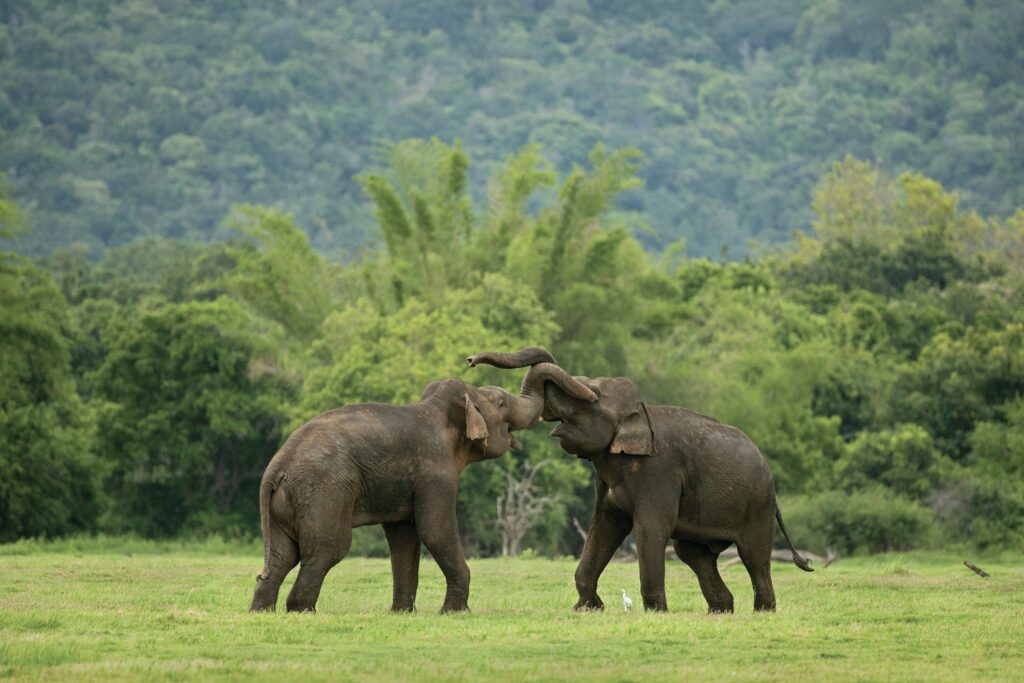
“When two elephants fight, it is the grass that gets trampled” appeared as Topic 4 of Section A in the UPSC Civil Services Mains Essay paper held on 21 August 2026. An East African proverb, eleven words long, carrying a century of geopolitics, a nation’s federal quarrels and every kitchen-table argument a child has ever overheard. One hundred and twenty-five marks if you read it on several levels. A GS answer on great-power rivalry if you read it on one. This guide breaks the topic down the way it should be tackled in the hall — first the meaning, then the angles, then the time map, then the paragraph-by-paragraph plan, and finally a complete 1,200-word model essay you can study, dissect and adapt.
When this was asked and what UPSC is really testing
The topic was set in UPSC CSE Mains 2026, Essay paper, Section A, on 21 August 2026. Three hours, two essays, one from each section, roughly 1,000 to 1,200 words each, 125 marks per essay. “When two elephants fight, it is the grass that gets trampled” is a proverb-prompt — a metaphor with an obvious surface (big powers, small victims) and a less obvious floor (who counts as an elephant, whether the grass is really helpless, and what happens when you become the elephant). The obvious surface is where 80% of scripts will stay. The floor is where the marks are.
UPSC is checking four things at once. One, can you decode a folk metaphor into a precise thesis about the distribution of consequences, rather than a lament. Two, can you scale the metaphor — from superpowers to Centre and States, from corporate duopolies to two parents — without losing the thread. Three, can you hold both sides of India’s position: the country that was grass in 1971 and the country that is an elephant to its neighbours today. Four, can you bring a counter-argument that takes the grass seriously as an actor, not a victim. The aspirant who does all four writes an essay about power. The aspirant who does only the first writes an essay about pity, and pity scores in the 90s.
Five angles that unlock “When two elephants fight, it is the grass that gets trampled”
The trap with a proverb is to accept its first meaning and illustrate it for 1,100 words. The mark-pulling answer instead identifies several lenses, names them clearly and weaves them. Here are the five most defensible readings of when two elephants fight, it is the grass that gets trampled. You do not need all five — three, treated well, is the sweet spot. But you should know all five so your choice is conscious.
- Great powers and the Global South — the literal reading. Cold War proxy wars in Korea, Vietnam, Angola and Afghanistan; sanctions aimed at regimes and landing on hospitals; the Russia–Ukraine war pushing wheat and fertiliser prices onto Africa and South Asia; the US–China trade and technology contest rewiring supply chains that smaller economies depend on. This angle opens up non-alignment, strategic autonomy, the Non-Aligned Movement and the G77.
- Elephants inside the nation — Centre–State confrontation and the citizen waiting for funds; inter-party deadlock and the stalled bill; corporate duopolies and the small trader; union–management strikes and the daily-wage worker who belongs to neither side. This angle pulls in cooperative federalism, the Competition Act, labour law and the Directive Principles.
- The home and the street — two parents in sustained conflict and the child who learns to read their moods; communal violence planned uptown and executed in the basti; the Partition negotiated in drawing rooms and walked by fifteen million peasants. This angle gives the essay its personal and literary register — the Stree Parva of the Mahabharata is the oldest Indian text about trampled grass.
- The planet as the field — three decades of climate deadlock between the historical emitters of the North and the fast-growing emitters of the South, while small island states watch the tide line climb. This angle brings in common but differentiated responsibilities, the Alliance of Small Island States and the loss-and-damage fund.
- The agency of the grass — the counter-current. Rivalry sometimes benefits the grass: price wars lower prices, the space race gave the world weather satellites, small states hedge between giants (Nehru’s non-alignment, ASEAN’s balancing). The grass also organises (NAM, G77) and grows back. And the proverb has a second edge: what are your duties once you become an elephant? India’s neighbourhood, its 2023 rice export ban and its G20 presidency all live here.
A strong essay picks angles 1, 2 and 4 as its backbone (geopolitics, the nation, the planet), uses 3 for emotional range and the literary anchor, and saves 5 for the counter-argument and the turn where India stops being grass and becomes an elephant with responsibilities. That last turn is what separates this essay from a GS II answer on great-power politics.
A time map for the 1,500-second window
One essay deserves about 75 to 90 minutes inside the three-hour paper. Spending more on Essay 1 starves Essay 2. The single biggest source of below-100 essay scores is poor time discipline — beautiful introductions, panicked conclusions. With a proverb-prompt the first ten minutes matter even more, because that is where you decide whether the essay is about elephants or about grass. Use a rough breakdown like this:
| Minutes | Activity | What it earns you |
|---|---|---|
| 0 — 10 | Decode the proverb. Write the thesis in one line. List the five scales (world, nation, market, home, planet). Pick three. | Direction. The single most important investment of the 90 minutes. |
| 10 — 18 | Brainstorm examples: one where India was grass, one where India is the elephant, one historical, one legal, one literary. Pick the counter. | The substance the body paragraphs will run on. |
| 18 — 22 | Draft a paragraph-level outline — 12 to 15 bullets, in sequence, with the counter-argument placed tenth. | Prevents the mid-essay drift that kills 60% of attempts. |
| 22 — 80 | Write the essay — opening scene, body, conclusion — without re-planning. | The actual marks come from this window. Protect it. |
| 80 — 85 | Read the conclusion. Tighten the last two sentences. Check every number has a source you could name. | Conclusions are over-weighted by examiners. A clean ending saves 5 marks. |
Notice what is not on the list: rewriting the introduction halfway, hunting for the perfect quote, drawing a diagram of the mandala theory, decorative underlining. None of that earns marks. Discipline does.
What to add — and what to avoid at all costs
The essay paper rewards what most aspirants under-do and punishes what most aspirants over-do. Memorise this list before you walk into the hall.
Add liberally
- One precise thesis, stated by the end of paragraph two and not abandoned. “Contests between the powerful externalise their costs onto those who had no seat at the table; the measure of a state, a market, a family or a world order is what it does about that asymmetry.”
- Concrete examples across four domains — historical (Cold War proxies, the Iraq sanctions, Partition), Indian (the 1971 carrier group, PL-480 wheat, the fertiliser subsidy after 2022, the 2023 rice export ban, the G20 presidency), legal and scientific (the Competition Act of 2002, the principle of distinction in humanitarian law, the divorce research on sustained conflict, the loss-and-damage fund) and literary (the Stree Parva).
- Two or three short, named references — Thucydides’ Melians, Ashoka’s thirteenth rock edict, Gandhi’s talisman. One per major section is enough.
- One Indian anchor used substantively. Kautilya’s mandala and the six instruments of the weaker king, or Ashoka’s remorse for the householders of Kalinga, or Article 51 of the Constitution. Explain what it teaches; do not just name it.
- Both sides of India’s position — one paragraph where India is the grass, one where India is the elephant. Examiners reward candidates who can see their own country from a smaller neighbour’s eyes.
- A counter-argument that gives the grass agency, resolved in two lines, and a conclusion that returns to the opening image instead of adding a new argument.
Avoid — even when tempted
- Restating the proverb in the first sentence. “This African proverb beautifully captures…” signals that you have nothing to add. Open with a scene.
- Writing a pure international-relations essay. Twelve paragraphs on the US, China and Russia is a GS II answer in disguise. Scale the metaphor down to the nation, the market and the home.
- Unsourced statistics. “Ninety per cent of war casualties are civilians” — if you cannot name the source, do not write the number. Prefer figures that sit in public documents: an Ashokan edict, a Union Budget line, a UN report.
- Naming living leaders or live disputes. The Essay paper is graded by humans across the ideological spectrum. Say “a Centre–State dispute over tax shares”, not the names of the governments currently in court. Use the institution, not the personality.
- Pity as a thesis. An essay that only catalogues victims reads as a lament. The proverb is about the distribution of power; treat the grass as an actor with choices, even if the choices are few.
- Moralising at the end. “Big powers must learn to behave responsibly” is a school-speech close. Name the rules and institutions that actually protect the grass, then return to your opening image.
A paragraph-by-paragraph blueprint
Twelve paragraphs at roughly 90 words each gets you to 1,080. Fifteen at 75 each gets you to 1,125. Either works. What follows is a 13-paragraph plan that maps cleanly onto the model essay below. Each line is what that paragraph is doing, not what it is saying.
- Opening image — a field after a battle, seen through the people who did not decide the battle. No mention of the proverb yet.
- The pivot to thesis — name the proverb and its origin, then state the thesis in one sentence about the distribution of consequences.
- Define the terms — who the elephants are at each scale, who the grass is, and the oldest Western statement of the rule for contrast.
- Angle 1 — History — the Cold War’s proxy wars and the sanctions decade. The elephants went home; the grass stayed.
- Angle 1 continued — The present, and India as grass — Russia–Ukraine and the fertiliser bill; the 1960s and 1971 as memory.
- Indian anchor — Kautilya on the weaker king’s instruments and Ashoka’s remorse for the non-combatants of Kalinga. Both halves of the Indian answer.
- Angle 2 — Inside the nation — Centre–State quarrels, union–management standoffs, corporate price wars, and the law built to protect the grass.
- Angle 3 — The home and the street — parental conflict and children, Partition, communal violence. Scale the metaphor down.
- Angle 4 — The planet — climate deadlock between big emitters while small islands drown; the loss-and-damage fund as the first admission.
- Counter-argument handled — the grass is not helpless: competition, hedging, organising. Resolved: agency is not immunity.
- The turn — India as elephant — the neighbourhood, Sri Lanka 2022, the rice ban, the G20 presidency and Vasudhaiva Kutumbakam.
- Way forward — the rules that name the grass at every scale, anchored in Gandhi’s talisman as an instruction to elephants.
- Closing image — return to the field, the grass that grows back, and one resonant line that repeats the proverb.
How to make an examiner stop and read
An essay examiner reads several hundred scripts in a sitting, and on a proverb-prompt most of them will open the same way — with the proverb. The first paragraph decides whether they read the second with attention or with autopilot. Four small habits separate the essays that get attention from the ones that get skimmed.
- Open with a scene, not a statement. A battlefield the morning after, a grain port with no ships, a child listening through a wall, a beach with the tide line higher than last year. Concrete images cost no marks and earn attention.
- Use the topic phrase itself two or three times across the essay. Once in the thesis, once at the turn, once at the close. It signals discipline and prevents drift.
- Vary sentence length. “The elephants went home. The grass stayed.” A short sentence after three long ones lands. Examiners feel rhythm before they parse meaning.
- End paragraphs with the takeaway, not with examples. Place the example mid-paragraph. Let the last sentence be the thought, so the reader carries it into the next paragraph.
The complete essay — “When two elephants fight, it is the grass that gets trampled”
What follows is a 1,200-word model essay built on the blueprint above. Read it twice — once for the argument, once for the moves. The moves are what you carry into your own essay.
On the morning after the eighteenth day, the women of Hastinapur walked out onto the field of Kurukshetra. The Mahabharata gives that walk a whole book, the Stree Parva. Gandhari moves among the dead and names them: a charioteer’s son, a foot-soldier, a boy who never sat in any council where the war was decided. The kings had quarrelled over a kingdom. The field was full of people who had owned no kingdom at all.
East Africa has a proverb for that field: “When two elephants fight, it is the grass that gets trampled.” A sharper version adds that the grass suffers when the elephants make love too. The proverb is not about elephants. It is about the distribution of consequences: when the powerful contend, the cost is pushed onto those who had no seat at the table. That asymmetry, and what a decent order does about it, is the subject of this essay.
The elephants change with the scale of the argument: great powers between nations; the Centre and the States within one; two firms that own a market; two adults in a home. The grass is whoever cannot leave the field. Thucydides recorded the rule when his Athenians told the Melians that the strong do what they can and the weak suffer what they must. The proverb adds what the Athenians left out: the grass never asked to be there.
The twentieth century is a ledger of trampled grass. The Cold War was cold only in Washington and Moscow. In Korea, Vietnam, Angola and Afghanistan it ran at full temperature, fought by proxies through other people’s villages. Afghanistan alone produced one of the largest refugee populations the UN has ever registered. The sanctions on Iraq in the 1990s were aimed at a regime and landed on its hospitals. The elephants went home. The grass stayed.
The pattern has not retired. When Russia invaded Ukraine in 2022, two large exporters of wheat and fertiliser went to war, and bread grew dearer in Cairo and Mogadishu. India felt it as a fertiliser bill: the Union Budget’s subsidy line crossed two lakh crore rupees in 2022–23. Nor was this India’s first season as grass. In the 1960s it ate PL-480 wheat from ship to mouth; in December 1971 an American carrier group sailed into the Bay of Bengal to make a point. The memory of being grass shapes how India thinks about power.
Indian political thought met the problem early. Kautilya’s Arthashastra places every king inside a mandala of neighbours and hands the weaker one six instruments — peace, war, neutrality, marching, seeking shelter, and the double policy of befriending one neighbour while resisting another. The small state is expected to be clever, not merely sorry. Ashoka supplies the other half. His thirteenth rock edict counts the dead of Kalinga and mourns most for the householders, Brahmanas and shramanas who had no part in the quarrel. No other emperor apologised to the grass in stone.
Inside a country the elephants are smaller; the grass is just as thin. When a Centre–State dispute over tax shares drags on, the labourer under a rural employment guarantee waits for arrears neither government admits it owes. When management and union lock horns, the contract worker who belongs to neither is sent home first. When two corporate giants fight a price war, the smaller rivals fold first. Competition law, from the Sherman Act of 1890 to India’s Competition Act of 2002, exists because a market left to two elephants becomes a lawn of flattened grass.
The proverb scales down to the kitchen table. Research on divorce converges on one finding: it is not separation that damages children so much as sustained conflict around it. Two adults fighting over custody are elephants; the child who learns to read their moods is grass. The Partition of 1947 was negotiated by a handful of men in drawing rooms and walked by some fifteen million peasants and artisans across a line they had not drawn. Every communal riot since repeats the structure: the speeches are made uptown, and the fires are lit in the basti.
The planet is now the largest field of all. Climate negotiations have stalled for decades on a quarrel between the historical emitters of the North and the fast-growing emitters of the South over who cuts first and who pays. While the elephants argued, the Alliance of Small Island States watched the tide climb; Tuvalu’s foreign minister once addressed a summit standing knee-deep in the sea. The loss-and-damage fund agreed at Sharm el-Sheikh in 2022 was the first formal admission that the grass is owed compensation, not sympathy.
It might be objected that the proverb flatters the grass by making it helpless. There is truth in this. Rivalry between giants has lowered prices, as Indian mobile users found when a price war made data among the cheapest on earth; and it has let small states hedge and organise, from Nehru’s non-alignment to the Group of 77 and ASEAN. But agency is not immunity. Hedging exists because the danger is real, and the cheap data cost tens of thousands of telecom jobs. The grass can be clever. It still cannot choose the weather.
India must now read the proverb from the other side, because to its smaller neighbours India is the elephant. When Sri Lanka’s economy collapsed in 2022, India extended close to four billion dollars in credit and currency support: an elephant choosing to shelter rather than trample. When it banned exports of non-basmati white rice in 2023, rice grew dearer in Senegal and Benin; the step that protected one lawn flattened another. The G20 presidency of 2023 seated the African Union under the Maha Upanishad’s Vasudhaiva Kutumbakam, the world as one family. A family is a field in which nobody is only grass.
What, then, does a decent order owe the grass? Rules that name it. Humanitarian law’s principle of distinction shields civilians; competition law forbids abuse of dominance; cooperative federalism gives the States a council table so quarrels are settled early; family courts ask what the child needs before what the parents want; climate finance turns sympathy into transfers. Beneath them sits Gandhi’s talisman: before any step, recall the face of the poorest and weakest person you have seen, and ask whether the step will help him. It is an instruction addressed to elephants.
Return to Kurukshetra. The epic does not end with a coronation; it ends with the survivors walking into the mountains, and with the field itself, which grew green again. Grass grows back — that is its quiet strength, and the reason the powerful forget it so easily. But the proverb was not composed to comfort elephants. When two elephants fight, it is the grass that gets trampled; the test of a state, a market, a family or a world order is whether it notices, and what it changes once it has.
Word count: approximately 1,200.
How to use this model essay
Do not memorise it. Memorised essays read like memorised essays, and examiners spot them in two paragraphs. Use the model the way a chess student uses a master game: study the opening scene, the pivot to the proverb, the way each paragraph changes the scale of the metaphor, the placement of the Indian anchor, the way the counter-argument gives the grass agency and then takes the comfort back. Then practise the same moves on neighbouring topics. Poverty anywhere is a threat to prosperity everywhere asks the same question about the grass from the economic side; The wealth of a nation is the wellbeing of its weakest asks it from the domestic side; The supreme art of war is to subdue the enemy without fighting asks what the elephants owe each other. Write all three using this blueprint, and the structure becomes muscle memory. On the day of the exam, the only thing you should have to think about is the topic itself.
Books quoted in this essay
The Arthashastra, Kautilya (Penguin).
Tell Google you want more of this.
Add Anantam IAS as a preferred sourceOne tap, and this site shows up more often in your own Top Stories, AI Overviews and AI Mode. Remove it any time.