
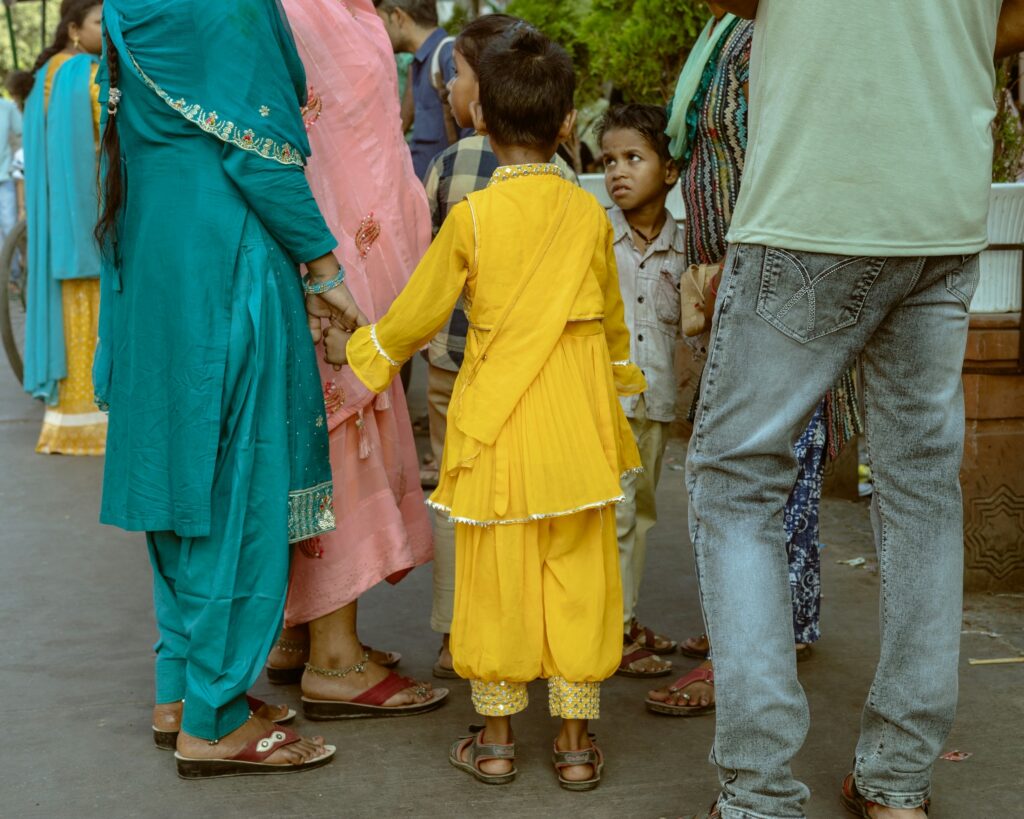
“Girls are weighed down by restrictions, boys with demands — two equally harmful disciplines” appeared as Topic 5 of Section B in the UPSC Civil Services Mains Essay paper held on 15 September 2023. One sentence. One hundred and twenty-five marks if you treat it with seriousness — far fewer if you treat it as a slogan. The topic asks something subtler than “gender is bad”. It asks whether the two cages we build around boys and girls are kin to each other, and what such a kinship means for a society and its constitution. This guide breaks the prompt down the way it should be tackled in the hall — meaning, angles, time map, paragraph blueprint, and a complete 1,150-word model essay you can study, dissect and adapt.
When this was asked and what UPSC is really testing
The topic was set in UPSC CSE Mains 2023, Essay paper, Section B, Topic 5. Three hours, two essays, one from each section, roughly 1,000 to 1,200 words each, 125 marks per essay. Section B of 2023 leaned philosophical and social; this prompt sat at the intersection of gender, ethics and political theory. There is a clear social-justice anchor, but no policy hook is handed to you on a plate. You have to find the data, the tradition, and the constitutional thread.
UPSC is testing four things at once. One, can you read a gendered claim without flattening it into a women-only or men-only essay. Two, can you treat “equally harmful” as a thesis to be examined rather than a slogan to be repeated. Three, can you move across sociology, law, public health and Indian tradition without sounding like a checklist. Four, can you do all this with restraint — without sensationalism, without grievance theatre, and without naming living political figures. The aspirant who carries the prompt’s tension all the way to the conclusion scores in the 130s. The aspirant who turns it into a one-sided rant scores in the 80s.
Five angles that unlock “Girls are weighed down by restrictions, boys with demands”
The trap with a topic like this is to write only about girls — easier, safer, well-rehearsed — and lose the second half of the sentence. The mark-pulling answer holds both halves up to the light, then asks whether they really are “equally harmful”. Here are five defensible angles. Three, treated well, is the sweet spot.
- The two cages — restrictions on girls (mobility after dusk, dress codes, marriage timing, “ghar ki izzat”, the over-policed body) and demands on boys (be the provider, never cry, “mard ko dard nahi hota”, the under-spoken interior). Both are disciplines, both deform.
- The data behind the metaphor — NFHS-5 on adolescent marriage and secondary-school dropout for girls; NCRB on male suicide rates running roughly two to three times the female rate; sex ratio at birth; women’s workforce participation; men’s mental-health silence. The cage is not a feeling, it is a measurable load.
- The Indian tradition that already says it — Ardhanarishvara, the half-Shiva-half-Shakti form, places masculine and feminine in a single body. The Devi Mahatmya makes the feminine the seat of power, not the protected object. Savitribai Phule’s schools, Gandhi’s writings on women’s equality and Ambedkar’s struggle for the Hindu Code Bill are not modern imports — they are an Indian inheritance.
- The constitutional frame — Articles 14, 15 and 39(d) commit the republic to equality before law, non-discrimination on grounds of sex, and equal pay for equal work. POSH (2013), PCPNDT (1994), the Domestic Violence Act (2005) and the new criminal codes carry that promise into ordinary life. The cage is not just personal; it is something the Constitution explicitly tries to dismantle.
- The “equally harmful” question itself — is the symmetry real? Restrictions on girls are more pervasive, more embedded, more violently enforced; demands on boys are heavier than they are allowed to admit. The essay must hold both without collapsing into false equivalence. This is the angle that separates an average script from a strong one.
A strong essay picks angles 1, 3 and 5 as its backbone (the two cages, the Indian inheritance, the symmetry question), uses 2 for anchoring weight and 4 for the constitutional turn. That gives the essay rhythm — description, complication, resolution — instead of a one-sided complaint.
A time map for the 1,500-second window
One essay deserves about 75 to 90 minutes inside the three-hour paper. Spending more on Essay 1 starves Essay 2. The single biggest source of below-100 essay scores is poor time discipline — overlong introductions, panicked conclusions. Use a rough breakdown like this:
| Minutes | Activity | What it earns you |
|---|---|---|
| 0 — 10 | Decode the topic. Underline “weighed down”, “restrictions”, “demands”, “equally harmful”. Write the thesis in one line. List 4 to 5 angles. Pick 3. | Direction. The single most important investment of the 90 minutes. |
| 10 — 18 | Brainstorm: NFHS-5, NCRB, Ardhanarishvara, Savitribai Phule, Simone de Beauvoir, Article 15, a personal hook. | The substance the body paragraphs will run on. |
| 18 — 22 | Draft a paragraph-level outline — 12 to 13 bullets, in sequence. | Prevents the mid-essay drift that kills most attempts. |
| 22 — 80 | Write the essay — opening, body, conclusion — without re-planning. | The actual marks come from this window. Protect it. |
| 80 — 85 | Read the conclusion. Tighten the last two sentences. Fix factual errors. | Conclusions are over-weighted by examiners. A clean ending saves 5 marks. |
Notice what is not on the list: rewriting the introduction halfway, hunting for the perfect quote, fancy diagrams, decorative underlining. None of that earns marks. Discipline does.
What to add — and what to avoid at all costs
The essay paper rewards what most aspirants under-do on a gender topic and punishes what most aspirants over-do. Memorise this list before you walk into the hall.
Add liberally
- One precise thesis, stated by the end of paragraph two and not abandoned. “The cage around the girl is heavier and older; the cage around the boy is quieter and almost unnamed; both are disciplines a republic of equals cannot afford.”
- Hard data from named Indian sources — NFHS-5 on early marriage and school dropout; NCRB on male suicide; the Periodic Labour Force Survey on women’s workforce participation. One number per claim, sourced, no rounded guesses.
- One or two short, named quotes — Simone de Beauvoir on becoming a woman, Gandhi on the equality of the sexes, an Ambedkar line on the Hindu Code Bill. One per major section is enough.
- One Indian philosophical anchor — Ardhanarishvara or the Devi Mahatmya, used substantively, not as decoration. An Indian inheritance that already pre-figures the modern claim earns the examiner’s attention.
- A counter-argument handled with honesty — yes, restrictions on girls are more pervasive than demands on boys. The essay must say so and still hold the symmetry of the prompt.
- A clean conclusion that returns to the opening image — not a fresh argument, not a new statistic, not a policy laundry list.
Avoid — even when tempted
- Restating the topic in the first sentence. “It is rightly said that girls are weighed down by restrictions…” — this signals you have nothing to add. Open with an image: a school gate at dusk, a hostel curfew board, a father’s silent walk home.
- A women-only or men-only essay. The prompt is explicitly two-sided. Spending 900 words on girls and a token paragraph on boys is the most common 90-mark mistake on this topic.
- Unsourced numbers and emotive language. “Crores of girls” without a source is worth nothing. “Patriarchy crushes everyone” reads like a slogan, not an argument.
- Naming living politicians, parties or recent judgments by personal name. The Essay paper is read across the ideological spectrum. Use the institution — Parliament, the Supreme Court, the Constitution — not the personality.
- Hot-button polemics — men’s-rights versus women’s-rights flame wars, Section 498A “misuse” rhetoric, the marital-rape debate handled in a sentence. Acknowledge the tensions; do not enlist in them.
- Moralising. “We must all respect women” reads like a school assembly. The essay paper rewards examination, not exhortation.
A paragraph-by-paragraph blueprint
Thirteen paragraphs at roughly 88 words each gets you to 1,150. What follows is a 13-paragraph plan that maps cleanly onto the model essay below. Each line is what that paragraph is doing, not what it is saying.
- Opening image — twin scenes: a girl asking permission to step out at dusk, a boy asked when he will start earning. No mention of the topic yet.
- The pivot to thesis — name the topic, then state the thesis in one sentence.
- Define the terms — what “restriction” means (mobility, body, choice) and what “demand” means (provision, stoicism, performance).
- The girl’s cage in numbers — NFHS-5 on early marriage and dropout; sex ratio at birth; women’s workforce participation.
- The boy’s cage in numbers — NCRB on male suicide; the silence around men’s mental health; the breadwinner script.
- Indian anchor — Ardhanarishvara, Devi Mahatmya, Savitribai Phule, Gandhi, Ambedkar. The inheritance the prompt already sits inside.
- The world reference — Simone de Beauvoir’s “one is not born, but rather becomes, a woman”, extended to “one is not born, but rather becomes, a man”.
- The constitutional turn — Articles 14, 15, 39(d); POSH, PCPNDT, the Domestic Violence Act; the republic’s refusal of both cages.
- The symmetry tested — are the two cages really “equally” harmful? Honest answer: the girl’s cage is heavier and older; the boy’s is quieter and less examined. Both deform, unequally.
- Counter-argument handled — the worry that men’s pain talk diverts from women’s struggles; reply that the two cages share a common hinge and dismantling one helps the other.
- Way forward — household and school — redistribution of unpaid care work, gender-sensitisation in the curriculum, paternal leave, role models in non-traditional roles.
- Way forward — institution and state — enforcement of existing law, men’s mental-health programmes, data systems that count both sides honestly.
- Closing image — return to the dusk and the dinner table, close with one resonant line about the half-Shiva, half-Shakti body.
How to make an examiner stop and read
An essay examiner reads several hundred scripts in a sitting. On a gender topic the temptation is to skim, because most scripts say roughly the same thing. The first paragraph decides whether yours gets attention or autopilot. Four small habits separate the essays that get read from the ones that get scanned.
- Open with a scene, not a statement. A school gate at dusk, a hostel curfew board, a son asked when he will start earning, a daughter asked when she will marry. Concrete images cost no marks and earn attention.
- Use the topic phrase itself two or three times across the essay. Once in the thesis, once at the turn, once at the close. It signals discipline and prevents drift.
- Vary sentence length. A short sentence after three long ones lands. Examiners feel rhythm before they parse meaning.
- End paragraphs with the takeaway, not with examples. Place the statistic or the quote mid-paragraph. Let the last sentence carry the thought.
The complete essay — “Girls are weighed down by restrictions, boys with demands — two equally harmful disciplines”
What follows is a 1,150-word model essay built on the blueprint above. Read it twice — once for the argument, once for the moves. The moves are what you can carry into your own essay; the argument is one of many you could make.
It is seven in the evening in a small town. A seventeen-year-old girl stands at her door with her cycle, on her way to a tuition class she has paid for from her own savings. Her father, not unkindly, asks her where she is going and whether someone can drop her instead. At a neighbour’s house, a nineteen-year-old boy puts down his engineering textbook because a relative has arrived; the talk, again not unkindly, turns to when he will finish, when he will start earning, when he will lift the family. Neither home is cruel. Both are doing what their grandparents did. And both, in their separate ways, are loading a young person’s bag.
The 2023 essay prompt — girls are weighed down by restrictions, boys with demands — names those two weights with unusual precision. The thesis worth defending is this: the cage around the girl is older, heavier and more violently enforced; the cage around the boy is quieter and almost unnamed; but both are disciplines that a republic of equals cannot afford to keep intact.
Some careful definitions help. “Restriction” here is shorthand for everything a girl is told she cannot do — go out after dusk, choose what to wear, choose whom to marry, choose how long to study, choose whether to carry a family’s honour on her body. “Demand” is the matching shorthand for everything a boy is told he must do — earn, provide, never cry, never fail, never admit to a fear. The first cage is built from prohibitions; the second from prescriptions. The materials are different. The damage is real in both.
The first cage is measurable. NFHS-5 (2019–21) recorded that nearly a quarter of women aged 20–24 were married before the legal age of eighteen, and that the gap between boys and girls in secondary-school enrolment widens sharply at adolescence. The sex ratio at birth, women’s labour-force participation — still well below thirty per cent in the Periodic Labour Force Survey — and the share of household decisions a woman is allowed to take alone, all point to the same locked room. The girl is not imagined into the cage; the cage is in the data.
The second cage is harder to count because it is built from things a boy is not supposed to say. The National Crime Records Bureau has, year after year, reported that men account for roughly seventy per cent of suicide deaths in India — a ratio held for over a decade. The Lancet’s commissions on men’s health describe the same pattern globally: shorter lives, fewer doctor visits, more deaths of despair. The breadwinner script and the “be a man” silence produce their own mortality. The boy is not in the same cage. He is in one of his own.
India has, in its own tradition, an image that already holds both halves together. Ardhanarishvara shows Shiva and Shakti as a single body split down the middle — neither figure is whole alone, neither subordinate to the other. The Devi Mahatmya makes the feminine the seat of power, not the protected object. Centuries later, Savitribai Phule opened a school for girls in Pune when the city’s elders threw dung at her on her way to teach. Gandhi wrote that “to call women the weaker sex is a libel; it is man’s injustice to woman”, and Ambedkar resigned from the Cabinet when the Hindu Code Bill — granting women rights to property and divorce — was diluted. The two cages were named in India long before the 2023 prompt put them in a single sentence.
The same insight was sharpened in twentieth-century Europe by Simone de Beauvoir, whose Second Sex contains the line every essay on this topic leans on: “One is not born, but rather becomes, a woman.” It is a sociological claim — what looks like nature is the slow work of restriction. The honest extension, which the boy’s cage forces us to make, is its mirror: one is not born, but rather becomes, a man, through demands no less invented.
The Indian Constitution sits squarely against both cages. Article 14 promises equality before the law, Article 15 forbids discrimination on grounds of sex, and Article 39(d) commits the state to equal pay for equal work. The Prohibition of Child Marriage Act, the PCPNDT Act, the POSH Act and the Domestic Violence Act try to convert those promises into ordinary life. The Constitution does not address the boy’s demands directly, but its insistence on the equal dignity of every citizen — including the right to refuse a role merely because one was born into it — covers him too.
It must, however, be said plainly: the prompt’s word “equally” is more philosophical than statistical. The girl’s cage is older, more pervasive, more violently policed and more often fatal. Female foeticide, dowry deaths and the curfew on half the population have no exact mirror on the male side. The boy’s cage is quieter — but a cage that ends two-thirds of suicide deaths in the country is not a small thing. The two are not equal in scale; they are kin in structure, sharing one hinge: the belief that a child’s life is to be lived along a script written by their gender.
It might be objected that to speak of men’s pain on a topic about gender dilutes a long-overdue conversation about women’s freedom. The objection deserves respect. The reply is that the two disciplines support each other: the man who must be unbreakable is the same man who tells his daughter she cannot go out at dusk, and the woman who has internalised her restriction is often the one who teaches her son that crying is unmanly. Removing one weight loosens the other.
The way out begins at home and school. The household that asks the son to wash dishes and the daughter to handle finances is a small constitutional act. Schools that introduce gender-sensitisation as a serious subject, not a one-off lecture, do more than any law. Paternal leave that is actually taken, men visible in nursing and primary teaching, women visible in engineering and policing, change the script by familiarity, not argument.
At the level of institutions, three things matter. First, enforcement — laws on child marriage, dowry and workplace harassment must move from statute to lived experience. Second, men’s mental-health programmes — helplines, counsellors, workplace screens — equal in seriousness to the women-and-child programmes the state already runs. Third, data: surveys must count both cages with the same rigour, because what the republic does not measure it does not protect.
Return to the small-town dusk and the relative’s dinner-table question. Neither home is unkind. Both are running scripts older than the people speaking them. The body India placed at the doorway of its temples — half Shiva, half Shakti — already held a more humane idea: the masculine and the feminine are not two cages to assign children to, but two halves of a single, fuller life. Girls are weighed down by restrictions and boys with demands; the disciplines are not equal in scale, but kin in damage, and the republic of equals is built one unloaded bag at a time.
Word count: approximately 1,200.
How to use this model essay
Do not memorise it. Memorised essays read like memorised essays, and examiners spot them in two paragraphs. Use the model the way a chess student uses a master game: study the opening twin-scene, the pivot to thesis, the placement of NFHS-5 and NCRB, the Ardhanarishvara anchor, the way Simone de Beauvoir’s line is extended to the boy, the way the counter-argument is acknowledged and closed. Then take a related topic — “Empowering women is empowering humanity” or “Patriarchy is the least noticed yet the most significant structure of social inequality” — and write your own essay using the same blueprint. Repeat that exercise eight to ten times and the structure becomes muscle memory. On the day of the exam, the only thing you should have to think about is the topic itself.
Tell Google you want more of this.
Add Anantam IAS as a preferred sourceOne tap, and this site shows up more often in your own Top Stories, AI Overviews and AI Mode. Remove it any time.