
Disclosure: this guide contains Amazon affiliate links. As an Amazon Associate, Anantam IAS earns from qualifying purchases — at no extra cost to you.
“Joy is the simplest form of gratitude” appeared as Topic 5 of Section B in the UPSC Civil Services Mains Essay paper held on 28 October 2017. Eight words on a question paper. One hundred and twenty-five marks if you handle it well. A wasted hour if you do not. This guide breaks the topic down the way it should be tackled in the hall — first the meaning, then the angles, then the time map, then the paragraph-by-paragraph plan, and finally a complete 1,200-word model essay you can study, dissect and adapt.
When this was asked and what UPSC is really testing
The topic was set in UPSC CSE Mains 2017, Essay paper, Section B, Topic 5. Three hours, two essays, one from each section, roughly 1,000 to 1,200 words each, 125 marks per essay. “Joy is the simplest form of gratitude” — a line widely attributed to the Swiss theologian Karl Barth — is a philosophical-ethical prompt of the kind UPSC has favoured since the paper was split into two sections in 2014. There is no policy hook, no current-affairs anchor, no GS overlap to lean on. The page is yours to fill, and that is exactly the test.
UPSC is checking four things at once. One, can you read a deceptively simple sentence without flattening it into a school-essay on “be thankful.” Two, can you organise material from psychology, philosophy, scripture and lived experience around one clear thesis. Three, can you move comfortably across the Upanishads, modern positive psychology, festival culture and civil-service work without sounding like a textbook. Four, can you write 1,100 disciplined words that examine the line rather than 1,500 loose words that decorate it. The aspirant who handles all four scores in the 130s. The aspirant who handles only the fourth — pleasant prose with no spine — scores in the 90s.
Five angles that unlock “Joy is the simplest form of gratitude”
The trap with quotable lines is to nod at them for 1,100 words. The mark-pulling answer instead identifies several lenses, names them clearly, and weaves them. Here are the five most defensible readings of joy is the simplest form of gratitude. You do not need all five in your essay — three, treated well, is the sweet spot. But you should know all five so your choice is conscious.
- Emotion as cognition — gratitude is, at its root, an awareness of having received. Joy is the body’s instinctive expression of that awareness, prior to any words of thanks. The line collapses a two-step process — recognise, then respond — into one. Used well, this opens the door to positive psychology, neuroscience, and the difference between felt gratitude and performed gratitude.
- The Indian inheritance — Upanishadic ananda as the very nature of the self, Tagore’s prayer for a country awakening into freedom, Tukaram’s bhakti abhangas singing of small mercies, Sant Kabir‘s warning against pride, the Gita’s santosha as the discipline of contentment. Indian thought has long treated joy and gratitude as one continuous movement of the heart.
- The civilisational dimension — Diwali, Pongal, Onam, Eid, Christmas, the harvest songs of every region. Across faiths, the human community has built calendars around seasonal gratitude, and the public face of that gratitude is collective joy — lamps, food, music, embrace. This angle anchors the abstract line in lived culture.
- The counter-current — gratitude can be weaponised. Telling the oppressed to “be grateful” for what they have is one of history’s older silencing tactics. Toxic positivity asks the suffering to perform a joy they do not feel. An essay that ignores this reads naïve; one that handles it with care reads mature.
- The public-policy reading — a society with rising depression, loneliness and burnout needs accessible, non-pharmacological practices. Gratitude journals, classroom happiness curricula, workplace rituals of acknowledgement, helpline expansion. This angle keeps the essay from floating into pure abstraction and lets a civil-services aspirant show range.
A strong essay picks angles 1, 2 and 3 as its backbone (cognition, Indian inheritance, festival culture), uses 5 as a contemporary application, and admits 4 as the necessary counter. That gives the essay rhythm — definition, illustration, complication, resolution — instead of a single straight line.
A time map for the 1,500-second window
One essay deserves about 75 to 90 minutes inside the three-hour paper. Spending more on Essay 1 starves Essay 2. The single biggest source of below-100 essay scores is poor time discipline — beautiful introductions, panicked conclusions. Use a rough breakdown like this:
| Minutes | Activity | What it earns you |
|---|---|---|
| 0 — 10 | Decode the line. Write the thesis in one sentence. List 4 to 5 angles. Pick 3. | Direction. The single most important investment of the 90 minutes. |
| 10 — 18 | Brainstorm examples — scripture, psychology, festivals, a personal moment, a counter. | The substance the body paragraphs will run on. |
| 18 — 22 | Draft a paragraph-level outline — 12 to 13 bullets, in sequence. | Prevents the mid-essay drift that kills 60% of attempts. |
| 22 — 80 | Write the essay — opening, body, conclusion — without re-planning. | The actual marks come from this window. Protect it. |
| 80 — 85 | Read the conclusion. Tighten the last two sentences. Fix factual errors. | Conclusions are over-weighted by examiners. A clean ending saves 5 marks. |
Notice what is not on the list: rewriting the introduction halfway, hunting for the perfect quote, fancy diagrams, decorative underlining. None of that earns marks. Discipline does.
What to add — and what to avoid at all costs
The essay paper rewards what most aspirants under-do and punishes what most aspirants over-do. Memorise this list before you walk into the hall.
Add liberally
- One precise thesis, stated by the end of paragraph two and not abandoned. “Gratitude is the mind’s recognition that we have received; joy is the body’s spontaneous reply — which is why the most reliable measure of a grateful life is not the words it speaks but the lightness it carries.”
- Concrete examples across three or four domains — one Indian-philosophical (Upanishadic ananda, Gita’s santosha, a Tukaram abhanga), one cultural (Diwali, Pongal, Onam, Eid), one scientific (Lyubomirsky, Seligman’s PERMA, Emmons’s gratitude-journal studies) and one personal or literary (Tagore’s prayer for an awakened country, a teacher watching a slow student finally read).
- Two or three short, named quotes — Karl Barth on joy and gratitude, a line from the Mundaka Upanishad on ananda, Tagore on freedom of mind. One per major section is enough.
- One Indian philosophical anchor. Ananda as the self’s nature in the Taittiriya Upanishad, Kabir’s “kabira garv na kijiye“, the Gita’s santosha among the niyamas. Examiners read 300 essays a day; an Indian anchor in an essay full of Western examples stands out.
- Counter-arguments handled briefly. “It might be argued that gratitude in the mouth of the powerful becomes an instrument of silencing…” — then resolved in two lines. Acknowledging the other side earns more marks than ignoring it.
- A clean conclusion that returns to the opening image — not a fresh argument, not a new example.
Avoid — even when tempted
- Restating the topic in the first sentence. “Joy is the simplest form of gratitude is a profound statement…” — this signals that you have nothing to add. Open with an image or a scene.
- Drifting into a single domain. A 1,100-word essay only on positive psychology, or only on festivals, looks like a GS answer. Range matters.
- Unsourced statistics. “Gratitude journals reduce depression by 32%” — if you cannot name the study, do not write the number. Examiners cross-mark this.
- Naming current politicians. The Essay paper is graded by humans across the ideological spectrum. Naming sitting leaders, parties or pending judgments introduces avoidable risk. Use the institution, not the personality.
- Decorative scholar-dropping. Citing Seligman, Lyubomirsky, Emmons and Csikszentmihalyi in one paragraph to look serious. One scholar, used well, beats four named in passing.
- Moralising. “We must all be grateful always” reads like a school speech. The essay paper rewards examination, not exhortation.
A paragraph-by-paragraph blueprint
Twelve paragraphs at roughly 95 words each gets you to 1,140. Thirteen at 90 each gets you to 1,170. Either works. What follows is a 13-paragraph plan that maps cleanly onto the model essay below. Each line is what that paragraph is doing, not what it is saying.
- Opening image — a Diwali courtyard at dusk, lamps being lit one by one. No mention of the topic yet.
- The pivot to thesis — name the line, state the thesis: gratitude is cognition, joy is its embodied reply.
- Define the terms — gratitude is not politeness; joy is not pleasure. Distinguish carefully.
- The Upanishadic anchor — ananda as the self’s nature in the Taittiriya Upanishad; the Gita’s santosha.
- The bhakti expansion — Tukaram, Kabir, Mirabai; gratitude sung, danced, embodied as joy.
- The civilisational angle — Diwali, Pongal, Onam, Eid, Christmas: gratitude calendars made visible as joy.
- The scientific angle — Emmons’s gratitude-journal research, Seligman’s PERMA, Lyubomirsky’s interventions.
- The personal angle — a teacher seeing a slow student finally read; a relief officer seeing a village rebuild.
- The mental-health context — rising depression, loneliness; gratitude as accessible practice, not a cure.
- The counter-current — toxic positivity, gratitude weaponised against the oppressed.
- The resolution — joy without justice is hollow; gratitude without action is sentimentality.
- Way forward — school happiness curricula, workplace rituals, helpline expansion, family practice.
- Closing image — return to the Diwali courtyard; one resonant line on joy as the body’s “thank you.”
How to make an examiner stop and read
An essay examiner reads several hundred scripts in a sitting. The first paragraph decides whether they read the second with attention or with autopilot. Four small habits separate the essays that get attention from the ones that get skimmed.
- Open with a scene, not a statement. A Diwali courtyard, a grandmother lighting the first lamp, a child unable to sit still — concrete images cost no marks and earn attention.
- Use the topic phrase itself two or three times across the essay. Once in the thesis, once at the turn, once at the close. It signals discipline and prevents drift.
- Vary sentence length. A short sentence after three long ones lands. Examiners feel rhythm before they parse meaning.
- End paragraphs with the takeaway, not with examples. Place the example mid-paragraph. Let the last sentence be the thought, so the reader carries it into the next paragraph.
The complete essay — “Joy is the simplest form of gratitude”
What follows is a 1,200-word model essay built on the blueprint above. Read it twice — once for the argument, once for the moves. The moves are what you can carry into your own essay; the argument is one of many you could make.
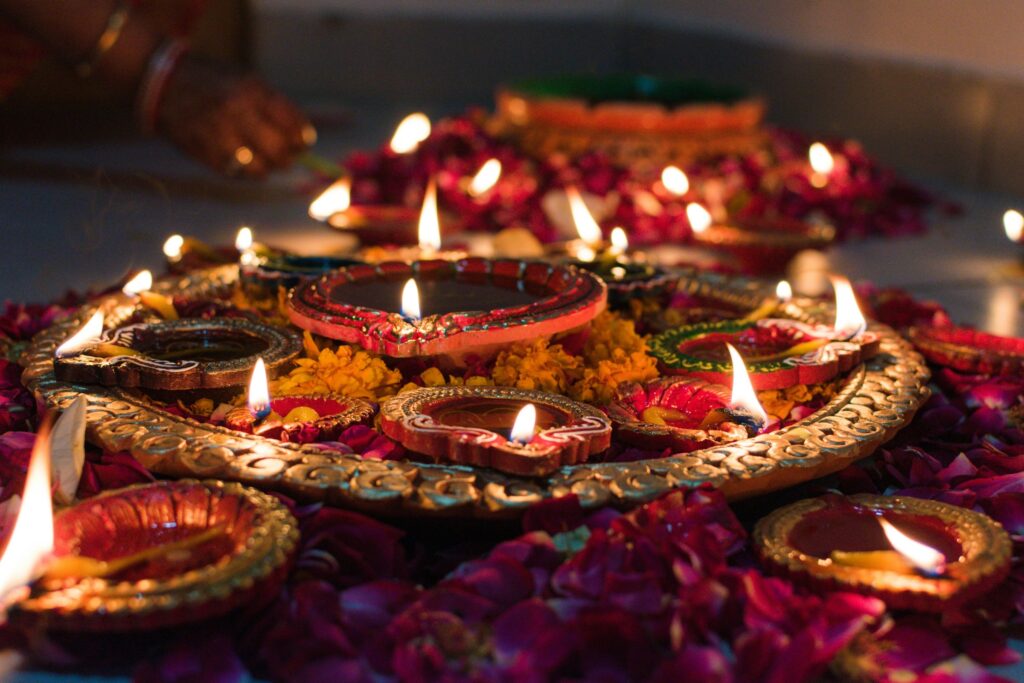
In a courtyard somewhere in India at dusk, a grandmother bends over a row of small clay lamps. She wipes the rims, pours in mustard oil, twists a cotton wick, and touches a single matchstick to the first one. The flame catches. A grandchild crouching beside her draws a sharp breath and her face opens into something older than language. She does not say “thank you.” She lights the next lamp. By the time the row is glowing and the courtyard smells of warm oil and earth, no one in the family has spoken of gratitude, and the house is full of it. The body has done the talking the mouth could not manage.
Karl Barth, the Swiss theologian, once observed that joy is the simplest form of gratitude. The sentence is short enough to be embroidered on a wall, and that is its trap. Read carefully, it makes a precise claim: gratitude is the mind’s recognition that we have received, and joy is the body’s spontaneous reply — which is why the most reliable measure of a grateful life is not the words it speaks but the lightness it carries. Where words are deliberate and can be performed, joy arrives before composition and leaves before politeness can dress it up.
Some careful definitions help. Gratitude is not politeness; politeness is a social grammar that anyone can learn and many use without feeling. Joy is not pleasure; pleasure is sensation, briefly bought, while joy is closer to a quiet expansion of the chest. The line being examined collapses a two-step movement — recognise that something has been given, then respond to it — into one. Joy is what happens when the gap between recognition and response narrows almost to nothing. A child receives a kite, sees it lift, and laughs before any thought of thanks has formed. The laugh is the thanks.
Indian thought has lived in this territory for a long time. The Taittiriya Upanishad describes ananda — bliss — not as a feeling that visits the self but as the self’s very nature; suffering, on this reading, is what happens when we forget what we already are. The Bhagavad Gita lists santosha, contentment, among the disciplines of an ordered life, and contentment is gratitude practised so steadily that it becomes a posture. Neither ananda nor santosha is the giggling cheerfulness that motivational posters sell. Both are closer to the deep, steady warmth of a lamp that has been burning all evening — quiet, sufficient, and grateful by simply being lit.
What the Upanishads stated, the bhakti poets sang. Tukaram’s abhangas turn the smallest mercies of a peasant’s life — the smell of rain, a fistful of grain, a healthy child — into songs of thanks that the village joined in chorus. Kabir warned in plain Hindi, “kabira garv na kijiye” — do not preen, the wealth is borrowed. Mirabai danced because her gratitude could not sit still. The bhakti tradition’s gift was to refuse to separate gratitude from the body. It was sung, swayed, drummed, embraced. Joy was not the decoration of the prayer; joy was the prayer.
The civilisational practice is wider than any one tradition. Diwali lights lamps for the return of dharma; Pongal cooks the first rice in gratitude to the sun and the cattle; Onam lays a feast for a remembered king; Eid breaks a month-long fast in gratitude for endurance; Christmas gathers families around a star. The forms differ; the architecture is identical. The community pauses, takes stock of what has been given, and expresses that recognition as joy. A festival calendar is, on inspection, a gratitude calendar made visible.
Modern psychology has begun, slowly, to catch up with what these calendars knew. Robert Emmons’s research on gratitude journals — asking subjects to write down three things they were thankful for each evening — has shown measurable reductions in depressive symptoms over weeks. Martin Seligman’s PERMA model places Positive emotion alongside engagement, relationships, meaning and accomplishment as the elements of a flourishing life, and gratitude is among its sturdiest sources. Sonja Lyubomirsky’s interventions suggest that practised gratitude raises a stable baseline of well-being. The headline of the science is unromantic and important: noticing what we have received, then letting that noticing surface as feeling, is one of the cheapest mental-health practices available.
The clearest illustrations are, in the end, small and personal. A teacher in a one-room school watches a child she has coaxed for a year finally read a sentence aloud; she walks home lighter than she walked in. A young relief officer, posted to a flooded district, watches a family carry their saved cooking pot back into a half-rebuilt home; the exhaustion lifts. These are stories about people who have, briefly, received the gift of mattering, and whose bodies have replied before their voices could.
The context has rarely been more urgent. NIMHANS surveys point to one in seven Indians needing mental-health care; the Lancet‘s global burden estimates place depression among the leading causes of disability worldwide. Pharmacology, counselling and helplines like Tele MANAS are necessary; they are not, by themselves, sufficient. A culture that has forgotten how to be grateful in small ways struggles to be joyful in any large way. Gratitude is not a cure for clinical illness. It is the soil in which other interventions take root.
It must, however, be said clearly that gratitude can be weaponised. To tell a child labourer to be grateful for the meal that ends a fourteen-hour day is to insult the labourer and to excuse the system. The toxic-positivity culture of certain workplaces — where exhaustion must be reframed as gratitude on pain of social punishment — uses the language of thanks to silence dissent. Joy without justice is hollow; gratitude without honesty is sentimentality. The line being examined points to the simplest form of gratitude, not the only form. The fuller form includes the courage to refuse what should not be received in the first place.
That courage is the bridge between feeling and action. A society serious about joy will fold acknowledgement into the school day, as several state boards have begun to do with happiness modules. It will let workplaces mark small wins instead of only escalating to the next quarter. It will fund Tele MANAS as basic infrastructure rather than as a pilot. It will protect public squares so festivals remain communal. And it will keep the family table large enough for the grandmother and the grandchild to meet over the first lamp of the evening, because most of the gratitude any culture transmits is transmitted there.
Return for a moment to that courtyard at dusk. The row of lamps is now fully lit; the grandmother has stepped back; the child is moving from flame to flame, palms warming, eyes wide. No one has used the word gratitude in the last hour. Joy has done the work that words would have made heavy. Karl Barth’s line, in the end, is less an instruction than an observation. Where a life is grateful, it tends to glow. Where a country is grateful, its festivals fill its streets. And where civilisation remembers that joy is the simplest form of gratitude, it spends less time teaching thanks and more time lighting lamps.
Word count: approximately 1,200.
How to use this model essay
Do not memorise it. Memorised essays read like memorised essays, and examiners spot them in two paragraphs. Use the model the way a chess student uses a master game: study the opening image, the pivot to thesis, the way the Upanishadic anchor is placed before the science, the way the counter-argument is named honestly and then resolved, the return to the opening scene at the close. Then take a different essay topic — try “Wisdom finds truth” or “Hand that rocks the cradle rules the world” — and write your own essay using the same blueprint. Repeat that exercise eight to ten times and the structure becomes muscle memory. On the day of the exam, the only thing you should have to think about is the topic itself.
Books quoted in this essay
The Bhagavad Gita, Eknath Easwaran’s translation. The plain-English edition most essay readers start with.
Tell Google you want more of this.
Add Anantam IAS as a preferred sourceOne tap, and this site shows up more often in your own Top Stories, AI Overviews and AI Mode. Remove it any time.