
Disclosure: this guide contains Amazon affiliate links. As an Amazon Associate, Anantam IAS earns from qualifying purchases — at no extra cost to you.
“The real is rational and the rational is real” appeared as Topic 4 of Section A in the UPSC Civil Services Mains Essay paper held on 7 January 2022 — the CSE 2021 cycle that ran late after the pandemic. Six words. Two centuries of argument behind them. One hundred and twenty-five marks if you handle them well, and a wasted hour if you mistake the topic for a slogan about positive thinking. This guide breaks the topic down the way it should be tackled in the hall — first the meaning, then the angles, then the time map, then the paragraph-by-paragraph plan, and finally a complete 1,200-word model essay you can study, dissect and adapt.
When this was asked and what UPSC is really testing
The topic was set in UPSC CSE Mains 2021, Essay paper, Section A, written on 7 January 2022. Three hours, two essays, one from each section, roughly 1,000 to 1,200 words each, 125 marks per essay. The line is a near-direct quotation from Hegel’s Elements of the Philosophy of Right (1820 Preface). That makes this a philosophical-abstract prompt of the densest kind — heavier than “Truth knows no color”, heavier than most 2020s topics, and easy to write badly.
UPSC is checking four things at once. One, can you recognise that this is a philosophical claim with a serious history and not a self-help maxim. Two, can you draw a clear thesis from it without either worshipping the status quo or rejecting reason. Three, can you move across philosophy, the Indian tradition, science, economics, law and history without sounding like a textbook. Four, can you handle the obvious counter — that much of what is real is plainly irrational — and turn it into argument rather than escape. The aspirant who handles all four scores in the 130s. The aspirant who treats the topic as a feel-good aphorism stops at 90.
Five angles that unlock “The real is rational and the rational is real”
The trap with a Hegelian line is to take its surface meaning and conclude that whatever exists deserves to exist. The mark-pulling answer instead identifies several lenses, names them, and weaves them. Here are the five most defensible readings of the real is rational and the rational is real. You do not need all five — three, treated well, is the sweet spot. But you should know all five so your choice is conscious.
- Hegel’s own claim — what truly is has a rational structure; reason is not a private possession but unfolds in history through institutions, law and culture. The state, the family, civil society are real because they embody reason; reason becomes real because it takes institutional form. The angle opens onto philosophy of history, the dialectic, the modern constitutional state.
- The Indian rational tradition — Nyaya’s pramana theory of valid knowledge, Mimamsa hermeneutics of textual meaning, the Buddhist logicians Dignaga and Dharmakirti, the empiricism of the Charvaka school. Ambedkar’s insistence that constitutional morality rests on reasoned argument rather than custom. India has its own long answer to the question of what makes the real rational.
- Reason as method — science assumes a lawful universe; the courtroom assumes that facts can be rationally reconstructed; economic models assume agents who weigh costs and benefits. The maxim becomes a working assumption of every modern institution that takes itself seriously.
- Where the real defies “rational” — bubbles and crashes, mob psychology, pandemics that no model fully captured, the industrial irrationality of the Holocaust. Behavioural economists from Herbert Simon to Daniel Kahneman to Richard Thaler have spent fifty years showing that real agents are predictably non-rational. If reason were already real, none of this would be possible.
- The critical inversion — Marx famously inverted Hegel: what exists may be unjust and demand transformation, not justification. The Frankfurt school added that “instrumental reason” can itself become a tool of unfreedom. Feminist epistemology asks: whose reason, defined by whom, recognised as such by whom? The maxim is not a verdict; it is the beginning of a quarrel.
A strong essay picks angles 1, 3 and 5 as its backbone (Hegel, modern reason as method, the critical inversion), uses 2 as the Indian anchor and 4 as the empirical complication. That gives the essay rhythm — definition, complication, resolution — instead of a single straight line.
A time map for the 1,500-second window
One essay deserves about 75 to 90 minutes inside the three-hour paper. Spending more on Essay 1 starves Essay 2. The single biggest source of below-100 essay scores is poor time discipline — beautiful introductions, panicked conclusions. Use a rough breakdown like this:
| Minutes | Activity | What it earns you |
|---|---|---|
| 0 — 10 | Decode the topic. Write the thesis in one line. List 4 to 5 angles. Pick 3. | Direction. The single most important investment of the 90 minutes. |
| 10 — 18 | Brainstorm examples — Hegel, Nyaya, behavioural economics, the Constitution, one historical episode, one personal hook. | The substance the body paragraphs will run on. |
| 18 — 22 | Draft a paragraph-level outline — 12 to 15 bullets, in sequence. | Prevents the mid-essay drift that kills 60% of attempts. |
| 22 — 80 | Write the essay — opening, body, conclusion — without re-planning. | The actual marks come from this window. Protect it. |
| 80 — 85 | Read the conclusion. Tighten the last two sentences. Fix factual errors. | Conclusions are over-weighted by examiners. A clean ending saves 5 marks. |
Notice what is not on the list: rewriting the introduction halfway, hunting for the perfect quote, fancy diagrams, decorative underlining. None of that earns marks. Discipline does.
What to add — and what to avoid at all costs
The essay paper rewards what most aspirants under-do and punishes what most aspirants over-do. Memorise this list before you walk into the hall.
Add liberally
- One precise thesis, stated by the end of paragraph two and not abandoned. “Hegel’s maxim is best read not as a celebration of what exists but as a demand on it — the real becomes worthy of being called rational only when reason is patiently built into its institutions.”
- The Hegel reference handled honestly — name the work (Elements of the Philosophy of Right, 1820 Preface), one short quotation, and a one-line gloss. Do not pretend to a Hegel scholarship you do not have.
- Concrete examples across three or four domains — one philosophical (Hegel, Marx’s inversion), one Indian (Nyaya, Ambedkar, Article 14 reasonableness), one scientific or economic (the 2008 crash, Kahneman’s prospect theory), and one historical (the Holocaust as industrial irrationality, or the South Sea bubble).
- One Indian philosophical anchor. Nyaya’s pramana, the Buddhist logician Dharmakirti, the Charvaka empiricists, Ambedkar’s “constitutional morality”. Examiners read 300 essays a day; an Indian anchor in an essay full of Western names stands out.
- Counter-arguments handled briefly — Marx, Frankfurt school, behavioural economics, feminist epistemology. Acknowledging the other side earns more marks than ignoring it.
- A clean conclusion that returns to the opening image — not a fresh argument, not a new example.
Avoid — even when tempted
- Restating the topic in the first sentence. “The real is rational and the rational is real is a profound statement…” — this signals that you have nothing to add. Open with an image or a paradox.
- Treating the maxim as a slogan for status quo. “Whatever exists is right” is not the essay UPSC wants. The maxim is the starting question of an argument, not its conclusion.
- Pretending to a deep Hegel scholarship. One named work, one short quote, one careful gloss. Anything more invites scrutiny you cannot survive in 90 minutes.
- Hot-button political examples. The Essay paper is graded by humans across the ideological spectrum. Naming current parties, leaders or pending judgments introduces avoidable risk. Use the institution, not the personality.
- Decorative scholar-dropping. Citing Hegel, Marx, Adorno, Foucault and Habermas in one paragraph to look serious. Examiners spot performance citations instantly. One scholar, used well, beats four named in passing.
- Moralising. “We must all be rational always” reads like a school speech. The essay paper rewards examination, not exhortation.
A paragraph-by-paragraph blueprint
Twelve paragraphs at roughly 95 words each gets you to 1,140. Fifteen at 80 each gets you to 1,200. Either works. What follows is a 13-paragraph plan that maps cleanly onto the model essay below. Each line is what that paragraph is doing, not what it is saying.
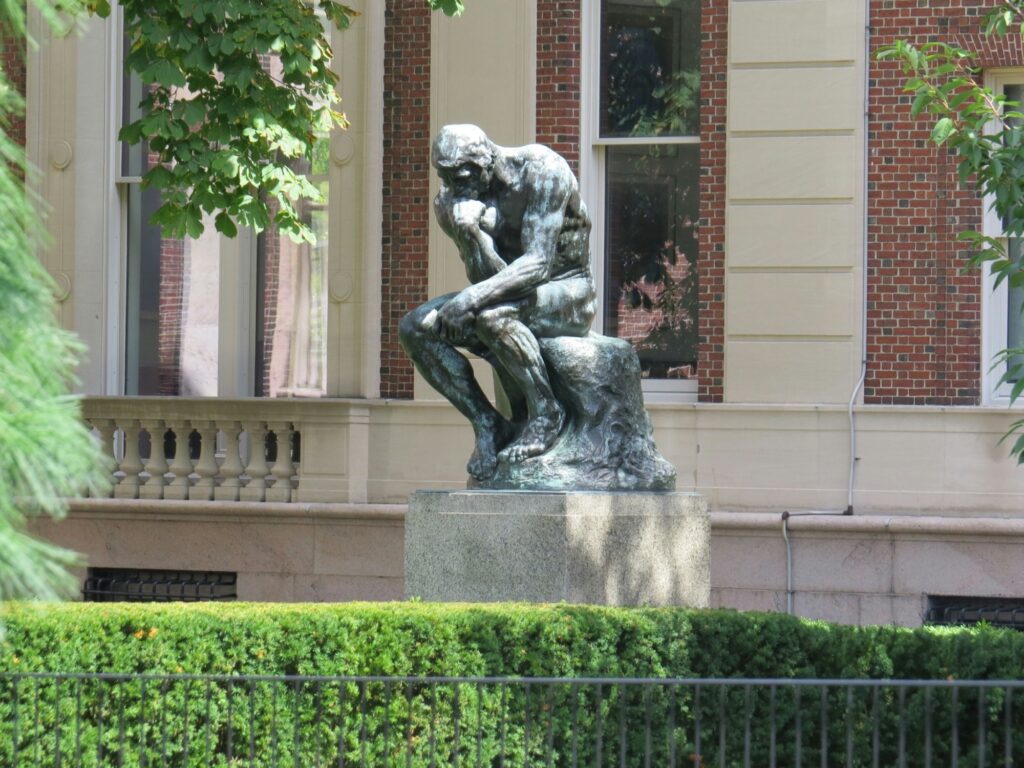
- Opening image — a Berlin lecture hall in 1820, or a bronze thinker hunched over an unfinished argument. No mention of the topic yet.
- The pivot to thesis — name the topic, name Hegel, state the thesis in one sentence.
- Define the terms — what does “real” mean (mere existence or actuality-in-its-essence), what does “rational” mean (logical, lawful, justifiable to others).
- Hegel proper — one careful gloss of Elements of the Philosophy of Right, the unfolding of reason in history, institutions as embodied rationality.
- Indian anchor — Nyaya’s pramana, the Buddhist logicians, Charvaka empiricism, Ambedkar’s constitutional morality. India’s own long argument for reasoned reality.
- Modern reason as method — science presupposing a lawful cosmos, jurisprudence reconstructing facts, economics assuming rational agents.
- Constitutional reasonableness — Article 14’s “reasonable classification”, Article 19’s “reasonable restrictions”, the judicial standard of arbitrariness. Reason translated into operative law.
- The complication — markets and minds — Kahneman, Thaler, behavioural economics; the 2008 crisis; mob psychology and pandemics. Where the real refuses to be rational.
- The deeper complication — instrumental reason — Marx’s inversion, the Frankfurt school, the Holocaust as the industrialisation of unreason in the guise of method.
- Counter-argument handled — feminist and post-colonial questions: whose reason, defined by whom. Answered, not dismissed.
- Way forward — institutional — evidence-based policy, NITI Aayog indices, RBI stress tests, public reason in democratic discourse.
- Way forward — civic — Article 51A(h) and scientific temper, a school curriculum that teaches reasoning over rote.
- Closing image — return to the bronze thinker or the Berlin hall, close with one resonant line.
How to make an examiner stop and read
An essay examiner reads several hundred scripts in a sitting. The first paragraph decides whether they read the second with attention or with autopilot. Four small habits separate the essays that get attention from the ones that get skimmed.
- Open with a scene, not a statement. A Berlin lecture hall in 1820, a Mumbai trading floor in October 2008, a Nyaya debate in a Mithila courtyard. Concrete images cost no marks and earn attention.
- Use the topic phrase itself two or three times across the essay. Once in the thesis, once at the turn, once at the close. It signals discipline and prevents drift.
- Vary sentence length. A short sentence after three long ones lands. Examiners feel rhythm before they parse meaning.
- End paragraphs with the takeaway, not with examples. Place the example mid-paragraph. Let the last sentence be the thought, so the reader carries it into the next paragraph.
The complete essay — “The real is rational and the rational is real”
What follows is a 1,200-word model essay built on the blueprint above. Read it twice — once for the argument, once for the moves. The moves are what you can carry into your own essay; the argument is one of many you could make.
On a winter afternoon in Berlin in 1820, a stooped professor stood before a hall of students and offered them a sentence they would still be arguing about two centuries later. “What is rational is actual,” he said, “and what is actual is rational.” The sentence appears in the Preface to his Elements of the Philosophy of Right, and its author, Georg Wilhelm Friedrich Hegel, meant it as the keystone of an entire philosophy of history. For two hundred years it has been read as a defence of whatever exists, attacked as a defence of whatever exists, and quietly used by judges, economists and reformers who would never name it.
The aspirant who picks this topic — “the real is rational and the rational is real” — must hold two truths together. The maxim is at once obviously right and obviously wrong. Right: every lasting institution and every working machine has reason built into it, or it would not work. Wrong: markets crash, mobs lynch, pandemics outrun every model, and much that is real is plainly absurd. A serious essay refuses to choose. It reads Hegel’s line not as a verdict on the world but as a demand on it: the real becomes worthy of being called rational only to the degree that reason is patiently built into its institutions.
Some careful definitions help. “Real” in Hegel does not mean every fleeting fact; he distinguished wirklich — that which has unfolded into its essence — from mere existence. A tyranny exists, but for Hegel it is not yet fully real; a constitutional order that secures freedom is real in his stricter sense. “Rational” likewise is wider than logic; it means lawful, intelligible, justifiable to others by reasons that they could in principle accept. With those distinctions in place, the maxim stops sounding like a celebration of whatever happens and begins sounding like a programme.
Hegel’s own gloss is that reason is not a private possession but a historical process. Geist — spirit, mind — unfolds in time through families, civil society, the state, art, religion and philosophy. Institutions are not external furniture decorated with reason; they are reason that has taken durable form. A law against arbitrary detention is reason solidified into a writ. A scientific journal is reason solidified into peer review. The constitutional state, on this reading, is rationality made real, and it is real only because it is rational.
India never needed to wait for Hegel to take this question seriously. The Nyaya school built one of the world’s earliest theories of valid knowledge, the pramanas — perception, inference, comparison, testimony — long before Berlin had a university. Mimamsa hermeneutics worked out rules for interpreting contested texts that legal scholars still admire. Buddhist logicians Dignaga and Dharmakirti formalised inference centuries before modern logic was christened. The Charvaka empiricists insisted that nothing be believed without evidence. And in our own century, B. R. Ambedkar argued in the Constituent Assembly that the new republic must rest on “constitutional morality” — reasoned argument — rather than the morality of custom. India’s claim that the real is rational is not borrowed; it is part of the inheritance.
Modern institutions everywhere take the maxim for granted, even when they have never read it. Science assumes a lawful universe; if causes did not regularly produce their effects, experiments would not work and aircraft would not fly. The courtroom assumes that scattered facts can be rationally reconstructed into a coherent account; cross-examination is reason at work. Economics builds its models on agents who weigh costs against benefits, the rational chooser at the heart of every demand curve. None of these systems would survive the abandonment of Hegel’s intuition; all of them act as though it were already true.
The Indian Constitution writes the same intuition into operative law. Article 14’s guarantee of equality before the law is interpreted to permit only “reasonable classification” — a distinction the courts will accept only if it rests on an intelligible ground related to the law’s purpose. Article 19’s freedoms are limited only by “reasonable restrictions”. The doctrine of arbitrariness — that what is arbitrary is therefore unconstitutional — runs through fifty years of judicial review. The Constitution does not merely permit reason; it demands it as a test for the validity of the real.
Yet the real refuses to behave. Half a century of behavioural economics, from Herbert Simon’s bounded rationality through Daniel Kahneman’s prospect theory to Richard Thaler’s nudge programme, has shown that flesh-and-blood agents systematically depart from the textbook chooser. Stock markets swing on rumour, housing bubbles inflate against every fundamental, the 2008 crisis crashed institutions that had been priced as triple-A. Pandemics outrun the models that were built to anticipate them. Crowds at festivals make decisions no individual member would defend an hour later. Wherever we look closely, the real shows up clothed in some species of unreason.
The deeper complication is older than behavioural science. Karl Marx famously inverted the maxim: what exists may be unjust and demand transformation rather than justification. The Frankfurt theorists who followed him went further, warning that “instrumental reason” — reason narrowed to means without ends — can itself become a tool of unfreedom, and pointed to the Holocaust as modern method placed in the service of utter unreason. To say with Hegel that the real is rational is to invite Marx’s question: rational for whom, and at whose expense.
It might be objected from feminist and post-colonial scholarship that the very category of “reason” has long been defined by particular Europeans, particular men, particular elites, and used to discredit other ways of knowing. The objection is partly right and entirely useful: a reason that cannot examine its own boundaries is not reason but prejudice in disguise. But the answer is not to abandon reason; it is to widen the circle of those whose reasoning counts, which is exactly what democratic politics, universal franchise and the slow opening of academies are for.
For an institution, the maxim points to a practical programme: evidence-based policy, not anecdote; transparent indices like the NITI Aayog’s health and education scoreboards; RBI stress tests that price risk before it prices the system; a public discourse where representatives offer reasons their opponents could in principle accept. None of these guarantees a rational outcome. All of them make a rational outcome more likely than its alternatives.
For the citizen, the maxim points to Article 51A(h) — the Fundamental Duty to develop “scientific temper, humanism and the spirit of inquiry and reform”. It points to a school curriculum that teaches reasoning rather than recitation, to a media that asks for sources, to a household that does not punish a child for asking why. The real becomes rational not all at once, and never on its own, but through countless small acts of reasoning practised by people who refuse to leave the world the way they found it.
Return for a moment to the Berlin hall, and to the bronze thinker who has since become its image. The sentence Hegel offered his students was not a verdict but an invitation: see what the world could be if reason were allowed its slow, patient work in it. The real is rational and the rational is real — but only to the degree that each generation chooses to make it so. The duty of a republic is to keep choosing.
Word count: approximately 1,200.
How to use this model essay
Do not memorise it. Memorised essays read like memorised essays, and examiners spot them in two paragraphs. Use the model the way a chess student uses a master game: study the opening move, the pivot to thesis, the careful Hegel gloss, the placement of the Indian anchor, the way the counter-argument is brought up and then closed. Then take a related abstract topic — try “Forests are the best case studies for economic excellence” or “The time to repair the roof is when the sun is shining” — and write your own essay using the same blueprint. Repeat that exercise eight to ten times and the structure becomes muscle memory. On the day of the exam, the only thing you should have to think about is the topic itself.
Books quoted in this essay
Thinking, Fast and Slow, Daniel Kahneman. Where System 1 and System 2 come from.
Tell Google you want more of this.
Add Anantam IAS as a preferred sourceOne tap, and this site shows up more often in your own Top Stories, AI Overviews and AI Mode. Remove it any time.