Disclosure: this guide contains Amazon affiliate links. As an Amazon Associate, Anantam IAS earns from qualifying purchases — at no extra cost to you.
“The supreme art of war is to subdue the enemy without fighting” appeared as Topic 2 of Section A in the UPSC Civil Services Mains Essay paper held on 22 August 2025. Six lines on a question paper, a 2,500-year-old line from Sun Tzu, and 125 marks waiting on the other side of 90 minutes. This guide breaks the topic down the way it should be tackled in the hall — the meaning, the angles, the time map, the paragraph-by-paragraph plan, and finally a complete 1,200-word model essay you can dissect and adapt.
When this was asked and what UPSC is really testing
The topic was set in UPSC CSE Mains 2025, Essay paper, Section A. Three hours, two essays, one from each section, roughly 1,000 to 1,200 words each, 125 marks per essay. The quote comes from chapter three of Sun Tzu’s The Art of War, written in the fifth century BCE — a philosophical-strategic prompt with deep GS II and GS III overlaps if you choose to use them.
UPSC is testing four things at once. One, can you read a strategic aphorism and convert it into a thesis that goes beyond the obvious “diplomacy is better than war.” Two, can you move between Kautilya, Clausewitz, Gandhi, nuclear doctrine, cyber-warfare and district-level mediation without sounding like a coaching handout. Three, can you hold a counter-argument — that sometimes you must fight — and not collapse into pacifist preaching. Four, can you discipline 1,200 words around a single spine. The aspirant who handles all four scores in the 130s. The aspirant who treats it as a peace sermon scores in the 90s.
Five angles that unlock “The supreme art of war is to subdue the enemy without fighting”
The trap with a famous quote is to praise it for 1,100 words. The mark-pulling answer instead identifies several lenses, names them clearly, and weaves them. Here are the five most defensible readings of Sun Tzu’s line. You do not need all five — three, handled well, is the sweet spot. But you should know all five so your choice is conscious.
- Strategic and military — deterrence theory. Cold War mutually assured destruction, India’s declared no-first-use nuclear doctrine, credible second-strike capability, modern grey-zone tactics — cyber operations, information warfare, lawfare. The enemy is subdued because the cost of fighting has been made unbearable in advance.
- Indian statecraft — Kautilya’s Arthashastra lays out the shadgunya and the four upayas — sama (conciliation), dana (gift), bheda (dissension) and danda (force). Force is the last instrument, used only when the first three fail. Ashoka’s pivot to dhamma vijaya after Kalinga is the most dramatic Indian instance of preferring the un-fought victory.
- Diplomatic and economic — soft power, pandemic-time vaccine diplomacy, the International Solar Alliance, the Coalition for Disaster Resilient Infrastructure, Act East, the Quad as deterrence without confrontation, BRICS expansion in 2024, supply-chain de-risking through the PLI scheme and the semiconductor mission. States today subdue rivals through markets, currencies and standards more often than through tanks.
- Moral and Gandhian — the most successful subdue-without-fighting campaign in modern history was Satyagraha. An empire on which the sun did not set was outlasted by an unarmed lawyer in a loincloth. Compared with armed independence struggles that took longer and cost more lives, the Indian freedom movement remains the strongest empirical case for Sun Tzu’s maxim in the moral register.
- Civic and administrative — the maxim does not live only in chancelleries. A district magistrate who anticipates a communal flashpoint and convenes a peace committee, a Lok Adalat that closes ten thousand small disputes in one sitting, a block development officer who routes a grievance before it becomes an agitation — each subdues a potential enemy without ever raising a baton.
A strong essay picks angles 2, 4 and 5 as its Indian spine, uses 1 as the contemporary strategic frame, and brings in 3 as the way forward. Add one honest counter-current — that some enemies cannot be subdued without fighting — and the essay has rhythm: thesis, complication, resolution.
A time map for the 1,500-second window
One essay deserves about 75 to 90 minutes inside the three-hour paper. Spending more on Essay 1 starves Essay 2. The single biggest source of below-100 essay scores is poor time discipline — beautiful introductions, panicked conclusions. Use a rough breakdown like this:
| Minutes | Activity | What it earns you |
|---|---|---|
| 0 — 10 | Decode the quote. Write the thesis in one line. List 4 to 5 angles. Pick 3. | Direction. The single most important investment of the 90 minutes. |
| 10 — 18 | Brainstorm examples — Kautilya, Ashoka, Cold War, Satyagraha, district-level cases. | The substance the body paragraphs will run on. |
| 18 — 22 | Draft a paragraph-level outline — 12 to 15 bullets, in sequence. | Prevents the mid-essay drift that kills 60% of attempts. |
| 22 — 80 | Write the essay — opening, body, counter, conclusion — without re-planning. | The actual marks come from this window. Protect it. |
| 80 — 85 | Read the conclusion. Tighten the last two sentences. Fix factual errors. | Conclusions are over-weighted by examiners. A clean ending saves 5 marks. |
Notice what is not on the list: rewriting the introduction halfway, hunting for the perfect quote, fancy diagrams, decorative underlining. None of that earns marks. Discipline does.
What to add — and what to avoid at all costs
The essay paper rewards what most aspirants under-do and punishes what most aspirants over-do. Memorise this list before you walk into the hall.
Add liberally
- One precise thesis, stated by the end of paragraph two and not abandoned. “The supreme art of war is not the avoidance of conflict but the design of conditions in which the adversary chooses not to fight; statecraft, deterrence and moral force are its three instruments.”
- Concrete examples across three or four domains — one classical (Kautilya’s four upayas, Ashoka after Kalinga), one modern strategic (Cold War deterrence, no-first-use, grey-zone warfare), one Indian-civic (Lok Adalats, district peace committees, vaccine diplomacy) and one moral-historical (Satyagraha, Mandela’s negotiated transition).
- Two or three short, named quotes — Sun Tzu himself, Kautilya on sama-dana-bheda-danda, Gandhi on the means and the end. One per major section is enough.
- One Indian philosophical anchor. The Bhagavad Gita’s defence of dharma yuddha when other paths fail, balanced against Ashoka’s renunciation, or the Mahabharata’s account of Krishna’s repeated peace embassies before Kurukshetra. Examiners read 300 essays a day; a substantive Indian anchor stands out.
- Counter-argument handled honestly. Munich 1938 taught the world that some enemies do not respond to conciliation. The 1962 reverse with China taught India that goodwill without capability is naïveté. Acknowledge it; resolve it in two lines.
- A clean conclusion that returns to the opening image — not a fresh argument, not a new example.
Avoid — even when tempted
- Restating the quote in the first sentence. “Sun Tzu’s profound saying that the supreme art of war…” — this signals that you have nothing to add. Open with a scene or a paradox.
- Drifting into a single domain. A 1,100-word essay only on nuclear deterrence, or only on Gandhi, looks like a GS answer. Range matters.
- Unsourced statistics. “India avoided 92% of border incidents through dialogue” — if you cannot name the source, do not write the number. Examiners cross-mark this.
- Hot-button political examples. The Essay paper is graded by humans across the ideological spectrum. Naming current parties, leaders or operations introduces avoidable risk. Use the institution, not the personality.
- Decorative scholar-dropping. Citing Clausewitz, Mearsheimer and Kissinger in one paragraph to look serious. One thinker, used well, beats four named in passing.
- Moralising. “We must all choose peace over war” reads like a school speech. The essay paper rewards examination, not exhortation.
A paragraph-by-paragraph blueprint
Twelve paragraphs at roughly 95 words each gets you to 1,140. Thirteen at 90 gets you to 1,170. Either works. What follows is a 13-paragraph plan that maps cleanly onto the model essay below. Each line is what that paragraph is doing, not what it is saying.
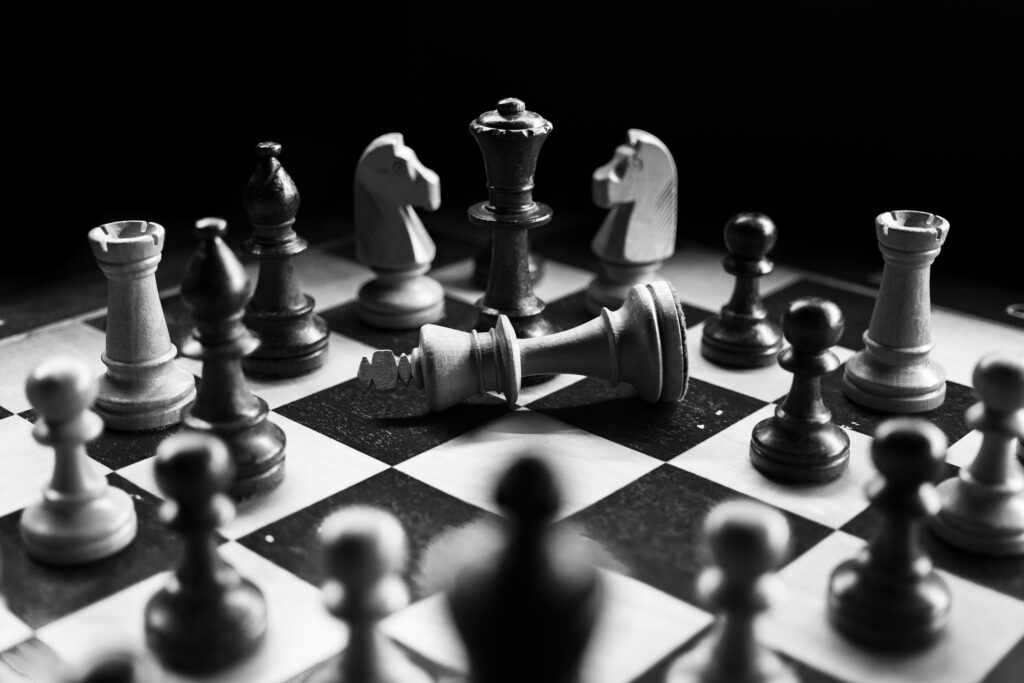
- Opening image — Ashoka surveying the dead at Kalinga, or a chessboard at the moment of resignation. Physical, not abstract. No mention of the topic yet.
- The pivot to thesis — name Sun Tzu and the topic, then state the thesis in one sentence.
- Define the terms — what is “war” here (kinetic, economic, informational), what is “subdue” (defeat, dissuade, co-opt), why “supreme art” matters.
- Kautilya as the Indian Sun Tzu — sama, dana, bheda, danda; the four upayas in sequence; force as the last resort.
- Ashoka after Kalinga — the historical pivot from digvijaya to dhamma vijaya. Soft power before the phrase existed.
- Modern strategic frame — deterrence — the Cold War, India’s no-first-use posture, credible second-strike. Subduing through cost-imposition, not engagement.
- The new grey zone — cyber, information operations, lawfare, economic statecraft. The battlefield has moved.
- The diplomatic-economic instruments — vaccine diplomacy, the International Solar Alliance, the Quad, supply-chain de-risking. India practising the maxim.
- The moral register — Satyagraha — the unarmed defeat of the largest empire in history. The proof that subdue-without-fighting is not only realist craft.
- The civil-services translation — district peace committees, Lok Adalats, restorative justice, the magistrate who reads a tension before it ignites.
- Counter-argument handled — Munich 1938, 1962, the limits of conciliation when the adversary is not deterrable. The maxim presumes credible capability.
- Way forward — soft power investment, intelligence depth, cyber defence, economic statecraft training in the Foreign Service, Track-II diplomacy, civic education.
- Closing image — return to Ashoka, or to the chessboard, with one resonant line.
How to make an examiner stop and read
An essay examiner reads several hundred scripts in a sitting. The first paragraph decides whether they read the second with attention or with autopilot. Four small habits separate the essays that get attention from the ones that get skimmed.
- Open with a scene, not a statement. Ashoka on the field at Kalinga, a chessboard at resignation, a vaccine consignment lifting off a Mumbai runway. Concrete images cost no marks and earn attention.
- Use the topic phrase itself two or three times. Once in the thesis, once at the turn, once at the close. It signals discipline and prevents drift.
- Vary sentence length. A short sentence after three long ones lands. Examiners feel rhythm before they parse meaning.
- End paragraphs with the takeaway, not with examples. Place the example mid-paragraph. Let the last sentence be the thought, so the reader carries it into the next paragraph.
The complete essay — “The supreme art of war is to subdue the enemy without fighting”
What follows is a 1,200-word model essay built on the blueprint above. Read it twice — once for the argument, once for the moves. The moves are what you can carry into your own essay; the argument is one of many you could make.
In 261 BCE, an emperor stood on the battlefield of Kalinga and counted the dead. One hundred thousand killed, the chronicles say; one hundred and fifty thousand deported. Ashoka had won. He returned to Pataliputra, sat with his conscience, and converted his victory into its opposite. The remaining decades of his rule were spent dispatching envoys of dhamma, not armies, as far as Greece and Sri Lanka. The emperor who could have conquered more chose instead to subdue without fighting, and the empire he ruled by that principle outlasted the wars he had stopped fighting.
A Chinese strategist five centuries earlier had given it its sharpest formulation. “The supreme art of war is to subdue the enemy without fighting,” Sun Tzu wrote in The Art of War around 500 BCE. The line has travelled into every modern war college and every diplomatic memoir because it captures a paradox at the heart of statecraft: the most successful war is the one that never has to be waged. The thesis of this essay is that the maxim is neither pacifism nor cynicism — it is a discipline that combines credible deterrence, patient statecraft and moral persuasion, and it must be earned in advance of the day the enemy decides whether to attack.
Some careful definitions help. “War” here is wider than kinetic combat. It includes economic coercion, cyber intrusion, information operations and lawfare — the so-called grey zone where modern rivalries are largely fought. “Subdue” does not mean annihilate; it means render the adversary unwilling, unable or uninterested in continuing the contest. And “supreme art” is doing a quiet load-bearing job in the sentence — it tells us this is the highest achievement of statecraft, not its absence. Anyone can break a window. The harder craft is to make sure the stone is never thrown.
India was working out this craft in parallel with Sun Tzu, in Chandragupta Maurya’s court. Kautilya’s Arthashastra set out four instruments of foreign policy in sequence — sama or conciliation, dana or material concession, bheda or the cultivation of dissension inside the rival camp, and danda, force, only when the first three failed. It is remarkably modern. A foreign service that exhausts sama and dana before reaching for danda is following Kautilya without naming him. The framework is older than Westphalia and is still better than most twentieth-century alternatives.
Ashoka’s pivot after Kalinga is the most dramatic Indian instance of the maxim in action. Where his grandfather had unified the subcontinent by the sword, Ashoka extended his influence by the carved edict, the Buddhist mission and the road built for the traveller. His reach, measured in cultural diffusion, was greater than what continued conquest would have produced. The lesson is not that war is always wrong; it is that the dividends of an un-fought victory compound in ways the dividends of a fought one rarely do.
Two and a half millennia later, the maxim found its starkest expression in nuclear deterrence. The Cold War did not end in mushroom clouds because both sides had made the cost of the first move incalculable. India’s nuclear posture — a declared no-first-use, an assured retaliation capability, a survivable arsenal — is recognisably the same logic in a different idiom. The Indian doctrine subdues by signalling that an attack will not pay, not by inviting one. Deterrence is a paradox: the weapon never used, in order that the weapon never have to be used.
The battlefield, however, has moved. Today’s contests are fought in undersea cables, semiconductor fabs, currency markets, social-media feeds and international tribunals. The grey zone — cyber operations against critical infrastructure, information operations against electorates, lawfare in international forums, economic coercion against supply chains — has become the routine ground of major-power competition. A state that loses here loses without ever hearing a rifle shot. Sun Tzu’s maxim has not aged; it has only changed instruments.
India has been practising the new instruments. The vaccine consignments dispatched to nearly a hundred countries during the pandemic were a strategic act as much as a humanitarian one. The International Solar Alliance, the Coalition for Disaster Resilient Infrastructure and the Quad operate as platforms of quiet authority and deterrence without confrontation. The Production-Linked Incentive scheme and the semiconductor mission are economic statecraft aimed at supply-chain leverage. Each is an instance of subduing — of shaping the field so the cost of opposition rises while the cost of cooperation falls.
The maxim’s most spectacular modern proof was not strategic but moral. Mohandas Gandhi led an unarmed movement that outlasted an empire on which the sun did not set. Compared with armed independence struggles elsewhere, which took longer and cost more lives, Satyagraha was the cheapest and the most permanent transfer of power in modern history. It earns its place here because it shows that subdue-without-fighting is not only the craft of generals and ambassadors; it can be the craft of a colonised people if the instruments — moral clarity, mass discipline, refusal to mirror the adversary’s violence — are present.
The same logic runs through the everyday work of civil administration. A district magistrate who convenes a peace committee a week before a religious procession defuses a riot that would have made headlines. A Lok Adalat that settles ten thousand small disputes in a sitting prevents the slow violence of pending litigation. A block development officer who routes a grievance to the right desk before it becomes an agitation has, in Sun Tzu’s sense, subdued an enemy without fighting. The maxim describes governance as much as it describes war.
It would be naïve to leave the argument here. History also remembers Munich in 1938, when conciliation without capability invited the war it sought to prevent. India learned its own version of that lesson in 1962, when goodwill toward a neighbour was not matched by readiness on the ridge. The maxim is therefore not an injunction against fighting; it is a demand that the capacity to fight be so manifest that the adversary calculates against it. The dove without a credible talon is not Sun Tzu — it is prey.
The way forward, for India and for any state that takes the maxim seriously, is therefore a portfolio. Continue to invest in conventional and strategic capability so that deterrence remains credible. Deepen the soft-power instruments — culture, education, public health, climate finance — because they are the cheapest way to make adversaries into partners. Train the Foreign Service in economic statecraft, not only protocol. Harden cyber defences. Build intelligence depth. Sustain Track-II channels so that quiet conversation is always available when public speech is not. And in the everyday republic, equip district administrations to mediate disputes long before they reach the police station.
Return for a moment to Ashoka in the aftermath of Kalinga. He had the army, the treasury and the appetite for further conquest. What he did not have, until that day, was the imagination to see that the unfought war is the greatest war won. The supreme art of war, Sun Tzu wrote, is to subdue the enemy without fighting. The republic that learns that lesson — in its doctrine, in its diplomacy, in its district headquarters — does not abandon strength. It elevates strength into something rarer: the strength that does not need to be used.
Word count: approximately 1,200.
How to use this model essay
Do not memorise it. Memorised essays read like memorised essays, and examiners spot them in two paragraphs. Use the model the way a chess student uses a master game: study the opening image, the pivot to Sun Tzu, the placement of the Kautilya anchor, the way the deterrence frame is set up before the moral register arrives, the discipline of the counter-argument paragraph, the closing return to Ashoka. Then take a different 2025 essay topic — try “Truth knows no color” or “Best lessons are learnt through bitter experiences” — and write your own essay using the same blueprint. Repeat that exercise eight to ten times and the structure becomes muscle memory.
Books quoted in this essay
The Arthashastra, Kautilya (Penguin).
The Bhagavad Gita, Eknath Easwaran’s translation. The plain-English edition most essay readers start with.
Tell Google you want more of this.
Add Anantam IAS as a preferred sourceOne tap, and this site shows up more often in your own Top Stories, AI Overviews and AI Mode. Remove it any time.