The Forest (Conservation) Amendment Act, 2023 — formally the Van (Sanrakshan Evam Samvardhan) Adhiniyam — is the most contested environmental legislation of the decade. It narrows the definition of "forest" that triggers the parent Act's protections, carves out large exemptions for border infrastructure, and expands the range of activities permissible inside forest land. Supporters call it a pragmatic update for national security and ease of doing business. Critics call it a rollback of the 1996 Godavarman ruling. UPSC has already begun probing both sides. This note consolidates the Act, its rules, and the controversies in a single UPSC-ready read.
Background: the 1980 Act and the Godavarman judgment
The Forest (Conservation) Act, 1980 (FCA) was enacted to check the rampant diversion of forest land to non-forest uses that had accelerated after independence. Its operative clause — Section 2 — bars state governments from de-reserving any reserved forest or permitting its use for non-forest purposes without the prior approval of the Central Government.
For sixteen years, the Act covered only lands recorded as "forest" under various state forest laws. Then came T N Godavarman Thirumulpad v. Union of India (1996). The Supreme Court held that the word "forest" in the FCA must be understood in its dictionary meaning — any area that looks like a forest, regardless of ownership, notification, or official records. This extended FCA protection to unclassed forests, private forests, deemed forests, and forest-like lands — effectively doubling the Act's reach overnight.
The 2023 amendment represents, in part, an attempt to walk back the Godavarman interpretation.
What the 2023 amendment actually changes
1. Narrowed definition of "forest"
The amended Act applies to only two categories of land:
- Land declared or notified as a forest under the Indian Forest Act, 1927, or under any state law, on or after 25 October 1980; and
- Land recorded as forest in government records on or after 25 October 1980.
Land that changed hands from forest to non-forest use before 12 December 1996 is excluded from the Act entirely — a direct statutory carve-out from the Godavarman ruling.
2. Exempted projects
Several categories are exempted from the requirement of prior Central approval:
| Category | Exemption |
|---|---|
| Strategic/security projects near borders | Within 100 km of any international border or Line of Control / Line of Actual Control |
| Small defence/paramilitary projects | Up to 10 hectares anywhere |
| Security-related projects in LWE areas | Up to 5 hectares for projects in Left-Wing Extremism affected zones |
| Linear public utility projects | Roadside amenities up to 0.10 hectare; railway lines up to certain width |
3. Expanded permitted activities
Activities permissible on forest land now include:
- Zoos and safaris owned by the government or any authority;
- Eco-tourism facilities;
- Silvicultural operations;
- Any survey/reconnaissance activity notified by the Centre.
4. Centre's direction-issuing power
The Centre can now issue directions to any authority or organisation under or recognised by the Centre, a state, or a UT for the Act's implementation. This centralises operational control.
The Forest Conservation Rules, 2022 — the procedural twin
In tandem, the MoEFCC notified the Forest (Conservation) Rules, 2022. These superseded earlier rules and operationalise Section 2. Salient features include:
- Project Screening Committee in each State/UT — a 5-member body reviewing proposals; must meet at least twice a month.
- Compliance with the Forest Rights Act, 2006 is shifted to state governments — earlier the Centre required Stage II clearance to be conditional on FRA compliance. Critics argue this dilutes FRA protection.
- Gram Sabha consent is no longer a procedural requirement for prior Central approval. The 2016 Rules had embedded this consent requirement; it has been removed.
- Compensatory afforestation in other States/UTs is permitted: forest land diverted in a hilly/mountainous state with >2/3 forest cover can be compensated in another state with <20% forest cover.
- Accredited compensatory afforestation — a new market-style mechanism allowing private landowners (≥10 ha, trees ≥5 years old, canopy density ≥0.4) to sell "afforestation credits".
- Land banks under forest departments — minimum 25 ha, unrestricted if contiguous with a forest/tiger reserve/wildlife corridor.
Key criticisms and challenges
1. Godavarman dilution
By excluding land not recorded as forest after 1980, the Act may leave vast stretches of unclassed, deemed, and community forests — especially in the North-East and tribal belts — outside statutory protection.
2. Border 100-km exemption
The 100-km blanket exemption along international borders particularly affects the North-East, Himalayan states, and parts of Ladakh — precisely the ecologically fragile and biodiversity-rich zones. Critics argue project-by-project scrutiny would be wiser than a blanket carve-out.
3. Zoos and safaris in protected areas
In In Re: Conservation of Forest Lands (2023), the Supreme Court questioned the logic of allowing zoos and safaris inside tiger reserves and national parks. The Court has since stayed specific tiger-safari proposals.
4. Tribal rights and FRA dilution
Shifting FRA compliance to state governments — without Central Stage-II linkage — risks weakening forest dwellers' statutory rights under the Scheduled Tribes and Other Traditional Forest Dwellers (Recognition of Forest Rights) Act, 2006.
5. Constitutional concerns
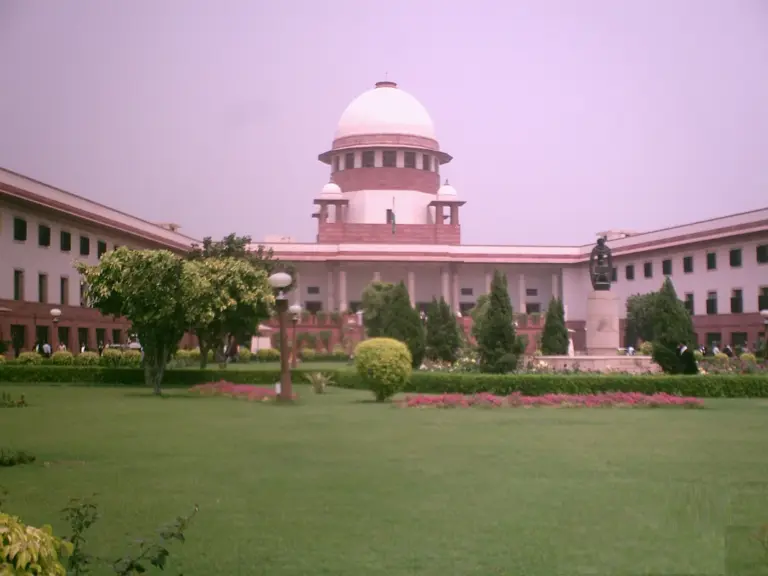
A Supreme Court petition (filed 2024) challenges the amendment on the ground that it negates the Godavarman ruling without a constitutional amendment. The case is being heard by a Bench led by the Chief Justice of India.
Latest developments (2024–26)
Updated context: Use these as pointers; candidates should confirm specific numbers with the latest ISFR 2023/2025 and MoEFCC releases.
- Supreme Court interim order (February 2024) directed all Union Territories and states to treat as forests all areas earlier identified as "dictionary-meaning" forests under Godavarman, pending final hearing — a partial reversal of the amendment's effect.
- ISFR 2023/2025 updates — India's total forest and tree cover around 25.17% (2023), up marginally; quality concerns persist as open forest grows faster than dense forest.
- Great Nicobar Project — revived holistic transshipment terminal and airport project on Great Nicobar Island cleared under Forest Conservation Rules; environmental critics have challenged the clearance.
- Biosphere reserve additions (2024) — Sharavathi Valley (Karnataka) and Khecheopalri (Sikkim) under India's MAB list; no new UNESCO additions in 2024.
- Forest Conservation Amendment rollout — State Project Screening Committees now fully operational across most states; initial audits suggest faster approvals for sub-10-ha projects.
FCA vs FCA-Amended — at a glance
| Feature | FCA 1980 (pre-2023) | Amended Act 2023 |
|---|---|---|
| Forest coverage | Broad Godavarman sense | Notified/recorded forests post-1980 |
| Border exemptions | Case-by-case | Blanket, up to 100 km |
| Tourism/zoos in forests | Case-by-case | Blanket permission |
| Gram Sabha consent | Required under Rules | No longer mandatory |
| FRA Stage-II link | Central requirement | Shifted to states |
| Compensatory afforestation | State-specific | Inter-state allowed |
India's wider forest legal ecosystem
| Law | Role |
|---|---|
| Indian Forest Act, 1927 | Categorisation: reserved / protected / village forests |
| Forest (Conservation) Act, 1980 (amended 2023) | Controls diversion |
| Scheduled Tribes and Other Traditional Forest Dwellers Act, 2006 | Forest rights |
| Compensatory Afforestation Fund Act, 2016 (CAMPA) | Fund management |
| Biological Diversity Act, 2002 (amended 2023) | Genetic resources |
UPSC relevance
GS-III mapping
Maps to Conservation, environmental pollution and degradation, environmental impact assessment.
Prelims bullets
- CAMPA is the compensatory afforestation fund mechanism, statutorily backed in 2016.
- Under the 2023 amendment, the 100-km border exemption covers projects of national importance.
- Accredited compensatory afforestation requires ≥10 ha, trees ≥5 years, canopy density ≥0.4.
- Project Screening Committee is a State-level body.
- Godavarman (1996) read "forest" in its dictionary sense.
Mains angles
- "The Van (Sanrakshan Evam Samvardhan) Adhiniyam 2023 prioritises ease of doing business over ecological prudence. Critically examine."
- "Discuss the constitutional and environmental implications of excluding unclassed forests from the Forest Conservation Act."
- "Evaluate the impact of the 100-km border exemption on biodiversity and indigenous communities in the North-East."
Essay hooks
- Development vs ecology — the recurring Indian dilemma.
- Federal balance in environmental governance after the 2023 amendment.
- Forests as climate assets: carbon stock, hydrological function, Adivasi livelihoods.
The 2023 amendment has not abolished the FCA — but it has redrawn its map. For UPSC answers, the safe framing is: the Act modernises the statute while narrowing its ecological footprint, creating a tension that the Supreme Court, not Parliament, may ultimately resolve.
Tell Google you want more of this.
Add Anantam IAS as a preferred sourceOne tap, and this site shows up more often in your own Top Stories, AI Overviews and AI Mode. Remove it any time.