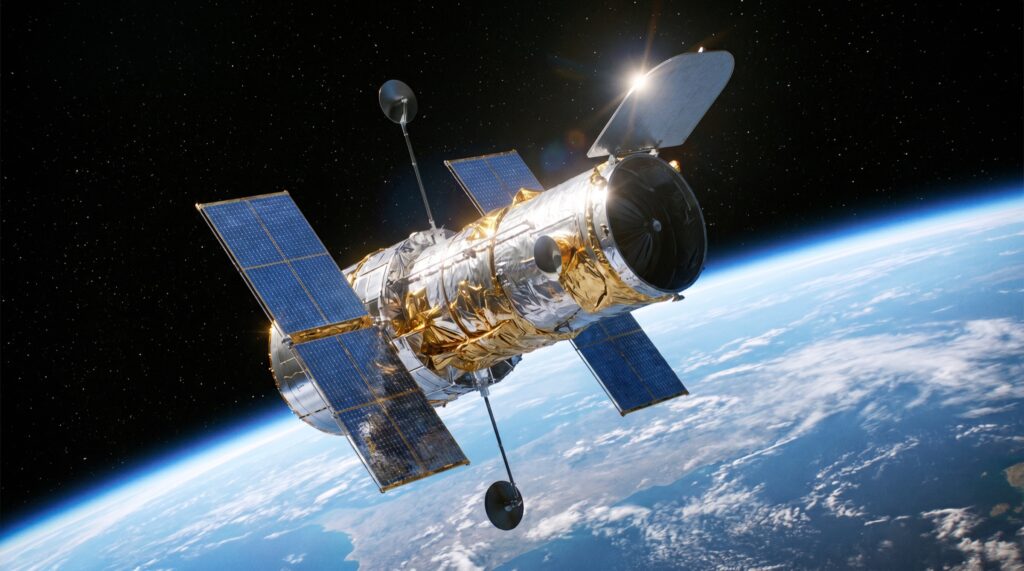
अपनी terrace से night sky की ओर अच्छा telescope point कीजिए और stars twinkle करते दिखेंगे। यह twinkling romantic नहीं, problem है। Earth’s atmosphere air का churning ocean है जो उससे गुजरने वाली हर light ray को bend और blur करती है। इसीलिए best ground observatories भी fine detail देखने में struggle करती हैं। Principle में fix absurdly simple है: telescope को atmosphere के ऊपर रख दीजिए। यही पूरा idea Hubble Space Telescope के पीछे है, school-bus-sized observatory जो 1990 से आपके सिर से करीब 540 kilometres ऊपर orbit कर रही है और humans द्वारा देखी गई universe की sharpest pictures भेज चुकी है।
यहां almost everyone trip करता है। Hubble famous इसलिए नहीं कि यह biggest telescope है, ऐसा नहीं है। इसका main mirror 2.4 metres का है, कई ground-based giants से छोटा। यह इसलिए famous है क्योंकि air view को smudge नहीं कर सकती और क्योंकि day one पर यह almost fail हो गया था, फिर history का most productive scientific instrument बना। ये दो facts सही रखिए और Hubble की बाकी story अपने-आप बैठ जाएगी।
Hubble Space Telescope क्या है और sky के ऊपर क्यों रहता है
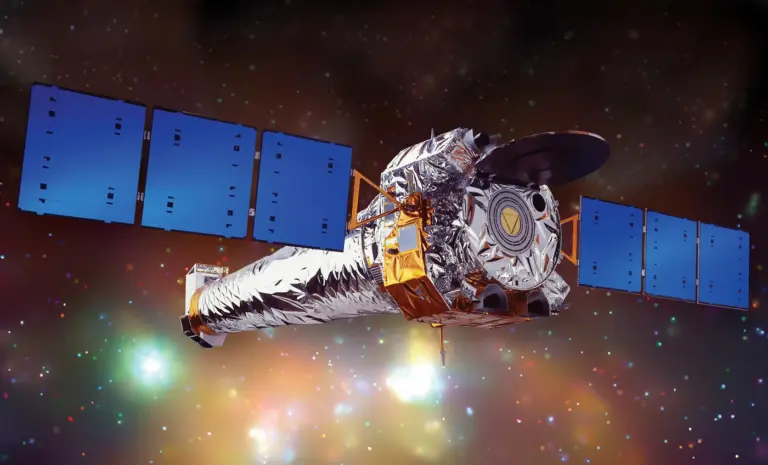
Hubble Space Telescope (HST) large space-based optical और ultraviolet telescope है। इसे 24 April 1990 को Space Shuttle Discovery से launch किया गया और यह American space agency NASA तथा European Space Agency (ESA) का joint project है। यह low Earth orbit में Earth का एक lap करीब 95 minutes में पूरा करता है, उस air layer से काफी ऊपर जो starlight distort करती है।
Altitude ही पूरा point है। Ground पर distant galaxy की light turbulent air, water vapour और pollution से गुजरकर lens तक आती है। Atmosphere ज्यादातर ultraviolet और much infrared light को रोक भी देती है, इसलिए sky के पूरे slices ground से invisible हैं। Telescope को इससे ऊपर उठाने पर दो चीजें साथ होती हैं: images razor-sharp होती हैं और वे wavelengths खुलती हैं जो surface तक पहुंचती ही नहीं। Electromagnetic spectrum revise किया है तो यही उसका concrete version है। Hubble visible, near-ultraviolet और near-infrared bands देखता है, जिन्हें ground telescopes blur या lose कर देते हैं।
Telescope का नाम Edwin Hubble के नाम पर है, उस American astronomer के नाम पर जिसने 1920s में दिखाया कि universe expand हो रही है। Namesake आगे क्या measure करेगा, उसका foreshadowing है। Satellite के हिसाब से यह छोटा नहीं: करीब 13 metres long और 11,000 kilograms, two solar panels से powered और शुरू से astronauts द्वारा visit तथा repair के लिए designed। Serviceable होना ही mission बचाने वाली feature बनी। Satellites के orbits और types compare करते समय Hubble वह rare science satellite है जिसे human hands तक पहुंचने के लिए बनाया गया।
वह flaw जिसने mission को लगभग डुबो दिया और 1993 rescue
Launch के weeks के भीतर Hubble की first images disappointingly fuzzy आईं। Engineers ने blur को main mirror की manufacturing error से जोड़ा। 2.4-metre primary mirror गलत shape में ground हुआ था, उसका edge करीब 2.2 micrometres ज्यादा flat था, human hair की thickness के लगभग one-fiftieth जितना। इतनी छोटी error ने light smear करके telescope का पूरा advantage छीन लिया। Flaw को spherical aberration कहा गया और कुछ समय के लिए यह planet का चक्कर लगाती multi-billion-dollar embarrassment लग रही थी।
यहां रुककर सोचिए, क्योंकि assume करना आसान है कि mirror replace किया गया। नहीं। Orbit में mirror swap नहीं कर सकते। Engineers ने exact error निकाली और उसे cancel करने वाले छोटे corrective mirrors बनाए, जैसे telescope को spectacles prescribe करना। Device का नाम COSTAR था। इसे first servicing mission (SM1) in December 1993 में Space Shuttle Endeavour से ऊपर ले जाया गया। Astronauts ने five spacewalks में COSTAR और नया camera install किया। Corrected images आईं तो Hubble वैसा देखने लगी जैसा उसे देखना चाहिए था।
Rescue ने mission का pattern तय कर दिया। 1993 से 2009 के बीच astronauts ने Hubble पर five servicing missions कीं। Cameras, gyroscopes, batteries और instruments बदले और हर बार telescope पहले से ज्यादा capable छोड़ा। Final visit SM4, May 2009 में Space Shuttle Atlantis से हुआ। उसके बाद कोई spacecraft पहुंच नहीं सका क्योंकि shuttle fleet 2011 में retire हो गई। Hubble का working lesson केवल “telescope air के ऊपर रखो” नहीं है। Repairable instrument perfect instrument से ज्यादा जी सकता है, क्योंकि launch पर कुछ perfect नहीं होता।
वे discoveries जिन्होंने textbooks फिर लिखीं
Hubble की real legacy एक pretty picture नहीं, astronomy textbooks के numbers बदलने वाले results की run है। सबसे बड़े से शुरू करें: universe कितनी पुरानी है। Hubble से पहले estimates 10 से 20 billion years तक wildly अलग थे, क्योंकि universe कितनी तेजी से expand हो रही है, यह तय नहीं था। इस rate को Hubble constant कहते हैं। Galaxies की distances carefully measure करके Hubble ने rate narrow किया और universe की age close to 13.8 billion years पर settle करने में मदद की। इसी measurement से telescope ने अपना नाम दोबारा earn किया।
फिर वह image जिसने scale की समझ बदल दी: Hubble Deep Field। 1995 में astronomers ने tiny, apparently empty patch of sky, Big Dipper के पास, पर telescope point करके shutter ten days तक open रखा। Arm’s length पर sand grain से छोटी वह “empty” patch करीब 3,000 galaxies निकली। हर galaxy billions of stars का city है। Hubble Ultra Deep Field (2004) ने इसे आगे बढ़ाकर करीब 10,000 galaxies capture कीं, जिनकी light 13 billion years से ज्यादा travel करके आई थी। Blank sky की एक pinprick में thousands galaxies हैं तो whole universe में galaxies hundreds of billions तक होंगी। Photograph यह lesson किसी graph से बेहतर सिखाती है।
Hubble ने दो frontier topics भी खोले। 2001 में इसने दूसरे star की orbit करने वाले planet, exoplanet HD 209458b, के atmosphere की first detection की। Planet जब अपने star के सामने से गुजरा, तब उसकी air से filtered starlight को देखना method था। Distant exploding stars, Type Ia supernovae, की observations 1998 की उस discovery में central थीं कि universe की expansion slow नहीं, speed up हो रही है। इसके पीछे mysterious dark energy है। इस finding को 2011 का Nobel Prize in Physics मिला। Big Bang और expanding universe theory के साथ इसे रखें और Hubble वह instrument है जिसने theory को measured fact बनाया।
Hubble और James Webb: rivals नहीं, partners
अब common confusion यह है कि क्या James Webb Space Telescope (JWST), जिसे 2021 के end में launch किया गया, Hubble को replace कर चुका है। नहीं। दोनों अलग kinds of light देखते हैं और बिल्कुल अलग places पर बैठे हैं। उन्हें teammates समझिए जो अलग beats cover करते हैं, old model और upgrade नहीं।
Difference याद रखने का cleanest तरीका छोटी table है।
| विशेषता | Hubble Space Telescope | James Webb Space Telescope |
|---|---|---|
| Launched | 24 April 1990 | 25 December 2021 |
| Main light it sees | Optical (visible) और ultraviolet, साथ में कुछ near-infrared | Mainly infrared |
| Mirror size | 2.4 m | 6.5 m |
| Where it orbits | Low Earth orbit, करीब 540 km ऊपर | Sun-Earth Lagrange point 2, करीब 1.5 million km दूर |
| Serviceable by astronauts | हां (five missions flown) | नहीं, बहुत दूर है |
| Run by | NASA और ESA | NASA, ESA और Canadian Space Agency |
Wavelength split ही main point है। Hubble की strength sharp visible और ultraviolet vision है, जो young, hot stars की light के लिए ideal है। Webb mainly infrared में देखता है। इससे dust clouds के पार और universe की first galaxies की light पकड़ी जा सकती है, जो expansion के कारण infrared तक stretch हो गई है। Webb time में ज्यादा पीछे और dust के पार देखता है, Hubble crisp visible तथा ultraviolet view देता है जो Webb नहीं दे सकता। दोनों एक ही object को अपनी bands में study करके fuller picture देते हैं।
Orbits servicing gap भी समझाती हैं। Hubble इतना पास है कि shuttle dock कर सकती थी, इसलिए five repairs हुईं। Webb 1.5 million kilometres away gravitational balance point पर है, crewed reach से बहुत बाहर। इसलिए उसे first try पर काम करना ही था, rescue mission संभव नहीं था। Notes में एक contrast रखिए: near और fixable बनाम far और untouchable।
Legacy और जब यह finally silent होगी
Launch के three decades से ज्यादा बाद Hubble अभी भी काम कर रही है और उसका record उसे केवल astronomy नहीं, modern science की story का हिस्सा बनाता है। उसने well over 1.5 million observations की हैं और tens of thousands published research papers को data दिया है। यह सबसे productive scientific instruments में से एक है। आज alive ज्यादातर लोगों के लिए glowing nebula या distant galaxies की mental image Hubble image है। Public cosmos को कैसे picture करती है, यह shift खुद legacy है।
Telescope immortal नहीं है। Hubble के पास orbit boost करने का engine नहीं, इसलिए upper atmosphere का thin drag इसे धीरे-धीरे नीचे खींच रहा है। Future mission orbit raise न करे तो 2030s में re-enter करके burn up होने की उम्मीद है। Gyroscopes और instruments भी ageing हैं। Engineers glitches को अब in-person fix करने के बजाय nurse करते हैं, क्योंकि कोई crewed spacecraft currently पहुंच नहीं सकता। Plain judgment यह है कि Hubble long, dignified decline में है: real science अभी हो रही है लेकिन borrowed time पर।
इससे इसका proof कम नहीं होता। ISRO का India का space programme भी इसी spirit में space-based observatories बना रहा है। हर ऐसी observatory Hubble के पहले सिखाए lesson पर खड़ी है: air के ऊपर जाइए और universe focus में आ जाती है।
Hubble को notes में कैसे lock करें
Hubble को पांच anchors पर याद करना efficient है: क्या है और कहां orbit करता है, mirror flaw और 1993 fix, headline discoveries, Webb से contrast और ageing legacy। Almost every worthwhile question इन्हीं पांच का variation है।
“Why above the atmosphere” fact से शुरू करें। Mission का पूरा concept और physics की आपकी existing understanding यहीं जुड़ती है। एक line में कह सकते हैं कि atmosphere light blur और ultraviolet block करती है, तो Hubble के existence की reason तैयार है। फिर clean data points जोड़ें: launch 1990, 2.4-metre mirror, NASA और ESA, करीब 540 km ऊपर।
Hubble-versus-Webb contrast एक page पर रखें, क्योंकि यही comparison test होने और muddle होने की सबसे ज्यादा संभावना है। Optical और ultraviolet बनाम infrared, near orbit बनाम distant balance point, serviceable बनाम not serviceable। अंत में हर discovery को “so what” से जोड़ें: Hubble constant ने universe की age fix की, Deep Field ने दिखाया कि sky कितना crowded है और supernova work ने dark energy को first solid footing दी। Consequence से anchored facts revision survive करते हैं।
सामान्य प्रश्न
Hubble Space Telescope कब और किसने launch किया?
इसे 24 April 1990 को Space Shuttle Discovery से launch किया गया। यह NASA और European Space Agency (ESA) का joint mission है और इसका नाम astronomer Edwin Hubble के नाम पर है।
Hubble Space Telescope atmosphere के ऊपर क्यों रखा गया है?
Earth की atmosphere light को bend और blur करती है और ज्यादातर ultraviolet radiation block कर देती है। करीब 540 km ऊपर orbit करने से Hubble sharper images और वह ultraviolet light capture करती है जो ground तक पहुंचती ही नहीं।
Mirror flaw क्या था और ठीक कैसे हुआ?
Hubble का 2.4-metre main mirror थोड़ा गलत shape में ground हुआ था। Spherical aberration के कारण early images blur थीं। December 1993 में astronauts ने mirror replace करने के बजाय COSTAR नाम की corrective optics install कीं, जैसे telescope को spectacles मिल गए हों।
Hubble की most important discoveries कौन-सी हैं?
इसने universe की expansion rate और age करीब 13.8 billion years पर fix करने में मदद की, Deep Field images से thousands distant galaxies दिखाईं, exoplanet atmosphere की first detection की और dark energy तथा accelerating expansion के लिए key evidence जुटाया।
Hubble James Webb Space Telescope से कैसे अलग है?
Hubble low Earth orbit से mainly visible और ultraviolet light देखती है और astronauts इसे service कर सकते हैं। James Webb करीब 1.5 million km दूर से mainly infrared light देखता है और repair के लिए पहुंच से बाहर है। दोनों rivals नहीं, complementary telescopes हैं।
क्या Hubble Space Telescope अब भी काम कर रही है?
हां। Launch के three decades से ज्यादा बाद भी observations जारी हैं, हालांकि instruments ageing हैं और orbit धीरे-धीरे decay हो रही है। Future mission orbit न उठाए तो 2030s में atmospheric re-entry की उम्मीद है।
Hubble constant का मतलब क्या है?
Hubble constant बताता है कि universe कितनी तेजी से expand हो रही है, यानी distance बढ़ने पर distant galaxies हमसे कितनी जल्दी दूर जा रही हैं। इसे accurately measure करने से astronomers universe की age estimate कर पाए।
अभ्यास प्रश्न
1. Hubble Space Telescope मुख्यतः spectrum के किस region में observe करने के लिए designed है?
a) Radio waves
b) X-rays और gamma rays
c) Visible (optical) और ultraviolet light
d) Microwaves
उत्तर: c
2. Hubble Space Telescope किन two agencies का joint project है?
a) NASA और ISRO
b) NASA और ESA
c) ESA और Roscosmos
d) NASA और JAXA
उत्तर: b
3. Launch के बाद Hubble के main mirror में मिला defect था:
a) Launch vibration से crack
b) Incorrect mirror shape से spherical aberration
c) बहुत कम light reflect करने वाली coating
d) Space dust से contamination
उत्तर: b
4. Hubble और James Webb Space Telescope के बीच key difference है:
a) Webb mainly infrared में observe करता है, Hubble mainly visible और ultraviolet में
b) दोनों same altitude पर orbit करते हैं
c) Hubble service नहीं हो सकता, Webb हो सकता है
d) Webb Hubble से Earth के ज्यादा पास orbit करता है
उत्तर: a
5. Hubble Deep Field image important है क्योंकि उसने:
a) Distant planet की surface दिखाई
b) Apparently empty sky के tiny patch में thousands galaxies दिखाईं
c) Moon की first colour image बनाई
d) दूसरी galaxy से radio signals detect किए
उत्तर: b
मुख्य परीक्षा प्रश्न
1. Atmosphere और electromagnetic spectrum के reference में समझाइए कि Hubble जैसे space-based telescopes ground-based observatories से क्या advantages देते हैं। 2. Hubble की servicing history scientific instruments को repairable design करने की value कैसे दिखाती है, चर्चा कीजिए। 3. Hubble और James Webb को competing के बजाय complementary क्यों कहा जाता है? Capabilities और orbits के reference में examine कीजिए। 4. Universe की age और expansion की understanding में Hubble के contribution का evaluation कीजिए। 5. “Repairable instrument perfect instrument से ज्यादा लंबा चल सकता है।” Hubble के mirror flaw और correction के example से चर्चा कीजिए।
Hubble आपकी preparation में biggest telescope होने की वजह से नहीं है, क्योंकि यह biggest है ही नहीं। इसकी जगह एक bundle की वजह से है: atmosphere के ऊपर जाने की physics, failure को method में बदलने वाला engineering rescue और universe की age fix करके dark energy को map पर रखने वाली measurements। इसे single launch date नहीं, bundle की तरह सीखिए। तब यह James Webb से confuse होने वाला नाम नहीं रहेगा, बल्कि ऐसी mission बनेगी जिसे आप सच में explain कर सकेंगे।