The Indo-Pacific was a niche concept in 2007 when Shinzo Abe spoke of the “confluence of the two seas” in the Indian Parliament. It is now the central theatre of 21st-century great-power politics and the organising frame for India’s foreign policy. India straddles both oceans geographically and economically — over 50% of its trade and 80% of its crude imports transit these waters. For UPSC GS II, this file tests India’s evolution from non-alignment to multi-alignment, the SAGAR doctrine, the Quad grouping, and the trade-vs-strategy gap that still limits India’s regional weight.
What is the Indo-Pacific
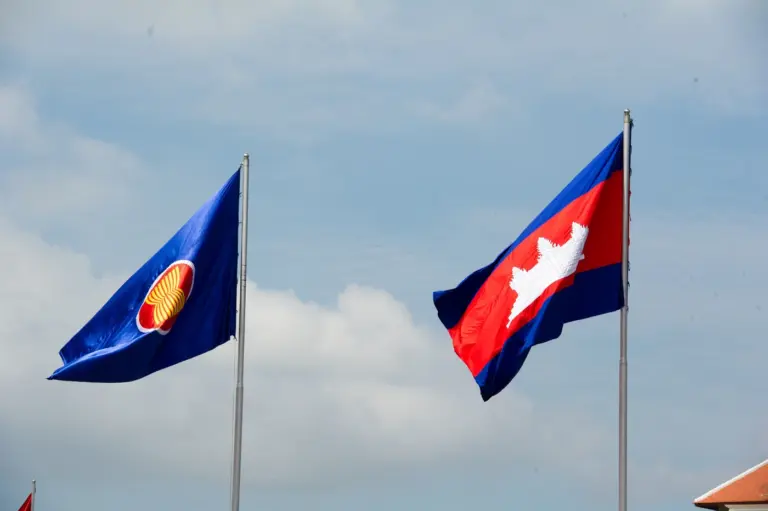
The Indo-Pacific stretches from the east coast of Africa to the western coast of the Americas, linking the Indian and Pacific oceans. India's official formulation — articulated by PM Modi at the Shangri-La Dialogue, 2018 — is free, open, inclusive, rules-based, with ASEAN at its centre. The region accounts for over 60% of global GDP, 65% of global population, and the world's busiest shipping lanes.
From Look East to Act East to Indo-Pacific
| Year | Milestone |
|---|---|
| 1992 | Look East Policy launched under PV Narasimha Rao |
| 2002 | ASEAN-India Summit institutionalised |
| 2014 | Act East Policy — upgrade with strategic depth |
| 2015 | SAGAR (Security and Growth for All in the Region) |
| 2018 | Indo-Pacific framework at Shangri-La Dialogue |
| 2019 | Indo-Pacific Oceans Initiative (IPOI) launched at EAS |
India's Indo-Pacific pillars
SAGAR doctrine
Announced in Mauritius (2015), SAGAR frames India as a net security provider in the Indian Ocean. It couples hard security with maritime capacity-building — coastal radars, training, HADR (Humanitarian Assistance and Disaster Relief) missions.
IPOI
The Indo-Pacific Oceans Initiative has seven pillars — maritime security, maritime ecology, maritime resources, capacity building, disaster risk reduction, science/technology, and trade/connectivity. Each pillar has a lead country, giving IPOI a network structure rather than a treaty.
Quad
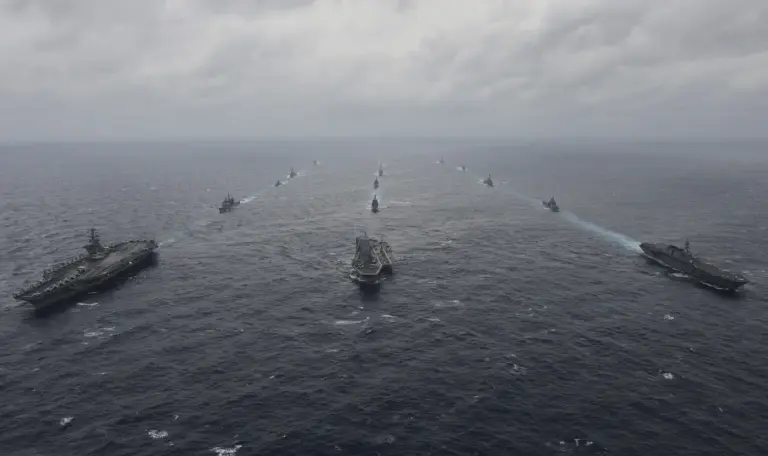
The Quadrilateral Security Dialogue — India, US, Japan, Australia — revived in 2017 after a decade-long dormancy. Summit-level since 2021. Agenda now spans vaccines, critical and emerging tech, infrastructure, maritime domain awareness (IPMDA), supply chains, and climate. The Malabar exercise is the naval operational spine.
IPEF
The Indo-Pacific Economic Framework for Prosperity (2022) has 14 members across four pillars — trade, supply chains, clean economy, fair economy. India joined three of four pillars, opting out of trade.
IMEC
The India-Middle East-Europe Economic Corridor was announced at the G20 New Delhi Summit (2023) — rail-and-shipping connector from India through the Gulf to Europe. Paused briefly by Israel-Hamas conflict, revived in 2024-25.
AUKUS adjacency
India is not in AUKUS but coordinates on undersea cables, AI, and quantum through Quad working groups.
Indo-Pacific vs Quad
| Dimension | Indo-Pacific | Quad |
|---|---|---|
| Character | Broad politico-economic vision | Tight plurilateral grouping |
| Membership | Inclusive, ASEAN-centred | Four democracies |
| China lens | Subtle balance | Clearer counter-balance |
| Instruments | Trade, development, norms | Security, tech, supply chains |
The economic gap
India's biggest weakness is trade. It stayed out of RCEP (2019) citing China dumping fears. It has FTAs with ASEAN, Japan, South Korea, Sri Lanka — but not with the US, New Zealand, Bangladesh or Maldives. China has FTAs with all of them bar the US. This asymmetry limits how much strategic weight New Delhi can carry with Indo-Pacific partners.
Military engagement
India's defence export profile in the region is rising but still small:
- BrahMos supply to the Philippines (first tranche delivered 2024) — a breakthrough.
- Akash missile offers to Armenia and Southeast Asia.
- Malabar, MILAN, La Perouse multilateral exercises.
- Coastal radar stations and white-shipping agreements with 20+ IOR partners.
Compared with China — a major arms supplier to Bangladesh, Myanmar, Sri Lanka, Indonesia, Malaysia, the Philippines, Thailand — India's share remains modest.
Challenges
- RCEP absence — India outside the region's flagship trade arrangement.
- Capacity constraints — Navy at roughly 130 ships versus PLAN's 370+.
- Third-country connectivity — Chabahar, Sittwe, Colombo West Container Terminal all face political frictions.
- Non-alignment hangover — some regional partners still read India as ambivalent.
Latest developments (2024-26)
- Quad Summit Wilmington (2024) — MAITRI maritime initiative, Indo-Pacific Partnership for Maritime Domain Awareness (IPMDA) expansion, Quad Cancer Moonshot.
- G20 New Delhi Summit (2023) — African Union admitted, IMEC launched, New Delhi Leaders' Declaration adopted by consensus.
- BRICS expansion (2024) — UAE, Egypt, Iran, Ethiopia joined; changes Indo-Pacific balance and Gulf dimension.
- Israel-Hamas conflict (Oct 2023 onwards) disrupted IMEC planning; India pushed revival.
- Red Sea crisis — Houthi attacks on Bab el-Mandeb routed ships via the Cape; Indian Navy deployed Operation Sankalp with 12 warships for anti-piracy and MDA.
- Operation Sindhu Thakur style evacuations and Operation Kaveri/Ajay templates refined for Indo-Pacific contingencies.
- AI Action Summit (Paris, 2025) — India co-chaired with France; Indo-Pacific AI governance language shaped.
- Russia-Ukraine update: India's oil import strategy resilient; Russian Pacific outreach (Chennai-Vladivostok corridor) progressed.
- BrahMos to Philippines delivery operationalised; Indonesia, Vietnam in negotiation.
- ASEAN-India Comprehensive Strategic Partnership deliverables reviewed; AITIGA upgrade talks ongoing.
Way forward
- Close the trade gap — accelerate UK FTA, EU FTA, GCC FTA; consider targeted regional arrangements.
- Build naval mass — indigenous carriers, SSNs (Project 75-Alpha), P-8I fleet expansion.
- Act East 2.0 — treat Northeast as launchpad, not backwater.
- IMEC execution — move from MoU to first-mile rail and digital links.
- Blue economy depth — fisheries, offshore renewables, and cable resilience.
- Third-country projects — co-financing with Japan (AAGC), EU (Global Gateway), US (Blue Dot).
Quad working groups: from concept to delivery
Since the Leaders Summit elevation (2021), Quad has built functional working groups:
- Vaccine Partnership — Johnson & Johnson vaccine production at BioE (India).
- Critical and Emerging Technology — semiconductor supply chains.
- Infrastructure — Blue Dot Network.
- Climate — clean energy supply chains.
- Maritime Domain Awareness (IPMDA) — real-time tracking of dark vessels.
- Cyber — coordinated attribution.
- Health Security — Quad Cancer Moonshot.
- Space — SBAS for Indo-Pacific partners.
India's Indo-Pacific diplomatic architecture
| Forum | India's role |
|---|---|
| East Asia Summit | Member since 2005; strategic forum on regional security |
| ASEAN Regional Forum (ARF) | Full participant |
| ADMM+ | Defence cooperation with ASEAN plus 8 partners |
| Expanded ASEAN Maritime Forum | Maritime security dialogue |
| IORA | 23 Indian Ocean rim members; India sees IORA as SAGAR's multilateral shell |
| BIMSTEC | Bay of Bengal cooperation — Charter adopted 2022 |
| Quad | Summit-level since 2021 |
| I2U2 | With Israel, UAE, US |
| SCO | Eurasian engagement |
Indo-Pacific and the Global South
India's 2023 G20 Presidency framed the Indo-Pacific through a Global South lens. The Voice of Global South Summit, the African Union's G20 admission, and emphasis on digital public infrastructure as a scalable export all positioned India as a bridge — not a bloc country. This messaging matters for ASEAN and IOR states uncomfortable with binary US-China framing.
Limits of the Indo-Pacific vision
Three limits deserve honest acknowledgement:
- No collective defence — Quad is not NATO; members have different threat perceptions.
- Economic underweight — India's absence from RCEP, slow FTA clock, and small defence export base.
- ASEAN caution — most ASEAN members prefer hedging; India's push must be patient.
UPSC Relevance
Indo-Pacific is a GS II evergreen — bilateral, regional and global groupings. Prelims has tested IPOI pillars, Malabar members, SAGAR full-form. Mains prompts rotate between Quad's evolution, India's naval posture, and Act East-Indo-Pacific convergence. Essay angles: "Oceans shape empires," "From non-aligned to multi-aligned."
Practice question (Mains): Examine the transition of India's maritime posture from the Look East framework to the Indo-Pacific vision. What structural gaps remain? (250 words)
Tell Google you want more of this.
Add Anantam IAS as a preferred sourceOne tap, and this site shows up more often in your own Top Stories, AI Overviews and AI Mode. Remove it any time.