The integration of princely states was the process, between 1947 and 1950, by which more than 550 kingdoms that the British had ruled indirectly became part of the Indian Union. It ran through the States Department, set up in July 1947 under Sardar Vallabhbhai Patel with V. P. Menon as its secretary. It matters because these states covered about one-third of British India’s land area and held one in four of its people, and without them the new country would have been a map full of holes.
Most readers carry one picture of it: the rulers signed a paper in August 1947 and the job was done. That signature was only the first half. The Instrument of Accession handed over just three subjects, and the harder work of merging states, ending personal rule and settling the rulers’ allowances ran until 1950, with a constitutional tail that reached 1971. This note separates the two stages, walks through the hard cases and says what the sources actually agree on.
What Was the Integration of Princely States?
It was a two-stage settlement. First the rulers acceded, giving the Centre three subjects. Then their states were merged, grouped or taken over until the old map of more than 550 units was reduced to 14 administrative units and fitted into the Constitution.
| Fact | Detail |
|---|---|
| Number of states | 565 (NCERT); 562 (Nehru, quoted by Menon); 554 (Menon’s own working count) |
| Share of British India | About one-third of the land area and one in four Indians (NCERT) |
| Legal trigger | Section 7 of the Indian Independence Act, 1947: the suzerainty of the Crown over the states lapsed on 15 August 1947 |
| Machinery | States Department; Menon took charge on 5 July 1947 under Sardar Patel |
| Stage 1: accession | Instrument of Accession (defence, external affairs, communications) plus a Standstill Agreement, mostly signed by 15 August 1947 |
| Stage 2: merger | 216 states merged into provinces, 310 grouped into six unions, 26 run from the Centre (Menon) |
| Hard cases | Junagadh, Hyderabad, Jammu and Kashmir, and later Manipur |
| Constitutional end-point | Eight Part B states in 1950, headed by rajpramukhs; the category was abolished in 1956 |
| Privy purses | Rs 580 lakh a year in all, per the White Paper cited by Menon; abolished by the Twenty-sixth Amendment, 1971 |
Why Did the Princely States Have a Choice in 1947?
They had a choice because paramountcy, the British Crown’s supremacy over the states, was not handed to India. It simply ended. The states had been bound to Britain by treaties going back to the Company’s subsidiary alliance system, and the Crown had stopped annexing them after 1858, which is why the doctrine of lapse is a pre-1857 story and not part of this one.
The Cabinet Mission of 1946 had already said paramountcy would not pass to a successor government. The June 1947 plan, covered in the note on the Mountbatten Plan, confirmed it. Section 7 of the Indian Independence Act, 1947 then wrote it into law: on the appointed day the Crown’s suzerainty over the states would lapse, and with it the treaties.
In theory, each ruler could now join India, join Pakistan or stay independent. In practice, geography closed most of those doors. NCERT records that Hyderabad announced it would stay independent and that the Nawab of Bhopal was averse to joining the Constituent Assembly. Menon, looking back in 1956, made a point that surprises most readers: the lapse of paramountcy helped India, because it let the new government “write on a clean slate” instead of inheriting every British treaty obligation.
How Did the Instrument of Accession Work?
The Instrument of Accession was a short legal document by which a ruler handed three subjects to the Dominion of India: defence, external affairs and communications. Everything else, including internal administration and taxation, stayed with the ruler.
Think of it as a lease on three rooms of a house, with the owner keeping the rest. The analogy holds for 1947 and breaks soon after, because within two years almost every owner had sold the whole house.
Two documents travelled together:
- The Instrument of Accession gave India legal authority over the three subjects. Menon records that rulers who attached conditions were told it had to be unconditional, and they complied.
- The Standstill Agreement kept existing arrangements on customs, railways, posts and similar matters running unchanged while the details were settled.
- The deadline was 15 August 1947. Mountbatten, as Crown Representative, addressed the rulers on 25 July 1947 and pressed them to decide before it.
The offer was deliberately modest. A ruler gave up little that he had actually controlled under the British, since defence and foreign relations had always sat with the paramount power. The IGNOU unit on princely states makes the same point: these were areas over which the states had long ceased to exercise control.
It worked. Menon records that by 15 August every state geographically contiguous to India had signed both documents, with three exceptions: Junagadh and two small Kathiawar states under Muslim rulers. Hyderabad was given two more months to negotiate. Kashmir, Menon notes, had not been approached by the States Ministry at all.
From Accession to Merger: The Second Stage
Accession brought the states in; merger dissolved most of them. Between late 1947 and 1950 the States Ministry replaced hundreds of small kingdoms with provinces, new unions and centrally run areas, and the rulers signed merger agreements or covenants that gave up their ruling powers in return for a privy purse and their personal titles.
The numbers explain why this was necessary. Menon notes that of 554 states, more than 450 had an annual revenue under Rs 15 lakh, too small to run a modern administration on their own. NCERT gives a sense of the fragmentation: today’s Odisha held 26 small states, and the Saurashtra region had 14 big states, 119 small ones and many other units besides.
Menon’s final count, in his chapter on administrative consolidation, runs like this:
- 216 states were merged into the provinces they sat in or bordered, such as the Orissa and Chhattisgarh states and the Deccan and Gujarat states that went to Bombay.
- 310 states were consolidated into six unions: Saurashtra, Madhya Bharat, PEPSU (Patiala and East Punjab States Union), Rajasthan, Travancore-Cochin and Vindhya Pradesh. Vindhya Pradesh was later turned into a centrally administered area.
- 26 states were taken over by the Centre: 5 individually as Chief Commissioners’ provinces and 21 Punjab Hill States that together became Himachal Pradesh.
- 2 states, Hyderabad and Mysore, were left territorially untouched.
The result was 14 administrative units in place of 554 states. Menon is careful to call this only a physical consolidation. Administration in most states was, in his words, personal and primitive, and the harder task was bringing their police, revenue, courts and services into one mould.
Rajpramukhs and the Part B states
The unions needed a head, and the answer was a rajpramukh, a senior ruler chosen as the union’s constitutional head, much like a Governor, with an uprajpramukh as deputy. The Maharaja of Gwalior became Rajpramukh of Madhya Bharat and the Maharaja of Patiala of PEPSU.
The Constitution of 1950 gave this arrangement a legal home. It grouped the states into Part A (the old provinces), Part B and Part C. Menon lists the eight Part B states:
- the three large states of Hyderabad, Jammu and Kashmir and Mysore;
- the five unions of Madhya Bharat, PEPSU, Rajasthan, Saurashtra and Travancore-Cochin.
Bhopal, Bilaspur, Himachal Pradesh, Kutch, Manipur, Tripura and Vindhya Pradesh went into Part C, run by the Centre. Article 371 placed Part B governments under the President’s general control for a period, because most of them had no stable administration yet.
This three-tier map lasted six years. The Constitution (Seventh Amendment) Act, 1956, passed with the States Reorganisation scheme, abolished the Part A, Part B and Part C categories, and the rajpramukh disappeared with them. That story continues in the note on Article 3 and state reorganisation.
The Hard Cases: Junagadh, Hyderabad, Kashmir and Manipur
Four states didn’t follow the pattern, and each was settled differently. That difference is the whole reason they’re studied: India argued from the people’s will in one case, from geography and law and order in another, and from the ruler’s signature in a third.
Junagadh
Junagadh, in Kathiawar, had a Muslim ruler, a large Hindu majority and no land border with Pakistan. Its Nawab announced accession to Pakistan on 15 August 1947, and Pakistan accepted it on 13 September. Indian forces surrounded the state without entering it, the Nawab left for Karachi, and on 9 November 1947 India took over the administration at the request of his Dewan.
A referendum followed on 20 February 1948. Menon records that 1,90,870 votes were cast and only 91 went to Pakistan. The full sequence, including the smaller states of Mangrol and Babariawad, is in the note on the Junagadh accession.
Hyderabad
Hyderabad was the largest princely state, entirely surrounded by Indian territory, with a Muslim ruler, the Nizam, and a mostly Hindu population. The Nizam wanted independence. After long talks he signed a Standstill Agreement on 29 November 1947, which NCERT describes as running for a year while negotiations continued. It kept the old arrangements on defence, external affairs and communications going without accession.
The negotiations failed while conditions inside the state worsened. NCERT describes a peasant uprising in Telangana against the Nizam’s rule and a paramilitary force, the Razakars, led by Kasim Razvi, whose violence was directed particularly at non-Muslims. A Hyderabad delegation took its case to the UN Security Council.
Indian troops moved in on 13 September 1948 in what the government called a police action; PIB records its name as Operation Polo. Menon gives the sequence:
- the Hyderabad army surrendered on the evening of 17 September;
- Indian troops entered Hyderabad City on 18 September;
- the operation lasted about 108 hours;
- on 23 September the Nizam withdrew his case from the Security Council.
A Military Governor ran the state until civil government returned. On 23 November 1949 the Nizam issued a firman accepting the Constitution of India, and Hyderabad entered the Republic as a Part B state.
Jammu and Kashmir
Jammu and Kashmir had a Hindu ruler, Maharaja Hari Singh, and a Muslim-majority population, and it bordered both Dominions. The Maharaja signed neither Instrument before 15 August. In October 1947 armed tribal raiders entered the state and advanced towards Srinagar, and on 24 October the Maharaja appealed to India for military help.
Menon records that he flew to Jammu on 26 October after a meeting of India’s Defence Committee, and that the Maharaja was ready to accede at once. The Instrument of Accession was accepted by the Governor-General, Lord Mountbatten, on 27 October 1947, and Indian troops were flown to Srinagar the same morning.
The accession was contested from the start. Menon records that Jinnah argued it had been brought about by violence, while Mountbatten replied that the violence had come from the raiders. Nehru, in early November, declared India’s readiness to hold a referendum under international auspices such as the United Nations once peace and the rule of law were restored. The later constitutional relationship is covered in the note on Article 370.
Manipur
Manipur shows that accession didn’t always settle the question. NCERT records that Maharaja Bodhachandra Singh signed the Instrument of Accession a few days before independence, on the assurance that Manipur’s internal autonomy would be kept, and held elections in June 1948. The new assembly was divided on merger, and the Government of India persuaded the Maharaja to sign a Merger Agreement in September 1949. Menon gives the date as 21 September. Manipur then became a Part C state run by a Chief Commissioner.
How Historians Judge Patel’s and Menon’s Roles
The standard verdict gives Patel the political authority and Menon the design and legwork, with Mountbatten’s standing with the princes as a third ingredient. Where accounts differ is on how much of the achievement was persuasion and how much was pressure.
NCERT says Patel played a historic role in negotiating with the rulers, and describes the government’s approach as a mix of skilful persuasion and flexibility on autonomy. The PIB treats him as the figure who unified over 560 states. The site’s profile of Sardar Patel covers his wider career.
Menon’s own account, written in 1956, is a participant’s history and should be read as one. He drafted the Instrument of Accession and negotiated most of the mergers himself. He is generous to Patel and to Mountbatten, and he is also candid that the job was unfinished in 1950, writing that real integration “had to take place in the minds of the people”.
The IGNOU unit on princely states offers a less celebratory frame. It says the Centre stepped into the space paramountcy left and intervened in the states’ internal affairs regularly: sending regional commissioners, detaining a ruler, taking direct control of Kutch, Tripura and Manipur on security grounds and blockading Junagadh. It also argues that the princely order fell as much because the British abandoned their allies as because of Indian pressure.
These views don’t cancel each other. It is wise to read integration as persuasion backed by the credible threat of force, and to credit the States Ministry for how rarely the force was used.
Privy Purses: The Price of Integration and Its End
A privy purse was an annual, tax-free payment to a former ruler for his personal and family expenses, fixed in each merger agreement in return for giving up his state. It was the main price India paid for a largely peaceful integration.
The amounts followed a formula. Menon describes the “Eastern States formula”, a sliding scale tied to each state’s revenue, which larger rulers bargained up; in Madhya Bharat, for instance, India agreed to higher purses for the sitting Maharajas but refused to guarantee more than Rs 10 lakh a year to their successors. He cites the White Paper for a total of Rs 580 lakh a year. The IGNOU unit gives a lower figure of Rs 4.66 crore for 1949, so the total depends on the year and the source.
The Constitution guaranteed these payments in Article 291, protected the rulers’ personal rights and privileges in Article 362 and defined who counted as a Ruler in Article 366(22). The end came in three steps:
- On 6 September 1970 the President issued orders derecognising all the Rulers, which stopped the purses.
- On 15 December 1970 the Supreme Court, by a majority of an eleven-judge bench, struck the orders down as ultra vires in Madhav Rao Scindia v Union of India.
- Parliament then passed the Constitution (Twenty-sixth Amendment) Act, 1971, which came into force on 28 December 1971. It omitted Articles 291 and 362 and inserted Article 363A, which ended the recognition of Rulers and abolished privy purses.
Its Statement of Objects and Reasons called rulership with privy purses incompatible with an egalitarian social order. On 4 February 1993, in Raghunathrao Ganpatrao v Union of India, the Supreme Court held the amendment valid in its entirety.
The Integration of Princely States Today
Legally, the question is closed. Article 363A ended the recognition of Rulers, the Part B category is gone, and every former princely state is now an ordinary state or Union territory of the Union. What survives is commemoration, and much of it is recent.
- Rashtriya Ekta Diwas. The government decided on 22 October 2014 to mark Patel’s birth anniversary, 31 October, as National Unity Day. The PIB backgrounder of 30 October 2025 marked his 150th birth anniversary, covered in the site’s note on Patel’s 150th birth anniversary.
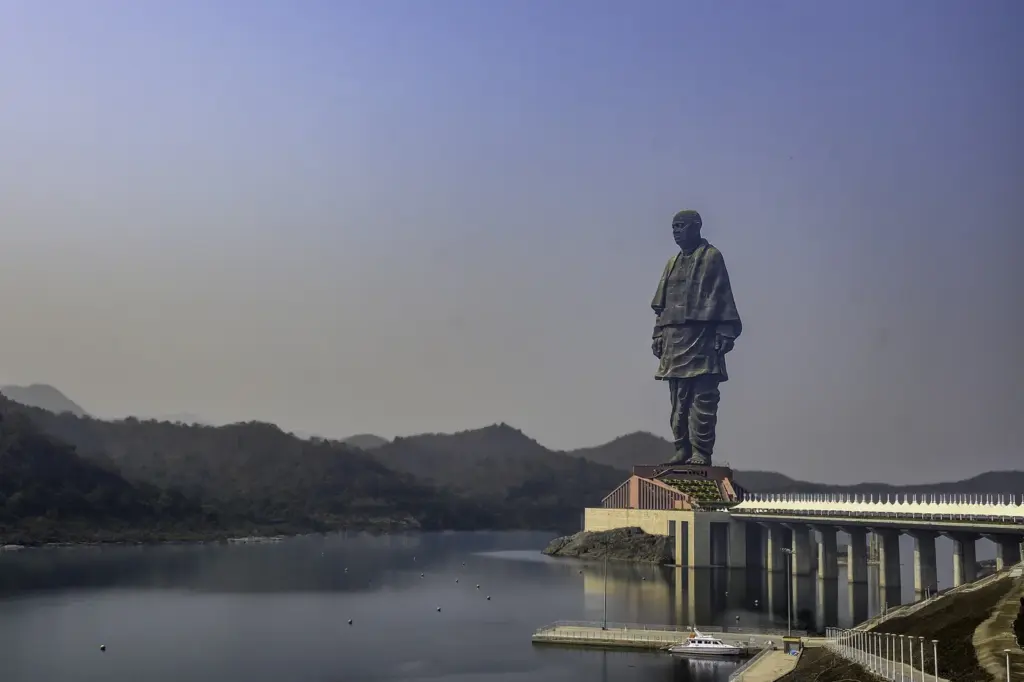
- The Statue of Unity. Patel’s statue at Ekta Nagar in Gujarat is where the Prime Minister pays tribute on 31 October before the national celebrations, described in the note on the Statue of Unity.
- Hyderabad Liberation Day. The Ministry of Home Affairs notified in March 2024 that 17 September, the day the Hyderabad army surrendered in 1948, will be marked every year as Hyderabad Liberation Day.
The commemorations are about Patel. The exam, as the next section shows, is about the process.
How to Study the Integration of Princely States for Exams
The topic sits in GS Paper I under post-independence consolidation and reorganisation, and it reaches into GS Paper II through federalism, Article 370 and the constitutional history of Articles 291 and 363A. In Prelims it appears under modern history, which accounts for 184 of the 1,403 questions in the site’s Prelims question bank.
Mains tests the process, not the dates. Mains 2021 GS Paper I asked candidates to “Assess the main administrative issues and socio-cultural problems in the integration process of Indian Princely States.” That question rewards exactly the second stage this note spends time on: merger, administration, rajpramukhs and privy purses.
Revise these facts until they’re automatic:
- Paramountcy lapsed under Section 7 of the Indian Independence Act, 1947.
- The States Department began work in July 1947; Menon took charge on 5 July.
- The Instrument of Accession covered defence, external affairs and communications.
- Menon’s count: 554 states became 14 units; 216 merged into provinces, 310 into six unions.
- Junagadh referendum: 20 February 1948. Hyderabad surrender: 17 September 1948. Kashmir’s accession accepted: 27 October 1947.
- There were eight Part B states in 1950, abolished by the Seventh Amendment, 1956.
- Privy purses: Article 291, ended by the Twenty-sixth Amendment, 1971; upheld by the Supreme Court in 1993.
Four confusions cost marks. Accession and merger are different acts: the first gave three subjects, the second ended the state. The Standstill Agreement is not accession; Hyderabad signed one without acceding. The number of states isn’t wrong in any textbook, it’s counted differently, so quote the source. And Part B states were former princely units, while Part C states were centrally administered and included some princely states too, such as Manipur and Tripura.
| Process | When | Instrument | What it settled |
|---|---|---|---|
| Accession | July to August 1947 | Instrument of Accession, Standstill Agreement | Three subjects to the Centre |
| Merger | 1948 to 1949 | Merger agreements and covenants | Ended the states as separate units |
| Constitutional absorption | 1950 | Constitution, Parts A, B and C | Rajpramukhs and Part B states |
| Reorganisation | 1956 | Seventh Amendment, States Reorganisation scheme | Abolished the Part categories |
| End of privileges | 1971 | Twenty-sixth Amendment | Ended recognition and privy purses |
This topic trips up aspirants who revise it as three case studies and a nickname. An answer that shows accession as the easy half, merger as the real work and the hard cases as three different arguments will stand apart from the pile. Spend your time on that structure, and the dates will hang on it.
Frequently Asked Questions
What is meant by the integration of princely states?
It is the process between 1947 and 1950 by which the princely states ruled by Indian princes under British paramountcy became part of the Indian Union. It happened in two stages: accession, which gave the Centre defence, external affairs and communications, and merger, which dissolved the states into provinces, unions or centrally run areas.
How many princely states were there in 1947?
Sources give different counts. NCERT says 565, Nehru spoke of 562 and V. P. Menon worked with a figure of 554 in his account of the consolidation. The difference comes from how small estates and jagirs were counted, so always name the source you quote.
What was the Instrument of Accession?
It was the legal document by which a ruler joined the Dominion of India in 1947. It transferred only three subjects, defence, external affairs and communications, and left everything else with the ruler. Most rulers signed it along with a Standstill Agreement before 15 August 1947.
Who integrated the princely states into India?
The work was done by the States Department, created in July 1947 under Sardar Vallabhbhai Patel as the minister in charge, with V. P. Menon as its secretary. Lord Mountbatten, as Governor-General, also pressed the rulers to accede. Patel is remembered for the political authority, and Menon for drafting the documents and negotiating most of the mergers.
What was Operation Polo?
Operation Polo was the name of the Indian military action in Hyderabad, officially called a police action. Indian troops moved in on 13 September 1948, the Hyderabad army surrendered on 17 September, and troops entered Hyderabad City on 18 September. The Nizam later accepted the Constitution through a firman issued on 23 November 1949.
What were Part B states?
Part B states were the eight states created in the 1950 Constitution out of former princely territory. They were Hyderabad, Jammu and Kashmir, Mysore, Madhya Bharat, PEPSU, Rajasthan, Saurashtra and Travancore-Cochin, and the unions among them were headed by a rajpramukh. The Seventh Amendment of 1956 abolished the category.
When were privy purses abolished?
Privy purses were abolished by the Constitution (Twenty-sixth Amendment) Act, 1971, which came into force on 28 December 1971. It omitted Articles 291 and 362 and inserted Article 363A. An earlier attempt to end them by presidential order in 1970 had been struck down by the Supreme Court.
Why is 31 October celebrated as Rashtriya Ekta Diwas?
It is Sardar Patel’s birth anniversary, and the government decided in October 2014 to mark it as National Unity Day to recognise his role in integrating the princely states. The first observance was in 2014, and 2025 marked his 150th birth anniversary.
Practice Questions
Prelims
1. Consider the following statements about the Instrument of Accession signed by rulers in 1947: 1. It transferred defence, external affairs and communications to the Dominion of India. 2. It required each ruler to hold a plebiscite before acceding. Which of the statements given above is/are correct?
- (a) 1 only
- (b) 2 only
- (c) Both 1 and 2
- (d) Neither 1 nor 2
Answer: (a) The Instrument transferred only the three subjects; a referendum was held only in exceptional cases such as Junagadh.
2. In which princely state was a referendum on accession held on 20 February 1948?
- (a) Hyderabad
- (b) Junagadh
- (c) Bhopal
- (d) Travancore
Answer: (b) Junagadh voted in February 1948, with only 91 of 1,90,870 votes cast for Pakistan.
3. Consider the following statements about privy purses: 1. The Constitution (Twenty-sixth Amendment) Act, 1971 omitted Articles 291 and 362. 2. In Madhav Rao Scindia v Union of India (1970), the Supreme Court upheld the presidential orders derecognising the Rulers. Which of the statements given above is/are correct?
- (a) 1 only
- (b) 2 only
- (c) Both 1 and 2
- (d) Neither 1 nor 2
Answer: (a) The Court struck the 1970 orders down as ultra vires, which is why Parliament had to amend the Constitution.
4. Which of the following were Part B states under the Constitution in 1950? 1. Mysore 2. Saurashtra 3. Manipur 4. Travancore-Cochin. Select the correct answer using the code given below.
- (a) 1, 2 and 3 only
- (b) 1, 2 and 4 only
- (c) 2, 3 and 4 only
- (d) 1, 2, 3 and 4
Answer: (b) Manipur was a Part C state run by a Chief Commissioner.
5. Operation Polo, launched in September 1948, is associated with which of the following?
- (a) Junagadh
- (b) Jammu and Kashmir
- (c) Hyderabad
- (d) Manipur
Answer: (c) Operation Polo was the police action that ended with the surrender of the Hyderabad army on 17 September 1948.
Mains
- Accession in 1947 was the easy half of the integration of princely states; merger was the real work. Discuss. (10 marks, 150 words)
- How did the Instrument of Accession and the Standstill Agreement differ in purpose? Illustrate with the case of Hyderabad. (10 marks, 150 words)
- Compare the principles India relied on in Junagadh, Hyderabad and Jammu and Kashmir. Were they consistent? (15 marks, 250 words)
- Trace the constitutional journey of privy purses from the merger agreements to the Twenty-sixth Amendment, 1971. Was their abolition a breach of faith or a completion of integration? (15 marks, 250 words)
- Assess the respective roles of Sardar Patel, V. P. Menon and Lord Mountbatten in the integration of the princely states. (15 marks, 250 words)
Tell Google you want more of this.
Add Anantam IAS as a preferred sourceOne tap, and this site shows up more often in your own Top Stories, AI Overviews and AI Mode. Remove it any time.