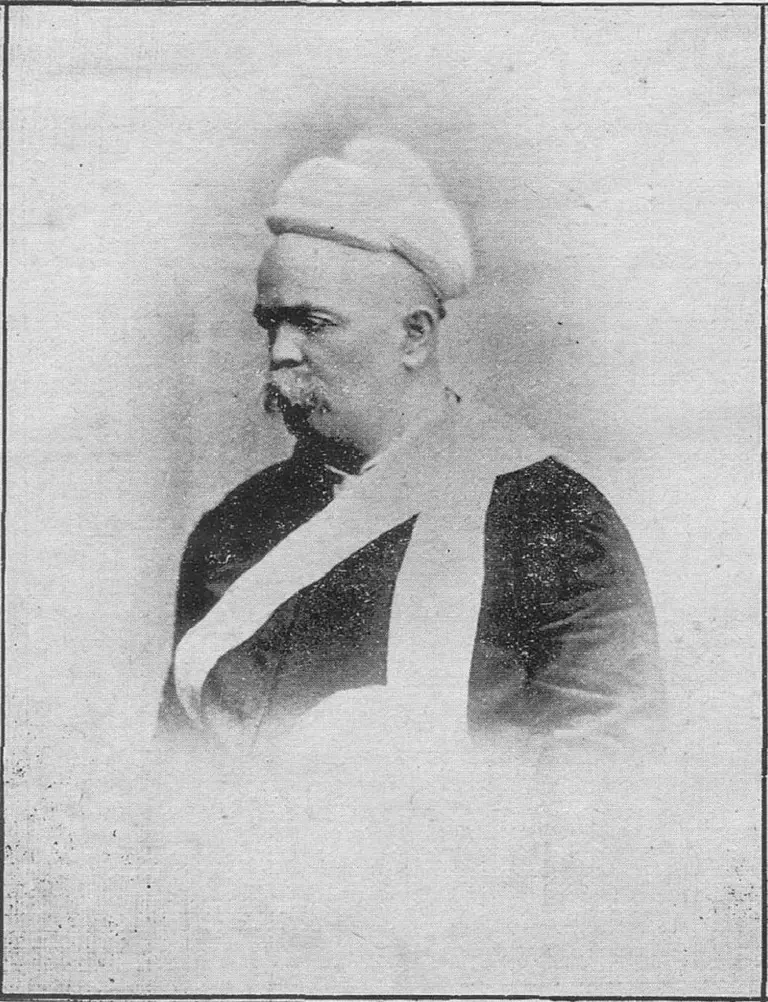
Jawaharlal Nehru (1889-1964) is one of the architects of modern India, and his ethical vision continues to shape the state he helped to build. Born on 14 November 1889 in Allahabad, he joined the Indian National Congress in 1919 and became an active ally of Mahatma Gandhi‘s independence movement. When the British withdrew in 1947, Nehru became independent India’s first prime minister, a position he held until his death in New Delhi on 27 May 1964. Across those seventeen years he laid the institutional foundations of Indian democracy, the mixed economy, non-alignment in foreign policy, and a distinctive variety of secularism.
For UPSC GS IV, Nehru matters across several domains: his conception of democratic socialism, his integrated idea of freedom, and his articulation of secularism rooted in scientific temper. This guide examines each and connects them to the ethical dilemmas a civil servant is likely to encounter.
Views on Democratic Socialism
Nehru's political ethics can be read as a sustained attempt to hold together two things that others treated as alternatives — democracy and socialism. His position, now shared by social democratic traditions worldwide, is that the two are not rivals but partners.
Democratic socialism, in Nehru's telling, is an ideological extension of the liberal commitment to democracy, adapted to the needs of every country. It is the view that both the economy and the society should function democratically to meet the needs of the whole community. The key claim is strong:
- Democracy and socialism are one and indivisible.
- There cannot be a true democracy without a true socialism.
- There cannot be a true socialism without a true democracy.
The two come together in equality, social justice, a fair share for all, and an irreversible shift in the balance of wealth and power toward workers and their families. A democracy that leaves the majority of its citizens economically dependent, Nehru held, is formally free but substantively hollow. A socialism that suppresses civil liberties, free elections, independent courts, and free media becomes a new form of coercion.
This philosophy shaped the mixed economy of independent India. Five-year plans, public-sector enterprises, land reform, public health and education systems, and progressive taxation were all attempts to marry political liberalism with redistributive commitments. The Preamble's "Socialist" and "Democratic" descriptors, even before the 42nd Amendment formalised the former, reflected his influence.
Why the Synthesis Still Matters
Nehru's synthesis is often criticised from both right and left — for being too statist or not socialist enough. The criticism misses the ethical point. The synthesis insists that no single value — efficiency, equality, liberty — should be allowed to eat the others. A civil servant today who balances growth with inclusion, competition with regulation, and individual enterprise with collective welfare is operating within a Nehruvian frame, whether or not she names it.
Views on Freedom
Nehru held freedom in the highest regard. For him, freedom was not a single thing but a layered reality.
By freedom Nehru meant:
- Freedom of speech and expression.
- Freedom of association.
- Several other aspects of creativity — intellectual, artistic, scientific, and political.
Crucially, he gave an integrated conception of political, social and economic freedom, which he argued could operate only in a socialistic pattern of society. One cannot be politically free while economically destitute; one cannot be socially free while politically silenced. The three freedoms are interdependent. A poor person's freedom of speech, Nehru understood long before the phrase "substantive freedom" became common, is compromised by her inability to organise, publish, or sustain a livelihood.
This integrated conception echoes and anticipates later developments. Amartya Sen's capabilities approach, Martha Nussbaum's list of central human capabilities, and contemporary debates on economic and social rights all draw on the intuition Nehru articulated — that formal liberties need material conditions to become real.
Views on Secularism
Nehru's secularism is perhaps his most contested and most indispensable legacy. Its roots were not primarily theological; they were humanistic and scientific.
Rationalism and Human Values
Nehru was a rationalist in the classical sense. He knew that human values were superior to religious orthodoxies. This commitment did not require hostility toward religion — he was respectful of religious sentiment and of the devotional lives of millions of Indians. But it required clarity that the state should be governed by reason, evidence, and the welfare of citizens, not by doctrinal command.
A This-Worldly Humanism
His secular credentials rested on a rational humanistic attitude towards life. For Nehru, this life was more important than the one after death. The emphasis was not on rejecting an afterlife but on taking seriously the moral weight of the present — the poverty, disease, and injustice that confronted Indians in the here and now. Policy, in this view, should be shaped by what it could do for the living.
Scientific Temper
Perhaps his most enduring ethical contribution is the idea of scientific temper. Nehru's emphasis on developing scientific temperament was, in his own words, a great contribution because it initiated the fight against religious obscurantism and superstition in which much of the country was steeped. The phrase "scientific temper" was later enshrined in the Constitution through Article 51A(h), which makes it a fundamental duty of every citizen "to develop the scientific temper, humanism and the spirit of inquiry and reform."
Scientific temper is not merely a posture toward laboratories. It is an ethical stance — the refusal to believe without evidence, the willingness to change one's mind when evidence changes, and the commitment to methods of reasoning that can be publicly shared and tested.
Uniform Civil Code
Nehru's concept of secularism implied the existence of a uniform civil code for the people of India. He considered the existence of different sets of laws governing different communities as inconsistent with his ideal of a secular society. Article 44 of the Directive Principles, which calls on the state to endeavour to secure a uniform civil code, reflects this conviction.
The debate over the UCC has continued for seventy-five years. Whichever side one takes, Nehru's framing — that secularism is incomplete so long as civil law treats citizens differently because of religion — remains a defining ethical claim about the Indian state.
Nehru in Dialogue with Other Thinkers
Nehru's ethics sits in interesting conversation with the other figures the GS IV paper covers.
- With Gandhi, Nehru shared the commitment to non-violence, swaraj and moral politics, but differed on industrialisation, science, and the role of the modern state.
- With Ambedkar, he shared the commitment to constitutional democracy and social reform, but their paths on caste, representation, and secular design sometimes diverged.
- With Tagore, he shared a cultural cosmopolitanism and a critique of narrow nationalism.
- With the Western liberal tradition, Nehru engaged selectively: absorbing Locke's rights framework, adding Rousseau's general will, supplementing both with Marxian concern for material conditions, and grounding the whole in an Indian humanist tradition.
This synthetic sensibility is precisely what GS IV answers should aim to model.
Nehru for the Civil Servant
For a civil servant, Nehru's ethics has several operative implications.
- Hold the synthesis. Do not let a single value — speed, efficiency, loyalty — override equality, dignity or legality.
- Treat freedom as layered. A policy that secures political liberty while undermining economic security is not a success.
- Cultivate scientific temper. Make evidence-based reasoning the default in departmental work.
- Protect a secular public ethos. Ensure that administrative decisions are free of religious bias in both content and appearance.
- Respect the long horizon. Nehru's state-building was thought over decades, not quarters. Institutional patience is an ethical virtue.
Criticisms
Nehruvian ethics has not gone unchallenged. Critics point to the slow pace of economic liberalisation, the entrenchment of a licence raj, the concentration of planning in Delhi, and the limits of top-down secularism in a deeply religious society. The treatment of dissenting voices — on integration of Kashmir, on Partition's legacy, on early Congress dominance — has also been examined.
A reflective answer acknowledges these criticisms while recognising the scale of the ethical architecture Nehru bequeathed. Few modern states were so deliberately built on a published philosophy.
Case study prompts
- A civil servant posted to implement a welfare scheme must choose between speed of delivery and inclusive consultation with marginalised communities. Use Nehru's integrated conception of freedom to frame the decision.
- A state government considers legislation that favours one religion's civil code. Apply Nehru's conception of secularism and the uniform civil code to evaluate the proposal, while also acknowledging the plurality of positions on this issue.
- A scientific advisor to a ministry finds that a policy popular with the political leadership contradicts available evidence. Using Nehru's idea of scientific temper, discuss the ethical obligations that flow from her position.
UPSC Relevance
Nehru appears in GS IV questions on democratic values, socialism, freedom, secularism, scientific temper, and the ethical foundations of Indian public administration. He is particularly useful for essays and case studies that require a synthesis — democracy and socialism, liberty and equality, religion and science, national identity and international cooperation. A candidate who can draw on Nehru's integrated conception of freedom, his commitment to scientific temper, and his insistence that democracy and socialism are indivisible displays precisely the ethical literacy the examiner wants to see in India's future administrators.
Tell Google you want more of this.
Add Anantam IAS as a preferred sourceOne tap, and this site shows up more often in your own Top Stories, AI Overviews and AI Mode. Remove it any time.