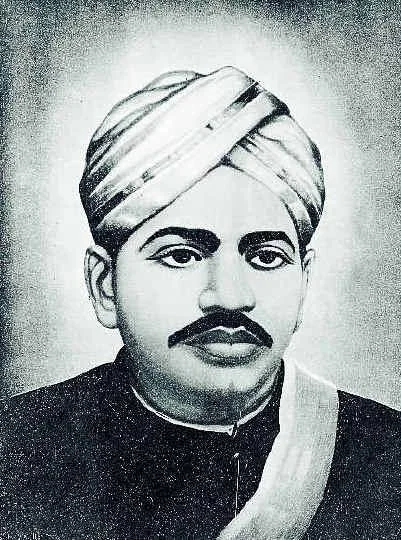
The Khilafat Movement (1919–1924) was a pan-Islamic political campaign launched by Indian Muslims in response to the dismantling of the Ottoman Caliphate by Britain and its allies after World War I. Led in India by the Ali Brothers — Maulana Muhammad Ali Jauhar and Maulana Shaukat Ali — it became the basis for an unprecedented Hindu-Muslim political alliance during the Non-Cooperation Movement (1920-22).
For UPSC, the Khilafat Movement is essential — it is the high point of Hindu-Muslim political unity in the freedom movement, and its collapse in 1924 has long-term consequences for Indian politics.
Background
The Ottoman Caliphate
The Ottoman Sultan held the title of Caliph (Khalifa) — the symbolic spiritual head of the global Sunni Muslim community. Though the title had diminished political meaning by the 20th century, it retained enormous religious-symbolic significance for Muslims worldwide.
Indian Muslims — though not under Ottoman rule — felt deeply connected to the Caliphate:
- Religious importance: The Caliph was seen as the protector of Islamic holy places (Mecca, Medina, Jerusalem)
- Cultural pride: The Ottoman Empire represented the last great Muslim political power
- Political identity: Indian Muslims found meaning in belonging to a global Islamic community
The Turkish Question After WWI
Turkey (Ottoman Empire) had fought alongside Germany in WWI (1914-18). After the defeat:
- The Treaty of Sèvres (August 10, 1920) imposed humiliating terms:
- Most of Ottoman territory partitioned
- Britain took control of Palestine and Iraq
- France took Syria and Lebanon
- Italy and Greece took other territories
- The Caliphate's authority severely reduced
- The Turkish people were left with a rump state
For Indian Muslims, the Treaty of Sèvres was a betrayal:
- During WWI, Britain had promised to respect the integrity of Muslim holy places and the Caliphate
- Indian Muslims had sent soldiers (approx. 1.3 million Indians fought in WWI) to support the British
- The post-war dismemberment of the Caliphate felt like a direct religious attack
The Movement Begins
Early Demands
In 1918-1919, Indian Muslim leaders began organising demands to preserve the Caliphate:
| Demand | Details |
|---|---|
| Preservation of the Caliphate | Restore the Ottoman Caliph's temporal authority |
| Integrity of Muslim holy places | Protection of Mecca, Medina, Jerusalem from non-Muslim control |
| Return of Thrace (Turkey's European territory) to Turkish/Caliphate control |
Formation of Khilafat Committee
In September 1919, the All India Khilafat Committee was formed in Bombay:
- Maulana Muhammad Ali Jauhar and Maulana Shaukat Ali (the Ali Brothers) — principal leaders
- Maulana Azad, Hakim Ajmal Khan, Hasrat Mohani, Abdul Bari, Chowdhary Khaliquzzaman — other prominent figures
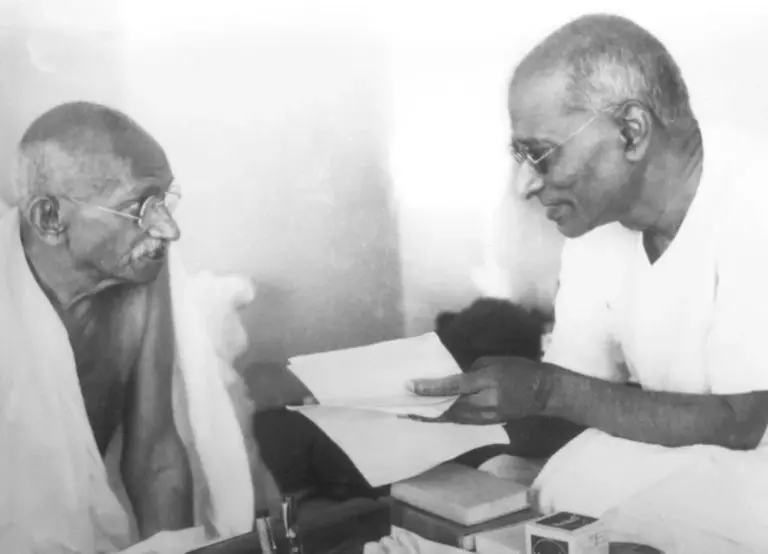
- Gandhi attended the Khilafat Conference and committed Congress support
Gandhi's Role
Gandhi's strategic decision to support the Khilafat cause was crucial:
- He saw the Khilafat issue as an opportunity to build Hindu-Muslim unity in the freedom movement
- He was willing to support a religiously-motivated movement because of its anti-imperialist implications
- He shaped the movement into a non-violent mass movement
- He personally presided over the All India Khilafat Conference in Delhi (November 1919)
The Khilafat-Non-Cooperation Alliance (1920)
The Convergence
Two simultaneous developments came together:
Khilafat grievance (Muslim-led):
- Treaty of Sèvres (August 1920)
- Dismemberment of the Caliphate
Indian national grievance:
- Rowlatt Act (1919)
- Jallianwala Bagh massacre (April 13, 1919)
- Montagu-Chelmsford Reforms (1919) — seen as inadequate
Gandhi proposed that the Congress launch a non-violent Non-Cooperation Movement while the Khilafat Committee would simultaneously protest against the British treatment of Turkey.
Launch of the Movement
| Date | Event |
|---|---|
| Aug 1, 1920 | Khilafat Day launched; non-cooperation began |
| Sept 1920 | Calcutta Congress (Special Session) approved Gandhi's Non-Cooperation programme |
| Dec 1920 | Nagpur Congress ratified the Non-Cooperation Movement |
The movements were technically separate but operated as a unified political front:
- Shared leadership: Gandhi and Ali Brothers often spoke at joint meetings
- Common programme: Boycott of British institutions
- Mass base that cut across religious lines
Joint Action
Hindu-Muslim cooperation during 1920-22 was unprecedented:
- Boycott of British goods — joint campaigns
- Boycott of courts — lawyers from both communities gave up practice
- Boycott of schools — students from both communities withdrew
- Renouncing of titles — leaders from both communities returned British honours
- Public meetings addressed by joint speakers
- Inter-religious meals and ceremonies
The Ali Brothers and Gandhi became symbols of this unity — their joint travels across India drew massive crowds.
The Ali Brothers
Maulana Muhammad Ali Jauhar (1878-1931)
- Educated at Aligarh Muslim University and Oxford
- Editor of Comrade (English) and Hamdard (Urdu) — influential journals
- Arrested with other leaders in 1915 for anti-British writings during WWI; released 1919
- INC President at the Kakinada session (1923)
- Died in 1931 and buried in Jerusalem (the last Caliph's territory)
Maulana Shaukat Ali (1873-1938)
- Muhammad Ali's elder brother
- More politically active; less literary
- Faced multiple imprisonments
- Continued political activity after his brother's death
- Drifted toward communal positions in the 1930s
The Brothers' Later Trajectory
Tragically, both Ali Brothers — who had been at the forefront of Hindu-Muslim unity — drifted toward communal politics in the late 1920s:
- Increasingly critical of the Congress for not doing enough for Muslims
- Muhammad Ali walked out of the Nehru Report committee (1928)
- Moved closer to the Muslim League and more separatist politics
This trajectory illustrates the fragility of the Khilafat-era unity.
Collapse of the Movement (1922-24)
The Khilafat-Non-Cooperation alliance began unraveling in 1922:
Chauri Chaura Incident (February 4, 1922)
The Chauri Chaura incident — in which protesters killed 22 policemen in UP — led Gandhi to suspend the Non-Cooperation Movement on February 12, 1922.
Khilafat leaders were disappointed and frustrated:
- Many felt that a temporary violation should not end a movement at its peak
- Muslim leaders saw the suspension as Gandhi placing Hindu sensitivities (about violence) above political necessity
This disappointment damaged the alliance.
The Turkish Revolution (1922-24)
The greatest irony of the movement was that the Caliphate was abolished by Turks themselves:
| Date | Event |
|---|---|
| November 1922 | Mustafa Kemal Atatürk abolished the Sultanate (political authority of the Ottoman rulers) |
| October 1923 | Turkey declared a Republic |
| March 3, 1924 | Caliphate abolished by the Turkish Grand National Assembly |
The Caliphate was ended not by British imperialism but by Turkish modernisers who saw it as an obstacle to Turkey's reform. This fundamentally undermined the Khilafat cause:
- The thing Indian Muslims were fighting to preserve no longer existed
- Modernist Muslims (especially the Turks themselves) rejected the need for a Caliphate
- The movement lost its core rationale
End of the Movement
By 1924, the Khilafat Movement had effectively ended:
- No Caliphate to defend
- Non-Cooperation already suspended
- Hindu-Muslim tensions rising (Moplah Rebellion in 1921-22 had damaged relations)
- Rising communal riots in the mid-1920s
Consequences
Positive
| Impact | Description |
|---|---|
| Hindu-Muslim unity | Unprecedented political cooperation — never replicated at this scale |
| Mass mobilisation | Both communities brought into active political participation |
| Anti-imperialist front | Demonstrated that religion could be mobilised against imperialism |
| Pan-Islamic consciousness | Indian Muslims developed broader political consciousness |
Negative/Problematic
| Impact | Description |
|---|---|
| Communal turn | After the movement's end, communal riots increased |
| Muslim separatism | Disappointment fed the later demand for Pakistan |
| Moplah Rebellion (1921-22) | Hindu-Muslim violence in Malabar; damaged relations |
| Institutionalising religion in politics | Set a problematic precedent of religious mobilisation in political movements |
The Moplah Rebellion
The Moplah Rebellion (August 1921 onwards) in Malabar (Kerala) was a major side effect:
- Mappila Muslim peasants and tenants rose against Hindu landlords and British authorities
- Initially framed as Khilafat agitation
- Turned into forced conversions and killings of Hindu landlords
- Severely damaged Hindu-Muslim political trust
- Hindu nationalists cite it as evidence of the dangers of religious mobilisation
Historical Assessment
Gandhi's Support — Was It Wise?
Gandhi's support for the Khilafat cause has been variously assessed:
Critics argue:
- He allied with a religious-political cause that had limited broader nationalist significance
- By elevating Khilafat to the level of national concerns, he strengthened religious identity in politics
- The eventual failure damaged his credibility with Muslims
Defenders argue:
- It was the only way to bring Muslim masses into the freedom movement
- The nationalist gains (Non-Cooperation) outweighed the risks
- The failure was due to external factors (Turkish abolition, Chauri Chaura), not Gandhi's choice
Verdict: Most historians see the Khilafat alliance as a pragmatic but risky gamble that achieved real but temporary results.
Legacy
Hindu-Muslim relations: The Khilafat Movement represents both the high point of Hindu-Muslim unity and the beginning of its breakdown. The unity it created was never achieved again at the same scale.
Mass politics: It helped transform Indian politics from elite petition-making to mass mobilisation — an enduring contribution.
Religious identity in politics: It institutionalised the role of religious identity in nationalist politics — a legacy that continues to shape India and Pakistan.
UPSC Relevance
GS1 (Modern History): Hindu-Muslim relations, Non-Cooperation Movement, pan-Islamism, freedom struggle.
GS1 (Society): Communalism, religion in politics, religious mobilisation.
Key Prelims facts:
- Period: 1919-1924
- Cause: Dismemberment of the Ottoman Caliphate after WWI
- Trigger: Treaty of Sèvres (August 1920)
- Indian leaders: Ali Brothers (Muhammad Ali Jauhar, Shaukat Ali), Maulana Azad
- All India Khilafat Committee: Formed September 1919, Bombay
- Gandhi presided: Delhi Khilafat Conference, November 1919
- Joint launch with Non-Cooperation: August 1920
- Non-Cooperation formally adopted: Nagpur Congress, December 1920
- Moplah Rebellion: 1921-22, Malabar
- Caliphate abolished: March 3, 1924 (by Turkish Grand National Assembly)
- Muhammad Ali Jauhar: INC President at Kakinada (1923)
- Muhammad Ali died: 1931 (buried in Jerusalem)
- End of movement: 1924
Tell Google you want more of this.
Add Anantam IAS as a preferred sourceOne tap, and this site shows up more often in your own Top Stories, AI Overviews and AI Mode. Remove it any time.