The Non-Cooperation Movement (1920–1922) was Gandhi's first attempt to organise mass resistance against British rule — and it nearly worked. For the first time, millions of Indians across class, religion, and region participated in a single political campaign. The British were genuinely alarmed. Then it ended abruptly, in a village called Chauri Chaura, because of a single violent incident that Gandhi used to call off the entire movement.
Whether that decision was wise or a catastrophic missed opportunity is one of the sharpest debates in Indian nationalist historiography. But the movement permanently transformed Indian politics — it showed what mass mobilisation looked like and made the Indian National Congress a genuine mass organisation rather than a club of lawyers.
For UPSC, the Non-Cooperation Movement is a central Modern History topic. Know the causes, phases, key events, Congress debates, and consequences.
Background and Causes
Three overlapping events created the conditions for the movement.
The Rowlatt Act (1919)
The Rowlatt Act (officially, the Anarchical and Revolutionary Crimes Act, 1919) allowed the British government to arrest and imprison any person suspected of sedition without trial or judicial review. It was based on the recommendations of the Rowlatt Committee (1918), which claimed seditious activities required emergency powers.
Gandhi called it the "Black Act." He launched the Rowlatt Satyagraha in March–April 1919 — his first major civil disobedience campaign in India. It led directly to the events at Jallianwala Bagh.
Jallianwala Bagh Massacre (April 13, 1919)
On Baisakhi (April 13, 1919), a large crowd of Hindus, Muslims, and Sikhs gathered at Jallianwala Bagh in Amritsar for a public meeting. The gathering was partly political (protesting the arrest of Congress leaders Saifuddin Kitchlew and Satyapal) and partly a festival gathering.
Brigadier General Reginald Dyer ordered his troops to open fire on the crowd without warning. The firing continued for approximately 10 minutes, until ammunition was running low. The exits were blocked. The official figure was 379 dead; Indian estimates were much higher. Hundreds more were injured.
The British response was worse than the massacre itself. The Hunter Commission enquiry was mild, Dyer was allowed to retire, and the House of Lords passed a motion in his favour. The Morning Post raised £26,000 for him as a public subscription. Rabindranath Tagore returned his knighthood in protest.
This sequence — massacre, cover-up, celebration of the perpetrator — shattered Indian faith in British justice more than any single previous event. The moderate constitutional approach, which had dominated Congress since 1885, lost its credibility.
The Khilafat Movement (1919–1924)
The Khilafat issue was about the fate of the Ottoman Caliphate after the First World War. Indian Muslims, particularly in north India, had emotional attachment to the Caliph as the symbolic head of the global Muslim community. After the war, the Allied powers (including Britain) were dismantling the Ottoman Empire and threatening to abolish the Caliphate.
The Khilafat Movement — led by Muhammad Ali and Shaukat Ali (the Ali Brothers) — demanded that Britain protect the Caliphate. Gandhi saw an opportunity for Hindu-Muslim unity and threw Congress support behind the Khilafat cause, despite reservations from some Congress leaders who saw it as a religiously communal platform.
The alliance between the Khilafat movement and Congress's Non-Cooperation Movement was the most significant example of Hindu-Muslim political unity in the independence struggle — and it held for about two years.
The Lahore Congress and Nagpur Congress
Two Congress sessions mark the formal launch of the movement.
Amritsar Congress (December 1919): Tilak and Gandhi both attended. The Montagu-Chelmsford Reforms (1919 Government of India Act) — which created a limited form of representative provincial government — divided Congress. Tilak was willing to use the new councils ("responsive cooperation"); Gandhi was sceptical.
Nagpur Congress (December 1920): This was the decisive session. Gandhi moved the resolution for Non-Cooperation and it was passed. The Congress constitution was also overhauled:
- Membership fee reduced from Rs. 6 to Rs. 4 (later Rs. 0.25 for the poor)
- Provincial Congress Committees organised along linguistic lines
- Hindi adopted as the Congress's working language
Bal Gangadhar Tilak died in August 1920 — just months before the Nagpur session. His death removed the most formidable opposition to Gandhi within Congress, and Gandhi’s dominance of the nationalist movement dates from this period.
Programme of Non-Cooperation
The Non-Cooperation Movement had a graduated programme of boycott and withdrawal.
Phase 1 — Boycotts:
- Surrender of honours and titles conferred by the British government
- Boycott of government-controlled schools and colleges
- Boycott of British law courts (lawyers should give up practice)
- Boycott of councils (the new legislative councils under the Montagu-Chelmsford reforms)
- Boycott of foreign goods — especially cloth
Phase 2 — Constructive programme:
- Establishment of national schools and colleges
- Establishment of panchayat courts for dispute resolution
- Promotion of hand-spinning and wearing khadi (hand-spun cloth)
- Promotion of Hindu-Muslim unity
- Removal of untouchability
The charkha (spinning wheel) became the symbol of the movement — Gandhi introduced it as both a practical economic tool (producing cloth independent of British mills) and a spiritual practice (discipline, self-reliance, identification with the poorest).
Gandhi's ambition was to complete the movement within a year and achieve Swaraj (self-rule) by the end of 1921. This was optimistic, to say the least.
Key Phases and Events (1920–1922)
1920: Launch and Momentum
The movement built throughout 1920. Lawyers gave up practice — among them C.R. Das, Motilal Nehru, Vallabhbhai Patel, and Jawaharlal Nehru — at enormous personal cost. Students left government colleges. The Non-Cooperation alliance with the Khilafat movement brought Muslims into the movement in large numbers.
The All India Khilafat Conference and the Indian National Congress held joint sessions and coordinated their programmes.
1921: Peak of the Movement
1921 was the year of maximum intensity. The visit of the Prince of Wales (November 1921) was met with hartals (shutdowns) across India. The boycott was so effective in some cities that the Prince drove through empty streets. In Bombay, riots broke out between Congress/Khilafat supporters and those who welcomed the Prince.
C.R. Das and Motilal Nehru were among those arrested. By the end of 1921, roughly 30,000 people had been imprisoned.
Moplah Rebellion (August 1921): The Khilafat agitation in Malabar (Kerala) among the Muslim Moplah community turned violent, becoming an agrarian revolt against Hindu landlords. This alarmed many Hindus and strained the Hindu-Muslim unity the movement depended on. Gandhi condemned the violence but defended the Moplahs' genuine grievances.
Ali Brothers arrested (September 1921): The arrest of Muhammad Ali and Shaukat Ali on sedition charges increased tensions.
January–February 1922: Approaching Civil Disobedience
Gandhi planned a move to mass civil disobedience — the ultimate escalation. He selected Bardoli in Gujarat as the site for a no-tax campaign. This would have been a major step — organised refusal to pay taxes is a direct challenge to state authority.
On February 1, 1922, Gandhi wrote to the Viceroy warning that mass civil disobedience would begin if political prisoners were not released and repressive laws repealed.
Chauri Chaura: February 5, 1922
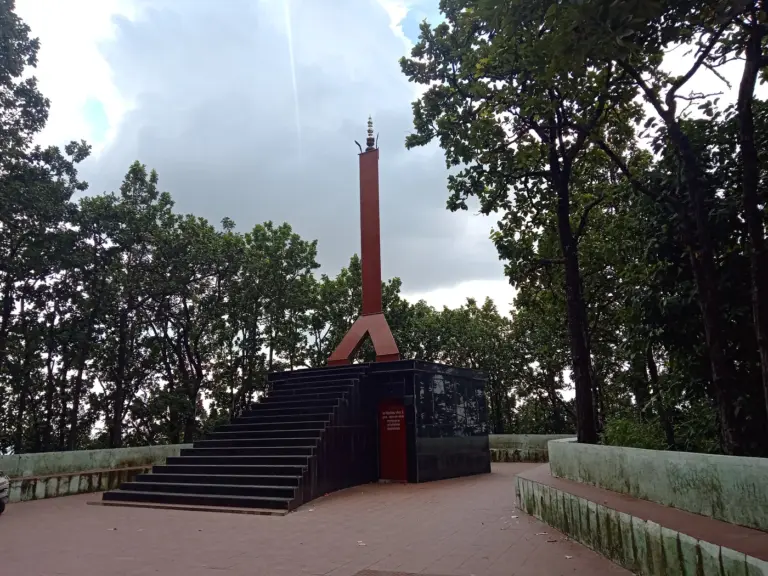
On February 5, 1922, in the village of Chauri Chaura in Gorakhpur district (now Uttar Pradesh), a procession of Non-Cooperation volunteers clashed with police. The police fired into the crowd and then retreated into the police station. The crowd set the station on fire. 22 policemen died — burned alive.
Gandhi's response was immediate and absolute. He called off the entire Non-Cooperation Movement.
He announced that mass civil disobedience was premature — the movement was not disciplined enough to absorb repression without resorting to violence. He began a five-day fast of penance. The Bardoli campaign was cancelled.
The Debate Around Gandhi's Decision
The decision was controversial then and remains so. C.R. Das, Motilal Nehru, Jawaharlal Nehru, Subhas Chandra Bose, and many others were furious — they felt the movement was at its peak and that calling it off for a single local incident was a catastrophic mistake. Gandhi was then arrested (March 1922) and sentenced to 6 years in prison (he served about 2 years).
Gandhi's reasoning was consistent with his philosophy: non-violence (ahimsa) was not a tactical choice but a moral principle. A movement that committed violence had lost its moral basis and therefore its claim to succeed. You cannot build a just society through unjust means.
Critics argued this logic made mass movements hostage to the worst-behaved participants in any crowd anywhere in the country — an impossibly high standard.
Both positions have merit. History doesn't resolve the argument.
Consequences and Impact
Immediate
- The movement ended. The Congress Working Committee voted on Gandhi's decision with significant opposition.
- Gandhi was arrested in March 1922, charged with sedition under Section 124A of the IPC (the same law used against Tilak in 1897 and Tilak again in 1908). His trial statement — "I am… guilty of the greatest crime against the State" — is one of the most famous courtroom statements in Indian history.
- The Khilafat alliance began to fracture. The Turkish Republic formally abolished the Caliphate in 1924, removing the issue's basis entirely.
Congress Split: Swarajists vs No-Changers
The suspension of the movement produced a significant Congress split.
C.R. Das and Motilal Nehru argued that Congress should contest the 1923 elections and enter the legislative councils — not to cooperate with British rule but to obstruct it from within, making governance impossible. They called themselves Swarajists.
Gandhi and his supporters (the No-Changers) argued that entering councils meant legitimising the British constitutional framework. They preferred constructive work — khadi, Hindu-Muslim unity, removal of untouchability.
The Swarajists won the argument on council entry — and proved somewhat effective at obstructing British legislative initiatives in the mid-1920s.
Long-Term Impact
- Mass politicisation: Millions of Indians, especially in rural areas, were politically mobilised for the first time. The Congress became genuinely national rather than elite.
- Hindu-Muslim unity: The Non-Cooperation–Khilafat alliance achieved the broadest Hindu-Muslim political cooperation of the nationalist era, even if it ultimately broke down.
- Khadi and self-reliance: The charkha and khadi movement created economic symbolism for independence that outlasted the specific campaign.
- New generation: Young leaders like Jawaharlal Nehru, Subhas Chandra Bose, and Vallabhbhai Patel were shaped by this movement and took leading roles in subsequent campaigns.
- Model for future movements: The Non-Cooperation Movement established the template — boycott, civil disobedience, mass arrests — that would be refined in the Civil Disobedience Movement (1930) and Quit India (1942).
| Key Date | Event |
|---|---|
| April 13, 1919 | Jallianwala Bagh massacre |
| August 1, 1920 | Gandhi's Non-Cooperation call; Tilak dies same day |
| December 1920 | Nagpur Congress passes Non-Cooperation resolution |
| November 1921 | Prince of Wales visit; widespread hartals |
| February 5, 1922 | Chauri Chaura incident |
| February 12, 1922 | Gandhi calls off movement |
| March 1922 | Gandhi arrested |
Frequently Asked Questions About the Non-Cooperation Movement
What were the main causes of the Non-Cooperation Movement?
The three main causes were: the Rowlatt Act (1919) — which allowed detention without trial; the Jallianwala Bagh massacre (April 13, 1919) and the British government's defence of General Dyer; and the Khilafat issue — Indian Muslim anger at British policy toward the Ottoman Caliphate. These three events together destroyed faith in constitutional approaches and created the conditions for Gandhi's first mass movement.
Why did Gandhi call off the Non-Cooperation Movement?
Gandhi called off the movement in February 1922 after the Chauri Chaura incident, where a mob burned a police station killing 22 policemen. He argued that the movement was not disciplined enough for mass civil disobedience and that violence by participants invalidated the movement's moral basis. This decision was deeply controversial — leaders like C.R. Das, Motilal Nehru, and Jawaharlal Nehru strongly opposed it.
What was the role of the Khilafat Movement in Non-Cooperation?
The Khilafat Movement — led by the Ali Brothers (Muhammad Ali and Shaukat Ali) — demanded protection of the Ottoman Caliphate. Gandhi allied Congress with this cause to create Hindu-Muslim unity in the independence struggle. The alliance was the most successful example of such unity in the nationalist period. It broke down after the Turkish Republic abolished the Caliphate in 1924.
What was the Swarajist vs No-Changer debate?
After the Non-Cooperation Movement was suspended, Congress split on whether to contest elections and enter legislative councils. C.R. Das and Motilal Nehru (Swarajists) argued for entering councils to obstruct British governance from within. Gandhi and the No-Changers opposed this as legitimising British constitutional structures. The Swarajists eventually won this argument within Congress.
What was the long-term impact of the Non-Cooperation Movement?
The movement's lasting impacts were: the mass politicisation of rural India; the establishment of Congress as a genuine mass organisation; the popularisation of khadi and the spinning wheel as symbols of economic independence; the emergence of a new generation of leaders (Nehru, Patel, Bose); and the creation of a template for future mass movements including the Civil Disobedience Movement of 1930.
Tell Google you want more of this.
Add Anantam IAS as a preferred sourceOne tap, and this site shows up more often in your own Top Stories, AI Overviews and AI Mode. Remove it any time.