
Opens in a new tab
Join Anantam IAS Channel on Telegram

TOPIC

Conservation Efforts

11 UPSC Prelims MCQs tagged "Conservation Efforts". Free practice with answer keys, explanations, and timed mock tests on Anantam IAS.

  1. “Biorock technology” is talked about in which one of the following situations?

    "Biorock technology" is talked about in which one of the following situations?

    1. ARestoration of damaged coral reefs
    2. BDevelopment of building materials using plant residues
    3. CIdentification of areas for exploration/extraction of shale gas
    4. DProviding salt licks for wild animals in forests/protected areas
    Answer and explanation

    Correct answer: A

    Biorock technology uses a low voltage electrical current to stimulate the growth of minerals on submerged structures. This creates a limestone-like material similar to that found in natural coral reefs.
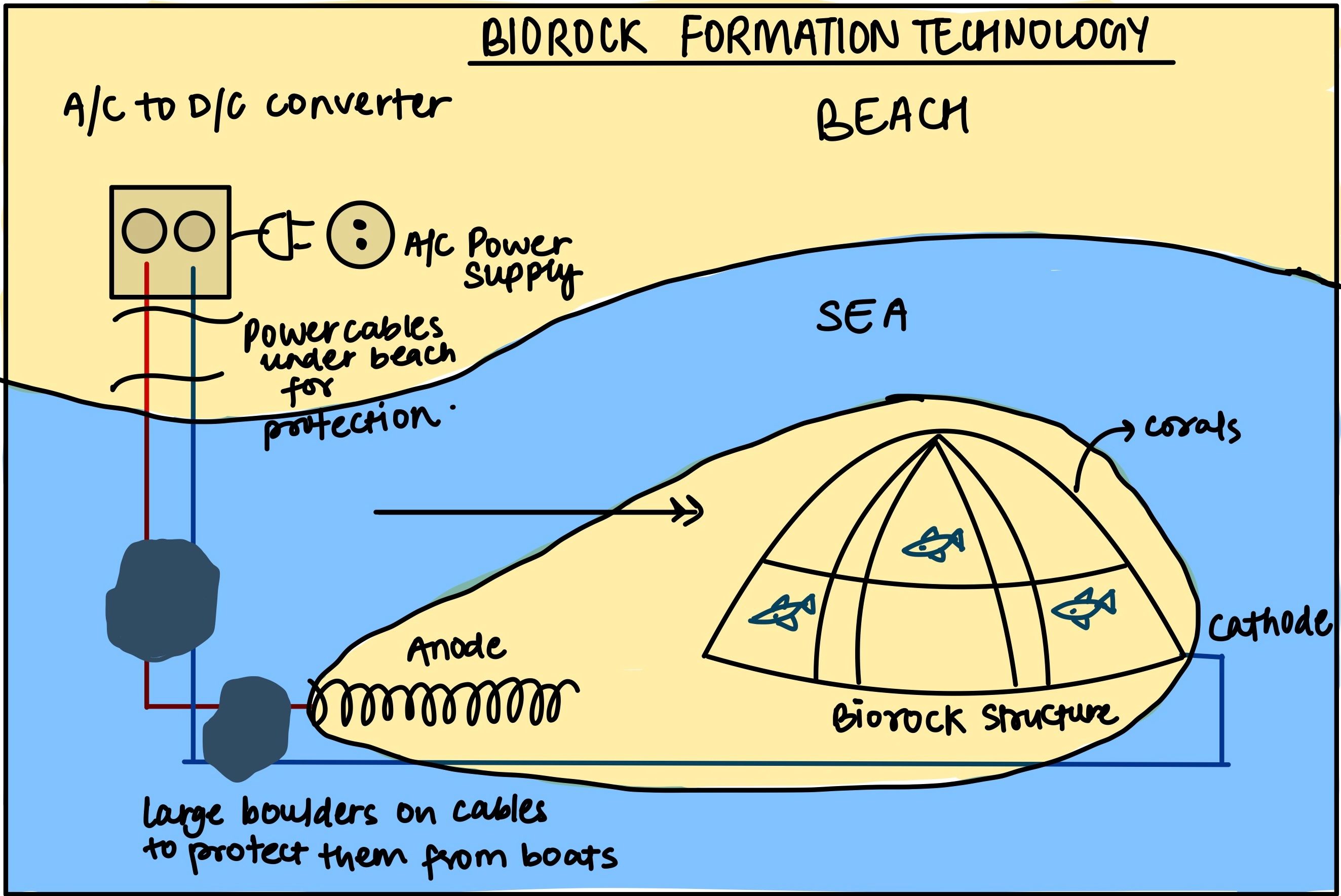
    ![Biorock Formation](https://d39jluplm5thpx.cloudfront.net//biorock_e12dead2b5.jpg)

    Biorock structures can provide a stable substrate for coral polyps to attach and grow, accelerating the restoration of degraded coral reefs.

    While Biorock can be used for other purposes, like creating artificial reefs for mariculture (fish farming) or promoting the growth of seacrete building materials, its application in coral reef restoration is a major area of interest.

  2. With reference to Indian elephants, consider the following statements: 1. The leader of an…

    With reference to Indian elephants, consider the following statements: 1. The leader of an elephant group is a female. 2. The maximum gestation period can be 22 months. 3. An elephant can normally go on calving till the age of 40 years only. 4. Among the States in India, the highest elephant population is in Kerala. Which of the statements given above is/are correct?

    1. A1 and 2 only
    2. B2 and 4 only
    3. C3 only
    4. D1, 3 and 4 only
    Answer and explanation

    Correct answer: A

    Statement 1 is correct: Female elephants, particularly older and more experienced ones, often lead the herd, while males may roam alone or form bachelor groups.

    Statement 2 is correct: The gestation period for elephants is indeed one of the longest among mammals, ranging from about 18 to 22 months.

    Statement 3 is incorrect: Female elephants can continue to reproduce well into their 40s and sometimes even into their 50s, although their reproductive capability tends to decrease with age.

    Statement 4 is incorrect: Kerala does have a significant elephant population, but the highest elephant population in India is typically found in the state of Karnataka, followed by Assam.

    ![Elephant](https://d39jluplm5thpx.cloudfront.net//Elephant_3_2d955090cd.jpeg)

  3. Which of the following are the most likely places to find the musk deer…

    Which of the following are the most likely places to find the musk deer in its natural habitat? 1. Askot Wildlife Sanctuary 2. Gangotri National Park 3. Kishanpur Wildlife Sanctuary 4. Manas National Park Select the correct answer using the code given below:

    1. A1 and 2 only
    2. B2 and 3 only
    3. C3 and 4 only
    4. D1 and 4 only
    Answer and explanation

    Correct answer: A

    Askot Wildlife Sanctuary (Uttarakhand): Musk deer are found in the high altitudes of the Himalayan region. Askot Wildlife Sanctuary, located in Uttarakhand, is specifically known for conserving the musk deer and its habitat.

    Gangotri National Park (Uttarakhand): Gangotri National Park, also located in Uttarakhand, is another high altitude region where musk deer can be found.

    Kishanpur Wildlife Sanctuary (Uttar Pradesh): This sanctuary primarily consists of terai grasslands and does not provide a suitable habitat for musk deer.

    Manas National Park (Assam): This park is located in the northeastern plains and is home to species like tigers, rhinos, and elephants, but not musk deer.

    Therefore, the most likely places to find the musk deer in its natural habitat are Askot Wildlife Sanctuary and Gangotri National Park.

  4. Which one of the following protected areas is well-known for the conservation of a…

    Which one of the following protected areas is well-known for the conservation of a sub-species of the Indian swamp deer (Barasingha) that thrives well on hard ground and is exclusively graminivorous?

    1. AKanha National Park
    2. BManas National Park
    3. CMudumalai Wildlife Sanctuary
    4. DTal Chhaper Wildlife Sanctuary
    Answer and explanation

    Correct answer: A

    Southern swamp deer/ hard ground swamp deer, a unique sub-species of Barasingha, also known as the Indian swamp deer, is a herbivorous species that feeds exclusively on grasses (graminivorous) and is well adapted to is adapted to hard ground in open sal forest.

    ![Barasingha](https://d39jluplm5thpx.cloudfront.net//Barasingha_7eacefaca8.PNG)

    Kanha National Park is well-known for the conservation of hard ground swamp deer. Conservation efforts by the park have helped revive its numbers from near extinction.

    Therefore, the correct answer is Kanha National Park.

  5. Consider the following statements 1. Asiatic lion is naturally found in India only. 2.…

    Consider the following statements 1. Asiatic lion is naturally found in India only. 2. Double-humped camel is naturally found in India only. 3. One-horned rhinoceros is naturally found in India only. Which of the statements given above is/are correct?

    1. A1 only
    2. B2 only
    3. C1 and 3 only
    4. D1, 2 and 3
    Answer and explanation

    Correct answer: A

    Statement 1 is Correct: The Asiatic lion is naturally found only in India, with its wild population restricted to the Gir National Park and surrounding areas in Gujarat. It is currently listed as Endangered on the IUCN Red List.

    Statement 2 is Incorrect: The double-humped camel (Bactrian camel) is naturally found in the steppes of Central Asia, particularly in Mongolia and China. While a population exists in the Nubra Valley of Ladakh, India, its natural range extends across Central Asia.

    Statement 3 is Incorrect: The one-horned rhinoceros is naturally found in India (primarily in Assam, West Bengal, and Uttar Pradesh) and Nepal. Since it is native to both countries, it is not found naturally in India only.

  6. Recently there was a proposal to translocate some of the lions from their natural…

    Recently there was a proposal to translocate some of the lions from their natural habitat in Gujarat to which one of the following sites?

    1. ACorbett National Park
    2. BSariska National Park
    3. CMudumalai Wildlife Sanctuary
    4. DKuno Palpur Wildlife Sanctuary
    Answer and explanation

    Correct answer: D

    An environment ministry's expert committee approved Kuno Palpur in Madhya Pradesh as the second home for Asiatic lions found only in Gir National Park. However, the Gujarat government will not share lions unless 33 studies as mandated by the International Wildlife Watchdog IUCN is completed.

  7. If you want to see gharials in their natural habitat, which one of the…

    If you want to see gharials in their natural habitat, which one of the following is the best place to visit?

    1. ABhitarkanika Mangroves
    2. BChambal River
    3. CPulicat Lake
    4. DDeepor Beel
    Answer and explanation

    Correct answer: B

    The best place to see Gharials in their natural habitat is the National Chambal Gharial Sanctuary.

    The National Chambal Gharial Sanctuary is a tri-state protected area in northern India spread across the states of Madhya Pradesh, Rajasthan and Uttar Pradesh. It is one of the dedicated sanctuaries for Gharials, the critically endangered fish-eating crocodiles.

  8. With reference to ‘dugong’, mammal found in India, which of the following statements is/are…

    With reference to 'dugong', mammal found in India, which of the following statements is/are correct? 1. It is a herbivorous marine animal. 2. It is found along the entire coast of India 3. It is given legal protection under Schedule 1 of the Wildlife (Protection) Act, 1972. Select the correct answer using the code given below.

    1. A1 and 2 only
    2. B2 only
    3. C1 and 3 only
    4. D3 only
    Answer and explanation

    Correct answer: C

    Statement 1 is correct: The Dugong is a herbivorous marine animal. Dugongs are marine mammals that feed on seagrass meadows.

    Statement 2 is incorrect: While once more widespread, dugong populations are now concentrated in specific areas. They are primarily found in -The Gulf of Mannar and Palk Bay off the coast of Tamil Nadu -The Andaman and Nicobar Islands -The Gulf of Kutch

    Statement 3 is correct: It is given legal protection under Schedule 1 of the Wildlife (Protection) Act, 1972.

    ![Dugong](https://d39jluplm5thpx.cloudfront.net//Dugong_1ea0620374.PNG)

  9. Which one of the following is the national aquatic animal of India?

    Which one of the following is the national aquatic animal of India?

    1. ASaltwater crocodile
    2. BOlive ridley turtle
    3. CGangetic dolphin
    4. DGharial
    Answer and explanation

    Correct answer: C

    * The National Aquatic animal of India is the Ganges River Dolphin (Platanista gangetica). * The Ministry of Environment and Forests notified the Ganges River Dolphin as the National Aquatic Animal on 18th May 2010. * The dolphin is blind and faces a severe threat from the heavy pollution and habitat destruction in the waters where it lives. * It has been declared Endangered in the IUCN Red List, and it is assumed that fewer than 2000 individuals remain. This dolphin, called susu or susuk in India, is thought to represent the purity of the Ganga.

  10. Other than poaching, what are the possible reasons for the decline in the population…

    Other than poaching, what are the possible reasons for the decline in the population of Ganges River Dolphins? 1. Construction of dams and barrages on rivers 2. Increase in the population of crocodiles in rivers 3. Getting trapped in fishing nets accidentally 4. Use of synthetic fertilizers and other agricultural chemicals in crop-fields in the vicinity of rivers Select the correct answer using the code given below.

    1. A1 and 2 only
    2. B2 and 3 only
    3. C1, 3 and 4 only
    4. D1, 2, 3 and 4
    Answer and explanation

    Correct answer: C

    Statement 1 is correct: This is a major threat. Dams fragment the river habitat, hinder migration patterns, and can disrupt prey availability for the dolphins.

    Statement 2 is incorrect: While competition might exist, it's not a cause of decline. A healthy river ecosystem can support both dolphins and crocodiles.

    Statement 3 is correct: This is a significant threat, as dolphins can get caught in fishing gear and drown.

    Statement 4 is correct: Runoff from agricultural lands can pollute rivers with pesticides and fertilizers. These pollutants can harm the dolphins' health and prey species.

    Thus 1,3, and 4 are the causes of the decline in the Ganga River Dolphins.

  11. The term ‘M-STRIPES’ is sometimes seen in the news in the context of

    The term 'M-STRIPES' is sometimes seen in the news in the context of

    1. ACaptive breeding of Wild Fauna
    2. BMaintenance of Tiger Reserves
    3. CIndigenous Satellite Navigation System
    4. DSecurity of National Highways
    Answer and explanation

    Correct answer: B

    M-STRIPES stands for Monitoring System for Tigers - Intensive Protection and Ecological Status. It's a software-based program launched by the Indian government's National Tiger Conservation Authority (NTCA) to -Strengthen protection efforts for Bengal tigers in Indian tiger reserves. -Enhance monitoring and patrolling activities by forest guards.