
Opens in a new tab
Join Anantam IAS Channel on Telegram

TOPIC

Renewable Energy

16 UPSC Prelims MCQs tagged "Renewable Energy". Free practice with answer keys, explanations, and timed mock tests on Anantam IAS.

  1. Consider the following materials: 1. Agricultural residues 2. Corn grain 3. Wastewater treatment sludge…

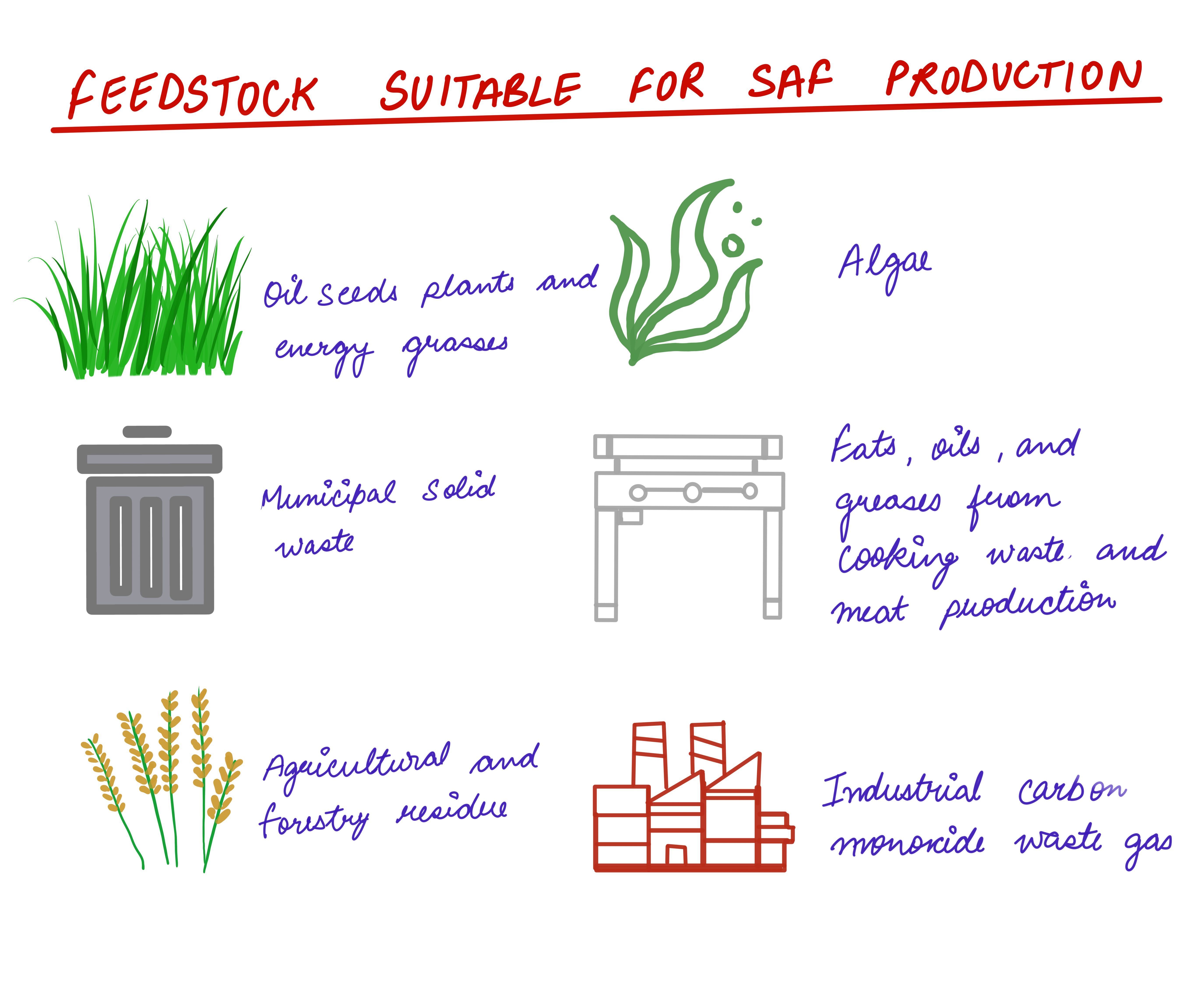
    Consider the following materials: 1. Agricultural residues 2. Corn grain 3. Wastewater treatment sludge 4. Wood mill waste Which of the above can be used as feedstock for producing Sustainable Aviation Fuel ?

    1. A1 and 2 only
    2. B3 and 4 only
    3. C1, 2, 3 and 4
    4. D1, 3 and 4 only
    Answer and explanation

    Correct answer: C

    * Agricultural residues: These include materials like crop stalks, husks, and leaves. They are a viable source of biomass that can be converted into biofuels, including Sustainable Aviation Fuel (SAF).

    * Corn grain: Corn grain is a source of sugars that can be fermented to produce ethanol, a biofuel. While ethanol is primarily used in gasoline blends, it can also be further processed into SAF.

    * Wastewater treatment sludge: This sludge is rich in organic matter. Through processes like anaerobic digestion, it can produce biogas, which can be further converted into SAF.

    * Wood mill waste: This includes sawdust, wood chips, and bark. These lignocellulosic materials can be converted into biofuels through various thermochemical or biochemical processes, ultimately leading to SAF production.
    ![Feedstock](https://d39jluplm5thpx.cloudfront.net//saf_production_43eea2380d.jpeg)

    Therefore, all four materials can be used as feedstock for producing Sustainable Aviation Fuel.

  2. Consider the following heavy industries : 1. Fertilizer plants 2. Oil refineries 3. Steel…

    Consider the following heavy industries : 1. Fertilizer plants 2. Oil refineries 3. Steel plants Green hydrogen is expected to play a significant role in decarbonizing how many of the above industries?

    1. AOnly one
    2. BOnly two
    3. CAll three
    4. DNone
    Answer and explanation

    Correct answer: C

    * Green hydrogen is the hydrogen produced through electrolysis of water using electricity from renewable sources.

    * Green hydrogen is expected to play a significant role in decarbonizing all three of the mentioned heavy industries.

    * Green hydrogen can be used in the production of ammonia, which is a key component for many fertilizers. Fertilizer production is energy-intensive and often relies on fossil fuels, particularly natural gas. By using green hydrogen as a clean energy source, the carbon emissions from this industry can be significantly reduced

    * Green hydrogen can be used in oil refineries to process crude oil into various products, including gasoline, diesel, and jet fuel. This can help to reduce the carbon emissions from the refining process.

    * The steel industry is one of the largest industrial emitters of carbon dioxide. Green hydrogen can be used in place of coal in the steelmaking process, significantly reducing the industry's carbon emissions.

    ![Green Hydrogen](https://d39jluplm5thpx.cloudfront.net//Green_Hydrogen_aec0f13997.png)

  3. With reference to green hydrogen, Consider the following statements : 1. It can be…

    With reference to green hydrogen, Consider the following statements : 1. It can be used directly as a fuel for internal combustion. 2. It can be blended with natural gas and used as fuel for heat or power generation. 3. It can be used in the hydrogen fuel cell to run vehicles. How many of the above statements are correct?

    1. AOnly one
    2. BOnly two
    3. CAll three
    4. DNone
    Answer and explanation

    Correct answer: C

    * Green hydrogen is any hydrogen that is produced from renewable energy.

    * Statement 1 is correct: Green hydrogen can be used as a direct fuel for internal combustion engines, replacing conventional fuels like gasoline or diesel.

    * Statement 2 is correct: Green hydrogen can be blended with natural gas and used as a fuel for various applications like heating, power generation, and industrial processes.

    * Statement 3 is correct: Green hydrogen can be used in hydrogen fuel cells to power electric vehicles, providing a clean and efficient alternative to traditional fossil fuel-powered vehicles.

    Therefore, all three statements regarding the uses of green hydrogen are correct.

  4. With reference to solar water pumps, consider the following statements: 1. Solar power can…

    With reference to solar water pumps, consider the following statements: 1. Solar power can be used for running surface pumps and not for submersible pumps. 2. Solar power can be used for running centrifugal pumps and not the ones with piston. Which of the statements given above is/are correct?

    1. A1 only
    2. B2 only
    3. CBoth 1 and 2
    4. DNeither 1 nor 2
    Answer and explanation

    Correct answer: D

    Solar pumps provide a clean, energy-efficient, and sustainable alternative to traditional electric and fuel-driven pump sets. They play a crucial role in environmentally friendly agriculture and can be implemented in both developed and underdeveloped regions. The main components in a solar pumping system include a photovoltaic (PV) array, an electric motor and a pump. Solar water pumping systems are classified as either direct current (DC) or alternating current (AC) systems based on the motors ability. Recently, the concept of brushless DC (BLDC) motors for solar pumping water applications was presented as well.

    Statement 1 is incorrect: Solar power can be used to run both surface pumps and submersible pumps. The type of pump does not limit the use of solar power.

    Statement 2 is incorrect: Solar power can be used to run both centrifugal pumps and piston pumps. The type of pump, whether it's a centrifugal pump or a piston pump, does not limit the use of solar power.

    Hence, both statements 1 and 2 are incorrect.

  5. According to India’s National Policy on Biofuels, which of the following can be used…

    According to India's National Policy on Biofuels, which of the following can be used as raw materials for the production of biofuels? 1. Cassava 2. Damaged wheat grains 3. Groundnut seeds 4. Horse gram 5. Rotten potatoes 6. Sugar beet Select the correct answer using the code given below:

    1. A1, 2, 5 and 6 only
    2. B1, 3, 4 and 6 only
    3. C2, 3, 4 and 5 only
    4. D1, 2, 3, 4, 5 and 6
    Answer and explanation

    Correct answer: A

    The question is asking about the raw materials that can be used for the production of biofuels according to India's National Policy on Biofuels.

    Cassava is a starch-rich root vegetable that can be used to produce biofuel.

    Damaged wheat grains, which are unfit for human consumption, can also be used to produce biofuel.

    Groundnut seeds are not mentioned in the National Policy on Biofuels as a raw material for biofuel production.

    Horse gram is also not mentioned in the National Policy on Biofuels as a raw material for biofuel production.

    Rotten potatoes, which are unfit for human consumption, can be used to produce biofuel.

    Sugar beet is a plant whose root contains a high concentration of sucrose and it is grown commercially for sugar production. It can also be used to produce biofuel.

    Therefore, according to India's National Policy on Biofuels, Cassava, Damaged wheat grains, Rotten potatoes, and Sugar beet can be used as raw materials for the production of biofuels.

  6. In the context of proposals to the use of hydrogen-enriched CNG (H-CNG) as fuel…

    In the context of proposals to the use of hydrogen-enriched CNG (H-CNG) as fuel for buses in public transport, consider the following statements : 1. The main advantage of the use of H-CNG is the elimination of carbon monoxide emissions. 2. H-CNG as fuel reduces carbon dioxide and hydrocarbon emissions. 3. Hydrogen up to one-fifth by volume can be blended with CNG as fuel for buses. 4. H-CNG makes the fuel less expensive than CNG. Which of the statements given above is/are correct?

    1. A1 only
    2. B2 and 3 only
    3. C4 only
    4. D1, 2, 3 and 4
    Answer and explanation

    Correct answer: B

    Statement 1 is incorrect: While H-CNG significantly reduces carbon monoxide (CO) emissions, it does not eliminate them entirely. Burning hydrogen produces only water vapor, but since H-CNG is a blend of hydrogen and CNG, some CO is still emitted though at lower levels than conventional CNG.

    Statement 2 is correct: H-CNG is cleaner than CNG, leading to a reduction in carbon dioxide (CO₂) and hydrocarbon (HC) emissions. The reduction depends on the specific blend ratio and engine efficiency.

    Statement 3 is correct: As per Indian government guidelines, up to 18% hydrogen (by volume) can be blended with CNG for use in buses and other vehicles. This blend improves combustion efficiency and reduces emissions.

    Statement 4 is incorrect: H-CNG is not necessarily cheaper than CNG. The cost is influenced by Hydrogen production methods, Infrastructure development and Blending technology.

    Therefore, option (B) statements 2 and 3 are correct.

  7. Consider the following statements: 1. The International Solar Alliance was launched at the United…

    Consider the following statements: 1. The International Solar Alliance was launched at the United Nations Climate Change Conference in 2015. 2. The Alliance includes all the member countries of the United Nations. Which of the statements given above is/are correct?

    1. A1 only
    2. B2 only
    3. CBoth 1 and 2
    4. DNeither 1 nor 2
    Answer and explanation

    Correct answer: A

    Statement 1 is correct: The International Solar Alliance (ISA) was launched by India and France on November 30, 2015, during the United Nations Climate Change Conference (COP 21) in Paris. The primary aim of ISA is to promote solar energy deployment, reduce dependence on fossil fuels, and support sustainable energy solutions, particularly in developing countries.

    Statement 2 is incorrect: Initially, ISA was open only to 121 solar-rich countries located between the Tropic of Cancer and the Tropic of Capricorn (the "Sun Belt"), as these regions receive abundant solar radiation throughout the year.

    *However, in 2018, ISA expanded its membership to include all UN member states, allowing countries beyond the tropics to join and benefit from solar energy initiatives. This change made ISA a more inclusive global platform for promoting solar energy adoption worldwide.*

  8. ‘Net metering’ is sometimes seen in the news in the context of promoting the…

    'Net metering' is sometimes seen in the news in the context of promoting the -

    1. Aproduction and use of solar energy by the households/consumers
    2. Buse of piped natural gas in the kitchens of households
    3. Cinstallation of CNG kits in motor- cars
    4. Dinstallation of water meters in urban households
    Answer and explanation

    Correct answer: A

    Net metering (also known as net energy metering) is a solar incentive that allows you to store energy in the electric grid. When your solar panels produce excess power, that energy is sent to the grid and in exchange, you can pull from the grid when your system is under-producing like during night-time.

  9. The term ‘IndARC’ sometimes seen in the news, is the name of?

    The term 'IndARC' sometimes seen in the news, is the name of?

    1. Aan indigenously developed radar system inducted into Indian Defence
    2. BIndia's satellite to provide services to the countries of Indian Ocean Rim
    3. Ca scientific establishment set up by India in the Antarctic region
    4. DIndia's underwater observatory to scientifically study the Arctic region
    Answer and explanation

    Correct answer: D

    IndARC stands for India's first underwater observatory deployed in the Arctic region. Here's a breakdown of its key aspects:

    Its location in Kongsfjorden fjord, Svalbard, Norway (situated midway between Norway and the North Pole) and deployment in the year 2014 for studies of the Arctic climate and its influence on the Indian monsoon system.

  10. With reference to the Indian Renewable Energy Development Agency Limited (IREDA), which of the…

    With reference to the Indian Renewable Energy Development Agency Limited (IREDA), which of the following statements is/are correct? 1. It is a Public Limited Government Company. 2. It is a Non – Banking Financial Company. Select the correct answer using the code given below.

    1. A1 only
    2. B2 only
    3. CBoth 1 and 2
    4. DNeither 1 or 2
    Answer and explanation

    Correct answer: C

    The Indian Renewable Energy Development Agency (IREDA) is a Non-Banking Financial Institution under the administrative control of Ministry of New and Renewable Energy for providing term loans for renewable energy and energy efficiency projects.

    Statement 1 is correct: IREDA is a Public Limited Government Company established under the Companies Act, 1956. Statement 2 is correct: IREDA is also registered as a Non-Banking Financial Company (NBFC) with the Reserve Bank of India (RBI).

  11. With reference to ‘fuel cells’ in which hydrogen-rich fuel and oxygen are used to…

    With reference to 'fuel cells' in which hydrogen-rich fuel and oxygen are used to generate electricity. Consider the following statements: 1. If pure hydrogen is used as a fuel, the fuel cell emits heat and water as by-products. 2. Fuel cells can be used for powering buildings and not for small devices like laptop computers. 3. Fuel cells produce electricity in the form of Alternating Current (AC). Which of the statements given above is/are correct?

    1. A1 only
    2. B2 and 3 only
    3. C1 and 3 only
    4. D1, 2 and 3
    Answer and explanation

    Correct answer: A

    Statement 1 is correct: When pure hydrogen reacts with oxygen in a fuel cell, the only byproducts are water and heat. This is an advantage of hydrogen fuel cells, making them a clean energy source with minimal emissions.

    Statement 2 is incorrect: Fuel cells can be used for various applications, including powering small devices like laptops. Portable fuel cells are being developed for this purpose. While currently less common, they hold promise for the future.

    Statement 3 is incorrect: Fuel cells actually produce electricity in the form of Direct Current (DC). In some applications, an inverter might be needed to convert the DC output to AC for compatibility with the electrical grid.

    Therefore, the only correct answer is 1 only.

  12. Consider the following statements: 1. Maize can be used for the production of starch.…

    Consider the following statements: 1. Maize can be used for the production of starch. 2. Oil extracted from maize can be a feedstock for biodiesel. 3. Alcoholic beverages can be produced by using maize. Which of the statements given above is/are correct?

    1. A1 only
    2. B1 and 2 only
    3. C2 and 3 only
    4. D1, 2 and 3
    Answer and explanation

    Correct answer: D

    Maize (corn) is a versatile crop with numerous uses.

    Statement 1 is correct: Maize is a major source of starch, a carbohydrate used in various food and industrial applications. Cornstarch is a common thickening agent in cooking and is also used in bioplastics and pharmaceuticals.

    Statement 2 is correct: Biodiesel Feedstock Corn oil, extracted from the maize germ, can be processed into biodiesel, a renewable fuel alternative to traditional diesel.

    Statement 3 is correct: Alcoholic Beverage Production Maize is a key ingredient in various alcoholic beverages, including bourbon whiskey and corn-based ethanol for alcoholic drinks or fuel.

  13. With reference to technologies for solar power production, consider the following statements: 1. ‘Photovoltaics’…

    With reference to technologies for solar power production, consider the following statements: 1. 'Photovoltaics' is a technology that generates electricity by direct conversion of light into electricity, while 'Solar Thermal' is a technology that utilizes the Sun's rays to generate heat which is further used in the electricity generation process. 2. Photovoltaics generates Alternating Current (AC), while Solar Thermal generates Direct Current (DC). 3. India has a manufacturing base for Solar Thermal technology, but not for Photovoltaics. Which of the statements given above is/are correct?

    1. A1 only
    2. B2 and 3 only
    3. C1, 2 and 3
    4. DNone
    Answer and explanation

    Correct answer: A

    Statement 1 is correct: Photovoltaic (PV) technology converts sunlight directly into electricity using semiconductors (like silicon) — this is a direct conversion of light to electrical energy. Solar Thermal technology uses mirrors or lenses to concentrate sunlight to produce heat, which then drives a turbine to generate electricity (an indirect process).

    Statement 2 is incorrect: Photovoltaic systems generate Direct Current (DC), which is usually converted into Alternating Current (AC) through an inverter for grid use. Solar Thermal systems generate heat energy, which is used to produce AC electricity through conventional turbines.

    Statement 3 is incorrect: India has a manufacturing base for solar photovoltaics (PV) — including solar cells, modules, and panels (e.g., companies like Adani Solar, Vikram Solar, and Tata Power Solar). The solar thermal manufacturing base in India is limited and largely focused on small-scale applications like water heating.

  14. In the context of which one of the following are the terms ‘pyrolysis and…

    In the context of which one of the following are the terms 'pyrolysis and plasma gasification' mentioned?

    1. AExtraction of rare earth elements
    2. BNatural gas extraction technologies
    3. CHydrogen fuel-based automobiles
    4. DWaste-to-energy technologies
    Answer and explanation

    Correct answer: D

    * Pyrolysis and plasma gasification are both thermochemical processes used to convert waste materials (organic or inorganic) into usable products.

    * Pyrolysis: This process involves heating organic materials (like plastic, and biomass) in an oxygen-deficient environment, leading to decomposition into various products like syngas (a mixture of gases), bio-oil, and char.

    * Plasma gasification: This technology uses high-temperature plasma to break down waste materials into syngas rich in hydrogen and carbon monoxide.

    * Both processes offer a potential solution for waste management and energy generation. They can convert various waste streams into usable fuels or feedstock for further processing.

  15. Consider the following statements: 1. Gujarat has the largest solar park in India. 2.…

    Consider the following statements: 1. Gujarat has the largest solar park in India. 2. Kerala has a fully solar powered International Airport. 3. Goa has the largest floating solar photovoltaic project in India. Which of the statements given above is/are correct?

    1. A1 and 2
    2. B2 only
    3. C1 and 3
    4. D3 only
    Answer and explanation

    Correct answer: B

    Statement 1 is incorrect. India's Bhadla Solar Park in Rajasthan is the largest solar power park in the world.

    Statement 2 is correct. Kerala's Cochin International Airport Ltd (CIAL) is the first airport in the world that would be running fully on solar power.

    Statement 3 is incorrect. The Omkareshwar Floating Solar Project in Madhya Pradesh is currently the largest floating solar photovoltaic project in India.

  16. With reference to solar power production in India, consider the following statements: 1. India…

    With reference to solar power production in India, consider the following statements: 1. India is the third largest in the world in the manufacture of silicon wafers used in photovoltaic units. 2. The solar power tariffs are determined by the Solar Energy Corporation of India. Which of the statements given above is/are correct?

    1. A1 only
    2. B2 only
    3. CBoth 1 and 2
    4. DNeither 1 nor 2
    Answer and explanation

    Correct answer: D

    Statement 1 is incorrect: India does not feature among the top three global manufacturers of silicon wafers used in photovoltaic (PV) units or solar cells. The top three manufacturers of silicon wafers for PV applications are China, Taiwan, and South Korea.

    Statement 2 is incorrect: The Solar Energy Corporation of India (SECI) is a government-owned company that facilitates the implementation of solar energy projects in the country, but it does not determine the solar power tariffs. The solar power tariffs in India are determined through a competitive bidding process conducted by various agencies.

    Hence, the correct answer is option (d) Neither 1 nor 2.