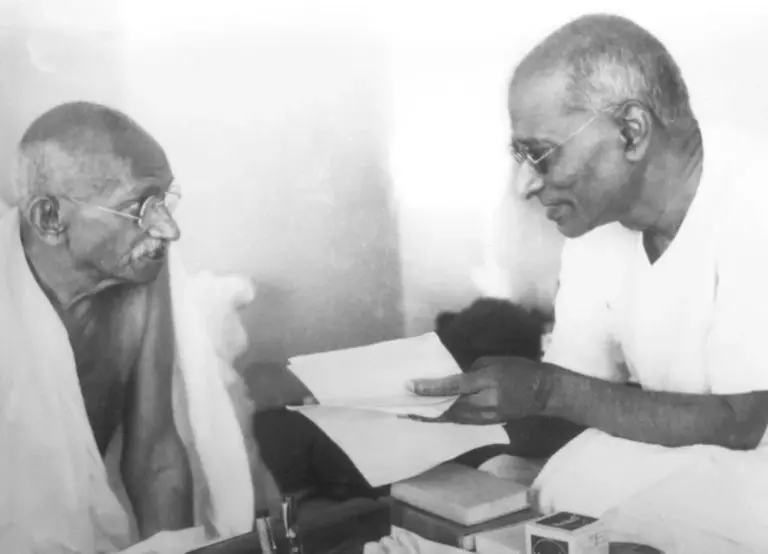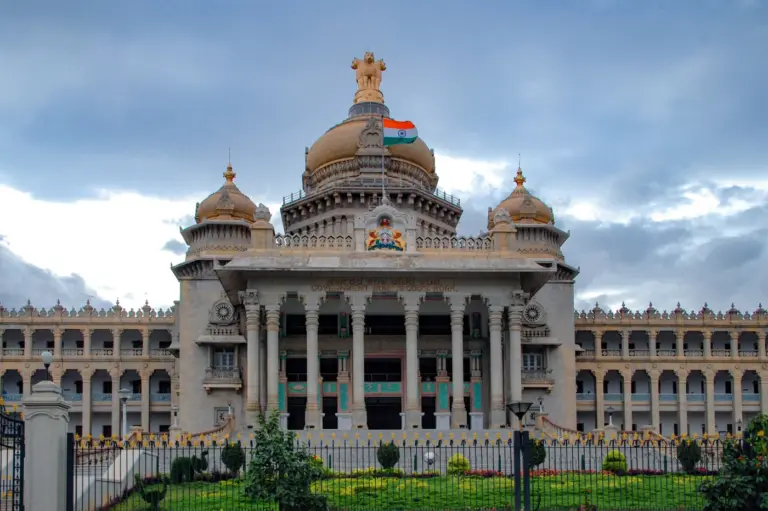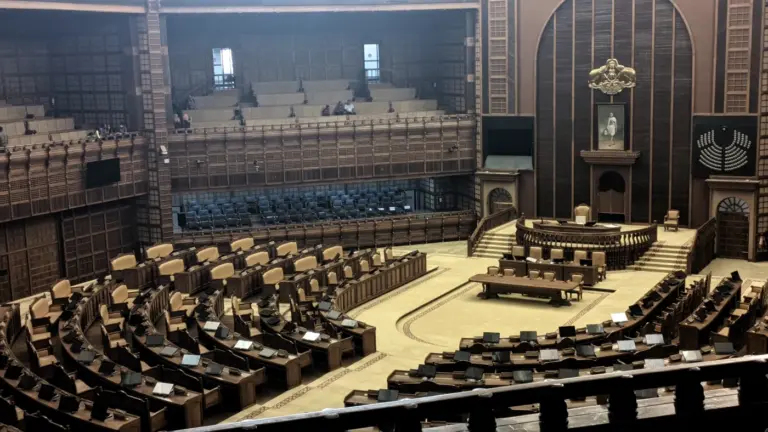
The idea of a single national language for India is not new. Freedom movement leaders like Mahatma Gandhi, Nehru, Patel and Rajagopalachari debated it deeply. Hindi was championed as a unifying idiom; voices from Tamil Nadu, Bengal and the South were equally firm that linguistic diversity was central to Indian identity. The Constitution of India offers a carefully calibrated compromise — one official language (Hindi), a permanent associate official language (English), and constitutional protection for linguistic minorities.
Yet, every few years, the idea of "One Nation, One Language" returns to national conversation — sometimes through political statements, sometimes through proposed education reforms. It is a GS II theme that intersects with constitutional law, federalism, culture and language policy.
Constitutional framework on language
Article 29 — Protection of linguistic minorities
- Any section of citizens having a distinct language, script or culture has the right to conserve it.
- Article 29(2) prohibits discrimination in admission to educational institutions maintained by the State or receiving state aid on grounds of religion, race, caste or language.
Article 343 — Official language of the Union
- Hindi in Devanagari script is the official language of the Union.
- Numerals: International form of Indian numerals (Arabic numerals).
- English was to continue for 15 years from commencement of the Constitution.
- Article 343(3) empowered Parliament to provide for continued use of English — done via Official Languages Act, 1963, which made English permanent alongside Hindi.
Article 345 — Official languages of states
- State Legislatures may adopt any language in use in the State as official language.
- Until then, English continues.
Article 348 — Language in courts
- Until Parliament provides otherwise, all proceedings in the Supreme Court and every High Court shall be in English.
Article 350A — Mother tongue instruction
- Directs every State and local authority to provide adequate facilities for instruction in the mother tongue at the primary stage to children belonging to linguistic minority groups.
Article 350B — Special Officer for Linguistic Minorities
- The President shall appoint a Special Officer to investigate matters relating to safeguards for linguistic minorities.
Eighth Schedule
- Originally listed 14 languages; now contains 22 languages recognised as scheduled languages of India:
Assamese, Bengali, Bodo, Dogri, Gujarati, Hindi, Kannada, Kashmiri, Konkani, Maithili, Malayalam, Manipuri, Marathi, Nepali, Odia, Punjabi, Sanskrit, Santali, Sindhi, Tamil, Telugu, Urdu.
Article 19(1)(a) — freedom of speech
Every citizen has the right to freedom of speech and expression — to express views, thoughts and opinions in words (speech, writing), images (painting), or any other medium. Imposing a single language undermines this right by privileging one expressive medium over another.
Linguistic diversity — the facts
- The 2011 Census records 1,369 rationalised mother tongues (grouped into 121 scheduled and non-scheduled languages).
- Hindi is spoken (as mother tongue or second language) by roughly 44 percent — the largest single group, but not a majority.
- Hindi is the first-choice language in about 12 of 36 states and UTs per 2011 Census — meaning most of India is linguistically non-Hindi.
- English serves as the bridge language for pan-Indian communication, higher education, law and professional services.
Why "One Nation, One Language" might seem attractive
- Lingual uniformity could strengthen national fraternity.
- Administrative efficiency — less time spent on translation of executive procedures, training of government human resources.
- Saves revenue spent on multilingual documentation.
- Better delivery in critical sectors — especially healthcare, where language barriers cause misdiagnosis and poor outcomes.
- Ease of inter-state mobility for work and education.
Why "One Nation, One Language" is deeply problematic
Violates the Preamble
- The Preamble promises FRATERNITY "assuring the dignity of the individual and the unity and integrity of the Nation" — forcing a language undermines individual dignity.
Violates fundamental rights under Article 29
- Article 29 guarantees any class of citizens with specific language, script and culture the right to protect it. Imposing a uniform language contradicts this right.
Undermines linguistic diversity
- As per Census 2011, there are 19,569 mother tongues reported in India. Imposing one language violates the principle of diversity that the Constitution was designed to protect.
Violates federal structure
- Only 12 of 36 states and UTs have Hindi as first choice. Imposing Hindi contradicts cooperative federalism.
- Articles 345 and 347 empower states to choose their own official language.
Historical warnings
- Imposition of one language has historically divided nations. The imposition of Urdu on East Pakistan was a major cause of the 1971 breakup that created Bangladesh.
- Sri Lanka's Sinhala Only Act, 1956 triggered decades of ethnic conflict.
- Within India, the 1965 anti-Hindi agitation in Tamil Nadu transformed state politics permanently.
Might aggravate regionalism into secessionism
- Heavy-handed imposition can feed secessionist sentiment where existing linguistic identity is strong.
The Three-Language Formula
A compromise accepted by most states (Tamil Nadu and Puducherry use a two-language formula):
- First language: Mother tongue or regional language.
- Second language: Hindi in non-Hindi-speaking states; a modern Indian language (often a Dravidian language) in Hindi-speaking states.
- Third language: English.
The National Education Policy 2020 retains a flexible three-language formula, without making any specific language mandatory and emphasising mother-tongue-based education at the primary level.
The Official Languages Act, 1963
- Ensures English continues as an associate official language alongside Hindi, as long as any non-Hindi-speaking state desires it.
- Mandates translation between Hindi and English in parliamentary and legislative contexts.
Article 351 — Directive on Hindi
- Directs the Union to promote Hindi as a medium of expression for all the elements of the composite culture of India.
- Does not mandate imposition — only encourages organic development drawing from Hindustani and other Indian languages.
Supreme Court on language rights
- Usha Mehta v State of Maharashtra (2004) — upheld the right of linguistic minority institutions to impart education in the mother tongue.
- Jamiat-ul-Ulama Hind v Union of India — upheld minority rights to establish and administer educational institutions under Article 30.
- Courts have consistently held that language is fundamental to identity and expression.
Latest developments (2024-26)
- National Education Policy 2020 continues to emphasise mother-tongue-based education at primary level and a flexible three-language formula.
- The Official Languages Department (Rajbhasha Vibhag) periodically issues directives on use of Hindi in Central government offices; these occasionally generate friction with non-Hindi states.
- Parliamentary Committee on Official Language has recommended expanded use of Hindi in recruitment and central government operations.
- Updated context: Several states — particularly Tamil Nadu, Karnataka and Kerala — have strongly resisted any perceived Hindi imposition. Debates in 2024-25 around exam language choices (CAPF, NEET counselling) and signboards reflect these tensions.
Way forward
- Celebrate linguistic pluralism as a national asset, not a liability.
- Enable Hindi as a link language through voluntary incentives, not coercive mandates.
- Promote English alongside regional languages for global competitiveness.
- Translation infrastructure — use AI-assisted translation at scale for government services.
- Preserve endangered languages — expand the Eighth Schedule judiciously; fund documentation of tribal languages.
- Respect Article 29 — no individual should be forced to adopt a language not their own.
UPSC relevance
For Prelims, remember:
- Article 343 — Hindi is the official language of the Union.
- Official Languages Act 1963 — makes English a permanent associate.
- Eighth Schedule — currently 22 languages.
- Article 350A, 350B — linguistic minority safeguards.
- Article 351 — directive to promote Hindi.
For Mains (GS II):
- Critically examine the "One Nation, One Language" proposition in the context of India's federal and pluralist Constitution.
- Discuss the three-language formula and its implementation challenges.
- Evaluate Article 29 and Article 350A in protecting linguistic minorities.
In essays, language is a rich theme that connects to identity, federalism, pluralism, fraternity, and the Indian idea of unity without uniformity — a cornerstone of constitutional morality.
Tell Google you want more of this.
Add Anantam IAS as a preferred sourceOne tap, and this site shows up more often in your own Top Stories, AI Overviews and AI Mode. Remove it any time.