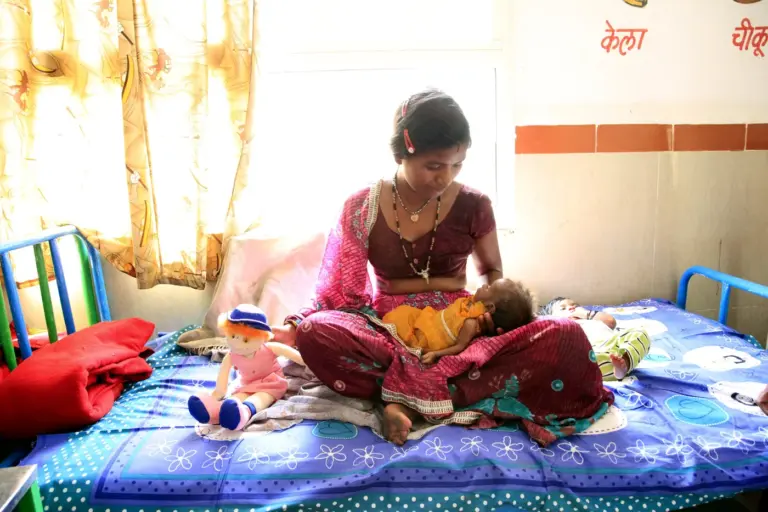
India has an estimated 2-3 crore children who are orphaned, abandoned or surrendered (OAS), according to UNICEF and civil society estimates. Official records, however, list only a fraction in the adoption pool. CARA — the Central Adoption Resource Authority — facilitates around 3,500-4,000 adoptions per year, a tiny fraction of demand. Indian families willing to adopt number in the lakhs; the gap is an administrative and data failure, not an absence of parental will.
This evergreen guide walks through the adoption framework in India, contrasts the JJ Act and HAMA pathways, evaluates CARA's procedures and maps reforms around single-parent and LGBTQ+ adoption.
Who Can Be Adopted?
Under the Juvenile Justice (Care and Protection of Children) Act 2015, an OAS child is any child:
- Who has been abandoned or surrendered.
- Whose biological parents are dead or have relinquished rights.
- Who is declared "legally free for adoption" by the Child Welfare Committee.
As of late 2024, only about 6,000-7,000 children were legally free for adoption on CARA's database — far below the number of OAS children in Child Care Institutions (CCIs).
Legal Framework
India has two parallel legal routes to adoption:
Hindu Adoptions and Maintenance Act 1956 (HAMA)
- Applies to Hindus, Buddhists, Jains and Sikhs.
- Allows Hindu individuals or couples to adopt Hindu children.
- Limitations — only one son and one daughter permitted; age gap requirements; requires consent of spouse; registration is optional.
- No central regulator — adoption deed is executed and registered.
Juvenile Justice Act 2015 (amended 2021)
- Secular route applicable to all citizens regardless of religion.
- CARA as the statutory body regulating in-country and inter-country adoptions.
- Central Adoption Resource Information and Guidance System (CARINGS) — online platform.
- Specialised Adoption Agencies (SAAs) — certified by CARA.
- State Adoption Resource Agencies (SARAs) coordinate at state level.
- District Magistrate issues adoption order (post 2021 amendment; earlier it was courts).
JJ Act 2021 Amendment — Key Changes
The Juvenile Justice (Amendment) Act 2021 made significant changes:
- District Magistrate now issues adoption orders, not civil courts — intended to reduce pendency (earlier it took 2-3 years in some states).
- CWC directions can be challenged before the District Magistrate.
- Stricter regulation of CCIs with monitoring by DMs.
- Non-registered CCIs can face criminal penalty.
CARA Procedure
Prospective Adoptive Parents (PAPs) must:
- Register on CARINGS.
- Upload documents (ID, income, marriage certificate, medical, home study).
- Undergo Home Study Report (HSR) by SAA.
- Receive a seniority number.
- Referral — matching with a child profile.
- Reserve, accept and physically meet the child.
- Foster the child in pre-adoption placement.
- File adoption petition with District Magistrate.
- Adoption order.
- Post-adoption follow-up for two years.
Eligibility of PAPs (CARA Guidelines)
- Physical, mental and emotional stability.
- No life-threatening medical conditions.
- Prospective adoptive mother must not exceed specified age limits.
- Age difference — minimum 25 years between child and adoptive parents.
- Single persons permitted:
- Single female can adopt a child of any gender.
- Single male can adopt only a male child.
- Couples — at least two years of stable marriage.
- Financial stability — adequate means to support the child.
In-Country vs Inter-Country Adoption
- In-country: Indian citizens adopting Indian children.
- Inter-country: NRI, OCI or foreign citizens adopting Indian children, governed by Hague Convention on Inter-country Adoption (1993) — India is a signatory.
- CARA regulates both; inter-country adoptions take seniority only after Indian PAPs have had an opportunity.
Problems in the Adoption Ecosystem
- Low legal-free pool. Children in CCIs are often not declared legally free; CWCs delay the process.
- Mismatch. Most PAPs want young, healthy children of specific gender; children with special needs or older children are harder to place.
- Long waiting periods — 3-4 years for PAPs; seniority accrual is slow.
- Parallel HAMA route abuse — unregistered HAMA adoptions raise trafficking and inheritance concerns.
- Lack of foster care infrastructure.
- Post-adoption support is limited.
Foster Care and Sponsorship
JJ Act 2015 provides for foster care and sponsorship as alternatives to institutional care. Foster care is less developed than adoption; Foster Care Guidelines 2016 and Model Foster Care Guidelines 2024 seek to scale the framework.
Adoption by Single Persons and LGBTQ+ Couples
- Single persons — allowed under CARA regulations, but single fathers limited to adopting male children.
- Live-in couples — not recognised by CARA.
- LGBTQ+ couples — Supriyo Chakraborty vs Union of India (October 2023) — the Supreme Court declined to recognise same-sex marriage but directed a high-level committee to examine rights of queer couples. Single LGBTQ+ individuals can adopt; joint adoption by same-sex couples is not currently permitted.
Inter-Religion Adoption and Personal Law
- HAMA applies only to Hindus.
- Muslim, Parsi and Christian personal laws recognise kafala or guardianship rather than full adoption (Guardians and Wards Act 1890).
- JJ Act permits adoption regardless of religion.
Latest Developments (2024-26)
Supriyo Chakraborty Committee. The Union government's high-level committee on queer couple entitlements, notified April 2024, is examining joint adoption, nominee rights and succession.
CARA Process Reforms. In 2024, CARA introduced:
- Faster HSR through video linkage.
- Prioritising adoption of special-needs children.
- Direct DM authority under the 2021 amendment.
District Magistrate Orders. Implementation data from 2023-24 shows median time for adoption orders has fallen from 12+ months (court) to around 4-6 months (DM).
CCI Monitoring. National Commission for Protection of Child Rights intensified CCI audits post-COVID; over 2,000 unregistered CCIs identified by 2024.
Caste Census 2025. Approval for caste enumeration in the next national census (April 2025) will update data on OAS children and adoptive parent demographics.
MPI 2024. The Global Multidimensional Poverty Index 2024 reported 415 million Indians exited multidimensional poverty between 2005-06 and 2019-21; household economic stability affects relinquishment rates.
Women's Reservation Act. The Nari Shakti Vandan Adhiniyam 2023 will bring more women legislators post-delimitation — a key constituency for child protection reform.
Global Gender Gap Index 2024. India ranked 129/146; CARA policy allowing single women to adopt children of any gender but restricting single men to male children has been critiqued on gender-equality grounds.
Uttarakhand UCC 2024. The Uniform Civil Code notified in Uttarakhand in 2025 addresses adoption procedures within the state, signalling a possible direction for inter-state harmonisation.
Policy Recommendations
- Universal registration of OAS children.
- Tighter CWC timelines for legally-free declaration.
- Strengthen foster care as a default pre-permanency option.
- Abolish HAMA parallel route — move to a single secular adoption law.
- Expanded eligibility for single persons and same-sex couples post-Supriyo committee.
- Digital transparency — real-time dashboard of pool size, referrals and waiting times.
- Post-adoption support — counselling, education subsidies, mental health services.
- Inter-country adoption safeguards — tighter compliance with Hague Convention.
UPSC Relevance
GS Paper I — Indian Society
- Role of women and women's organisations.
- Family structure and social development.
GS Paper II — Governance, Social Justice
- Welfare schemes for vulnerable sections.
- Mechanisms, laws and institutions for protection.
Possible mains questions
- "India's adoption framework is institutionally robust but procedurally slow. Examine." (250 words)
- "A unified secular adoption law would strengthen child rights in India. Discuss." (150 words)
- "Single-parent and queer adoption raise questions of equality and child welfare. Comment." (150 words)
Prelims pointers. HAMA 1956 (Hindu Adoptions and Maintenance Act); Guardians and Wards Act 1890; JJ Act 2015 (amended 2021); CARA (Central Adoption Resource Authority); CARINGS; SAAs; SARAs; Hague Convention on Inter-Country Adoption (1993); Foster Care Guidelines 2016; Supriyo Chakraborty (2023).
Essay themes. "Every child deserves a family"; "The waiting children"; "Parenthood beyond biology".
Adoption reform in India must move from procedural tweaks to systemic redesign — one secular law, a larger legal-free pool, faster pathways and a fairer framework for all prospective parents.
Tell Google you want more of this.
Add Anantam IAS as a preferred sourceOne tap, and this site shows up more often in your own Top Stories, AI Overviews and AI Mode. Remove it any time.