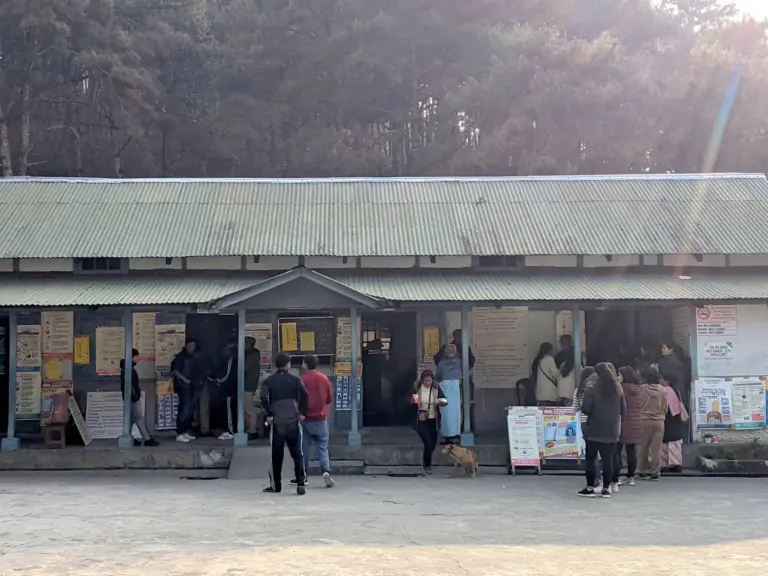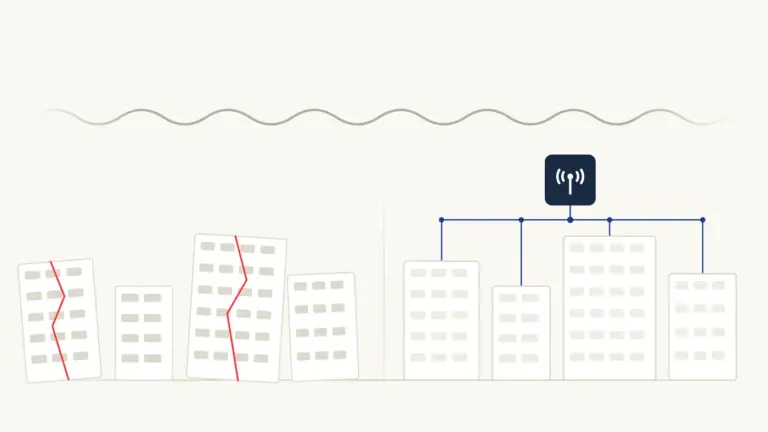
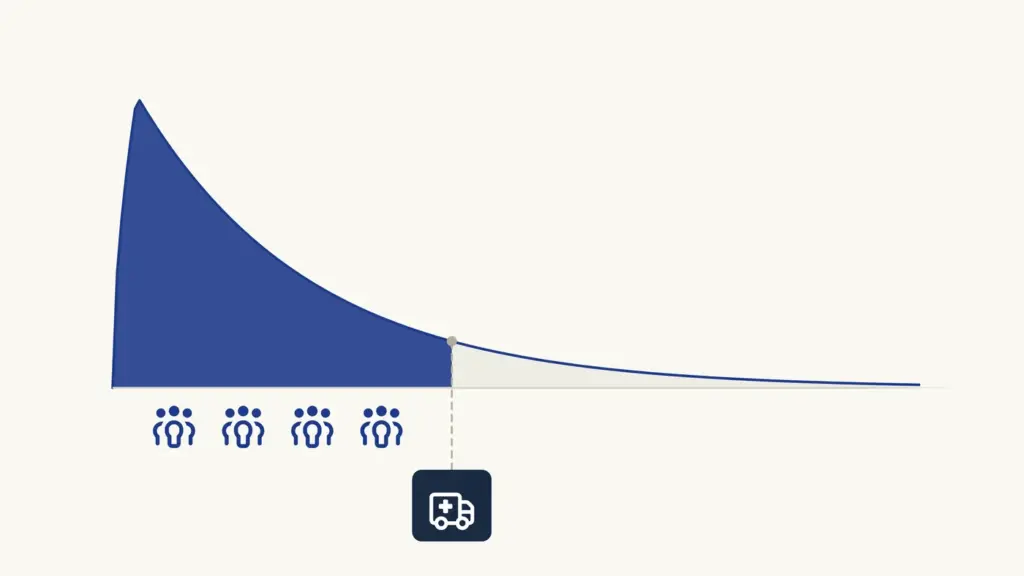
Community-based disaster management is the practice of building preparedness, response and recovery capacity inside the affected community itself, and it rests on one structural fact: the first responder in any disaster is never the state. It is the neighbour. Formal teams arrive after the window in which most lives are saved has already closed, which is why community participation is the foundation of disaster management rather than a supplement to it.
Why the Community Is the Foundation
- The golden hour belongs to the community. Studies of earthquakes consistently find that the great majority of people rescued alive are pulled out in the first hours by people who were already there.
- Local knowledge is not reproducible. Residents know which nala fills first, which slope moves, and which lane floods at what rainfall. No external agency arrives with that.
- The vulnerability map lives locally. Who is disabled, who is pregnant, which elderly person lives alone — only the neighbourhood holds that list.
- Warnings need a last mile. An early warning works only when someone goes door to door and people trust the message enough to move.
- Recovery outlasts the responders. External agencies leave; the community stays, so long-term reconstruction rests on it.
Indian Evidence
Odisha cyclone preparedness
The clearest case anywhere in India. Deaths fell from roughly 10,000 in the 1999 super cyclone to a handful in later cyclones of comparable strength, and around a million people have been evacuated in a single operation.
- Village-level disaster management committees under the Odisha State Disaster Management Authority.
- Shelter management committees that maintain multipurpose cyclone shelters year-round rather than only during an alert.
- Trained community volunteers and the Odisha Disaster Rapid Action Force.
- Regular mock drills and a last-mile warning chain that reaches the household.
Other Indian examples
- Kerala floods, 2018. The fishing community’s boats formed the rescue fleet, evacuating several thousand people using knowledge of water and terrain no external agency possessed.
- Bhuj, 2001. Owner-driven reconstruction, where families received funds and technical support to rebuild, produced better compliance with seismic norms than contractor-driven models.
- Aapda Mitra. The NDMA scheme training community volunteers in the most disaster-prone districts in search, rescue and first aid, deliberately building capacity that lives in the village rather than arriving in it.
- Traditional knowledge. Assam’s stilted houses and community boat networks, Sundarbans embankment maintenance, and Himalayan settlement patterns that avoid known avalanche paths.
- Urban. Mumbai’s ward-level monsoon volunteers and resident welfare association networks.
The Institutional Framework
- The Disaster Management Act, 2005 creates the NDMA-SDMA-DDMA structure, and the District Disaster Management Plan is where community participation is formally located.
- Priority 4 of the Sendai Framework — enhancing preparedness for effective response and to build back better — is explicitly community-anchored, and India is a signatory.
- Aapda Mitra, Civil Defence, NCC, NSS and the Nehru Yuva Kendra Sangathan supply the volunteer base.
- Panchayats and urban local bodies are the constitutional units through which participation is meant to operate.
- Common Alerting Protocol and the Sachet platform push multilingual alerts to every mobile in a targeted area, but the alert only converts into evacuation where community drills already exist.
Challenges
- Tokenism. Participation frequently means one consultation meeting recorded after the plan is written. This is the most common failure.
- Capacity and training gaps. Village disaster management plans exist on paper but stay inert without drills and equipment.
- Decay of disaster memory. Volunteer networks disperse a few years after a major event because preparedness receives no continuous funding.
- Social exclusion. Women, Dalits, persons with disabilities and migrant workers are often unrepresented on village committees despite being the most vulnerable.
- Migration and demography. Out-migration of working-age men thins rescue capacity in hill and coastal villages.
- Urban anonymity. Neighbourhood ties are weaker in cities, so the rural model does not transfer directly.
- Finance and institutional space. District authorities rarely hold a dedicated head for community programmes, and disaster funds tilt towards relief rather than preparedness.
- Warning fatigue. Repeated false alarms make households refuse evacuation, a pattern observed on both the Odisha and Andhra coasts.
Measures to Strengthen It
- Make village and ward disaster management plans mandatory, funded and annually drilled rather than merely filed.
- Expand Aapda Mitra and pay an honorarium to trained volunteers, so the network survives between events.
- Mandate representation of women, persons with disabilities and marginalised groups on committees, and maintain a household-level vulnerability register.
- Put disaster education into school and college curricula, and link NCC, NSS and Nehru Yuva Kendra Sangathan formally to district plans.
- Give panchayats and urban local bodies a separate budget head for preparedness, so participation has an institutional financial base.
- Improve warning credibility through impact-based forecasting and clear local-language messaging.
- Record traditional knowledge in formal plans, since it is often more site-specific than the scientific hazard map.
- Build a separate urban model around resident welfare associations, market associations and housing societies as the unit of training.
Technology generates the warning; the community acts on it. A warning that arrives and is not trusted saves nobody, which is why last-mile platforms are worth only as much as the drills that precede them.
Frequently Asked Questions
What is community-based disaster management?
It is the practice of building preparedness, response and recovery capacity within the affected community itself, on the premise that the first responder in any disaster is a neighbour rather than the state, and that formal teams arrive after the window in which most lives are saved has closed.
Why is Odisha cited as the model for community participation?
Because the death toll fell from roughly 10,000 in the 1999 super cyclone to a handful in later cyclones of comparable strength. The instruments were community-based: village disaster management committees, shelter management committees maintaining cyclone shelters year-round, trained volunteers and household-level warning chains.
What is Aapda Mitra?
An NDMA scheme that trains community volunteers in the most disaster-prone districts in search, rescue and first aid, deliberately building response capacity that lives in the village rather than arriving in it after an event.
Where does community participation sit in India’s legal framework?
In the Disaster Management Act, 2005, which creates the NDMA-SDMA-DDMA structure, with the District Disaster Management Plan as the formal location of community participation. Priority 4 of the Sendai Framework, to which India is a signatory, is also explicitly community-anchored.
What is the biggest challenge to community participation?
Tokenism. Participation frequently means a single consultation meeting recorded after the plan has already been written. Alongside it sit the decay of volunteer networks between events, exclusion of women and marginalised groups from committees, and financing that favours relief over preparedness.
Can technology replace community participation in disaster management?
No. Technology generates and delivers the warning, but the community acts on it. A warning that reaches a household and is not trusted saves nobody, which is why last-mile alerting platforms deliver value only where drills and shelter planning already exist.
Practice Questions
Prelims MCQs
1. Aapda Mitra, the community volunteer training scheme, is run by:
- (a) The National Disaster Response Force
- (b) The National Disaster Management Authority
- (c) The Ministry of Rural Development
- (d) The National Institute of Disaster Management
Answer: (b) The National Disaster Management Authority
2. The death toll in the 1999 Odisha super cyclone was approximately:
- (a) 1,000
- (b) 5,000
- (c) 10,000
- (d) 50,000
Answer: (c) 10,000
3. Which priority of the Sendai Framework is most explicitly community-anchored?
- (a) Priority 1
- (b) Priority 2
- (c) Priority 3
- (d) Priority 4
Answer: (d) Priority 4
4. The Sachet platform for last-mile disaster alerts is based on:
- (a) The Common Alerting Protocol
- (b) The Incident Response System
- (c) The Sendai Monitor
- (d) The Hyogo Protocol
Answer: (a) The Common Alerting Protocol
5. Owner-driven reconstruction, which outperformed contractor-driven models on seismic compliance, is associated with recovery after the:
- (a) Latur earthquake, 1993
- (b) Bhuj earthquake, 2001
- (c) Kashmir earthquake, 2005
- (d) Sikkim earthquake, 2011
Answer: (b) Bhuj earthquake, 2001
Mains Questions
- “Community participation is the cornerstone of effective disaster management.” Analyse this statement with suitable examples from India. (15 marks, 250 words)
- Discuss the challenges to community participation in disaster management in India and suggest measures to strengthen it. (15 marks, 250 words)
- Examine why the Odisha model of cyclone preparedness has succeeded where other coastal states have not. (10 marks, 150 words)
- “Technology generates the warning; the community acts on it.” Discuss the relationship between early warning systems and community preparedness. (10 marks, 150 words)
- Community-based disaster management models designed for villages do not transfer to cities. Examine this proposition and suggest an urban alternative. (15 marks, 250 words)
Tell Google you want more of this.
Add Anantam IAS as a preferred sourceOne tap, and this site shows up more often in your own Top Stories, AI Overviews and AI Mode. Remove it any time.