Introduction
Peri-urban water governance is the missing middle of India’s urbanisation story. Villages on the edge of cities are no longer fully rural, but many are not yet governed like proper urban local bodies. They face urban pressures, higher land values, industrial growth, tanker markets, groundwater stress, sewage dumping and fragmented accountability without the institutional capacity of a municipality.
This is why peri-urban water governance should be treated as an evergreen UPSC topic, not merely a passing news item. India has expanded rural tap-water access under Jal Jeevan Mission and has national sanitation programmes for urban areas, but the transition zone between village and city often falls through the cracks. The result is a governance gap that affects drinking water, wastewater, public health, local finance and urban planning.
Meaning and Definition
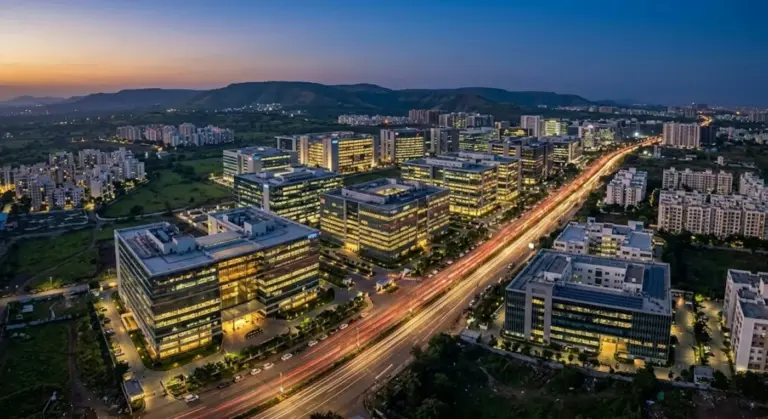
Peri-urban areas are zones around cities where rural and urban land uses overlap. They may include former villages, census towns, industrial clusters, informal colonies, farmhouses and fast-growing settlements. Their economy is no longer mainly agricultural, but their governance may still depend on panchayats or under-resourced local bodies.
For UPSC, the term matters because it connects urbanisation with local governance. A city does not end at its municipal boundary. Its water demand, waste disposal, housing expansion and labour markets spill outward. Peri-urban zones absorb this pressure first.
Quick Facts at a Glance
| Indicator | Value | Source |
|---|---|---|
| Census towns in 2001 | 1,362 | MoHUA Census 2011 urban transition PDF |
| Census towns in 2011 | 3,894 | MoHUA Census 2011 urban transition PDF |
| JJM rural households with tap water | around 15.82 crore, 81.71% as on 03.03.2026 | PIB Jal Jeevan Mission release |
| JJM launch baseline | 3.23 crore rural households had tap connections in 2019 | PIB JJM people and panchayats release |
| Service norm under JJM | 55 litres per capita per day, BIS:10500 quality | PIB Har Ghar Nal Se Jal release |
| Sanitation concern | Faecal sludge and septage management is critical for small and medium towns | SBM-U FSSM technical advisory |
Historical Background
India’s constitutional architecture recognises both panchayats and municipalities through the 73rd and 74th Constitutional Amendments. The problem is that many settlements urbanise economically before they are reclassified administratively. A census town may meet demographic and occupational criteria for urban status, but it may still lack a statutory urban local body.
The rise of census towns between 2001 and 2011 shows this shift clearly. MoHUA’s Census 2011 urban transition document records the number of census towns rising from 1,362 in 2001 to 3,894 in 2011. These are precisely the places where rural governance tools are often too weak and urban infrastructure planning has not yet arrived.
Constitutional and Policy Framework
The 74th Amendment created municipalities for urban governance and envisaged Nagar Panchayats for transitional areas. This is the constitutional bridge for peri-urban settlements. When that bridge is not used, the settlement may remain dependent on fragmented panchayat capacity even as it faces urban water demand.
Policy programmes also create a split. Jal Jeevan Mission focuses on rural household tap connections, while AMRUT and urban sanitation programmes focus on statutory urban areas. Peri-urban areas can fall between these mandates unless States actively plan the transition.
Key Features of Peri-Urban Water Stress
Common collection and irregular supply
Many peri-urban settlements receive water through limited public points, irregular pipelines or tanker supply. The problem is not only infrastructure. It is also the absence of an accountable utility that plans supply, billing, maintenance and grievance redress.
Groundwater dependence
Fast construction and industrial activity increase extraction from borewells. When local recharge areas are encroached upon and ponds disappear, groundwater stress becomes a structural problem rather than a seasonal one.
Sanitation without sewerage
Peri-urban households often use septic tanks or on-site systems. If desludging is irregular and treatment facilities are distant, faecal sludge may be dumped in drains, fields or water bodies. The SBM-U technical advisory on FSSM is directly relevant here.
Rural-urban transfer of water
Cities often pull water from surrounding reservoirs, rivers and aquifers. Peri-urban residents may bear the environmental and social costs while receiving neither rural protection nor urban service quality.
Significance for UPSC
- GS-I: Urbanisation, migration and changing rural-urban settlements.
- GS-II: Local governance, 74th Amendment, devolution and service delivery.
- GS-III: Water resources, infrastructure, environment and sustainable urbanisation.
- Essay: Useful for themes on cities, sustainability, public health and governance gaps.
- Prelims: Census towns, Nagar Panchayat, Jal Jeevan Mission, SBM-U and FSSM are testable.
- Interview: Links to Delhi NCR, Bengaluru, Hyderabad, Gurugram and other urban-fringe issues.
Detailed Analysis: The Missing Middle in Urbanisation
The governance problem begins with classification. A village may acquire dense housing, non-farm employment and market links, but if it remains outside the municipal system, its water planning remains small-scale. Panchayats may not have the technical staff, revenue base or planning authority to manage rapidly urban water systems.
Jal Jeevan Mission has made major progress in household tap connections. PIB reported that as of March 3, 2026, around 15.82 crore rural households, or 81.71%, had tap water supply in their homes. This is a strong rural achievement. But peri-urban India needs more than connection numbers: source sustainability, wastewater disposal, land-use control and service accountability.
| Governance issue | Peri-urban symptom | Policy response |
|---|---|---|
| Classification gap | Settlement is urban in function but rural in administration | Use Nagar Panchayat and planned transition |
| Water source stress | Borewell dependence and tanker markets | Protect recharge zones and regulate extraction |
| Sanitation gap | Septic tanks without treatment chain | Scale FSSM and decentralised treatment |
| Finance gap | Low local revenue for urban-grade services | User charges, grants and pooled infrastructure finance |
A second problem is sanitation. Toilets alone do not solve public health if faecal sludge is not safely collected, transported and treated. Small and medium towns often cannot immediately build expensive sewer networks. This is where decentralised FSSM, scheduled desludging and local treatment plants become practical.
Challenges
The first challenge is institutional ambiguity. When multiple agencies control water supply, groundwater, land use, drains and waste, no single body is accountable for outcomes. Citizens may pay urban prices for tanker water while receiving rural-level grievance redress.
The second challenge is finance. Peri-urban local bodies often lack the tax base and borrowing capacity of municipal corporations. Yet they face the infrastructure costs of urbanisation: roads, drains, water supply, streetlights, waste and sanitation.
The third challenge is environmental. Wetlands, ponds and drainage channels are often filled before the area is planned as urban. Once these natural systems disappear, both floods and water scarcity worsen.
Way Forward
State governments should identify fast-urbanising census towns and create transition plans. The constitutional tool already exists: Nagar Panchayats for transitional areas. Legal reclassification should be accompanied by staffing, water engineering support, accounting systems and citizen grievance platforms.
Water planning should combine household connections with source sustainability. Catchments, ponds, recharge areas and local water quality monitoring should be protected before the settlement becomes a crisis zone.
India also needs a peri-urban sanitation push. Scheduled desludging, GPS-tracked septage vehicles, faecal sludge treatment plants, mini-cesspool vehicles for narrow lanes and reuse of treated wastewater can prevent the open dumping that undermines sanitation gains.
Prelims Pointers
- Peri-urban areas are transition zones between rural and urban settlements.
- The 74th Constitutional Amendment provides for municipalities and Nagar Panchayats.
- Census towns rose from 1,362 in 2001 to 3,894 in 2011.
- Jal Jeevan Mission was launched in August 2019.
- JJM aims at Functional Household Tap Connections for rural households.
- JJM service norm is 55 litres per capita per day of prescribed quality.
- BIS:10500 relates to drinking water quality standards.
- Faecal sludge and septage management is important where sewerage is absent.
- Swachh Bharat Mission-Urban deals with urban sanitation.
- Nagar Panchayat is meant for areas in transition from rural to urban.
- Groundwater regulation is a key peri-urban governance issue.
- Decentralised wastewater treatment can reduce pressure on central sewer systems.
Mains Practice Questions
- Peri-urban India represents the missing middle of urban governance. Discuss with reference to water supply and sanitation.
- How can the 74th Constitutional Amendment be used more effectively to manage census towns and transitional areas?
- Jal Jeevan Mission has expanded tap-water access, but source sustainability remains a challenge. Analyse.
- Faecal sludge and septage management is central to public health in small towns. Discuss.
- Urbanisation in India is often faster than institutional reform. Examine the consequences for water governance.
- Suggest a policy framework for making peri-urban settlements water-secure and climate-resilient.
Conclusion
Peri-urban water governance matters because it is where India’s future cities are being made before they are officially named. If these settlements are ignored, they will inherit groundwater stress, unsafe sanitation, flooding and unaccountable service delivery.
The solution is not to romanticise villages or overload municipalities. The solution is planned transition: classify, finance, staff and regulate the urban fringe before crisis becomes the default mode of governance.
For UPSC answers, the core line is this: India’s urban future will be decided not only in mega-cities, but in the peri-urban settlements that are becoming cities without yet being governed like them.
Frequently Asked Questions
What is peri-urban water governance?
Peri-urban water governance refers to how water supply, groundwater, sanitation and wastewater are managed in areas transitioning from rural to urban character. These zones often face urban pressure without full municipal capacity.
Why is it important for UPSC?
It connects urbanisation, local governance, water resources, public health and environmental sustainability. It is useful for GS-I, GS-II, GS-III and Essay answers.
What is a census town?
A census town is a settlement that meets Census urban criteria but is not necessarily a statutory municipality. Such towns often expose the gap between demographic urbanisation and legal urban governance.
What is the role of Nagar Panchayat?
A Nagar Panchayat is meant for an area in transition from rural to urban. It can provide a constitutional route to better peri-urban governance under the 74th Amendment.
How is Jal Jeevan Mission linked?
Jal Jeevan Mission expanded rural household tap water connections. Peri-urban areas need this achievement to be combined with source sustainability, wastewater management and urban-grade service accountability.
What is FSSM?
FSSM means faecal sludge and septage management. It includes safe emptying, transport, treatment and disposal or reuse of waste from septic tanks and on-site sanitation systems.
Tell Google you want more of this.
Add Anantam IAS as a preferred sourceOne tap, and this site shows up more often in your own Top Stories, AI Overviews and AI Mode. Remove it any time.