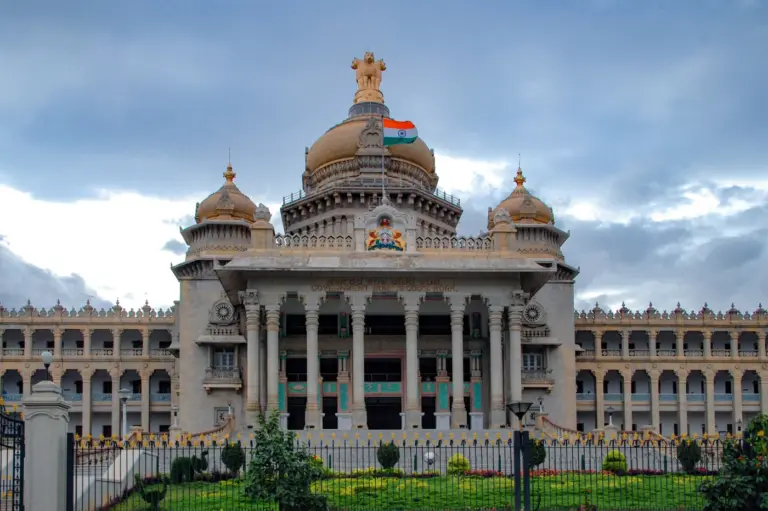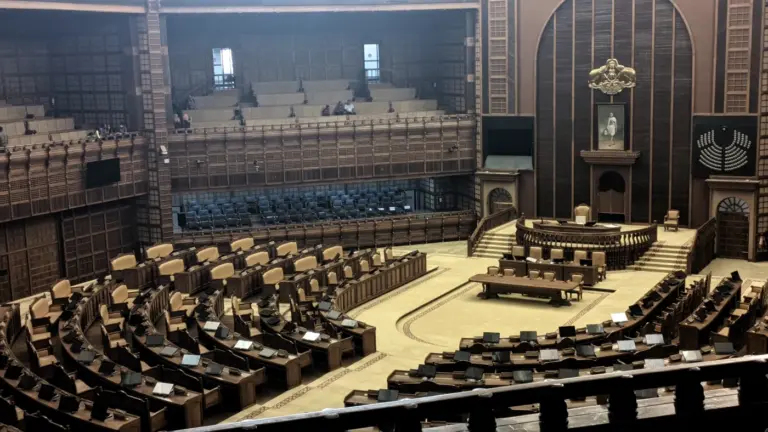

The presidential model of the United States separates the executive from the legislature; India’s parliamentary model fuses them. That single structural difference explains almost every other contrast — how the head of government is chosen, how long they survive, what they can pass, and who can stop them. Comparing the two is a standing GS2 question, and the marks lie in comparing actual authority rather than formal titles.
The Structural Difference
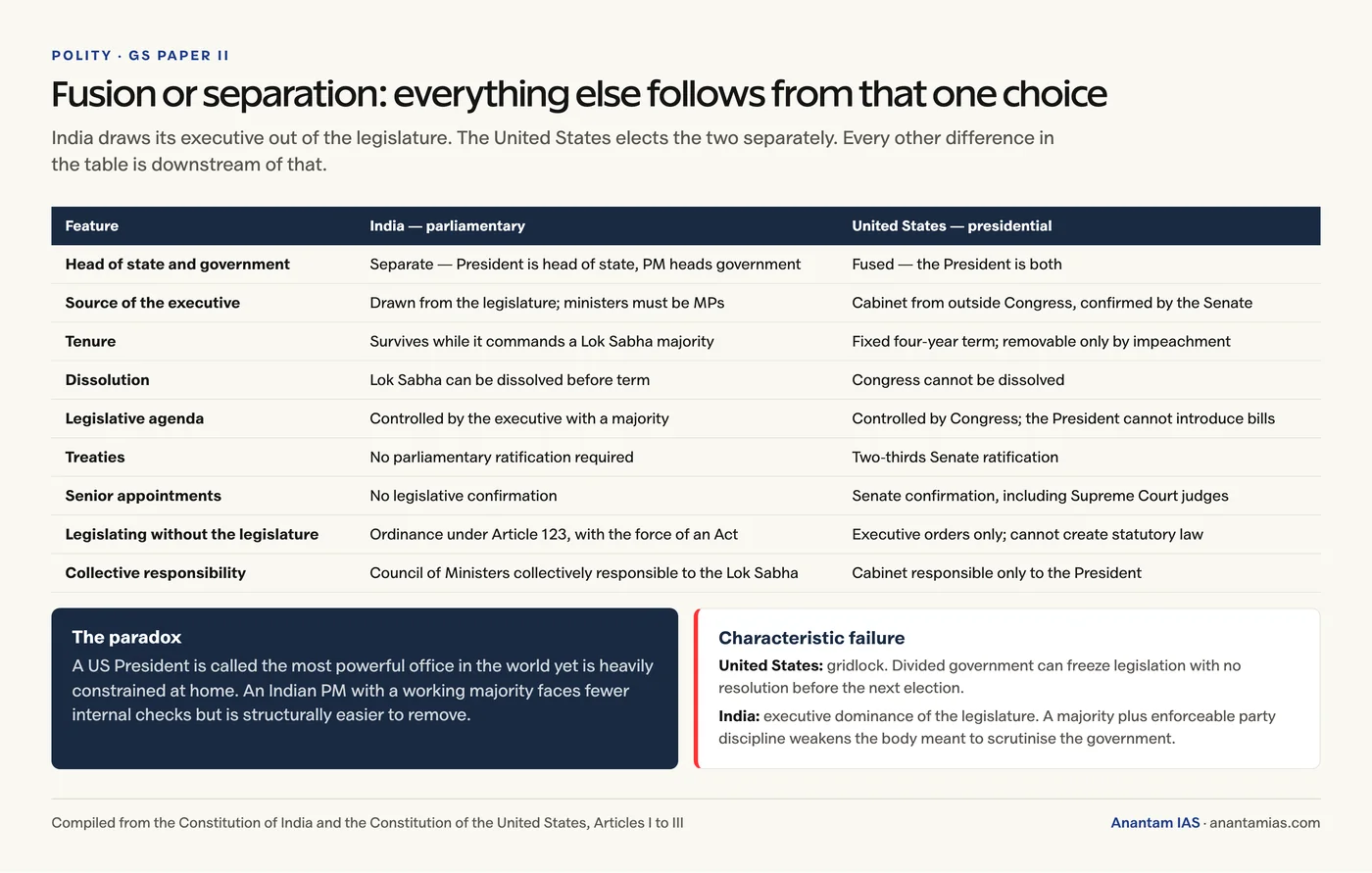
| Feature | India (parliamentary) | United States (presidential) |
|---|---|---|
| Head of state and government | Separate — President is head of state, PM heads government | Fused — the President is both |
| Source of the executive | Drawn from the legislature; ministers must be MPs | Cabinet is outside Congress and needs Senate confirmation |
| Tenure | Survives while it commands a Lok Sabha majority | Fixed four-year term; removable only by impeachment |
| Dissolution | Lok Sabha can be dissolved before term | Congress cannot be dissolved |
| Legislative agenda | Controlled by the executive with a majority | Controlled by Congress; the President cannot introduce bills |
| Veto | President has a limited and rarely used veto | Presidential veto, overridable by a two-thirds vote |
| Treaties | No parliamentary ratification required | Two-thirds Senate ratification |
| Senior appointments | No legislative confirmation | Senate confirmation, including Supreme Court judges |
| Collective responsibility | Council of Ministers collectively responsible to the Lok Sabha | Cabinet responsible only to the President |
Prime Minister Versus President: Actual Authority
- Legislative control. An Indian PM with a majority effectively controls what Parliament passes, and the anti-defection law makes party discipline enforceable. A US President may see an entire programme blocked, and divided government is normal rather than exceptional.
- Tenure security. The US President’s four years are secure; the PM’s tenure lasts exactly as long as the majority. In a coalition that is a real constraint; with a single-party majority it is not.
- Cabinet authority. US Cabinet secretaries serve at the President’s pleasure and have no independent political base. Indian ministers are politicians with constituencies and, in coalitions, leverage of their own.
- Emergency and ordinance power. The Indian executive can legislate by ordinance under Article 123 when Parliament is not in session. The US President has no equivalent, relying instead on executive orders that cannot create new statutory law.
- The paradox: the US President is described as the world’s most powerful office yet is heavily constrained at home, while an Indian PM with a working majority faces fewer internal checks but is structurally easier to remove.
Why India Chose Parliamentary Government
- Familiarity: the Government of India Acts of 1919 and 1935 had already built responsible government on the Westminster pattern.
- Accountability: the Constituent Assembly preferred day-to-day responsibility — question hour, motions, confidence votes — over the periodic accountability of a fixed term.
- Avoiding deadlock between a separately elected executive and legislature in a new and diverse polity.
- Representation: a plural society was thought better served by a Cabinet drawn from a legislature reflecting many groups than by a single nationally elected office.
- Ambedkar’s formulation was that the Constitution chose more responsibility over more stability.
Separation of Powers in Each System
The US applies a rigid separation through Articles I, II and III, with checks operating across rival branches. India applies a functional separation: the phrase does not appear in the Constitution, Article 50 is only a Directive Principle, and what is protected is judicial independence and the non-usurpation of essential functions. Kesavananda Bharati (1973) and Indira Nehru Gandhi (1975) placed separation of powers in the basic structure. The full treatment is in our notes on separation of powers and the parliamentary system.
The Characteristic Failure of Each
- United States: gridlock. Divided government can freeze legislation and budgets entirely, and the system offers no mechanism to resolve the deadlock before the next election.
- India: executive dominance of the legislature. With a majority and enforceable party discipline, the body meant to scrutinise the executive is largely controlled by it — visible in declining sitting days, fewer bills referred to committees and heavy use of the ordinance route.
Frequently Asked Questions
What is the main difference between the Indian and US systems?
India fuses the executive and the legislature — ministers are members of Parliament and the government survives only while it holds a majority. The United States separates them — the President is separately elected for a fixed four-year term, and the Cabinet is drawn from outside Congress.
Who is more powerful, the Indian Prime Minister or the US President?
It depends on the dimension. An Indian PM with a majority has far greater control over the legislative agenda, needs no confirmation for appointments and no ratification for treaties, and can legislate by ordinance. A US President has a secure fixed term but may be blocked entirely by Congress. Greater control, less security.
Why did India not adopt a presidential system?
The Constituent Assembly preferred continuous accountability to periodic accountability, wanted to avoid deadlock between a separately elected executive and legislature, and was building on the responsible-government structure already created by the Government of India Acts of 1919 and 1935. Ambedkar framed the choice as more responsibility over more stability.
Does India follow the separation of powers?
Functionally rather than rigidly. The Constitution does not use the phrase, Article 50 is a non-enforceable Directive Principle, and the executive sits inside the legislature. What is protected is judicial independence and the principle that essential functions of one organ cannot be transferred to another, which Kesavananda Bharati and Indira Nehru Gandhi placed in the basic structure.
What is an executive order and how does it differ from an ordinance?
A US executive order directs how existing law is implemented and cannot create new statutory law. An Indian ordinance under Article 123 has the same force as an Act of Parliament, though it must be laid before Parliament and ceases to operate six weeks after it reassembles.
What is the characteristic weakness of each system?
The US system tends to gridlock, because divided government can freeze legislation with no resolution mechanism before the next election. The Indian system tends to executive dominance of the legislature, because a majority combined with enforceable party discipline weakens the body meant to scrutinise the government.
Practice Questions
Prelims MCQs
1. In the United States, the Cabinet is:
- (a) Drawn from Congress
- (b) Drawn from outside Congress and confirmed by the Senate
- (c) Appointed by the Supreme Court
- (d) Elected separately
Answer: (b) Drawn from outside Congress and confirmed by the Senate
2. Treaty ratification in the United States requires:
- (a) A simple majority in the House
- (b) A two-thirds majority in the Senate
- (c) No legislative involvement
- (d) Approval by the Supreme Court
Answer: (b) A two-thirds majority in the Senate
3. Article 50 of the Indian Constitution relates to:
- (a) Uniform civil code
- (b) Separation of the judiciary from the executive
- (c) Organisation of village panchayats
- (d) Promotion of international peace
Answer: (b) Separation of the judiciary from the executive
4. Which power does the Indian executive have that the US President does not?
- (a) Veto over legislation
- (b) Ordinance-making with the force of statute
- (c) Command of the armed forces
- (d) Appointment of judges
Answer: (b) Ordinance-making with the force of statute
5. Separation of powers was held to be part of the basic structure in:
- (a) A. K. Gopalan (1950)
- (b) Kesavananda Bharati (1973) and Indira Nehru Gandhi (1975)
- (c) Maneka Gandhi (1978)
- (d) S. R. Bommai (1994)
Answer: (b) Kesavananda Bharati (1973) and Indira Nehru Gandhi (1975)
Mains Questions
- Examine how the separation of powers is practised in India compared to the rigid presidential model of the USA. Compare the actual authority of the Indian Prime Minister with that of the President of the USA.
- “India chose more responsibility over more stability.” Discuss the Constituent Assembly’s choice of a parliamentary system.
- Compare the characteristic failure modes of parliamentary and presidential systems with contemporary examples.
- Examine the extent to which the anti-defection law has strengthened executive dominance over the Indian Parliament.
- Discuss whether India’s parliamentary system remains suited to its scale and diversity.
Tell Google you want more of this.
Add Anantam IAS as a preferred sourceOne tap, and this site shows up more often in your own Top Stories, AI Overviews and AI Mode. Remove it any time.