Disclosure: this guide contains Amazon affiliate links. As an Amazon Associate, Anantam IAS earns from qualifying purchases — at no extra cost to you.
Norman Lowe’s Mastering Modern World History can become a large reading commitment when you treat every chapter as compulsory UPSC material. The practical problem is coverage: a book focused on the modern world doesn’t automatically supply the earlier background your syllabus asks for.
I recommend selective reading for GS1. Keep the book if you already own it, use it for a defined topic and fill the earlier-history gaps separately. If you haven’t bought it, first compare your present notes with the syllabus. An unread comprehensive book adds little when your immediate need is to explain one event clearly.
Identify the Edition
The sixth edition credits Norman Lowe and John Traynor as authors. The Bloomsbury paperback record identifies a 2022 sixth edition, 720 pages and ISBN 9781350933408. Regional formats can carry different ISBNs.
The Indian Amazon listing also credits both authors and identifies Bloomsbury Academic India. Check the edition on the offered copy instead of assuming that a familiar title or cover proves it. Older chapter numbers may differ.
The contents make this a useful modern-history resource, especially for twentieth-century developments. That is a scope statement, not a claim that the book covers the whole UPSC world-history syllabus. If you’re choosing between resources, start with the world history book guide.
Map the Syllabus Before Reading
The UPSC GS1 syllabus places world history from the eighteenth century onward, including industrialization and political philosophies. The book’s twentieth-century emphasis means earlier foundations need a separate check.
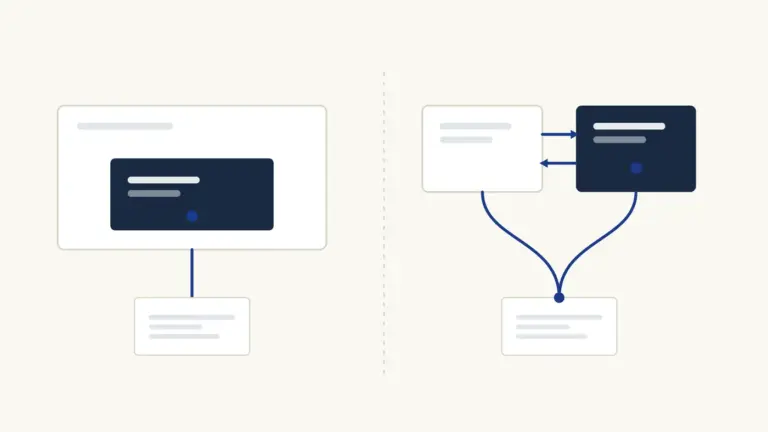
Use a crosswalk: place a syllabus theme beside the matching book topic, then identify any remaining gap. It works like a shopping list checked against what you already have; it prevents buying or reading the same thing twice. The analogy is about coverage, not the historical connection between topics.
| Study Theme | Useful Book Sections | Output or Gap |
|---|---|---|
| World wars | Origins, conflict and the peace settlement | Cause, escalation and consequence sheet |
| Communism and political change | Russia and China | Compare ideas with the conditions of their adoption |
| Fascism | Italy and Germany | A crisis, movement and institution comparison |
| Decolonization | End of European empires and regional aftermath | Compare routes to independence and postcolonial challenges |
| International order | Cold War and the United Nations | Explain an institution or conflict in its historical setting |
| Industrial Revolution and earlier revolutions | Check your separate foundation source | Don’t assume twentieth-century economic history fills the earlier gap |
The table recommends study tasks. It doesn’t assign official marks or predict which chapter will produce a question. Country-specific detail earns reading time when it helps explain a syllabus theme or a question you are practicing.
Explain a Cause Properly
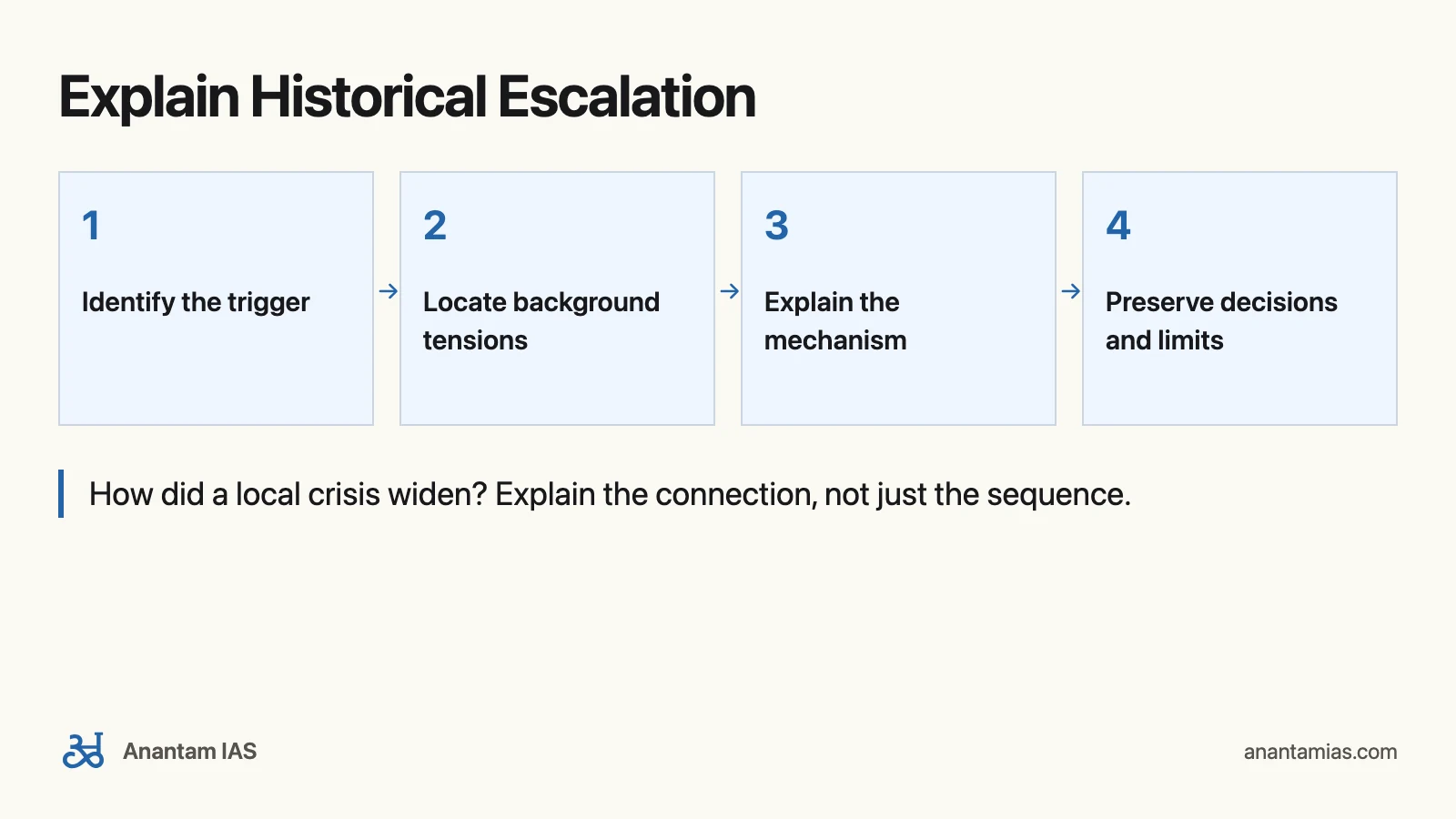
A list of causes needs mechanisms: how did each factor make the event more likely or widen it? Otherwise, “nationalism, alliances and militarism” can be memorized without explaining anything.
Try this original practice prompt, not a UPSC PYQ: “Explain why the assassination at Sarajevo did not by itself account for the scale of the First World War.”
The New Zealand government’s account of the war’s origins provides a factual starting point. Archduke Franz Ferdinand and his wife Sophie were assassinated at Sarajevo on 28 June 1914. Your task is to connect the trigger with the wider conditions and decisions.
| Step | Worked Reasoning |
|---|---|
| Identify the trigger | The assassination created an immediate crisis involving Austria-Hungary and Serbia. |
| Explain the background | Rival national ambitions and tensions made the response politically dangerous. The trigger alone doesn’t explain why other powers became involved. |
| Explain a connecting mechanism | Alliance commitments and calculations about security helped connect a local crisis to other states. |
| Preserve political choice | Leaders still made decisions about demands, mobilization and war. An alliance diagram doesn’t show those decisions automatically happening. |
| State the conclusion | The assassination explains the immediate crisis; wider tensions and decisions help explain its escalation into a much larger war. |
An answer paragraph can now follow the reasoning:
“The Sarajevo assassination triggered a crisis, but the wider war developed through interactions between existing tensions and political decisions. Austria-Hungary’s response to Serbia affected the calculations of other powers. Alliances widened the security problem, while mobilization and decisions about war narrowed the space for compromise. The scale of the conflict therefore requires an explanation of escalation as well as the trigger.”
This is a teaching answer, not a complete account of war responsibility. A longer answer would need named decisions and evidence from the chapter. Calling the war an automatic domino effect removes that work.
Create a closed-book recall card with trigger, background, mechanism and qualification. When you can fill those fields, add one consequence and explain how it followed. Avoid predicting an inevitable later war from a single peace term.
Build a Selective Routine
Your unit of progress should be a topic you can explain. I suggest starting with one cause-and-consequence task and allowing the reading time to follow its difficulty.
| Session | Task | Stopping Point |
|---|---|---|
| First | Read the chapter introduction and establish the timeline | Locate the event and define the problem |
| Second | Read the relevant causes or institutions | Explain the main mechanisms in your own words |
| Third | Compare consequences and qualifications | Produce a compact revision sheet |
| Fourth | Write an answer without the book | Identify exactly which claims need repair |
A 50-minute session could contain 30 minutes reading, 10 recalling and 10 checking. With 25 minutes, halve the passage rather than remove recall. These are adjustable suggestions, not promises of a fixed-time finish.
Use the UPSC Mains book guide when a gap concerns the broader preparation plan. Keep your world-history notes compact enough to revisit alongside the rest of GS1.
Decide When to Stop
You don’t need to finish every regional chapter to justify owning the book. Stop a topic’s first reading when you can explain its sequence, central mechanism and relevant limitation; return when practice reveals a gap.
- Keep: A usable edition already serving your notes.
- Buy or borrow: When a defined world-history topic needs a fuller narrative than your current material supplies.
- Defer: When earlier foundational topics are missing and the purchase won’t address them.
- Expand selectively: When an answer requires a comparison or evidence absent from your revision sheet.
For the next topic, write the question before opening the book. That gives the reading a purpose and gives you a clear way to judge whether it worked.
Frequently Asked Questions
Who wrote the sixth edition of Mastering Modern World History?
Bloomsbury credits Norman Lowe and John Traynor. Its UK paperback record identifies the sixth edition, 2022, with 720 pages and ISBN 9781350933408. Regional editions and formats can carry other ISBNs.
Must I read the entire book for UPSC GS1?
No fixed cover-to-cover requirement follows from the syllabus. Read sections that answer a defined topic or practice gap. The guide recommends selective use and a stopping rule based on explanation and recall.
Does it cover all earlier world-history foundations?
Its modern-world emphasis means earlier topics require a separate coverage check, including industrialization. Use the contents beside the syllabus rather than treating a broad title as proof of completeness.
How should I write cause-and-consequence notes?
Separate the trigger, background conditions, connecting mechanism and qualification. Then add consequences with an explanation of how they followed. Naming a cause without its mechanism is incomplete.
Why avoid an automatic domino explanation of the First World War?
It can hide the decisions made by leaders during escalation. Alliance relationships matter, but your answer should also explain the choices and pressures that connected the immediate crisis to wider war.
Should I replace an older edition?
First check whether it supplies the topic you need and whether references match your notes. A usable older copy may remain helpful. Identify relevant revised material before paying for a replacement.
Tell Google you want more of this.
Add Anantam IAS as a preferred sourceOne tap, and this site shows up more often in your own Top Stories, AI Overviews and AI Mode. Remove it any time.