Disclosure: this guide contains Amazon affiliate links. As an Amazon Associate, Anantam IAS earns from qualifying purchases — at no extra cost to you.
History Optional has one of the longest syllabuses on the UPSC list, and most of the material circulating for it is either a scanned coaching handout or a book summary that stops somewhere around 1947. So if you are looking for History Optional notes that follow the official syllabus unit by unit, this page has them, free and complete for both papers.
We teach History as an optional at Anantam IAS, and these are the notes our own students revise from.
One set of notes cannot replace Upinder Singh or Bipan Chandra, and these are not trying to. What they do is hold the whole syllabus in one fixed shape you can revise from in the last month, with the questions UPSC has actually asked sitting inside the unit they came from. Every unit here is written against the official syllabus line, not against a chapter in somebody’s textbook.
You can take the whole thing as one book, or pick up single units as you finish them. Both are below.
Download the History Optional Notes (Free PDF)
The complete book runs to 325 pages and covers all 51 units of Paper 1 and Paper 2. There is no sign-up, no watermark and no page limit on the free version. Add it to the cart at zero rupees and the PDF and ePub download straight away.
If you would rather revise one unit at a time, every unit is a separate PDF in the two tables below. The marks column shows what that unit was worth across the 2023 to 2026 papers, so you can see where the paper actually spends its marks before you decide what to revise first.
Paper 1 Notes, Unit by Unit
Paper 1 runs from the sources of ancient Indian history to the eighteenth century. Section A ends with the early medieval period, Section B picks up with the thirteenth century, and the map question sits at the top of Section A every year.
| Unit | Topic | Marks asked, 2023 to 2026 | Notes |
|---|---|---|---|
| 1 | Sources | 30 | Download PDF |
| 2 | Pre-history and Proto-history | 50 | Download PDF |
| 3 | Indus Valley Civilization | 65 | Download PDF |
| 4 | Megalithic Cultures | 15 | Download PDF |
| 5 | Aryans and Vedic Period | 45 | Download PDF |
| 6 | Period of Mahajanapadas | 50 | Download PDF |
| 7 | Mauryan Empire | 65 | Download PDF |
| 8 | Post-Mauryan Period | 50 | Download PDF |
| 9 | Early State and Society in Eastern India, Deccan and South India | 35 | Download PDF |
| 10 | Guptas, Vakatakas and Vardhanas | 15 | Download PDF |
| 11 | Regional States during Gupta Era | 45 | Download PDF |
| 12 | Themes in Early Indian Cultural History | 40 | Download PDF |
| 13 | Early Medieval India, 750-1200 | 75 | Download PDF |
| 14 | Cultural Traditions in India, 750-1200 | 100 | Download PDF |
| 15 | The Thirteenth Century | 15 | Download PDF |
| 16 | The Fourteenth Century | 80 | Download PDF |
| 17 | Society, Culture and Economy in the Thirteenth and Fifteenth Centuries | 40 | Download PDF |
| 18 | The Fifteenth and Early Sixteenth Century | 60 | Download PDF |
| 19 | Cultural and Religious Developments (Bhakti and Sufi) | 50 | Download PDF |
| 20 | Akbar | 65 | Download PDF |
| 21 | The Mughal Empire in the Seventeenth Century | 65 | Download PDF |
| 22 | Economy and Society in the Sixteenth and Seventeenth Centuries | 85 | Download PDF |
| 23 | Culture in the Mughal Empire | 95 | Download PDF |
| 24 | The Eighteenth Century | 165 | Download PDF |
The marks are uneven on purpose, and the table is worth reading before your revision plan is fixed: the eighteenth century alone carried 165 marks in 4 years, while the Guptas carried 15.
Paper 2 Notes, Unit by Unit
Paper 2 is two syllabuses sitting in one paper. Section A is modern India from the European arrival to the years after 1947, and Section B is world history from the Enlightenment to the collapse of the Soviet Union. Most candidates read Section A properly and treat Section B as something to manage, which is why Section B is where marks are usually lost.
| Unit | Topic | Marks asked, 2023 to 2026 | Notes |
|---|---|---|---|
| 1 | European Penetration into India | 30 | Download PDF |
| 2 | British Expansion in India | 60 | Download PDF |
| 3 | Early Structure of the British Raj | 50 | Download PDF |
| 4 | Economic Impact of British Colonial Rule | 120 | Download PDF |
| 5 | Social and Cultural Developments | 40 | Download PDF |
| 6 | Social and Religious Reform Movements | 70 | Download PDF |
| 7 | Indian Response to British Rule | 100 | Download PDF |
| 8 | Factors Leading to the Birth of Indian Nationalism | 90 | Download PDF |
| 9 | Rise of Gandhi | 50 | Download PDF |
| 10 | Constitutional Developments in Colonial India, 1858-1935 | 20 | Download PDF |
| 11 | Other Strands in the National Movement | 70 | Download PDF |
| 12 | Politics of Separatism | 20 | Download PDF |
| 13 | Consolidation as a Nation | 30 | Download PDF |
| 14 | Caste and Ethnicity after 1947 | 20 | Download PDF |
| 15 | Economic Development and Political Change after 1947 | 30 | Download PDF |
| 16 | Enlightenment and Modern Ideas | 40 | Download PDF |
| 17 | Origins of Modern Politics | 110 | Download PDF |
| 18 | Industrialization | 100 | Download PDF |
| 19 | Nation-State System | 90 | Download PDF |
| 20 | Imperialism and Colonialism | 30 | Download PDF |
| 21 | Revolution and Counter-Revolution | 110 | Download PDF |
| 22 | World Wars | 50 | Download PDF |
| 23 | The World after World War II | 50 | Download PDF |
| 24 | Liberation from Colonial Rule | 80 | Download PDF |
| 25 | Decolonization and Underdevelopment | 40 | Download PDF |
| 26 | Unification of Europe | 60 | Download PDF |
| 27 | Disintegration of the Soviet Union and the Rise of the Unipolar World | 40 | Download PDF |
Section B is worth exactly as much as Section A, 200 marks a year, and the units in it are the ones our students most often reach unprepared.
What the Last 4 Papers Asked
The notes carry previous-year questions because we sat down and typed out all 8 papers from 2023 to 2026 first, then built the units around what came up. That is 208 questions and 3,200 marks, and a few things in it are worth knowing before you start reading.
- Both papers are 400 marks a year, split exactly 200 and 200 between Section A and Section B. There is no lighter half.
- The Paper 1 map question is 50 marks every single year, which is 12.5% of the paper. 20 places, a 30-word note on each.
- Paper 1 asks questions worth 10, 15 and 20 marks. Paper 2 has asked nothing but 10 and 20-mark questions in these 4 years, so the 150-word answer does not exist there.
- The eighteenth century is the heaviest unit in either paper at 165 marks, and it sits in Section B of Paper 1 where candidates running short of time usually stop reading.
- The economic impact of colonial rule (120 marks), the origins of modern politics (110) and revolution and counter-revolution (110) are the heaviest units in Paper 2.
None of this makes a unit safe to skip, because the paper moves. It does tell you where a week of extra revision buys the most marks.
The full year-by-year breakdown, with every question mapped to its syllabus unit, is in the Paper 1 PYQ analysis and the Paper 2 PYQ analysis.
How These Notes Are Organised
Every unit follows the same shape, so by the third one you stop reading the structure and start reading the content. Each unit PDF carries:
- the official syllabus line for that unit, printed at the top, so you can see what UPSC actually promised to ask
- the substance in sections, with comparison tables where 2 positions have to be held apart and a key-terms box where the vocabulary is the difficulty
- the real Mains questions asked from that unit between 2023 and 2026, with marks and the word limit that goes with them
- a last-mile revision list, short enough to read the morning of the paper
- a common-errors box naming the mistakes that cost marks in that specific unit
The depth is not uniform, and that is deliberate. A unit that has carried 100 marks or more gets the long treatment, and a unit that has carried 15 gets what it needs and stops. Padding a thin unit to match a heavy one only costs you reading time.
Books to Read Alongside
Notes are for revision. The reading still has to happen once, and for History Optional the standard list is short. These are the 2 books most History candidates build Paper 1 around.
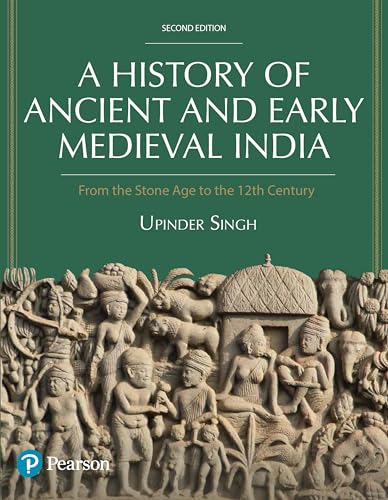
A History of Ancient and Early Medieval India – Upinder Singh
- Covers the Stone Age through the twelfth century in one volume
- Archaeology and sources are handled properly, which the map question rewards
- The default text for Section A of Paper 1
Upinder Singh is the long read of the optional. Budget real weeks for it, because nothing else covers the archaeological material at the depth the map question and the source questions expect.
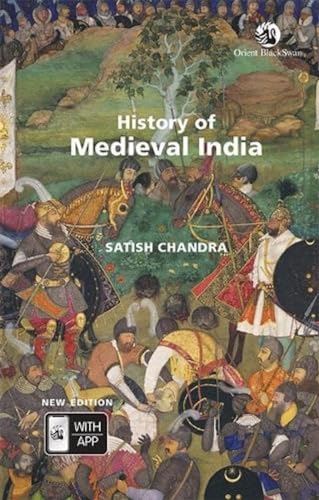
History of Medieval India – Satish Chandra
- The Delhi Sultanate through the eighteenth century
- Strong on administration, land revenue and the Mughal economy
- Pairs with Section B of Paper 1, where the heaviest units sit
Satish Chandra carries the units that pay the most in Paper 1, including the eighteenth century. Read it before you decide Section B can be managed with notes alone.
The rest of the list, in the order most candidates use it:
- R.S. Sharma, India’s Ancient Past for a first pass through ancient India before Upinder Singh
- Romila Thapar, The Penguin History of Early India for the historiography questions in Section A
- Bipan Chandra, India’s Struggle for Independence for the national movement in Paper 2, Section A
- Norman Lowe, Mastering Modern World History for world history, which is the Section B most people underread
- Jain and Mathur, History of the Modern World as the shorter alternative to Lowe when time is tight
Two texts and one world-history book will carry you. A candidate reading 9 books for History Optional is usually reading instead of writing.
History Optional and the GS Papers
History is one of the few optionals that pays a second time in the General Studies papers, and it is worth knowing exactly where, so you do not double-read material you have already covered.
- GS Paper 1 art and culture sits almost entirely inside Paper 1, Section A of the optional.
- GS Paper 1 modern India and the national movement is Paper 2, Section A, at a lower depth.
- GS Paper 1 world history is Paper 2, Section B, again at a lower depth.
- Prelims ancient and medieval questions come straight out of Paper 1 reading.
The overlap runs one way. Optional reading covers GS comfortably, but GS-level reading will not survive an optional question, and every year a few candidates find that out in the exam hall.
The Limits
These notes will not teach you to write an answer. They hold the content in a fixed shape, and holding content is a different skill from producing 150 words on a question you have not seen before, in 9 minutes, in an exam hall. That gap closes only by writing answers and getting them read.
They also carry no maps. The 50-mark map question needs an atlas and repeated plotting practice, and a PDF cannot give you that. Whatever else you cut, do not cut map practice, because 50 marks a year is more than most units are worth in 4 years.
And the historiography is compressed. Where a question asks you to weigh 2 historians against each other, the notes give you the positions and the fault line between them, not the full argument each one built. For the Section A historiography questions, Thapar and Upinder Singh still have to be read.
FAQs on History Optional Notes
Are these notes really free?
Yes. The complete book and all 51 unit PDFs are free, with no sign-up and no watermark. The cart step exists only because the download is delivered through it.
Are the notes enough on their own?
For revision, yes. For your first pass through the syllabus, no. The notes assume you have read the standard texts once and need the material in a form you can go through again in the last few weeks.
Do the notes cover the map question?
The units cover the sites and their significance, which is the 30-word note half of the map question. The plotting half needs an atlas and practice, and no set of notes replaces that.
Which paper should be prepared first?
Paper 2, Section A, if you are starting from zero. It overlaps with GS Paper 1, it is the most familiar material, and finishing it early frees the long stretch that Paper 1 Section A genuinely needs.
Is History Optional a scoring choice?
It scores when it is written well and it sinks when it is written as a story. The syllabus is long, the reading is heavy, and the examiner is looking for an argument with evidence, not a narrative. Candidates who like reading history and do not mind the volume do well with it. Anybody choosing it because it looks familiar from school usually does not.
Are Hindi notes available?
Not yet. The Hindi twins for History are in the queue, and they will appear on this page when they are ready.
Final Remarks
You now have the whole syllabus in one place, with the marks each unit has actually carried printed next to it. The one idea worth keeping is that History Optional is won in the units nobody finishes, not in the ones everybody starts.
When a student sits down with these notes and asks what to do next, we tell them the same 3 things. Read Section B of both papers before Section A, because Section B is where the marks and the unpreparedness overlap. Start the map practice in the first week and never stop, since it is 50 marks that reward repetition more than understanding. And write one full-length answer a day from the previous-year questions printed in each unit, because the paper tests production speed and reading does not build it.
Keep the complete PDF on your phone for the revision weeks, and pull the single unit PDFs when you are working through one topic properly. If you want the answers checked as you write them, our History Optional test series is built around exactly this material, and the full syllabus breakdown is worth keeping open beside the notes.
That is all from my side. I hope these help you.
Tell Google you want more of this.
Add Anantam IAS as a preferred sourceOne tap, and this site shows up more often in your own Top Stories, AI Overviews and AI Mode. Remove it any time.