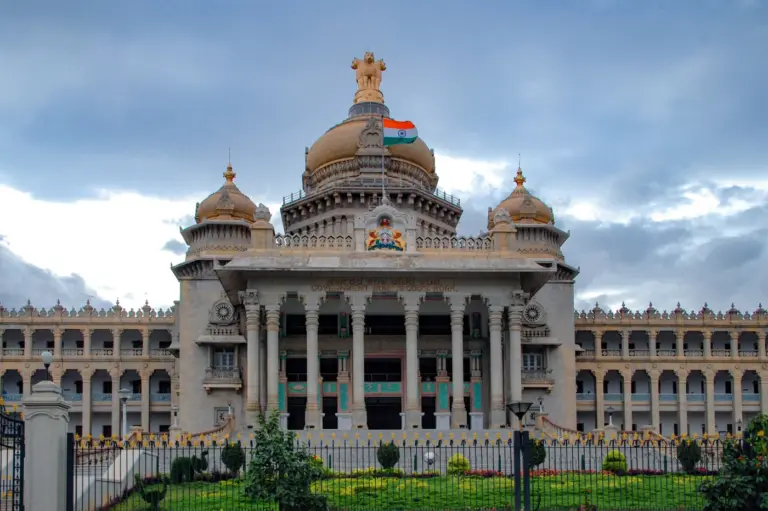
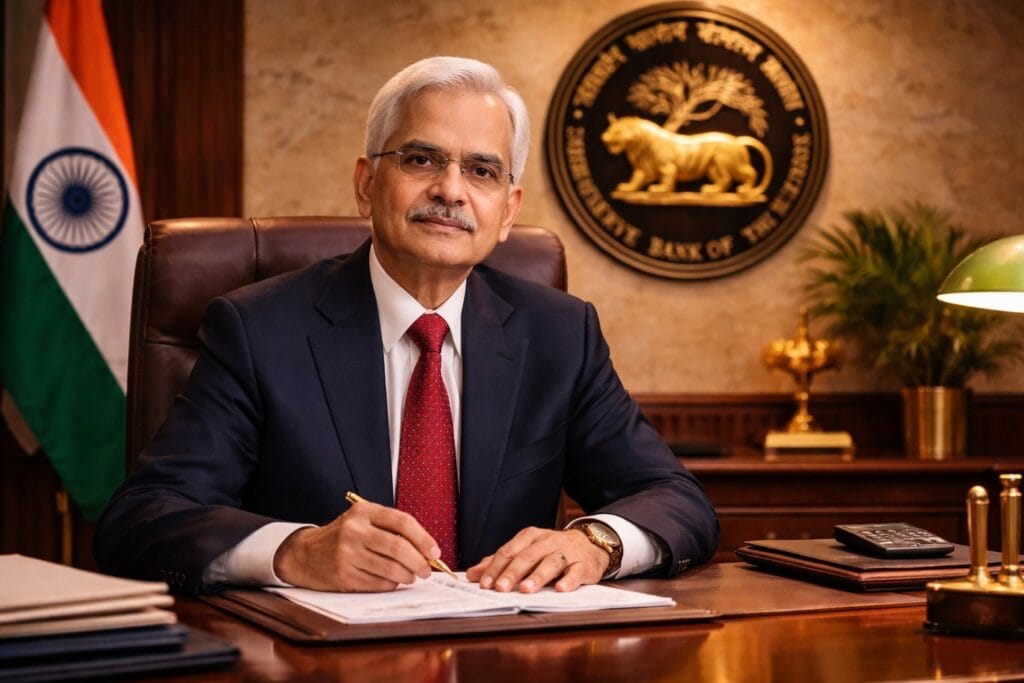
RBI Governor is the head of the Reserve Bank of India, India's central bank established under the Reserve Bank of India Act, 1934. The current RBI Governor is Sanjay Malhotra, who took charge on 11 December 2024 for a three-year term. For UPSC, the office matters in Economy (GS-III) and institutional Polity because it sits at the junction of monetary policy, banking regulation, currency management, and financial stability.
Quick Facts
| Parameter | Details |
|---|---|
| Institution | Reserve Bank of India |
| Founding law | Reserve Bank of India Act, 1934 |
| RBI began operations | 1 April 1935 |
| RBI nationalised | 1 January 1949 |
| Status of office | Statutory (not constitutional) |
| Appointed by | Central Government (under Section 8(1)(a) of the RBI Act) |
| Term | Not fixed by statute; typically 3 years by government notification (can be extended) |
| Current Governor | Sanjay Malhotra |
| Current term start | 11 December 2024 |
| Qualifications | No statutory qualifications prescribed — convention favours economists, civil servants, or bankers |
| First RBI Governor | Sir Osborne Smith (1935) |
| First Indian RBI Governor | C.D. Deshmukh (1943) |
Legal Basis: RBI Act, 1934
The RBI Governor is not a constitutional office like the President, CAG, or Governor of a state. The office derives from the RBI Act, 1934, specifically the provisions governing the Central Board of Directors of the Bank.
Key statutory points:
- Section 8(1)(a) — The Central Board includes a Governor and not more than four Deputy Governors, appointed by the Central Government
- Section 11 — The Governor and Deputy Governors hold office for the period specified by the Central Government at the time of appointment (no fixed statutory tenure)
- Section 7 — The Central Government may give directions to the Bank "in public interest" after consultation with the Governor (the controversial "Section 7" provision, never formally invoked)
The Governor also gained greater institutional visibility after the Monetary Policy Committee (MPC) framework was introduced through the Finance Act, 2016 (amending Section 45ZB of the RBI Act).
How the RBI Governor Is Appointed
The RBI Governor is appointed by the Central Government. Unlike the Chief Election Commissioner or a Supreme Court judge, there is no fixed constitutional appointment process.
| Aspect | Details |
|---|---|
| Appointing authority | Union Government (Cabinet Appointments Committee) |
| Constitutional provision | None — purely statutory under the RBI Act |
| Removal | By the Central Government; no formal removal procedure prescribed in the Act |
| Tenure convention | Typically 3 years, extendable |
| Eligibility | No statutory qualifications; by convention — senior economists, IAS/IES officers, or career bankers |
Powers and Functions of the RBI Governor
The RBI Governor does not run the economy alone, but the office carries major institutional powers.
1. Monetary Policy (MPC Chairperson)
The Governor is the ex officio Chairperson of the Monetary Policy Committee (MPC) — a 6-member body that decides the policy repo rate. The Governor holds a casting vote in case of a tie.
2. Currency Management
The RBI Governor's signature appears on all RBI-issued banknotes (₹10 and above, except ₹1 notes which carry the Finance Secretary's signature). The Governor is linked to note issue, currency management, and the integrity of the monetary system.
3. Banking Regulation and Supervision
The RBI regulates scheduled commercial banks, urban co-operative banks, NBFCs, and parts of the payment ecosystem. The Governor influences bank licensing, supervisory action (PCA framework), risk regulation, and crisis response.
4. Foreign Exchange Management
The Governor oversees forex reserves management and exchange rate stability. India's forex reserves are managed by the RBI under the Governor's institutional authority.
5. Financial Stability and Crisis Management
During stress — inflation spikes, banking shocks, exchange-rate pressure, or external crises — the Governor becomes the face of central bank credibility. The Governor chairs the Financial Stability and Development Council (FSDC) sub-committee.
6. Developmental Role
The Governor oversees financial inclusion initiatives, payment systems (UPI, RTGS, NEFT), priority sector lending norms, and the RBI's developmental agenda.
RBI Governor vs Finance Minister
UPSC often rewards this distinction. The two offices handle different domains of economic management.
| Parameter | RBI Governor | Finance Minister |
|---|---|---|
| Institutional base | Reserve Bank of India | Union Ministry of Finance |
| Legal base | RBI Act, 1934 | Executive government + parliamentary responsibility |
| Main domain | Monetary policy, regulation, currency | Taxation, expenditure, budget, borrowing |
| Policy tool | Repo rate, CRR, SLR, OMOs | Tax rates, subsidies, fiscal deficit targets |
| Direct role in repo rate | Yes, through MPC (casting vote) | No |
| Parliament membership | Not required | Yes (or must become member within 6 months) |
| Accountability | To the Central Board and indirectly to Parliament | Directly to Parliament |
| Independence | Expected to maintain operational autonomy | Part of the elected government |
Complete List of RBI Governors
| No. | RBI Governor | Term | Key Contribution |
|---|---|---|---|
| 1 | Sir Osborne Smith | 1935-1937 | First RBI Governor; established early operations |
| 2 | Sir James Braid Taylor | 1937-1943 | Wartime monetary management |
| 3 | C.D. Deshmukh | 1943-1949 | First Indian RBI Governor; later became Finance Minister |
| 4 | Benegal Rama Rau | 1949-1957 | Oversaw RBI nationalisation (1949); post-independence monetary framework |
| 5 | K.G. Ambegaonkar | 1957 | Brief interim charge |
| 6 | H.V.R. Iyengar | 1957-1962 | Strengthened banking regulation |
| 7 | P.C. Bhattacharya | 1962-1967 | Managed wartime economy (1962, 1965 wars) |
| 8 | L.K. Jha | 1967-1970 | Devaluation aftermath; later Governor of J&K |
| 9 | B.N. Adarkar | 1970 | Brief interim tenure |
| 10 | S. Jagannathan | 1970-1975 | Bank nationalisation period |
| 11 | N.C. Sen Gupta | 1975 | Brief interim charge |
| 12 | K.R. Puri | 1975-1977 | Emergency period |
| 13 | M. Narasimham | 1977 | Brief tenure; later chaired landmark banking reform committees (Narasimham Committee I & II) |
| 14 | I.G. Patel | 1977-1982 | Managed demonetisation of high-denomination notes (1978) |
| 15 | Dr. Manmohan Singh | 1982-1985 | Later became Prime Minister of India |
| 16 | Amitav Ghosh | 1985 | Brief interim charge |
| 17 | R.N. Malhotra | 1985-1990 | Pre-reform monetary management |
| 18 | S. Venkitaramanan | 1990-1992 | 1991 balance of payments crisis and gold pledge |
| 19 | C. Rangarajan | 1992-1997 | Liberalisation-era reforms; Rangarajan Committee on monetary policy |
| 20 | Bimal Jalan | 1997-2003 | Asian financial crisis management; forex reserves buildup |
| 21 | Y.V. Reddy | 2003-2008 | Conservative regulation that shielded India from 2008 global crisis |
| 22 | D. Subbarao | 2008-2013 | Post-global financial crisis management; inflation challenges |
| 23 | Raghuram G. Rajan | 2013-2016 | Inflation targeting framework; introduced MPC concept; rupee stabilisation |
| 24 | Urjit R. Patel | 2016-2018 | First MPC meeting (October 2016); demonetisation aftermath; resigned before term completion |
| 25 | Shaktikanta Das | 2018-2024 | COVID-era monetary easing; longest-serving recent Governor (6 years); digital rupee pilot |
| 26 | Sanjay Malhotra | 2024-present | Current Governor; IAS officer background |
Key facts to remember:
- C.D. Deshmukh — First Indian RBI Governor
- Manmohan Singh — later became Prime Minister
- M. Narasimham — later chaired landmark banking reform committees
- Raghuram Rajan — introduced inflation targeting framework
- Shaktikanta Das — longest recent tenure (6 years), steered through COVID
Constitutional and Statutory Basis: Summary
| Source | Relevance to RBI Governor |
|---|---|
| Article 283(2) | Custody and management of the Consolidated Fund — RBI acts as banker to governments |
| RBI Act, 1934 (Section 8) | Appointment of Governor and Deputy Governors |
| RBI Act, 1934 (Section 7) | Government's power to give directions (never formally invoked) |
| RBI Act, 1934 (Section 45ZB) | MPC constitution — Governor as Chairperson |
| Finance Act, 2016 | Amended RBI Act to establish MPC framework |
Why the RBI Governor Matters for UPSC
This office appears in UPSC because the RBI sits at the centre of multiple Economy topics:
- Inflation targeting and the 4% CPI target (with +/- 2% band)
- Repo rate and monetary policy transmission
- Banking regulation and NPA resolution
- Exchange-rate management and forex reserves
- Financial inclusion and payment systems (UPI, Jan Dhan)
- Central bank independence debates
The phrase "central bank independence" should be used carefully. RBI autonomy does not mean freedom from the state. It means institutional credibility, rule-based action, and protection from day-to-day political pressure in monetary management.
Related: Banking System in India
Related: Fiscal Policy in India
Related: Governor of India: Role, Powers & Appointment
UPSC Relevance of RBI Governor
| Paper | Likely Question Type |
|---|---|
| Prelims | Constitutional vs statutory status; MPC Chairperson; who signs banknotes; current Governor; first Indian Governor |
| GS-III (Economy) | Monetary policy, inflation targeting, banking regulation, financial stability |
| GS-II (Polity) | Statutory bodies, central bank independence, Section 7 debate |
| Interview | RBI-government tensions, role of institutions in economic governance |
The strongest answer-writing move is to distinguish RBI Governor, Finance Minister, and MPC instead of mixing them together.
Frequently Asked Questions
Who is the current RBI Governor?
As of March 2026, the current RBI Governor is Sanjay Malhotra. He took charge on 11 December 2024 for a three-year term.
Is the RBI Governor a constitutional post?
No. The RBI Governor is a statutory office created under the Reserve Bank of India Act, 1934. It is not one of the offices created directly by the Constitution of India.
What are the main powers of the RBI Governor?
The RBI Governor leads the central bank, chairs the Monetary Policy Committee (with casting vote), oversees banking regulation, manages currency issuance, and is responsible for financial stability and forex reserves management.
Who was the first Indian RBI Governor?
The first Indian RBI Governor was C.D. Deshmukh, who served from 1943 to 1949. The first two governors — Sir Osborne Smith and Sir James Taylor — were British.
How is the RBI Governor appointed?
The RBI Governor is appointed by the Central Government under Section 8(1)(a) of the RBI Act, 1934. There are no statutory qualifications prescribed; the tenure is decided at the time of appointment, typically three years.
Tell Google you want more of this.
Add Anantam IAS as a preferred sourceOne tap, and this site shows up more often in your own Top Stories, AI Overviews and AI Mode. Remove it any time.