Saudi Arabia is India's third-largest trading partner globally, the third-largest crude supplier, host to 2.6 million Indian expatriates, and the custodian of the Two Holy Mosques where 175,000 Indian Hajj pilgrims travel each year. For decades the relationship was transactional — oil from Riyadh, workers from India. Since the Riyadh Declaration (2010), and particularly under Crown Prince Mohammed bin Salman's Vision 2030, ties have upgraded to a Strategic Partnership Council (SPC, 2019). For UPSC GS II, India-Saudi tests energy diplomacy, diaspora economy, and the balancing act between Iran, Israel, and the Gulf.
Historical context
India and Saudi Arabia established diplomatic relations in 1947. The Cold War positioned Riyadh closer to Pakistan due to Islamic solidarity and anti-Soviet alignment. Relations warmed steadily after 1991 liberalisation and PM Vajpayee's 2001 visit. The Delhi Declaration (2006) elevated ties; the Riyadh Declaration (2010) formalised the Strategic Partnership. PM Modi's 2016 visit — and MBS's 2019 and 2023 visits — embedded the relationship.
Strategic Partnership Council
Established in 2019 as the apex bilateral mechanism. Two verticals:
- Political, Security, Social and Cultural Cooperation Committee
- Economy and Investments Committee
The first SPC Summit (September 2023) produced:
- Target of USD 100 billion Saudi investments in India.
- Commitment to FTA with GCC.
- Joint Task Force on Investments.
- Agreements on energy, finance, digital, and culture.
Vision 2030 and India
Saudi Arabia’s Vision 2030 — launched by MBS in 2016 — aims at diversification away from oil: tourism, entertainment, renewable energy, manufacturing, technology. India is identified as a key partner for:
- Labour and talent supply.
- Technology and digital public infrastructure.
- Pharmaceuticals and healthcare.
- Agri-food security (Saudi imports 80% of food).
- Investment flows from Saudi PIF to Indian infrastructure.
Areas of cooperation
Trade
- Bilateral trade USD 43 billion (FY24); USD 52 billion (FY23).
- Oil dominates; non-oil trade rising — pharma, rice, engineering goods.
- GCC FTA negotiations ongoing.
Investment
- Saudi PIF invested in Reliance Jio Platforms and Reliance Retail (~USD 3 billion).
- Aramco signed MoU for West Coast Refinery and Petrochemicals Project (USD 44 billion, Maharashtra) with ADNOC and Indian consortium.
- Saudi Aramco entered Nayara Energy fuel retail.
Energy
- Third-largest crude supplier to India (16.7% share in FY23).
- Strategic Petroleum Reserve — Saudi Aramco invested in Indian SPR.
- LPG — Saudi supplies significant volumes.
- Renewables — ACWA Power and Aramco expanding renewable JVs.
Defence
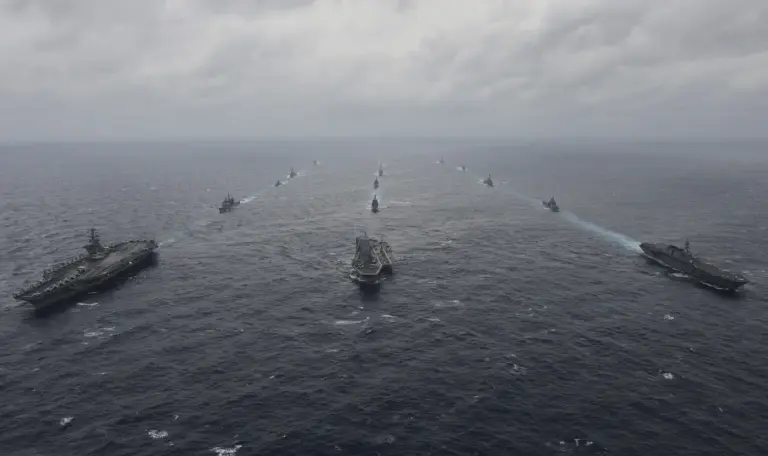
- Joint exercises Sada Tanseeq (army).
- Al-Mohed Al-Hindi (navy, biennial).
- Defence industry MoU signed (2023).
- Saudi interest in Tejas, BrahMos, Akash.
Diaspora
- 2.6 million Indians — largest expatriate community.
- Remittances approximately USD 11-12 billion annually.
- Labour MoU (2014); e-migrate platform.
- Hajj quota — 175,000 Indian pilgrims, highest global.
Food security
Saudi investments in Indian food processing, grains, dairy, and agri-infrastructure to secure imports.
Digital and innovation
- UPI and RuPay cooperation.
- Indian IT companies partner on smart city projects (NEOM, Red Sea Project).
- Startup cooperation.
Counter-terrorism
- Riyadh Declaration condemned cross-border terrorism.
- Intelligence sharing; deportation cooperation.
- Indian terror suspects extradited.
Cultural
- Education MoUs.
- Yoga and Ayurveda outreach.
- Saudi Arabia opened a consulate in Mumbai.
Geopolitical context
Saudi-Iran normalisation (2023)
China-brokered detente in March 2023 restored Saudi-Iran ties. India, which had warm ties with both, welcomed the move. Still, Saudi remains cautious about Iran's regional proxy network (Houthis, Hezbollah).
China in the Gulf
- China is Saudi Arabia's largest oil buyer and a major investor.
- Saudi Vision 2030 signed "harmonisation plan" with BRI.
- Saudi joined BRICS (2024) — though later paused formal accession.
US withdrawal narrative
US shale independence has reduced American energy dependence on the Gulf. The US retains security commitments but is perceived as less engaged. This opens space for India.
Yemen war
Houthi attacks on Saudi oil assets (Aramco, 2019) and now on Red Sea shipping affect India's interests directly. India coordinates maritime security.
Israel-Saudi normalisation
US-brokered normalisation on pause post-October 2023. Indian interest: an integrated I2U2-IMEC corridor benefits from Saudi-Israel normalisation.
Challenges
- Oil price volatility affects Indian fiscal planning.
- Diaspora vulnerabilities — unpaid wages, legal issues.
- Human rights concerns — Indian media occasionally critical of Saudi record, causing diplomatic friction.
- Pakistan factor — Saudi historically a Pakistani ally; balance maintained.
- Climate and green transition — Saudi clings to oil; India pushes solar/green hydrogen.
Latest developments (2024-26)
- MBS state visit to India (September 2023) for SPC Summit.
- Modi visit to Saudi Arabia (April 2024) — follow-up engagements.
- IMEC (G20 New Delhi, Sep 2023) — Saudi Arabia is a core member.
- BRICS expansion (2024) — Saudi initially accepted, then paused membership process.
- Red Sea crisis (late 2023 onward) — Saudi ceasefire in Yemen; Indian Navy's Operation Sankalp coordinated.
- Israel-Hamas conflict — Saudi-Israel normalisation paused.
- West Coast Refinery revised timelines (2025 ground-breaking).
- Saudi PIF expanding Indian infrastructure and tech bets.
- Hajj quota increased to 175,025 for 2025.
- GCC FTA negotiations progressed.
- AI Action Summit Paris (2025) — Saudi-India AI MoUs.
- Russia-Ukraine update — Saudi hosted Ukraine peace talks (August 2023).
- Operation Sindhu Thakur / Ajay — evacuation coordination.
- UPI in Saudi Arabia rollout planned for 2025-26.
Way forward
- Conclude the GCC FTA — unlocks major trade and investment.
- Deliver the West Coast Refinery — flagship project.
- Green hydrogen corridor — India as consumer; Saudi as producer.
- Deepen defence — joint production, naval capability.
- Diaspora welfare — labour reforms, social security portability.
- Cultural diplomacy — Yoga, cuisine, Bollywood.
- IMEC execution — revive Gulf-to-Europe rail links.
Key bilateral agreements and mechanisms
| Mechanism | Status |
|---|---|
| Riyadh Declaration | 2010 |
| Delhi Declaration | 2006 |
| Strategic Partnership Council (SPC) | Since 2019 |
| Joint Commission on Economic and Technical Cooperation (JCETC) | Regular |
| India-Saudi Arabia High-Level Task Force on Investments | 2019 |
| Defence Cooperation MoU | 2014 |
| Civil Nuclear Cooperation Framework | Under discussion |
| Memorandum on Haj | Annual |
| Bilateral Investment Treaty (BIT) | Under negotiation |
| DTAA | In force |
PM Modi's Saudi visits
| Year | Notes |
|---|---|
| April 2016 | First PM Modi visit; Award of King Abdulaziz Sash |
| October 2019 | State visit; Strategic Partnership Council established |
| November 2022 | G20 Bali sideline meeting with MBS |
| September 2023 | MBS state visit to India; SPC Summit |
| April 2024 | Modi state visit |
Vision 2030 alignment with India
| Saudi Vision 2030 pillar | Indian contribution |
|---|---|
| NEOM futuristic city | Indian IT, construction, hospitality expertise |
| Red Sea Project | Tourism, infrastructure partnerships |
| Qiddiya entertainment city | Cultural and entertainment exports |
| Renewables target (50% by 2030) | Solar, green hydrogen cooperation |
| Food security initiative | Agri-imports from India, investments in processing |
| Mining and minerals diversification | Rare earth cooperation |
Religious diplomacy
- Hajj quota: 175,025 Indian pilgrims in 2025 — the highest for any country.
- Haj Committee of India works with Saudi Ministry of Hajj and Umrah.
- Umrah quota expanding.
- Saudi Arabia hosted India's Republic Day cultural programme in 2023.
West Asian security architecture
Saudi Arabia's positioning has three vectors:
- US security guarantor historically; recent disaffection.
- Chinese economic partner — top oil buyer; growing political role.
- Emerging leader of Islamic world — challenge to Iran, Turkey.
India's approach: become a fourth vector — non-aligned, economically substantive, culturally respectful, defence-capable. The I2U2 and IMEC frameworks institutionalise that.
Challenges deep dive
- Oil price volatility — USD 10-15 per barrel swings affect Indian import bill by USD 10-15 billion annually.
- Migrant worker vulnerabilities — kafala system reforms incomplete.
- Climate politics — Saudi's OPEC+ oil-first stance vs India's renewable ambition.
- Regional proxy wars — Yemen, Syria, Lebanon.
- Hajj logistics — mass casualty events (2015 stampede; 2024 heatwave deaths including Indians).
UPSC Relevance
India-Saudi is a GS II topic — bilateral relations, effect of policies of developed and neighbouring countries on India's interests. Prelims has asked about SPC, Vision 2030, Hajj quota, Aramco investments. Mains prompts rotate between energy security, diaspora, and West Asia balancing.
Practice question (Mains): Examine the evolution of India-Saudi Arabia relations from an energy-focused partnership to a strategic and economic engagement. (250 words)
Watch on YouTube
Related video from the Anantam IAS YouTube channel.
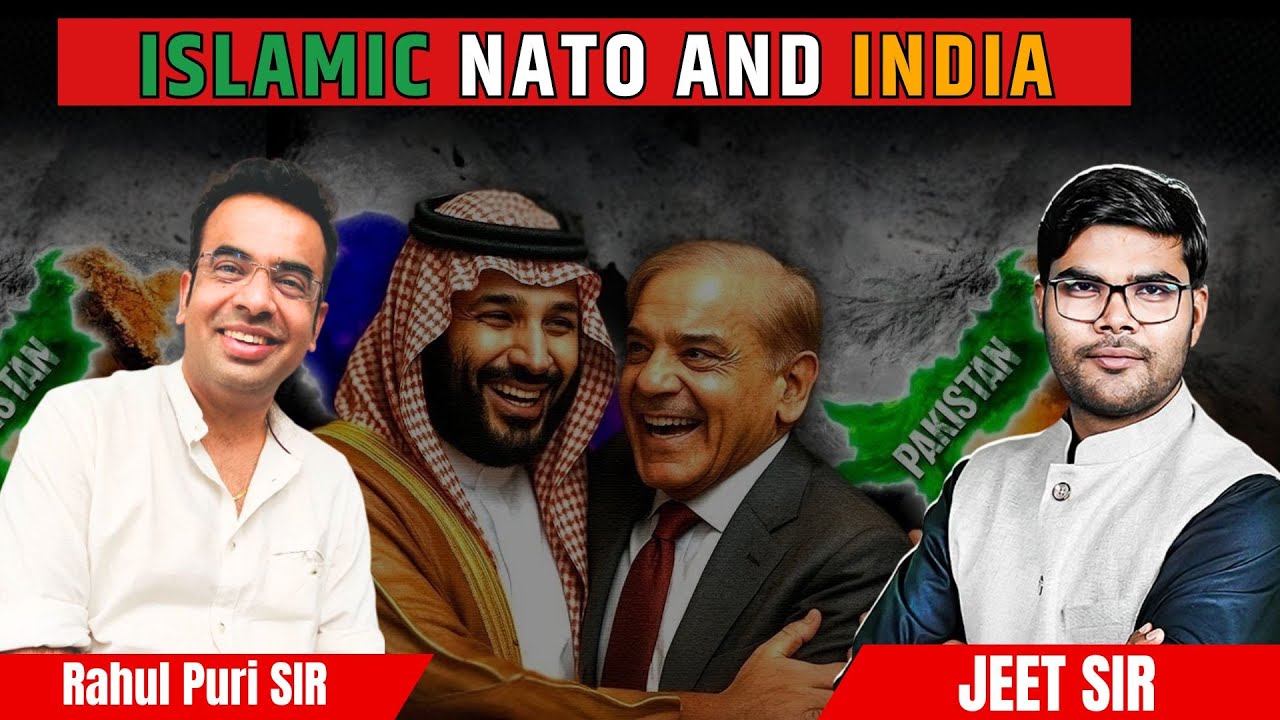
Pakistan and Saudi Arabia Defence Agreement
Tell Google you want more of this.
Add Anantam IAS as a preferred sourceOne tap, and this site shows up more often in your own Top Stories, AI Overviews and AI Mode. Remove it any time.