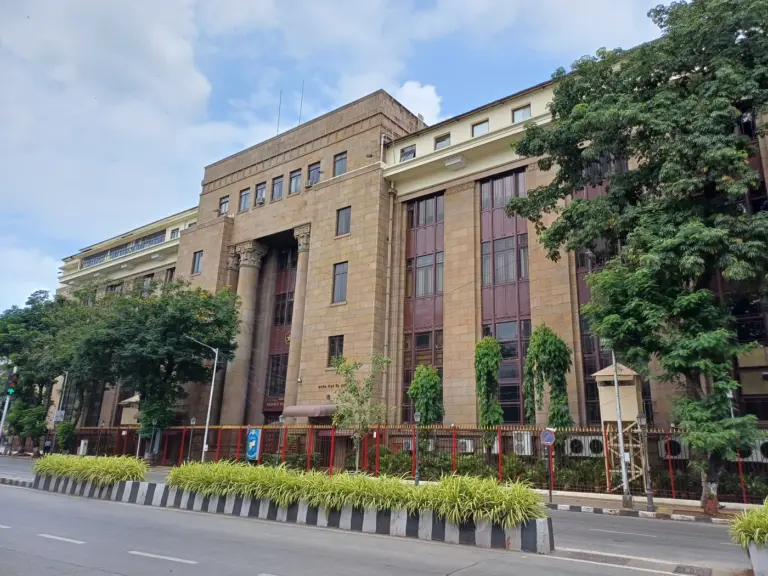
UPSC stands for Union Public Service Commission. It’s a constitutional body established under Article 315 of the Indian Constitution, responsible for recruiting candidates to central government services and advising the government on civil service matters.
Every year, millions of aspirants attempt exams conducted by UPSC. But most of them don't know the body they're appearing before — its composition, powers, constitutional position, and the range of exams it runs beyond the Civil Services Examination. This guide fixes that.
What Is UPSC? Constitutional Basis and Legal Framework
UPSC isn't just an exam board. It's a constitutional body with independent status, protected from political interference by the Constitution itself.
Articles 315 to 323: The Constitutional Foundation
Part XIV of the Indian Constitution (Articles 308–323) deals with "Services Under the Union and the States." Within this, Articles 315–323 specifically establish and govern the UPSC:
| Article | Provision |
|---|---|
| Article 315 | Establishment of UPSC and State Public Service Commissions |
| Article 316 | Appointment and term of office of members |
| Article 317 | Removal and suspension of members |
| Article 318 | Power to make regulations regarding conditions of service |
| Article 319 | Prohibition of holding offices by UPSC members after ceasing to be members |
| Article 320 | Functions of UPSC |
| Article 321 | Power to extend functions of UPSC |
| Article 322 | Expenses of UPSC charged to Consolidated Fund of India |
| Article 323 | Reports of UPSC to President |
The UPSC's expenses are charged to the Consolidated Fund of India (Article 322), not subject to vote in Parliament. This financial independence is intentional — it insulates UPSC from annual budget negotiations that could compromise its independence.
UPSC as a Constitutional Body vs Statutory Body
This distinction appears repeatedly in UPSC exams. A constitutional body derives its authority directly from the Constitution. A statutory body is created by an Act of Parliament. UPSC is a constitutional body. Its existence can't be abolished by a simple parliamentary majority — it would require a constitutional amendment.
History of UPSC: From Lee Commission to Today
The UPSC didn't emerge with the 1950 Constitution. Its roots go back to British India.
The Lee Commission (1923–1924)
The Lee Commission, chaired by Lord Lee of Fareham, recommended the creation of a Public Service Commission for India in 1924. Before this, recruitment to the India Civil Service was entirely conducted from London.
Federal Public Service Commission (1926)
Following the Lee Commission report, the Federal Public Service Commission was established on October 1, 1926 — this is the founding date that UPSC traces its institutional history to. It was India's first formal civil service recruitment body based in India.
Evolution to UPSC (1950)
When the Constitution came into force on January 26, 1950, the Federal Public Service Commission was reconstituted as the Union Public Service Commission under Article 315. The first Chairman of the UPSC after the Constitution came into force was H.K. Kripalani.
UPSC Composition: Chairman and Members
The UPSC consists of a Chairman and members appointed by the President of India.
Appointment and Eligibility
- The President appoints both the Chairman and members
- There's no fixed number of members specified in the Constitution — it's at the President's discretion (currently around 9–11 members including the Chairman)
- At least half the members must have held office under the Government of India or a State Government for at least 10 years
Term of Office
- Members serve for 6 years or until they reach 65 years of age, whichever is earlier
- After serving as UPSC Chairman or member, a person is not eligible for reappointment to UPSC
- A former UPSC Chairman is not eligible for any other government employment (Article 319)
- A former UPSC member can become the Chairman of UPSC or SPSC
Removal of Members
Members can only be removed by the President — and only on specific grounds:
- Insolvency (adjudged bankrupt)
- Engagement in paid employment outside the duties of the office
- Infirmity of mind or body
- Misbehaviour — but this requires an inquiry by the Supreme Court under Article 317
The President can suspend a member pending an inquiry by the Supreme Court. But dismissal requires the Supreme Court's finding of misbehaviour.
Current UPSC Chairman
As of 2025, Preeti Sudan is the Chairperson of UPSC. She is the first woman to serve as UPSC Chairperson in its history.
Functions of UPSC: More Than Just the Civil Services Exam
Most aspirants think UPSC = Civil Services Exam. That's a small fraction of what UPSC actually does.
Recruitment Functions
UPSC conducts recruitment for:
- Civil Services Examination (CSE) — IAS, IPS, IFS, and 20+ other Group A and B central services
- Combined Defence Services Examination (CDS) — entry to IMA, INA, AFA, and OTA
- National Defence Academy Examination (NDA) — entry to NDA and NA
- Engineering Services Examination (ESE/IES) — engineering posts in various central government departments
- Indian Forest Service Examination (IFoS) — recruitment to the Indian Forest Service
- Combined Medical Services Examination (CMS) — medical officers in central health services
- Central Armed Police Forces (CAPF) Examination — Assistant Commandants in BSF, CRPF, CISF, SSB, ITBP
- Special Class Railway Apprentice (SCRA) Examination (currently suspended)
- Geologists' Examination — geological survey positions
- CISF AC (EXE) LDCE — Limited Departmental Competitive Examination
Advisory Functions
Article 320 requires the government to consult UPSC on:
- Recruitment methods for civil services
- Principles for appointments, promotions, and transfers
- Disciplinary matters affecting civil servants
- Cases where a civil servant may be compensated for legal expenses in defending government decisions
- Claims by civil servants for pension in respect of injuries
The government is not bound to accept UPSC's advice — but it must consult. If the government disagrees, it must record reasons in writing.
What UPSC Does NOT Do
UPSC's jurisdiction has explicit exclusions:
- Posts filled by direct appointment on contract
- Posts where maximum age is below 25
- Group C and Group D services (handled by Staff Selection Commission)
- State-level services (handled by State Public Service Commissions)
- Posts in the President's Secretariat, Lok Sabha Secretariat, Rajya Sabha Secretariat
UPSC Exam Calendar: Key Annual Exams
UPSC follows a predictable annual schedule. Here are the major exams:
| Examination | Notification (Approx.) | Exam (Approx.) | Vacancies (Approx.) |
|---|---|---|---|
| Civil Services (Prelims) | Feb–Mar | May–Jun | 800–1100 total |
| Civil Services (Mains) | – | Sep–Oct | – |
| NDA I | Dec–Jan | Apr | 400 |
| CDS I | Oct–Nov | Feb | 450 |
| NDA II | May–Jun | Sep | 400 |
| CDS II | May–Jun | Sep | 450 |
| IFoS (Prelims via CSE Prelims) | Feb–Mar | May–Jun | 150–200 |
| CAPF (AC) | Mar–Apr | Aug | 250–300 |
| ESE (Prelims) | Sep–Oct | Feb | 600–700 |
| CMS | Mar–Apr | Jul–Aug | 500–600 |
Approximate figures. Always verify from official UPSC notifications.
UPSC Civil Services Examination: The Flagship Exam
The CSE is UPSC's most visible exam. Here's a quick structural overview:
Preliminary Examination
- Paper I: General Studies — 100 questions, 200 marks, 2 hours
- Paper II: CSAT (Civil Services Aptitude Test) — 80 questions, 200 marks, 2 hours, qualifying (minimum 33% required)
- Negative marking: 1/3rd of marks deducted per wrong answer
- Results in about 12–13 times the Mains vacancies being shortlisted
Main Examination
Nine papers total, seven of which count for merit:
| Paper | Subject | Marks |
|---|---|---|
| Paper A | Indian Language (qualifying) | 300 |
| Paper B | English (qualifying) | 300 |
| Paper I | Essay | 250 |
| Paper II | GS 1 (History, Geography, Society) | 250 |
| Paper III | GS 2 (Polity, Governance, IR) | 250 |
| Paper IV | GS 3 (Economy, Environment, Technology) | 250 |
| Paper V | GS 4 (Ethics) | 250 |
| Paper VI | Optional Subject Paper 1 | 250 |
| Paper VII | Optional Subject Paper 2 | 250 |
Total merit marks: 1750
Personality Test (Interview)
- 275 marks
- Conducted by a UPSC board in New Delhi
- Tests personality, judgment, mental alertness, and suitability for civil service
Final merit = Mains (1750) + Interview (275) = 2025 marks
Related: IAS Full Form: Indian Administrative Service Guide
State Public Service Commissions: The Parallel Structure
Just as UPSC handles central services, each state has its own State Public Service Commission (SPSC) under Article 315. Examples:
- MPSC — Maharashtra Public Service Commission
- UPPSC — Uttar Pradesh Public Service Commission
- BPSC — Bihar Public Service Commission
- TNPSC — Tamil Nadu Public Service Commission
SPSC members are appointed by the Governor (not President) and follow similar constitutional protections.
The Joint Public Service Commission can be created for two or more states by Parliament — but currently no joint commission exists in practice.
UPSC Annual Report and Accountability
Article 323 requires UPSC to present an annual report to the President on the work done. The President then lays this report before both Houses of Parliament. If the government rejects UPSC's advice on any matter, the reasons must be stated in the report.
This parliamentary accountability mechanism is a key safeguard — it ensures transparency even when the government overrides UPSC recommendations.
Frequently Asked Questions About UPSC
What is the full form of UPSC?
UPSC stands for Union Public Service Commission. It is a constitutional body established under Article 315 of the Indian Constitution, responsible for conducting examinations and recruiting candidates to central government services.
When was UPSC established?
The Federal Public Service Commission — UPSC's predecessor — was established on October 1, 1926. After the Constitution came into force on January 26, 1950, it was reconstituted as the Union Public Service Commission under Article 315.
How many exams does UPSC conduct per year?
UPSC conducts approximately 14–16 examinations per year, including the Civil Services Exam, NDA, CDS, IFoS, ESE, CMS, CAPF, Geologists' Exam, and several departmental/limited competitive exams.
Who appoints the UPSC Chairman?
The President of India appoints the UPSC Chairman. The Chairman serves for 6 years or until the age of 65, whichever comes earlier. After retirement, a UPSC Chairman is not eligible for any other government employment.
Is UPSC's advice binding on the government?
No. UPSC's advice is consultative, not binding. The government must consult UPSC on specified matters under Article 320, but it's not obligated to accept the advice. If the government rejects UPSC's recommendation, it must record the reasons, which are then included in UPSC's annual report to Parliament.
Tell Google you want more of this.
Add Anantam IAS as a preferred sourceOne tap, and this site shows up more often in your own Top Stories, AI Overviews and AI Mode. Remove it any time.