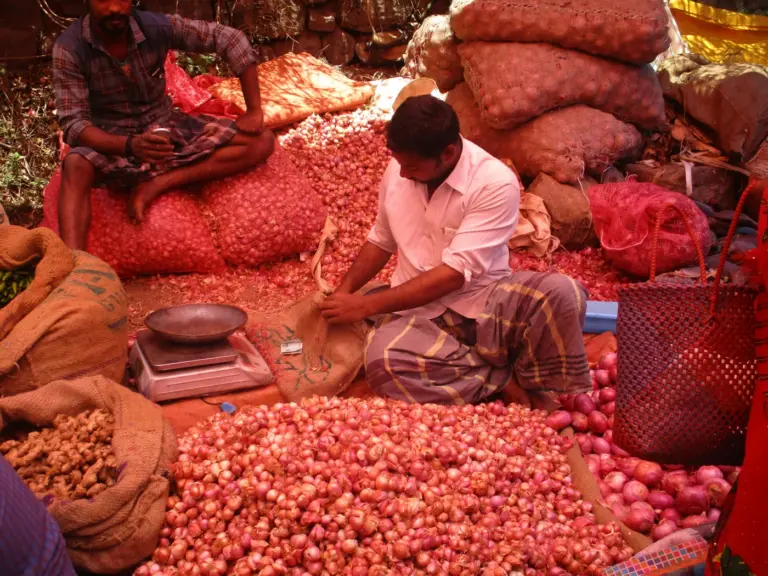
Agricultural credit — affordable, timely and adequate institutional lending — is the circulation system of rural India. Every one per cent rise in agri credit delivers roughly a 0.3% rise in agricultural GDP, according to RBI research. Yet institutional credit still reaches only around 60% of farm households, and long-term investment loans remain the weakest link. This guide covers the importance of agri credit, initiatives, problems and the reform agenda in 2025-26.
Importance of Agricultural Credit
- Meets credit needs of poor marginal farmers who cannot fund inputs from their own savings.
- Prevents debt traps — saving farmers from moneylenders who charge exploitative rates.
- Improves access to agricultural inputs — seeds, fertilisers, pesticides, machinery.
- Enhances investment — tractors, irrigation systems, storage, processing.
- Enhances productivity through adoption of new technology and mechanisation.
- Reduces distress sales — farmers can hold produce until prices rise.
- Quantified effect: every 1% increase in agricultural credit produces a 0.3% increase in agricultural GDP.
Initiatives for the Promotion of Agricultural Credit
Institutional Architecture
- Nationalisation of banks (1969, 1980) — made rural branches a priority.
- Regional Rural Banks (RRBs) — established 1975.
- NABARD — National Bank for Agriculture and Rural Development, set up in 1982.
- Co-operative credit structure — State Cooperative Banks, DCCBs, PACS at village level.
Policy Instruments
- Priority Sector Lending (PSL): Banks must lend 18% of ANBC to agriculture, with 10% to small and marginal farmers.
- Kisan Credit Card (KCC) scheme: Launched 1998; simplified credit access with flexible drawing against sanctioned limit. Extended to fisheries and animal husbandry.
- Rural Infrastructure Development Fund (RIDF) — with NABARD for rural infrastructure.
- Ground Level Credit (GLC) Policy: Government announces annual GLC targets for agriculture in the Union Budget; banks must achieve them.
- Interest Subvention Scheme (ISS) for short-term crop loans — effective interest rate of 4% for loans up to Rs 3 lakh if repaid on time (2% subvention + 3% prompt-repayment incentive).
- On-lending — banks can lend to NBFCs and HFCs, who then lend to priority sectors, counted as PSL.
- Agri Infrastructure Fund (AIF) — Rs 1 lakh crore fund for post-harvest management infrastructure and community assets; 3% interest subvention and credit guarantee up to Rs 2 crore.
Present Status
- 20% growth rate in agricultural credit over the last decade.
- Percentage of farmer households indebted: ~52% (NSSO Situation Assessment Survey 2019).
- Average farm loan: around Rs 74,121 per farm household (SAS 2019 update).
- Share of institutional credit: ~72% (2019; improving from 60%).
- Total agricultural credit disbursed FY 2023-24: around Rs 22 lakh crore against a target of Rs 20 lakh crore; FY 2024-25 target raised to Rs 27.5 lakh crore.
Problems in Agricultural Credit
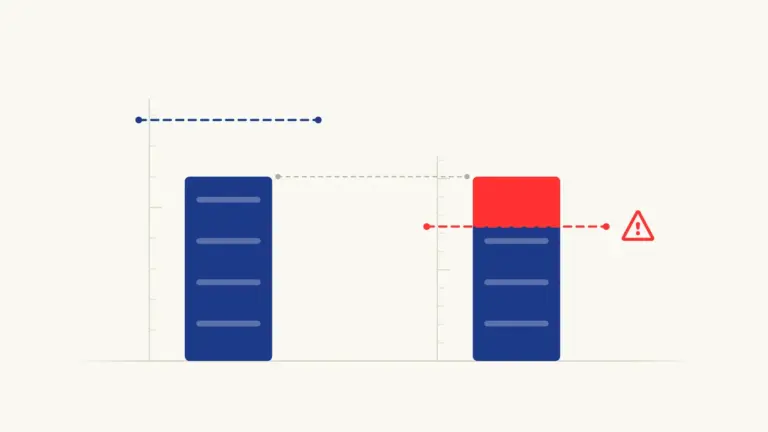
Lower share of long-term credit: The ratio is skewed — long-term investment loans only ~35%, short-term crop loans ~65%. Two reasons:
- Interest subvention is only on short-term crop loans.
- Farmers cannot provide collateral for long-term high-value investment loans.
Share of small and marginal farmers is only around 60% of the loans due to poor land records and fragmented holdings.
Regional imbalances: Higher share of southern region; Eastern and North-Eastern states under-served.
Rising NPAs of banks in agriculture: Weather-related defaults, farm loan waivers and political interventions have pushed up NPAs in agri loans, squeezing credit creation.
Coercive recovery action: Some banks' recovery practices have been linked to farmer suicides, especially in Maharashtra and Punjab.
Problems with Priority Sector Lending:
- Predominance of large-value loans (agri-infrastructure, corporate farming) that meet PSL targets without reaching small farmers.
- Concentration of agri loans in urban branches through on-lending/securitisation.
- March rush — banks front-load disbursements in March to meet PSL targets, with weak downstream quality.
How to Address These Problems
- Credit Guarantee Fund Trust for Agriculture — on the lines of CGTMSE for MSMEs. Should guarantee repayment of long-term investment loans, unlocking collateral-free investment lending for farmers.
- Strict adherence to PSL guidelines: Of the 18% for agriculture, 10% for small and marginal farmers. A sub-limit for tenant and landless farmers is overdue.
- Digitisation of land records (DILRMP, SVAMITVA) — makes institutional credit easier to access.
- Saturation drives for KCC scheme — all eligible farmers holding active KCCs.
- Mobilisation of farmers into FPOs for pooled credit applications.
- Special focus on unbanked regions — expand Regional Rural Banks and SHG-led lending in Eastern and North-Eastern states.
- Technology-driven portal — an agri-credit equivalent of PSBLoansIn59Minutes, using AgriStack, land records and credit bureau data for fast appraisals.
- Parametric crop insurance paired with credit to reduce default risk.
- Long-term loan subvention — extend interest subvention to long-term investment loans.
Special Focus Initiatives
| Scheme/Instrument | Key Feature |
|---|---|
| KCC | Flexible credit with built-in OD facility |
| Modified Interest Subvention Scheme | 4% effective rate on prompt repayment up to Rs 3 lakh |
| Agri Infrastructure Fund (AIF) | Rs 1 lakh crore fund, 3% interest subvention |
| PACS computerisation | Rs 2,516 crore scheme to digitise primary societies |
| PM Fasal Bima Yojana (PMFBY) | Credit-linked crop insurance |
| KCC for Animal Husbandry and Fisheries | Extended to allied activities in 2018 |
Latest Developments (2024-26)
- Agricultural credit target FY 2025-26: Rs 27.5 lakh crore (Budget 2025-26); disbursements in FY24 already at ~Rs 22 lakh crore.
- Modified Interest Subvention Scheme (MISS) continued at 1.5% interest subvention to banks + 3% PRI to farmers for loans up to Rs 3 lakh, effective rate 4%.
- KCC coverage — over 7.3 crore active accounts as of FY 2024-25.
- Agri Infrastructure Fund — Rs 1 lakh crore; over 75,000 projects sanctioned by 2024.
- PACS computerisation — 67,000+ PACS being computerised under the central scheme.
- Budget 2025-26 announced Kisan Credit Card loan limit raised from Rs 3 lakh to Rs 5 lakh under MISS for eligible farmers.
- AgriStack and Digital Agriculture Mission — farmer registry, crop registry and geo-referenced village maps to enable paperless credit.
- Unified Lending Interface (ULI) being developed by RBI to allow seamless data sharing for agri credit appraisal.
- PM Dhan-Dhaanya Krishi Yojana (Budget 2025-26) targeting 100 low-productivity districts with focused credit, irrigation and post-harvest support.
UPSC Relevance
GS-III Mapping
- Agriculture — credit, farm income, agri infrastructure.
- Indian Economy — PSL, financial inclusion, NPAs.
- Inclusive Growth — reach to small and marginal farmers.
Prelims Bullets
- PSL for agriculture: 18% of ANBC; 10% for small and marginal farmers.
- KCC launched: 1998.
- NABARD: set up 1982, based on Sivaraman Committee.
- Interest Subvention Scheme: effective rate 4% on prompt repayment up to Rs 3 lakh (KCC limit raised to Rs 5 lakh in Budget 2025-26).
- Agri Infrastructure Fund: Rs 1 lakh crore; 3% interest subvention; credit guarantee up to Rs 2 crore.
- Share of institutional credit in farm borrowings: ~72% (2019).
- RBI research: 1% agri credit ↑ → ~0.3% agri GDP ↑.
- Agri credit target FY 2025-26: Rs 27.5 lakh crore.
Mains Angles
- "Short-term crop loans dominate Indian agricultural credit at the expense of long-term investment loans." Discuss the implications and reforms.
- "Without bringing tenant farmers into the institutional credit ambit, priority sector lending cannot achieve its equity goal." Examine.
Tell Google you want more of this.
Add Anantam IAS as a preferred sourceOne tap, and this site shows up more often in your own Top Stories, AI Overviews and AI Mode. Remove it any time.