The autumn season in India is known in the Hindu calendar as Sharad Ritu and typically spans the months of September to November, corresponding to the lunar months of Ashwin and Kartik. Meteorologically, the India Meteorological Department (IMD) classifies October and November as the Post-Monsoon or Retreating Monsoon season, which closely overlaps with Sharad Ritu. It is a transition phase between the rainy south-west monsoon and the cool, dry winter — marked by clearing skies, cooler nights, kharif harvests, and a cluster of major Hindu festivals.
For UPSC, the autumn season is relevant to GS Paper 1 — Indian Geography (climatology) and Indian Society and Culture (festivals, crop cycles). Understanding India’s six-season classification in the Hindu system, alongside the IMD’s four-season climatology, is a common Prelims and essay-level theme.
Autumn Season Months in India
| System | Season name | Months | Approx. dates |
|---|---|---|---|
| Hindu calendar (Shad Ritu) | Sharad Ritu | Ashwin – Kartik | Mid-September to Mid-November |
| IMD classification | Post-Monsoon (Retreating Monsoon) | October – November | 1 Oct – 30 Nov |
| Common usage | Autumn | September – November | — |
Autumn therefore has two overlapping definitions in India. The cultural Sharad Ritu begins a little earlier and ends before the onset of Hemant (early winter), while the IMD's post-monsoon is a strict October–November window.
Climate and Features
Autumn is the most pleasant period of the Indian year in much of the country. Key features:
- Temperature: Day temperatures of 28–32 °C and night temperatures of 18–22 °C across the northern plains by late October. South India remains a little warmer.
- Humidity: Falls steadily as the south-west monsoon withdraws; air becomes drier, especially over north and central India.
- Skies: Clear blue skies after the monsoon, with cumulus cloud cover reducing sharply.
- Retreating monsoon: The south-west monsoon withdraws from Rajasthan by early September and from the rest of India by mid-October. As it retreats, it leaves the northern plains with low humidity while redirecting moisture to the south.
- North-east monsoon: Tamil Nadu, coastal Andhra Pradesh, Puducherry and south Kerala receive their principal rainfall now — the retreating or north-east monsoon — which accounts for 35–50 per cent of Tamil Nadu's annual rainfall.
- Cyclones: The Bay of Bengal becomes cyclogenically very active in October–November. Historic severe cyclones (Phailin 2013, Hudhud 2014, Titli 2018, Amphan 2020, Mandous 2022, Dana 2024 over Odisha, Fengal 2024 over Tamil Nadu) have struck during autumn.
- October Heat: A characteristic spell of warm, humid, oppressive weather in northern India in early October, caused by high temperature combined with residual monsoonal moisture. It ends as relative humidity drops.
Autumn in Different Regions
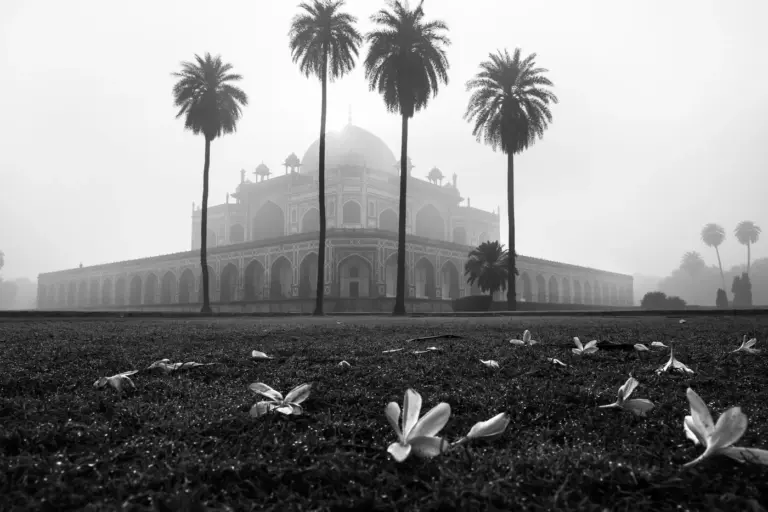
- Northern Plains (Delhi, UP, Bihar, Punjab, Haryana): Gradual cooling; morning mist by late November; rabi sowing begins.
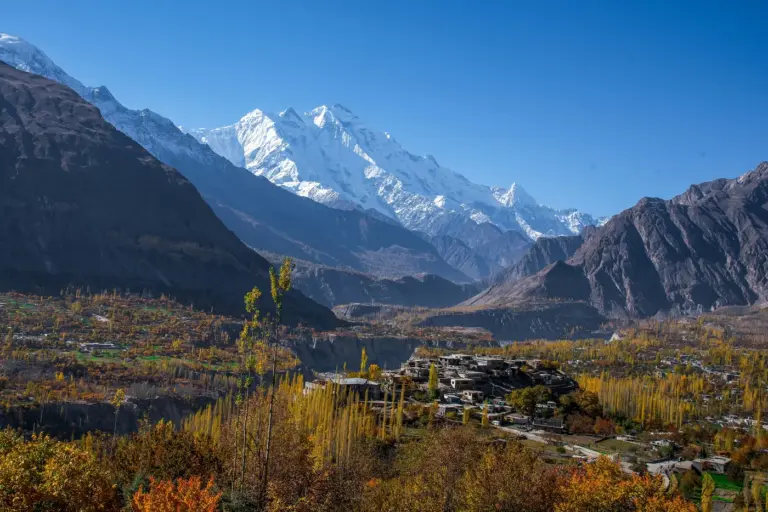
- Himalayan Belt (Uttarakhand, HP, Sikkim, Arunachal): Clear skies, trekking peak season; early snowfall in high passes by November.
- Peninsular India (Karnataka, AP, TN): North-east monsoon brings heavy rainfall; cyclone-prone Coromandel coast.
- North-East (Assam, Meghalaya): Monsoon withdraws last; bright, cool weather by early November.
- Coastal Maharashtra and Goa: Humid October heat, clearing by November.
Festivals of Autumn (Sharad Ritu)
Sharad Ritu is the most festive period of the Hindu calendar. Major festivals include:
| Festival | Tithi | Significance |
|---|---|---|
| Navratri / Durga Puja | Ashwin Shukla Pratipada to Navami | Nine-night worship of the goddess; Durga Puja in Bengal |
| Vijayadashami (Dussehra) | Ashwin Shukla Dashami | Victory of Rama over Ravana; end of Navratri |
| Sharad Purnima (Kojagiri) | Ashwin Shukla Purnima | Full moon considered brightest; agrarian and Lakshmi worship |
| Karva Chauth | Kartik Krishna Chaturthi | Fast observed by married women |
| Dhanteras | Kartik Krishna Trayodashi | Beginning of Diwali festivities |
| Diwali (Deepavali) | Kartik Amavasya | Festival of lights; Lakshmi Puja |
| Govardhan Puja, Bhai Dooj | Kartik Shukla Pratipada–Dwitiya | Celebrated after Diwali |
| Chhath Puja | Kartik Shukla Shashti | Sun worship, principally in Bihar, Jharkhand and eastern UP |
The clustering of harvest-linked festivals in autumn is no coincidence — kharif crops (rice, bajra, jowar, maize, cotton, groundnut) are harvested in late autumn, generating agrarian prosperity that is marked ritually.
Agriculture in Autumn
Autumn is critical for two crop cycles:
- Kharif harvest (September–November): Rice, jowar, bajra, maize, tur, urad, moong, cotton, groundnut, soybean and sugarcane are harvested.
- Rabi sowing (October–November): Wheat, barley, mustard, gram, peas and potato are sown. Timely sowing and post-monsoon soil moisture determine rabi yields.
Cold-wave risk from late November affects the north Indian rabi belt; farmers watch for frost damage to mustard and potato.
Sharad Ritu in the Shad Ritu System
The Hindu Shad Ritu (Six Seasons) classification is unique to India and differs from the Western four-season model. It divides the year into six seasons of two lunar months each.
| Ritu | English equivalent | Months (Gregorian) | Hindu months |
|---|---|---|---|
| Vasant | Spring | Mid-March – Mid-May | Chaitra – Vaishakh |
| Grishma | Summer | Mid-May – Mid-July | Jyeshtha – Ashadh |
| Varsha | Monsoon | Mid-July – Mid-September | Shravan – Bhadrapada |
| Sharad | Autumn | Mid-September – Mid-November | Ashwin – Kartik |
| Hemant | Pre-winter | Mid-November – Mid-January | Margashirsha – Paush |
| Shishir | Winter / Late winter | Mid-January – Mid-March | Magha – Phalguna |
The Shad Ritu system appears in Vedic and Puranic literature, and ritus are even personified — notably in Kalidasa's "Ritusamhara" ("Garland of Seasons"), which devotes a canto to Sharad's moonlit nights and blooming lotus-ponds.
Autumn in India vs Temperate Autumn
Unlike the temperate autumns of Europe and North America, Indian autumn is not characterised by leaf-fall and dormancy for most native species. India's deciduous trees (sal, teak, tendu, palash) shed leaves in spring (Vasant), not autumn. The "autumn colours" Indian travellers associate with the West are absent in most of India; high Himalayan forests of Uttarakhand, Himachal and Arunachal, however, do display autumnal foliage because they contain oak, maple and birch.
IMD's Four-Season Classification
For contrast, the IMD divides the Indian year into:
- Cold Weather Season / Winter — December, January, February
- Hot Weather Season / Summer (Pre-monsoon) — March, April, May
- South-West Monsoon / Rainy Season — June, July, August, September
- Retreating Monsoon / Post-Monsoon / Autumn — October, November
This is the classification most frequently cited in UPSC Prelims questions on Indian climate.
Environmental and Public-Health Notes
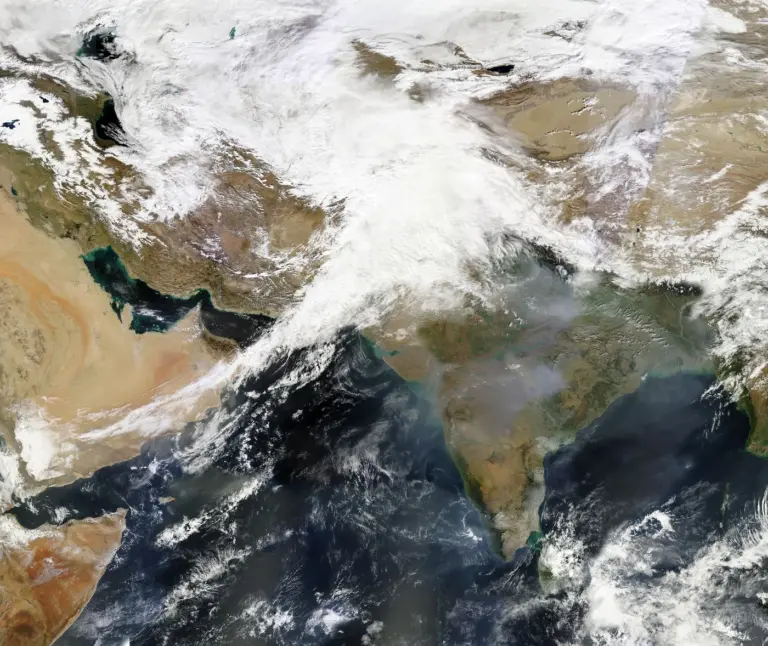
- Air pollution in the Indo-Gangetic Plains spikes in October–November due to stagnating air, lower wind speeds, stubble burning in Punjab and Haryana, and Diwali fireworks. Delhi-NCR AQI regularly enters “Severe” bands.
- Dengue and chikungunya peaks occur in late autumn because of stagnant post-monsoon water.
- Vector control and GRAP (Graded Response Action Plan) measures are invoked in the NCR each autumn.
UPSC Relevance
GS Paper 1 – Geography and Culture:
- Mechanism of the retreating monsoon; north-east monsoon over Tamil Nadu
- Tropical cyclones over the Bay of Bengal
- Kharif-Rabi transition and harvest festivals
- Shad Ritu classification in Indian literary and Vedic tradition
GS Paper 3 – Environment:
- Stubble burning, NCR air pollution, GRAP
- Cyclone preparedness and disaster management
Prelims Pointers:
- IMD post-monsoon season: October–November
- Sharad Ritu corresponds to the Hindu months of Ashwin and Kartik
- North-east monsoon primarily benefits Tamil Nadu and coastal AP
- Cyclones peak over Bay of Bengal in October–November
- Shad Ritu: Vasant, Grishma, Varsha, Sharad, Hemant, Shishir
- Kalidasa's "Ritusamhara" deals with the six seasons
- Sharad Purnima, Durga Puja, Dussehra and Diwali fall within Sharad Ritu
Mains angle: Relate autumn's retreating monsoon to regional rainfall asymmetry in India, and discuss how the agrarian calendar aligns with cultural festivals.
Tell Google you want more of this.
Add Anantam IAS as a preferred sourceOne tap, and this site shows up more often in your own Top Stories, AI Overviews and AI Mode. Remove it any time.