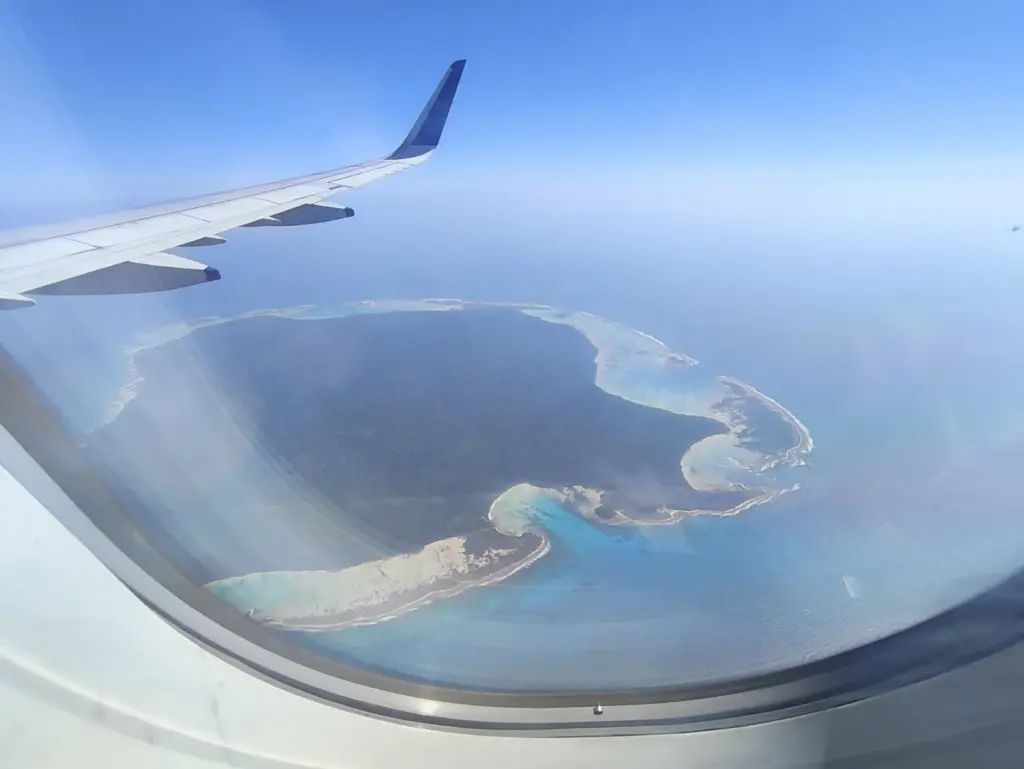
North Sentinel Island is a small, forested island of 59.67 sq km in the Andaman group, off the west coast of South Andaman, and the home of the Sentinelese, a people who have consistently refused contact with the outside world. India treats the whole island and the sea around it as a tribal reserve, and anyone who lands there without permission breaks the law.
Readers usually come with two misconceptions. The first is that the island is a lawless place that India cannot control. The second is that a 2018 permit relaxation opened it to visitors. Both are wrong. The island is under India’s sovereignty and protection, and the rule that keeps outsiders away is a deliberate policy, written into law, to protect the islanders. This note explains that policy, the law behind it and the honest limits of what anyone actually knows about the Sentinelese.
North Sentinel Island at a Glance
The core facts come from the Ministry of Home Affairs’ reply to the Rajya Sabha on 27 December 2017, which remains the most complete official statement on the island.
| Fact | Detail |
|---|---|
| Location | Andaman Islands, off the west coast of South Andaman, Union Territory of Andaman and Nicobar Islands |
| Area | 59.67 sq km |
| Inhabitants | The Sentinelese, a Particularly Vulnerable Tribal Group |
| Protected zone | Whole island plus the sea up to 5 km from the high water mark |
| Governing law | Andaman and Nicobar Islands (Protection of Aboriginal Tribes) Regulation, 1956 |
| Other laws | SC/ST (Prevention of Atrocities) Act, 1989, notified in the islands |
| Population | Not known; no survey has been carried out |
| Watch and ward | Coast Guard, Navy and the Police Marine Force of A&N Police |
Where Is North Sentinel Island?
North Sentinel lies in the Bay of Bengal on the western side of the Andaman chain, a short sea journey from the South Andaman coast near Port Blair. It is low, densely forested and ringed by coral reef, which made it hard to approach by boat even before any law stood in the way.
Because the island is small and set apart from the main Andaman group, its people developed in isolation from the neighbouring tribes. The MHA describes them as still living by hunting and gathering, with the land and sea resources of the island enough for their needs. Their language has never been documented, so nobody outside the island can say with confidence how it relates to other Andamanese languages.
The one physical fact worth fixing in memory is the shape of the reserve. It is not only the land. The notified Sentinelese Tribal Reserve covers the island and the coastal sea for 5 km from the high water mark. A boat anchored 2 km offshore is already inside it.
Who Are the Sentinelese?
The Sentinelese are one of India’s Particularly Vulnerable Tribal Groups, the official category for tribal communities with a pre-agricultural level of technology, a stagnant or declining population, very low literacy and a subsistence economy. India has identified 75 such groups, and the Andaman and Nicobar Islands is the only Union Territory that has any.
The Andamans hold more than one of these groups, and they are easy to mix up:
- the Great Andamanese, once many tribes, now a small resettled community;
- the Onge of Little Andaman;
- the Jarawa of the western forests of South and Middle Andaman;
- the Sentinelese of North Sentinel;
- the Shompen of Great Nicobar.
What sets the Sentinelese apart is not technology but choice. They have repeatedly signalled, by turning back boats and helicopters, that they want to be left alone. The MHA’s 2017 reply records that their “active hostility towards outsiders” is the reason the community has stayed safe from outside diseases and other effects of contact.
What Nobody Knows
Here the honest answer matters more than a confident one. In 2017 the MHA told Parliament plainly that no survey of the Sentinelese has been carried out, and that their exact population cannot be ascertained. Numbers you see online, whether a few dozen or a few hundred, are guesses made from boats and aircraft. A good answer says so and moves on. Inventing a figure, even a cautious one, is precisely the habit this topic punishes.
A Short History of Contact
Outsiders have visited North Sentinel for well over a century, almost always on their own terms. A colonial expedition under M.V. Portman landed in 1880. After Independence, the Anthropological Survey of India took the lead.
From 1967, the anthropologist T.N. Pandit of the Anthropological Survey of India led a series of expeditions that left gifts such as coconuts on the shore. For years the islanders took the gifts and kept the visitors at a distance. In 1991 came what Pandit described as the first friendly encounter: the Sentinelese came forward without weapons and collected coconuts from the team’s hands in the water.
That moment did not lead to regular contact, and the reasons are instructive. Contact brings disease to a population with no immunity to common infections, and the experience of other small tribes elsewhere showed how fast that can turn fatal. Over time the administration moved from gift expeditions to a policy of watching from a distance. The MHA’s description of the present system is exactly that:
- air and sea surveillance with the Coast Guard, the Navy and the Police Marine Force;
- periodic circumnavigation of the island by anthropologists and officials of the Forest, Health and Tribal Welfare departments and the Andaman Adim Janjati Vikas Samiti (AAJVS);
- no attempt to land, settle or administer.
This is often summarised in the phrase “eyes on, hands off”. The phrase is shorthand used by commentators; the official description is the surveillance-and-circumnavigation system above.
The Laws That Protect North Sentinel Island
Three layers of law keep outsiders away, and confusing them is the main error in this topic.
ANPATR, 1956
The Andaman and Nicobar Islands (Protection of Aboriginal Tribes) Regulation, 1956, often shortened to ANPATR, is the main instrument. It is a regulation made by the President, who holds the power to make regulations for the islands under Article 240 of the Constitution. Under it, the administration notifies tribal reserves and bars entry into them by anyone without authorisation. North Sentinel and its 5 km sea belt are notified as one such reserve.
The Atrocities Act and Forest Rules
The UT Administration has also notified the Scheduled Castes and Scheduled Tribes (Prevention of Atrocities) Act, 1989 in the islands, so offences against the Sentinelese by outsiders attract that law too. The island’s forests are also covered by forest law, which adds a separate bar on entry and extraction.
The Restricted Area Permit Confusion
The Restricted Area Permit (RAP) is a different thing altogether. It is a permit for foreign nationals, notified under the Foreigners (Restricted Areas) Order, 1963, that controls where foreigners may travel in the islands. In August 2018 the Centre removed 29 islands from the RAP regime to boost tourism, and North Sentinel was on that list.
Some reports in late 2018 read this as “North Sentinel is now open”. It was not. Removing the RAP only meant a foreigner did not need that particular permit. The island stayed a notified tribal reserve under ANPATR, and entry stayed a crime for Indians and foreigners alike. Think of it as two locked doors: the 2018 decision opened the outer one for foreigners, while the inner one, the tribal reserve, never moved.
The protection framework fits inside India’s wider approach to small tribes, covered in the notes on Particularly Vulnerable Tribal Groups and on PVTG land and forest rights. For the permit regimes that apply to Indian citizens in parts of the North-East, see the Inner Line Permit note; it is a different instrument from the RAP.
North Sentinel Island Today
The island remains a closed tribal reserve under continuous watch, and the two recent cases both ended with the law being enforced against the outsider.
- November 2018. An American missionary, John Allen Chau, made an illegal trip to the island to preach and is believed to have been killed by the islanders on 17 November 2018. The case led the National Commission for Scheduled Tribes to suggest bringing the 29 islands back under the RAP regime.
- March and April 2025. A 24-year-old US national, Mykhailo Viktorovych Polyakov, launched an inflatable boat from Kurma Dera beach on 29 March 2025, reached the island’s north-eastern shore, landed for about five minutes and left a coconut and a can of cola on the beach. He saw no inhabitants. The CID arrested him on 31 March for entering the tribal reserve without authorisation.
Both cases point the same way. The danger in North Sentinel runs mainly from outsiders to the islanders, not the other way round, because one visitor with a cold can do more harm than any arrow. That is why police treat a landing as a serious offence even when nobody is hurt.
North Sentinel also sits in a larger debate on the islands’ future. The Great Nicobar project has raised questions about the Shompen, another PVTG, and the Andaman and Nicobar Islands note covers the geography and strategic weight of the chain as a whole.
How to Study North Sentinel Island for Exams
The topic belongs to GS Paper I (Indian society and tribes), GS Paper II (protection of vulnerable sections and Scheduled Tribes) and Prelims geography of the islands. Mains does not ask about North Sentinel by name; it asks about tribal policy, and the Sentinelese are the cleanest example of a group whose right to be left alone the state protects. Mains 2022 GS Paper I asked, “Given the diversities among tribal communities in India, in which specific contexts should they be considered as a single category?” The Sentinelese are a strong illustration of why they often should not be.
Revision facts:
- Area 59.67 sq km, in the Andaman group, off South Andaman.
- The whole island plus 5 km of sea is a tribal reserve under ANPATR, 1956.
- The ANPATR is a presidential regulation under Article 240.
- The Sentinelese are a PVTG, one of 75 nationally.
- No population survey has been carried out (MHA, 2017).
- The first friendly encounter, led by T.N. Pandit of the Anthropological Survey of India, came in 1991.
- North Sentinel was among 29 islands removed from the RAP regime in August 2018; the tribal reserve stayed in force.
Common confusions:
- RAP vs tribal reserve. The RAP governs foreigners’ travel; the tribal reserve bars everyone.
- Sentinelese vs Jarawa. The Jarawa live on the main Andaman islands along the Andaman Trunk Road and have had sustained contact since the late 1990s; the Sentinelese live on their own island and have not.
- North Sentinel vs South Sentinel. South Sentinel is a separate, smaller island to the south.
| Group | Where | Contact status | Key protection |
|---|---|---|---|
| Sentinelese | North Sentinel Island | Refuse contact | ANPATR tribal reserve with 5 km sea belt |
| Jarawa | Western South and Middle Andaman | Regular contact | ANPATR reserve and buffer zone |
| Onge | Little Andaman | Settled at Dugong Creek | ANPATR reserve |
| Shompen | Great Nicobar | Limited contact | ANPATR reserve |
The Prelims question bank has 57 of its 1,403 questions on Indian society; search that set and the geography set for PVTG and Andaman questions.
What this topic tests is restraint. An aspirant who can explain why the state’s best service to the Sentinelese is to do nothing, and who refuses to fill the gaps in the record with guesses, is showing exactly the judgment a tribal-policy answer needs.
Frequently Asked Questions
Where is North Sentinel Island?
North Sentinel Island lies in the Andaman Islands in the Bay of Bengal, off the west coast of South Andaman. It is part of the Union Territory of Andaman and Nicobar Islands and covers 59.67 sq km.
Why is North Sentinel Island banned for visitors?
The whole island and the sea up to 5 km from the high-water mark are a notified tribal reserve under the A&N Islands (Protection of Aboriginal Tribes) Regulation, 1956. Entry is barred to protect the Sentinelese, who refuse contact and have no immunity to outside diseases.
How many Sentinelese are there?
Nobody knows. The Ministry of Home Affairs told Parliament in 2017 that no survey of the Sentinelese has been carried out, so their exact population cannot be ascertained. Figures found online are estimates made from a distance.
Are the Sentinelese a PVTG?
Yes. The Sentinelese are one of India’s 75 Particularly Vulnerable Tribal Groups, and one of the groups in the Andaman and Nicobar Islands along with the Great Andamanese, Onge, Jarawa and Shompen.
Did India open North Sentinel Island to tourists in 2018?
No. In August 2018 the island was among 29 islands removed from the Restricted Area Permit regime for foreigners. It remained a protected tribal reserve, so landing there stayed illegal for everyone.
Who made the first friendly contact with the Sentinelese?
A team led by anthropologist T.N. Pandit of the Anthropological Survey of India recorded the first friendly encounter in 1991, when the islanders came forward without weapons to collect coconuts. Regular contact never followed, and the policy shifted to watching from a distance.
What happened at North Sentinel Island in 2025?
In March 2025 a US national landed briefly on the island and left a coconut and a can of cola on the shore. The police arrested him on 31 March for entering the tribal reserve without authorisation.
Practice Questions
Prelims
1. Consider the following statements about North Sentinel Island: 1. The tribal reserve covers the island and the coastal sea up to 5 km from the high water mark. 2. A population survey of the Sentinelese was completed in the Census of 2011. Which of the statements given above is/are correct?
- (a) 1 only
- (b) 2 only
- (c) Both 1 and 2
- (d) Neither 1 nor 2
Answer: (a) The MHA told Parliament in 2017 that no survey of the Sentinelese has been carried out.
2. The Andaman and Nicobar Islands (Protection of Aboriginal Tribes) Regulation, 1956 was made under which provision?
- (a) Article 239AA
- (b) Article 240
- (c) Article 244A
- (d) Article 371
Answer: (b) Article 240 empowers the President to make regulations for the Andaman and Nicobar Islands.
3. Consider the following statements: 1. The Restricted Area Permit regime applies to foreign nationals. 2. Removing an island from the RAP regime automatically ends its tribal reserve status. Which of the statements given above is/are correct?
- (a) 1 only
- (b) 2 only
- (c) Both 1 and 2
- (d) Neither 1 nor 2
Answer: (a) The RAP is notified under the Foreigners (Restricted Areas) Order, 1963; the ANPATR reserve stands on its own.
4. Which of the following Particularly Vulnerable Tribal Groups lives on Great Nicobar Island?
- (a) Onge
- (b) Jarawa
- (c) Shompen
- (d) Sentinelese
Answer: (c) The Shompen live on Great Nicobar; the Sentinelese are on North Sentinel.
5. The Andaman Adim Janjati Vikas Samiti (AAJVS), set up in 1976, is concerned with:
- (a) Coral reef monitoring
- (b) Protection and welfare of PVTGs in the islands
- (c) Inter-island shipping
- (d) Disaster warning for tsunamis
Answer: (b) AAJVS is an autonomous society funded by the UT Administration for PVTG protection and welfare.
Mains
- Given the diversities among tribal communities in India, in which specific contexts should they be considered as a single category? (10 marks, 150 words) Previous year: Mains 2022, GS Paper I.
- Does India’s tribal development policy reflect the aspirations for a socially grounded and equity-based governance? Justify your answer. (10 marks, 150 words) Previous year: Mains 2026, GS Paper II.
- The Sentinelese show that non-intervention can itself be a tribal policy. Examine the legal and ethical basis of India’s approach. (15 marks, 250 words)
- Distinguish between the Restricted Area Permit regime and tribal reserves under the ANPATR, 1956, with reference to North Sentinel Island. (10 marks, 150 words)
- How should the state balance tourism, strategic development and the rights of isolated tribes in the Andaman and Nicobar Islands? (15 marks, 250 words)
Tell Google you want more of this.
Add Anantam IAS as a preferred sourceOne tap, and this site shows up more often in your own Top Stories, AI Overviews and AI Mode. Remove it any time.