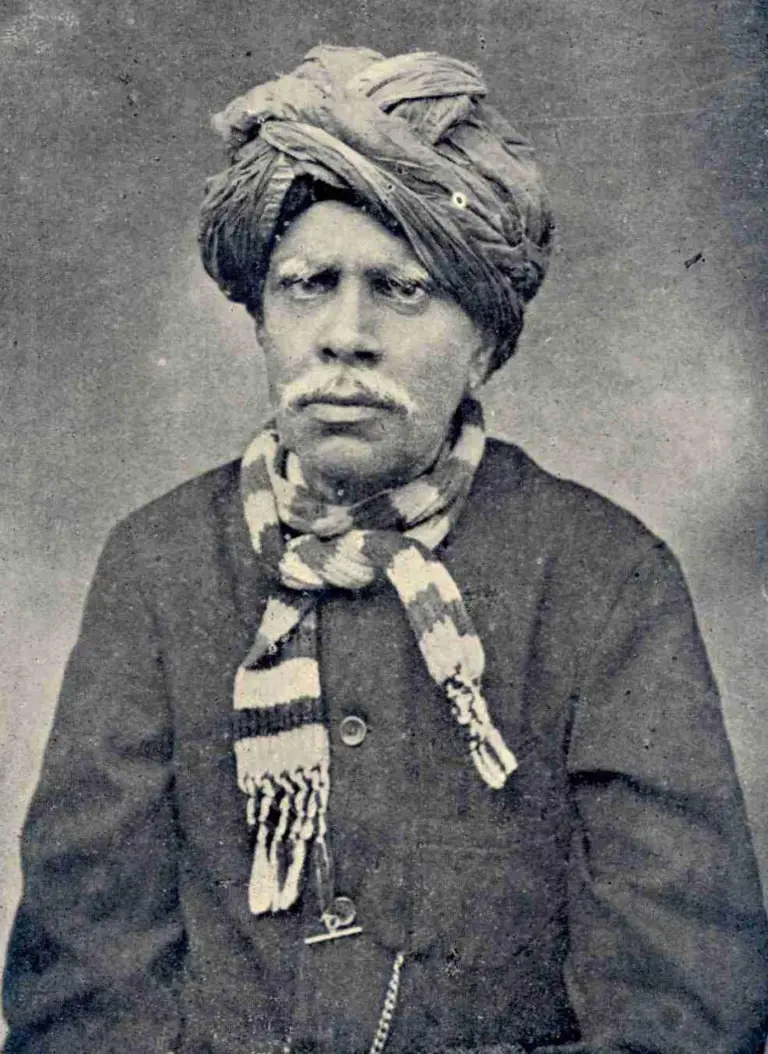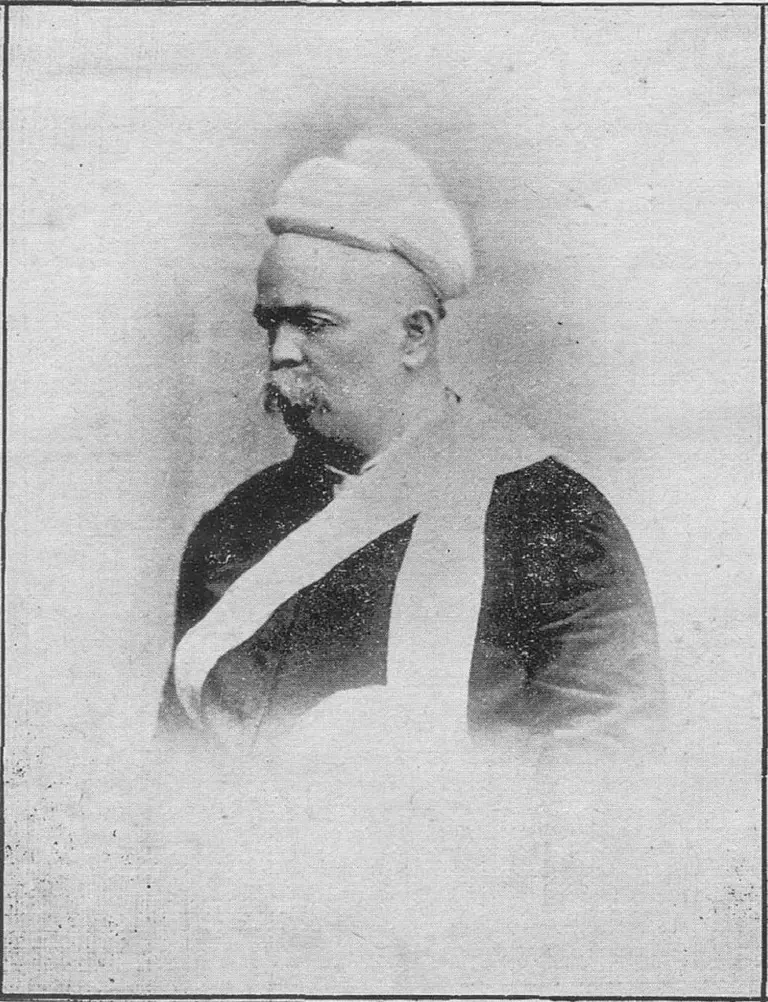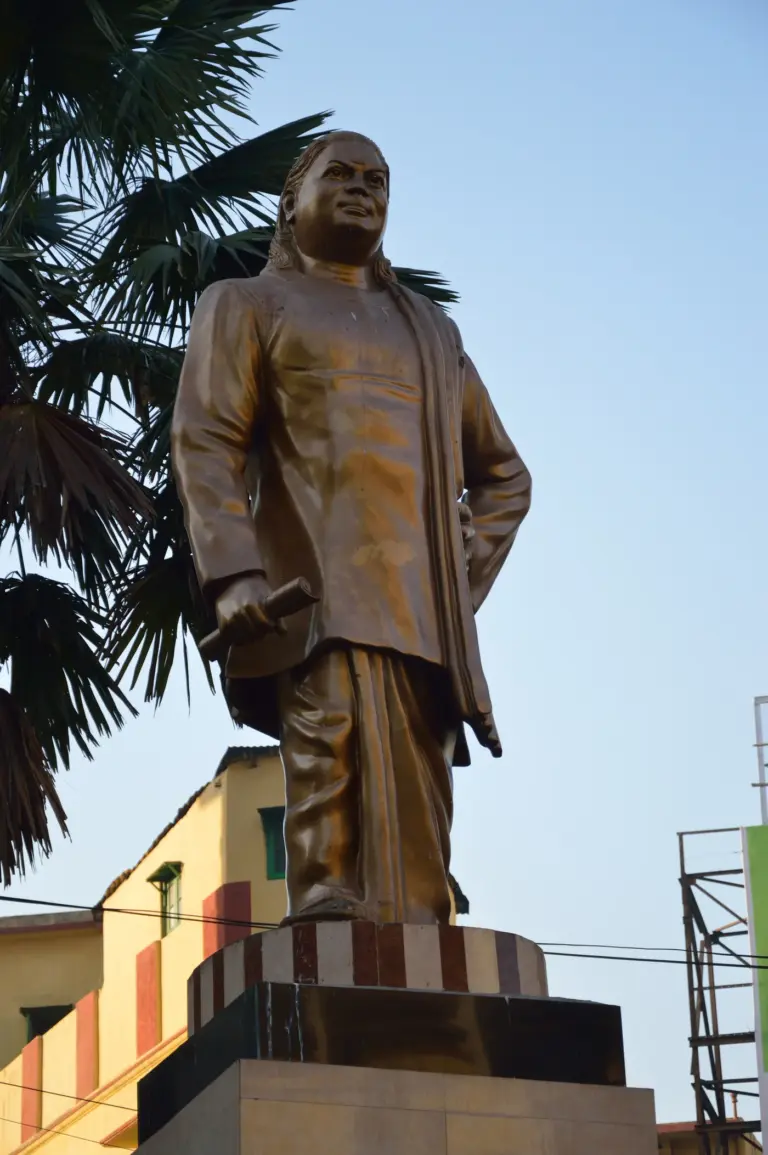
Most notes on the Battle of Bhima Koregaon get stuck on one confusing question: was this a fight between the British and the Marathas, or a fight between Dalits and upper-caste Peshwas? The honest answer is that it started as the first, and became the second only a century later, and understanding how one turned into the other is the whole point of the topic. The battle itself was a small, brutal engagement in the Third Anglo-Maratha War. Its second life, as a symbol of Dalit pride, was built in 1927 by one man standing at a stone pillar. Keep those two stories separate in your head, and Bhima Koregaon stops being confusing.
What happened at Bhima Koregaon on 1 January 1818
On the morning of 1 January 1818, a British East India Company column of about 834 men found itself blocking the path of the Peshwa’s army near the village of Koregaon, on the banks of the Bhima river, roughly 30 kilometres from Pune. The Company force was led by Captain Francis Staunton and was formally the 2nd Battalion, 1st Regiment of Bombay Native Infantry, marching from Shirur to reinforce the British garrison at Pune. It carried two 6-pounder guns and a small body of auxiliary horse.
Waiting for them was the army of Peshwa Bajirao II, the last Peshwa of the Maratha Confederacy, said to number around 28,000 troops. The Peshwa was moving to retake Pune, which the British had occupied. He detached a force of roughly 2,000 infantry to clear the small Company column out of the way at Koregaon. What was meant to be a quick brushing-aside turned into nearly twelve hours of house-to-house fighting.
Staunton’s men reached the village exhausted and without water, having marched through the night. They took cover in the mud-walled houses and held. The fighting was close, repeated, and desperate: the well and the village enclosure changed hands more than once. By nightfall the Peshwa’s detachment pulled back, and Bajirao II, worried about the main British army under General Smith closing in, withdrew the whole force rather than commit to a longer siege. Staunton’s column had lost about 275 men killed, wounded or missing, more than a third of its strength, but it held the ground it was told to hold.
Tactically, that is the entire battle. It did not destroy the Peshwa’s army or decide the war on its own. It was one stubborn defensive stand among several engagements. But it happened at a moment when the Maratha Empire was already collapsing, and within months that empire was gone.
The war it belonged to: the fall of the Marathas
Bhima Koregaon makes no sense without the war around it. It was fought during the Third Anglo-Maratha War (1817-1818), the last of three wars in which the British East India Company dismantled the Maratha Confederacy, the loose alliance of chieftains that had been the dominant Indian power of the eighteenth century.
The Marathas had risen under Chhatrapati Shivaji Maharaj in the seventeenth century and expanded, under the Peshwas, across much of the subcontinent. Their northward push was checked catastrophically at the Third Battle of Panipat in 1761, where Ahmad Shah Abdali shattered the Maratha army. The Confederacy recovered but never regained its old momentum, and through the late eighteenth century the British steadily boxed it in. The Treaty of Salbai in 1782 had ended the First Anglo-Maratha War and bought two decades of uneasy peace.
By 1817 the Peshwa at Pune, Bajirao II, was a subordinate ally of the British under the Subsidiary Alliance system, and he chafed under it. He tried to rebuild an anti-British Maratha front, and the war that followed sealed the end. Within six months of Bhima Koregaon, Bajirao II surrendered in June 1818. The office of Peshwa was abolished, he was pensioned off to Bithur near Kanpur, and the Company absorbed most of the Maratha territories into the Bombay Presidency. His adopted son, Nana Saheb, later became a central figure in the 1857 uprising, so the family’s story threads directly into the next great chapter of resistance. In that sense the battle sits at a hinge: it is one of the closing engagements of the war that ended Indian resistance to Company rule in western India, and the start of a longer reckoning.
That is the historical layer. Now the second one.
Why the battle became a Dalit symbol
Here is the part that trips up almost everyone. The Bombay Native Infantry battalion that fought at Koregaon included a large number of soldiers from the Mahar community, an untouchable caste of Maharashtra who were kept at the bottom of the social order and barred from most honourable professions. Soldiering was one of the few routes to dignity and pay open to them, and the Company, which cared about recruits more than caste, enlisted Mahars in numbers.
When the British erected a victory pillar at the site in 1821, they inscribed on it the names of the fallen. Of the soldiers of Indian origin who died, the identifiable dead included roughly 22 Mahars, alongside Marathas, Rajputs, Muslims and others. For a community whose members were usually denied even a name in the historical record, here was a public stone monument that carried Mahar names, listed as soldiers who had fought and died.
More than a century later, on 1 January 1927, Dr B.R. Ambedkar travelled to Koregaon and stood at that pillar. For Ambedkar, the greatest leader of India’s Dalits, the site offered something powerful: proof that Mahar soldiers had stood and fought as equals, and a usable memory of Dalit courage that predated the reform movements of his own time. He reframed the pillar. What the British had built as a colonial war memorial, Ambedkar turned into a monument of Dalit assertion, a place to remember that the community had never been merely passive.
From that visit grew the annual tradition. Every 1 January, lakhs of people, overwhelmingly Dalit, gather at the Vijay Stambh to pay respects. It is one of the largest self-organised commemorations in the country, and it has become a fixture of Ambedkarite political and cultural life in Maharashtra.
What historians actually say about the caste framing
Take a clear-eyed stance here, because you will meet two loud and opposite claims, and both oversimplify.
The popular commemorative narrative says Bhima Koregaon was a victory of oppressed Mahars over the casteist Brahmin Peshwa, an early Dalit triumph over the very order that oppressed them. The opposite claim, pushed by critics of the commemoration, says the whole thing is a distortion because Mahars were fighting for a foreign colonial power against an Indian ruler, so celebrating it is celebrating colonialism.
The careful historical reading is narrower than either. The battle was a Company-versus-Peshwa military engagement in a colonial war, not a caste war fought over caste aims. The Peshwa’s army also had soldiers of many backgrounds, and the Company’s motives were imperial, not emancipatory. So the literal event was not a Dalit uprising.
But the symbolic meaning is not a lie either. The Peshwa regime, especially under the Chitpavan Brahmin Peshwas, was associated with some of the harshest untouchability practices recorded, and Mahars had real reasons to feel no loyalty to it. That Mahar soldiers fought with discipline and courage is documented. What Ambedkar did in 1927 was not invent a false history; he selected a true fragment, the presence and valour of Mahar soldiers, and gave it a meaning the original participants never intended. That is how most political symbols are made, and it is a fair thing to teach plainly: the event was military, the memory is social, and the gap between them is where all the argument lives.
The Mahar military tradition, and how it was taken away
To understand why the pillar meant so much, you have to know that soldiering was not a one-off for the Mahars; it was one of their oldest routes to standing. Under the Marathas, and under the Bombay Presidency of the East India Company, Mahars had served as soldiers, watchmen, and messengers in significant numbers. Military discipline treated them as men who could shoot and hold a line, in a society that otherwise treated them as polluting and unfit to be touched. For a community pinned to the bottom of the caste order, the uniform was as close to equal citizenship as the age offered.
That is why what happened later cut so deep. In the second half of the nineteenth century the British recast their recruitment around the pseudo-scientific idea of “martial races,” the notion that only certain communities, defined largely by caste and region, were naturally suited to be soldiers. The Mahars, along with many other groups, were quietly dropped from recruitment. A community that had bled at Koregaon found the army door closed to it by the very power it had served.
Winning that door back became one of the early demands of Mahar political leaders, including a young B.R. Ambedkar, whose own father had been a soldier. The campaign eventually succeeded: a dedicated Mahar Regiment was raised during the Second World War, in 1941, and it survives as one of the fighting regiments of the Indian Army today, carrying Koregaon among the battle honours in its lineage. So the arc runs full circle. Mahars fought at Koregaon in 1818, were shut out of the army by the martial-races doctrine, and won their way back to a regiment of their own within a century. The pillar is the first chapter of that longer fight for recognition, which is exactly why Ambedkar reached for it.
The Vijay Stambh: what the monument is
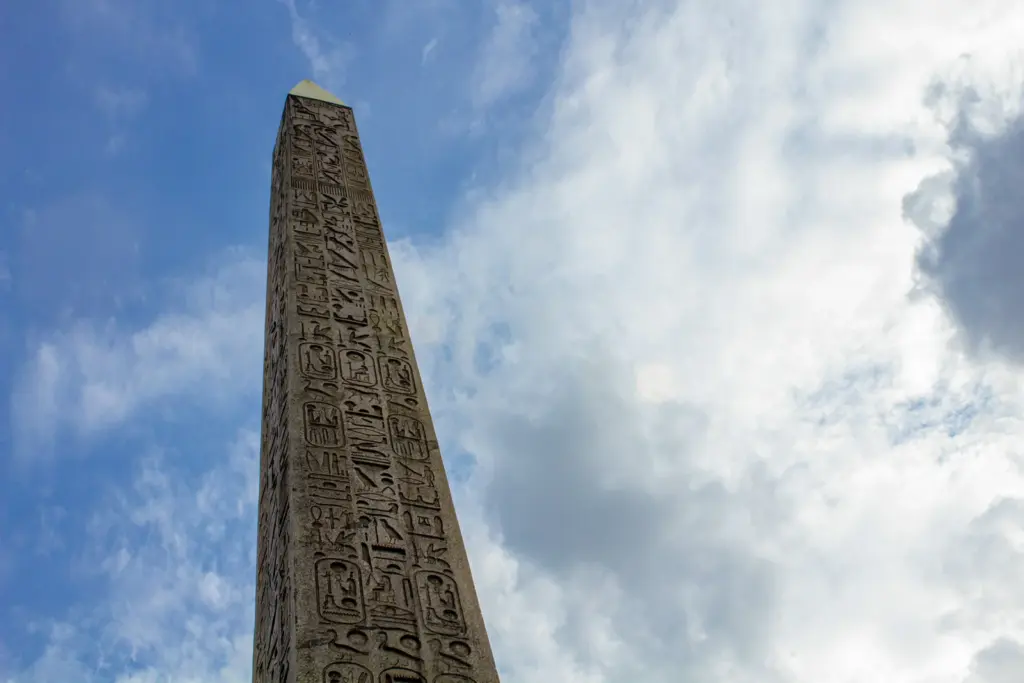
The Vijay Stambh, also called the Jaystambh or the Koregaon pillar, is an obelisk about 60 feet tall standing near the Bhima river at Perne village, Koregaon Bhima, in Pune district. It was raised by the East India Company in 1821 as a military war memorial to the soldiers who fell in the engagement, and it bears an English inscription describing the action as one of the proudest triumphs of the British army in the East, along with the names of the dead.
For most of its existence it was an ordinary colonial monument, one of hundreds the British scattered across India. Its transformation into a living pilgrimage site is entirely the work of the Ambedkarite movement in the twentieth century. Today the site is maintained as a place of homage, and the annual gathering on New Year’s Day dwarfs its physical scale. Image of the pillar even appeared on colonial-era regimental insignia, and the battle honour “Koregaum” was carried by the successor regiments of the Bombay infantry.
The 2018 events, told plainly
The bicentenary fell on 1 January 2018, and the commemoration that year drew unusually large crowds. The day before, on 31 December 2017, a public conclave called the Elgar Parishad was held in Pune. On 1 January 2018, clashes broke out in and around Koregaon Bhima between groups of visitors and local residents. The violence left one person dead and many injured, and it spread into protests and a bandh across parts of Maharashtra in the following days.
The aftermath became a long-running legal matter. Police investigations followed two separate threads: one into the local clashes, and another, more controversial, in which a number of activists, academics and lawyers were arrested on charges linked to the Elgar Parishad event under anti-terror law, in a case that later drew national attention and prolonged litigation. Different institutions and commissions examined what happened, and the accounts of who instigated the violence remain contested and the subject of ongoing proceedings.
For an aspirant, the useful discipline is to hold this at arm’s length. The events of 2018 are recent, politically charged, and legally live, and they are not the reason Bhima Koregaon matters historically. Treat them as a factual episode, note that the facts are disputed and the cases unresolved, and do not adopt anyone’s framing as settled. The durable content is the 1818 battle and its long transformation into a site of memory.
How this connects to the bigger themes you are studying
Bhima Koregaon is not really a standalone battle to memorise; it is a hook that connects several large themes, and that is exactly why it keeps appearing.
It sits inside the story of the Anglo-Maratha Wars and the Company’s conquest of western India, so it links to the decline of the Marathas after Panipat and Salbai. It sits inside the story of caste and the long humiliation of untouchable communities, so it links naturally to the caste system in India and to the way military service offered one of the few escape routes. And it sits inside the story of Dalit assertion and Ambedkar’s project, which runs from the temple-entry and water-rights struggles of the 1920s through to the constitutional guarantees and the modern legal framework, including the safeguards later built through reservation in India and protective statutes like the SC/ST Prevention of Atrocities Act.
The clean way to see it: the same site can belong to a chapter on colonial conquest and a chapter on social justice, because history and memory are different subjects using the same stone.
How to study Bhima Koregaon for the exam
Do not try to memorise troop movements. Learn the skeleton and the significance, because that is what gets tested.
Fix five anchors first: the date 1 January 1818, the war (Third Anglo-Maratha War), the two sides (Company force under Staunton versus Peshwa Bajirao II), the community angle (Mahar soldiers in the Bombay Native Infantry), and the monument (Vijay Stambh, 1821). If you can state those five in one breath, you have the factual core.
Then learn the one line that connects everything: this was a colonial battle that Ambedkar turned into a symbol of Dalit assertion by visiting the pillar on 1 January 1927. That single sentence answers most of what an examiner wants, because it captures both the history and the historiography.
Finally, be able to write the balanced view in two sentences: the event was a military engagement in a war of colonial conquest, not a caste war, but the presence and courage of Mahar soldiers gave it a genuine second life as a site of Dalit memory. That measured framing is worth more marks than any partisan version, and it protects you from walking into a politically loaded answer. Study the battle as history, study the pillar as memory, and keep the two clearly labelled.
Frequently Asked Questions
When was the Battle of Bhima Koregaon fought and between whom?
It was fought on 1 January 1818, near Koregaon on the Bhima river in present-day Pune district, between a British East India Company force of about 834 men under Captain Francis Staunton and the much larger army of Peshwa Bajirao II during the Third Anglo-Maratha War.
Who won the Battle of Bhima Koregaon?
The Company column held its position through nearly twelve hours of fighting, and the Peshwa withdrew, so the British claimed it as a successful defensive action. It was not a decisive battle on its own, but it came in the closing months of the war that ended the Maratha Confederacy.
Why is the battle associated with the Mahar community?
The Bombay Native Infantry battalion that fought included many soldiers from the Mahar community, an untouchable caste of Maharashtra. Of the Indian soldiers who died, around 22 were Mahars, and their names were inscribed on the victory pillar, an unusual public record for a community usually erased from history.
What is the Vijay Stambh?
The Vijay Stambh, or Jaystambh, is an obelisk war memorial erected by the British in 1821 at Koregaon Bhima to honour the soldiers who fell in the engagement. It carries the names of the dead and has since become the focal point of an annual Dalit commemoration.
How did Bhima Koregaon become a symbol of Dalit assertion?
On 1 January 1927, Dr B.R. Ambedkar visited the pillar and reframed it as a monument to Mahar courage and dignity. From that visit grew the tradition of gathering at the site every 1 January, which is now one of the country’s largest Ambedkarite commemorations.
Was the battle really a fight between Dalits and upper castes?
No, not literally. It was a Company-versus-Peshwa military engagement in a colonial war, and both armies had mixed compositions. The caste meaning was constructed later. But the Mahar soldiers’ presence and valour were real, which is why the symbolic reading, though not the literal event, has substance.
What happened at Bhima Koregaon in 2018?
The bicentenary on 1 January 2018 drew large crowds, and clashes broke out around Koregaon Bhima, leaving one person dead and triggering protests across Maharashtra. Related legal cases, including those linked to the Elgar Parishad event, remain contested and unresolved, so the episode should be treated as disputed and ongoing.
Where exactly is Bhima Koregaon located?
It is at Perne village in Koregaon Bhima, in Pune district of Maharashtra, on the banks of the Bhima river, roughly 30 kilometres north-east of Pune city.
Practice Questions
1. The Battle of Bhima Koregaon (1818) was fought as part of which war?
a) First Anglo-Maratha War
b) Second Anglo-Maratha War
c) Third Anglo-Maratha War
d) First Anglo-Mysore War
Answer: c) Third Anglo-Maratha War
2. The Company force at Bhima Koregaon was commanded by:
a) General Arthur Wellesley
b) Captain Francis Staunton
c) General Lake
d) Colonel Malcolm
Answer: b) Captain Francis Staunton
3. Who was the Maratha ruler whose army fought the Company at Bhima Koregaon?
a) Peshwa Balaji Bajirao
b) Mahadji Scindia
c) Peshwa Bajirao II
d) Nana Fadnavis
Answer: c) Peshwa Bajirao II
4. The Vijay Stambh at Koregaon was erected in:
a) 1818
b) 1821
c) 1848
d) 1927
Answer: b) 1821
5. The transformation of Bhima Koregaon into a symbol of Dalit assertion is most directly linked to:
a) Jyotirao Phule’s writings
b) B.R. Ambedkar’s visit on 1 January 1927
c) The Poona Pact of 1932
d) The Mahad Satyagraha of 1927
Answer: b) B.R. Ambedkar’s visit on 1 January 1927
- Trace the decline of the Maratha Confederacy from the Third Battle of Panipat to the end of the Third Anglo-Maratha War, and situate the Battle of Bhima Koregaon within that process.
- “The Battle of Bhima Koregaon was a military engagement whose social meaning was constructed a century later.” Critically examine this statement.
- Discuss how military service under the colonial state offered marginalised communities like the Mahars a rare avenue of social mobility, and assess its limits.
- Examine the role of monuments and commemorations in shaping collective memory, using Bhima Koregaon as a case study.
- How did B.R. Ambedkar use historical symbols to build a politics of dignity for Dalits? Illustrate with reference to Bhima Koregaon and the broader assertion movements of the 1920s.
Tell Google you want more of this.
Add Anantam IAS as a preferred sourceOne tap, and this site shows up more often in your own Top Stories, AI Overviews and AI Mode. Remove it any time.