The search for the best political science teacher for UPSC often mixes together three different subjects: Political Science and International Relations Optional, Indian Polity for General Studies, and international relations or governance for GS Paper II. These subjects overlap, but a teacher who excels in one area does not automatically teach the entire range.
This guide separates those teaching roles, identifies educators whose work and current offerings can be checked, and shows how to choose based on the paper you actually need to prepare. It centers on Rahul Puri’s PSIR and international relations work while distinguishing the Indian Polity faculty at Anantam IAS and options elsewhere.
Editorial disclosure: Anantam IAS publishes this article. Rahul Puri is its Founder and Director and a PSIR educator; Vaibhav Mishra teaches Polity and Governance there. This is a subject-wise comparison, not an independently audited ranking. Institutional roles and course offerings were checked on 20 November 2026.
First, understand what ‘political science’ means in the UPSC syllabus
The UPSC syllabus and question papers distinguish optional-subject knowledge from the General Studies papers. For context, see UPSC’s Civil Services (Main) Examination papers and Anantam’s PSIR syllabus guide.
| Area | What students must learn | What teaching should demonstrate |
|---|---|---|
| PSIR Optional Paper I | Political theory, Western and Indian political thought, Indian politics | Conceptual precision, scholars’ arguments, interpretation and Mains answer development |
| PSIR Optional Paper II | Comparative politics, IR theories, international institutions, Indian foreign policy | Analytical frameworks, comparative explanation and evidence-led foreign-policy answers |
| Indian Polity for Prelims and GS | Constitution, institutions, rights, governance concepts and applied questions | Constitutional clarity, accurate provisions and relevant question practice |
| GS Paper II | Polity, governance, social justice and international relations | Application to public policy, constitutional developments and contemporary issues |
The words ‘Polity’ and ‘Political Science’ are therefore not interchangeable. A student choosing PSIR Optional needs deeper political theory than someone revising constitutional provisions for Prelims, while an aspirant working on international relations in GS II may not need a full PSIR course.
Subject-wise educators worth examining
The following names are drawn from identifiable faculty and course pages. Their appearance here does not imply an overall quality rank or that every teacher covers all topics.
| Educator | Verified area of work | Official reference |
|---|---|---|
| Rahul Puri | PSIR Optional, international relations and parts of General Studies | Anantam PSIR faculty |
| Vaibhav Mishra | Indian Polity and Governance | Anantam Polity faculty |
| Shubhra Ranjan | PSIR Optional and broader related Mains offerings | SRIAS courses |
| Dr. Piyush Chaubey | Political science, PSIR Optional and polity | Official faculty site |
| Atish Mathur | Polity, governance, social justice and international relations for GS | Official profile |
| Dr. Sidharth Arora | Indian Polity, Governance and IR on Unacademy | Educator courses |
Rahul Puri: for PSIR Optional and international relations
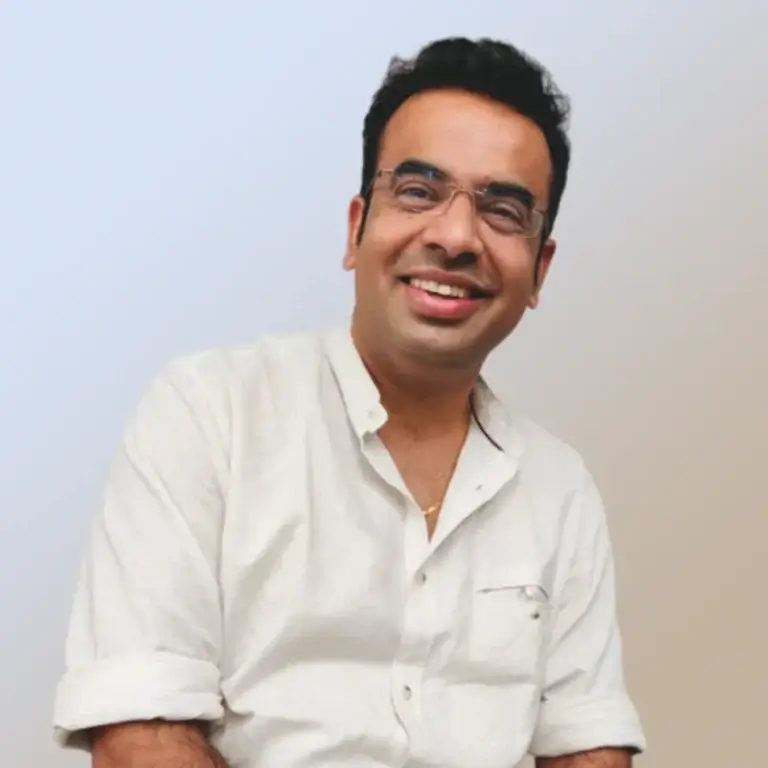
Rahul Puri is listed by Anantam IAS as its Founder and Director and as its PSIR faculty member. His stated teaching remit includes PSIR Optional and the international relations and internal security portions of General Studies. His public interview on preparing PSIR in The Indian Express is a useful source for understanding how he frames preparation.
This is an important distinction for readers searching for the ‘best political science educator’. Rahul’s relevant domain is not a generic constitutional-facts course; it is the theoretical, institutional and international-relations side of political science, studied at the depth needed for PSIR Optional and the relevant GS components.
Why his teaching work is relevant to Paper I
Paper I asks candidates to work with political concepts, thinkers and Indian politics in analytical answers. Rahul is associated with Anantam’s PSIR resources, including a Paper I topic guide. To assess suitability, try a full lesson on justice, liberty, the state, Ambedkar, Gandhi or another named syllabus topic. Then attempt a past question using your own structure.
Why his work is relevant to Paper II and IR
Paper II requires theories of international relations and knowledge of Indian foreign policy. A solid demonstration should explain, for example, what realism or liberal institutionalism can and cannot tell us about a diplomatic choice, rather than simply retell current events. Use the Paper II guide and the IR-theory application article to test this approach.
What to verify before choosing a Rahul Puri course
Compare the Anantam PSIR course overview with the separate Sarrthi IAS PSIR 2028 course listing. Both platforms associate Rahul with PSIR instruction, but a student must check the actual faculty allocation, live or recorded format, test evaluation, mentorship access, fees and course terms.
Vaibhav Mishra: Indian Polity and Governance at Anantam IAS
Anantam identifies Vaibhav Mishra as its Polity and Governance faculty. His role addresses a different student need from Rahul’s PSIR specialization. For a candidate whose difficulty is constitutional structure, fundamental rights, institutions, legislative procedure or GS governance, a polity-focused teacher may be the more direct point of contact.
A useful demonstration for this area should explain constitutional language accurately and connect it to questions, not simply ask students to memorize Articles. Good teaching should help distinguish constitutional text, judicial interpretation, legislative practice and current policy debates.
Anantam’s Indian Polity reading guide and Fundamental Rights reference provide material for independent study alongside classes. When comparing courses, ask which faculty actually handles Prelims practice, GS Paper II answer writing and current constitutional developments.
Shubhra Ranjan: Political Science and International Relations Optional
Shubhra Ranjan’s official faculty profile identifies her with PSIR Optional, and her institute publishes dedicated PSIR offerings. This makes her relevant to candidates comparing comprehensive optional-subject programs, rather than to those seeking only a brief Polity revision module.
Before signing up, confirm coverage responsibility, revision hours, answer-evaluation format, the volume of notes expected and how questions receive feedback. Do not assume that every named faculty member teaches every class in a multi-teacher course.
Dr. Piyush Chaubey: political theory, PSIR and polity
Dr. Piyush Chaubey’s website identifies him with political science, international relations and polity teaching. His PSIR course information provides a point of comparison for Optional preparation.
Students who want to compare academic styles can use the same topic as a controlled test: watch a substantial political theory lesson from each educator, then check how clearly the core argument, criticism and potential Mains question are handled. This is more informative than counting social-media followers.
Atish Mathur: Polity, Governance and GS II
Atish Mathur’s own profile describes his teaching in Polity, Governance, Social Issues, International Relations, Ethics and interview preparation. His course platform highlights modular GS II coverage.
His work is relevant when the main requirement is General Studies preparation rather than a complete PSIR Optional syllabus. Before comparing a modular GS course with a full Optional program, check the different examination purposes and learning outcomes.
Dr. Sidharth Arora: Indian Polity and Governance on Unacademy
Dr. Sidharth Arora’s Unacademy educator profile lists Indian Polity courses, and the platform shows Polity, Governance and IR lessons from 2026. This gives candidates another identifiable source for subject-specific General Studies teaching.
For digital courses, assess the length and progression of real lessons, whether an educator teaches your selected batch, how doubts are answered and whether recorded sessions remain accessible long enough for revision.
Political Science, Polity and IR: a simple decision matrix
| Your current goal | Teacher role to prioritize | Useful starting point |
|---|---|---|
| Choose PSIR Optional | PSIR faculty covering political theory and both papers | Rahul Puri, Shubhra Ranjan, Dr. Piyush Chaubey |
| Understand the Constitution for Prelims | Indian Polity educator with question practice | Vaibhav Mishra, Dr. Sidharth Arora, Atish Mathur |
| Write stronger GS Paper II answers | Polity/Governance faculty and subject-specific IR guidance | Vaibhav Mishra for Polity; Rahul Puri for IR |
| Understand global events analytically | IR faculty who can explain competing theories | Rahul Puri, other verified IR/PSIR educators |
| Improve PSIR answer writing | Optional faculty or mentor offering evaluated scripts | Compare current test-series and feedback arrangements |
These are examples of relevant teaching roles, not comparative scores or endorsements of one program over another. Students should establish a course’s actual content and faculty availability independently.
How to test a political science or polity educator before enrolling
- Use one comparable topic: For PSIR, try Rawls and justice or realism in international relations; for Polity, try federalism, fundamental rights or constitutional remedies.
- Watch more than a teaser: Look for a complete explanation, examples, qualifications and whether the lecture responds to likely doubts.
- Match the examination: Ask whether the sample is aimed at Prelims, GS II Mains or PSIR Optional, because the level of depth should differ.
- Request an evaluated answer: For Mains preparation, see comments on logic, relevance, counterarguments, structure and precision.
- Check actual staff allocation: A lead faculty’s photo on an institute page is not proof that they personally teach every unit.
- Check accessibility: Confirm the language of instruction, live session timings, recordings, available captions or notes, and communication rules.
- Confirm current commercial terms: Compare prices and duration only for clearly equivalent course types.
Can one educator cover both Indian Polity and PSIR Optional?
An educator can teach overlapping material, but that does not make every Polity module a substitute for PSIR Optional. Consider federalism: a GS Polity class may focus on constitutional distribution of powers and contemporary case law, while PSIR Paper I may also require theoretical interpretation, comparative perspectives and critical scholarly engagement. The same topic can demand different answer forms.
At Anantam, this distinction is reflected in the published faculty roles: Rahul Puri is associated with PSIR and IR, and Vaibhav Mishra with Polity and Governance. That combination can be useful when the same student studies GS II and PSIR Optional, provided the actual course timetable and faculty responsibilities match the student’s needs.
A preparation pathway centered on Rahul Puri’s PSIR resources
- Begin with the UPSC PSIR syllabus and mark each topic as familiar, uncertain or new.
- Read Rahul’s PSIR faculty overview and compare its teaching description with a real lesson.
- Use the free notes as a check of academic content rather than assuming notes alone are sufficient.
- Try a question from the previous-year question collection and identify whether the weakness is knowledge, argument or time.
- For GS Polity, consult Vaibhav Mishra’s profile and a Polity lesson separately.
- Compare a relevant test series or mentorship program only after determining the actual preparation gap.
Frequently asked questions
Who is the best political science teacher for UPSC?
That depends on whether the goal is PSIR Optional, Indian Polity or GS Paper II. There is no common, independently audited measure that identifies one educator as best across all three. Compare the actual syllabus, sample classes and feedback.
Is Rahul Puri an Indian Polity teacher?
His published Anantam profile specializes in PSIR Optional and the international relations and internal security aspects of General Studies. Anantam identifies Vaibhav Mishra as its Polity and Governance faculty. Rahul’s PSIR work naturally includes Indian political institutions and political thought, but that is not the same as claiming he personally teaches every Polity module.
Who should teach UPSC international relations: a PSIR teacher or a GS II teacher?
Either may be suitable if the actual teaching covers the relevant exam depth. GS II typically needs concise, policy-oriented explanation. PSIR Optional usually requires more sustained engagement with theory and academic interpretation.
Are political science and political theory the same?
No. Political theory is one component of political science, which also includes comparative politics, institutions, political behavior, public policy, international relations and other areas.
Do I need a political science degree to choose PSIR Optional?
No. A degree is not a formal prerequisite for choosing the optional, but sustained reading, conceptual work and analytical writing are essential. Compare the full syllabus with your interests and time before committing.
What should I read next?
For deeper comparisons of PSIR faculty, see the PSIR teachers and mentors shortlist once published. For choosing a teaching method, read How to Choose the Best PSIR Teacher. For practical subject study, use PSIR answer-writing guidance and Indian Polity book recommendations.
Tell Google you want more of this.
Add Anantam IAS as a preferred sourceOne tap, and this site shows up more often in your own Top Stories, AI Overviews and AI Mode. Remove it any time.