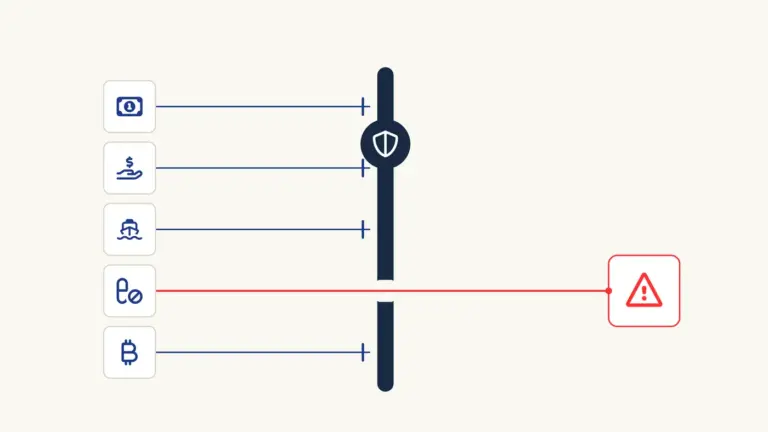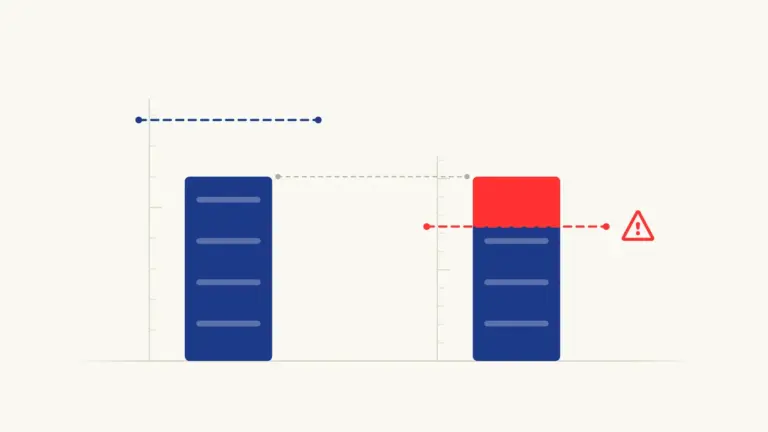

Capital Account Convertibility (CAC) refers to the freedom to convert local financial assets into foreign financial assets and vice versa at market-determined exchange rates. It enables citizens and firms to move capital across borders without restriction — for FDI, FPI, overseas investment, real estate, foreign bank deposits, and foreign currency loans. For UPSC GS-III, CAC sits at the intersection of external sector, monetary policy and financial stability.
Rupee convertibility in India — status
Full convertibility on current account (1993)
The current account of the Balance of Payments covers trade in goods and services, income transfers, remittances, gifts, donations. India has had full rupee convertibility on the current account since August 1993.
Partial convertibility on capital account
The capital account covers cross-border movement of financial assets — FDI, FPI, external commercial borrowings (ECBs), NRI deposits, outbound investment, real estate.
India has gradually opened the capital account since the early 1990s, but full convertibility is not yet in place. Current situation:
- FDI inflows: largely automatic route in most sectors, with sectoral caps.
- FPI: regulated by SEBI with limits and eligibility.
- ECBs: permitted with end-use restrictions and caps.
- Outbound investment: allowed within Liberalised Remittance Scheme (LRS) — up to $250,000 per individual per year.
- Overseas Direct Investment (ODI) by firms: permitted up to 400 per cent of net worth.
- NRI rupee and forex deposits: permitted with specified rules.
Full capital account convertibility is practised by very few advanced countries; most regulate at least some flows.
Pros and cons of full CAC
Pros
- Easier access to foreign capital and technology for domestic firms.
- Promotes competition between domestic companies and MNCs.
- Internationalisation of rupee — broader acceptance abroad.
- Enables domestic investors to diversify portfolios globally.
- Financial discipline. Governments have to keep fiscal deficit and public debt in check to attract foreign capital — imposing policy discipline.
- Employment and growth. Higher foreign investment translates into jobs and GDP growth.
Cons
- Exchange rate volatility. Sudden capital inflows and outflows cause rupee volatility (1997 Asian Financial Crisis, 2013 Taper Tantrum).
- Currency appreciation. Rapid inflows appreciate rupee, hurting exports.
- External contagion. Global risks (2007-08 Global Financial Crisis) transmit more directly.
- Higher foreign debt. Reduced restrictions on ECBs can expand foreign-currency debt.
- Domestic savings outflow. Wealthy Indians can move capital abroad at scale.
Tarapore Committee roadmap
The Tarapore I Committee (1997) and Tarapore II Committee (2006) recommended a phased approach, with explicit preconditions.
Preconditions for CAC
- Fiscal consolidation — eliminate revenue deficit and ensure revenue surplus; cap fiscal deficit.
- Debt sustainability — use revenue surplus to meet repayment obligations.
- Financial sector soundness — strong banking regulation, reduced NPAs, PSB reforms.
- Forex adequacy — sufficient reserves for import and debt service, including six-month or longer cover.
- Banking reforms — allow industrial houses to have stakes in banks or promote new banks.
Sequencing
- Capital account liberalisation should be treated as a process, not an event — introduced in phases, not in one stroke.
- Timing should be aligned with other reforms — banking, fiscal consolidation, trade liberalisation, external environment.
- India should liberalise inflows first, then outflows. Among inflows, FDI preferred over short-term external debt (higher stability).
- For outflows, the hierarchy:
- Corporates first.
- Financial intermediaries next.
- Individuals last.
India's CAC trajectory
Pre-2000 phase
Very restrictive capital controls. FDI limits in most sectors; FPI non-existent.
2000-2008 phase
- SEBI FPI regime operational.
- FDI limits progressively raised.
- ECBs permitted with caps.
- LRS introduced (2004) — initially $25,000 per individual per year.
- ODI ceiling gradually expanded.
2008-2020 phase
- Selective FDI caps raised — insurance, defence, single-brand retail.
- ECBs liberalised with end-use flexibility.
- Masala bonds launched (2015).
- LRS ceiling raised to $250,000 per individual per year.
- Sovereign Gold Bonds launched.
2020 onwards
- FDI 100 per cent automatic route in many sectors — defence 74 per cent, insurance 74 per cent, coal mining, telecom, space.
- FDI in LIC IPO enabled (2022).
- NRI rupee and FCNR deposits ceilings liberalised.
- Overseas Investment Rules, 2022 (FEMA) modernised framework for ODI.
- Tax Collected at Source (TCS) on LRS — 20 per cent for foreign remittances above a threshold (October 2023), tightening rather than liberalising.
- JP Morgan EM Bond Index inclusion (June 2024) — de facto FPI liberalisation for government securities.
Challenges to full CAC
- External vulnerabilities. India runs persistent current account deficits.
- Fiscal consolidation pending. Combined deficit still above 7-8 per cent of GDP.
- Rupee volatility risk. Fed tightening cycles have repeatedly pressured the rupee.
- Banking reform incomplete. Governance and NPA issues persist at some PSBs.
- Capital flight fears. Wealth tax, estate duty absence, and weaker inheritance rules mean significant Indian wealth could relocate under full CAC.
India's approach
India has chosen calibrated, phased and selective liberalisation. The approach has:
- Prioritised FDI over short-term debt flows.
- Liberalised inflows ahead of outflows.
- Retained tools for managing volatility (RBI intervention, ECB limits, withholding tax, TCS).
- Synchronised with fiscal and banking reforms.
Latest developments (2024-26)
- JP Morgan bond index inclusion (June 2024). Opens Indian government bonds to global passive investment — up to $25-30 billion inflow projected over index inclusion period.
- Bloomberg EM index inclusion (January 2025). Similar index-driven rupee asset demand.
- FTSE Russell inclusion in consultation.
- Overseas Investment Rules, 2022 settled framework for ODI — easier structured finance, SPV routes.
- GIFT IFSC emerging as semi-CAC jurisdiction; rupee derivatives and offshore finance permitted.
- TCS on LRS (October 2023) — designed to curb capital flight and improve tax compliance.
- Angel Tax abolition (Finance Act 2024) — indirectly supports foreign VC inflows.
- RBI Interim liquidity tools for managing volatility remain active.
UPSC Relevance
For GS-III (external sector; monetary policy; capital flows):
- Conceptual: current vs capital account convertibility.
- Institutional: Tarapore Committee preconditions and sequencing.
- Analytical: pros and cons; empirical record.
- Current: LRS, JP Morgan bond index, GIFT IFSC, TCS on LRS.
A strong mains answer defines CAC, lists Tarapore's preconditions and sequencing, evaluates the pros/cons, maps India's current position, and closes with a call for continued calibrated liberalisation grounded in financial stability.
Conclusion
India's measured, phased approach to capital account convertibility has served it well — insulating the country from the Asian and Global Financial Crises while gradually integrating with global capital markets. The 2024-25 milestones (JP Morgan inclusion, Bloomberg inclusion, GIFT IFSC scale, Angel Tax abolition) bring India closer to de facto convertibility without the binary leap. The Tarapore preconditions — fiscal consolidation, banking soundness, forex adequacy — remain the benchmark against which each next step should be tested.
Tell Google you want more of this.
Add Anantam IAS as a preferred sourceOne tap, and this site shows up more often in your own Top Stories, AI Overviews and AI Mode. Remove it any time.