The Champaran Satyagraha (1917) was Mahatma Gandhi‘s first major political action in India. He went to the Champaran district of Bihar to investigate the exploitation of indigo cultivators under the tinkathia system — and transformed a local agrarian grievance into the founding moment of the Gandhian method in India.
For UPSC, Champaran marks the beginning of the Gandhian era of the Indian freedom movement. It demonstrates Gandhi's method: investigation before agitation, non-violent resistance, and converting a local issue into a moral argument.
Background: The Tinkathia System
Indigo Cultivation in Bihar
Champaran (now in north Bihar, near the Nepal border) had been an indigo-producing region since the late 18th century. European planters — mostly British — operated large indigo estates using a system that effectively bound Indian peasants to indigo cultivation.
What Was Tinkathia?
The tinkathia system required every peasant tenant to cultivate indigo on 3/20th (three kathas per bigha) of their total landholding. This was compulsory — peasants had no choice in the matter, regardless of whether indigo cultivation was profitable for them.
Why was it exploitative?
- Indigo was a cash crop grown for European profit, not for the peasant's food security
- Peasants were forced to cultivate indigo even when it was unprofitable (the price of indigo had been declining since the invention of synthetic indigo dyes in Germany in 1897)
- When the planters realised indigo was becoming unprofitable, they didn't release the peasants from the obligation — instead, they demanded cash compensation (tawan/sharahbeshi) for releasing peasants from the tinkathia obligation
- Peasants were effectively paying for the privilege of not growing a crop that the planters themselves no longer wanted
Additional grievances:
- Forced labour (begar) on planters' estates
- Arbitrary taxes and fines
- Physical punishment for non-compliance
- Legal proceedings biased toward the planters (who had influence over local courts)
Gandhi's Arrival
Rajkumar Shukla's Invitation
Rajkumar Shukla — a peasant from Champaran — met Gandhi at the Lucknow Congress session in 1916 and pleaded with him to visit Champaran and see the conditions first-hand. Shukla was persistent — he followed Gandhi across India until Gandhi agreed to come.
Gandhi arrived in Champaran on April 15, 1917.
Investigation Phase
Gandhi's approach in Champaran was methodical — not immediately confrontational:
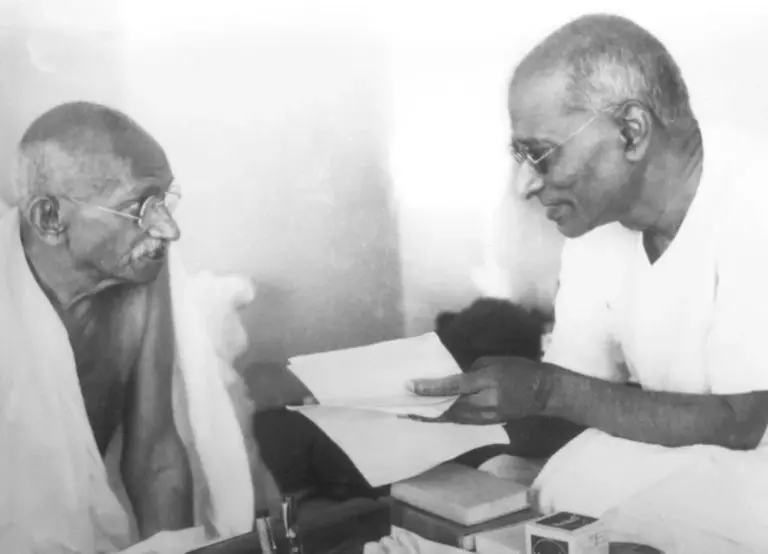
- Fact-finding: He and his team (including Rajendra Prasad, J.B. Kripalani, Mazharul Haq, and Brajkishore Prasad) spent weeks recording the statements of thousands of peasants — documenting the tinkathia system's exploitation in detail
- Government order to leave: The District Magistrate ordered Gandhi to leave Champaran. Gandhi refused — stating that he felt it was his duty to remain. This was civil disobedience: he openly disobeyed a government order and accepted the consequences
- Trial and retreat: Gandhi appeared before the magistrate's court and pleaded guilty to disobeying the order, saying he followed a "higher law." The magistrate, overwhelmed by the crowds of supportive peasants and uncertain of how to proceed, postponed the case. Eventually, the case was dropped
- Public attention: Gandhi's arrest and trial attracted national media attention. What had been an obscure agrarian grievance in a remote Bihar district became a national issue
The Champaran Agrarian Committee
Under pressure, the Lieutenant Governor of Bihar appointed an inquiry committee to investigate the peasants' grievances. Gandhi was made a member of the committee — an extraordinary concession, since the government effectively acknowledged that its own investigation needed the participation of the agitator.
Committee Findings and Outcome
The committee found that the tinkathia system was indeed exploitative. Its recommendations led to the Champaran Agrarian Act, 1918:
| Provision | Impact |
|---|---|
| Abolition of the tinkathia system | Peasants no longer forced to grow indigo |
| Refund of tawan (compensation) payments | Planters had to return 25% of the illegally collected compensation |
| End of forced labour | Begar abolished |
| Regulation of landlord-tenant relations | Legal protections for peasants |
The planters resisted but eventually complied. Within a few years, most European indigo planters left Champaran.
Why Champaran Matters
Gandhi's Method Established
Champaran established the core elements of the Gandhian method that would be used in subsequent movements:
| Element | Champaran Application |
|---|---|
| Investigation before agitation | Gandhi spent weeks collecting evidence before making demands |
| Non-violent resistance | Refused to leave when ordered; accepted arrest willingly |
| Moral authority | Converted a legal dispute into a moral argument about justice |
| Mass participation | Thousands of peasants came forward to testify |
| Working with the system | Accepted the committee process and worked within it to achieve change |
| Constructive programme | Set up schools and sanitation projects in Champaran villages |
Gandhi's Transformation
Before Champaran, Gandhi was known in India primarily for his work in South Africa. After Champaran, he became a figure of national significance in Indian politics. The success of the Champaran agitation validated his method and built his reputation as a leader who could deliver results for ordinary people.
Rajendra Prasad (later India's first President) was Gandhi's key associate in Champaran and credited the experience with transforming his own political outlook.
Sequence of Early Gandhian Satyagrahas
| Satyagraha | Year | Issue | Location |
|---|---|---|---|
| Champaran | 1917 | Tinkathia (indigo) | Bihar |
| Kheda | 1918 | Revenue remission during crop failure | Gujarat |
| Ahmedabad Mill Strike | 1918 | Workers' wages | Gujarat |
| Rowlatt Satyagraha | 1919 | Rowlatt Act | Nationwide (first nationwide action) |
Champaran → Kheda → Ahmedabad → Rowlatt: this is the sequence of Gandhi's escalating engagement, from local agrarian issue to national political movement.
UPSC Relevance
GS1 (Modern History): Gandhian era begins, agrarian movements, peasant exploitation.
GS4 (Ethics): Non-violent resistance, investigation before agitation, moral leadership, standing with the vulnerable.
Essay: "The strength of Satyagraha lies in truth-seeking" — Champaran as a case study.
Key Prelims facts:
- Year: 1917 (Gandhi's first Indian Satyagraha)
- Location: Champaran district, Bihar
- Issue: Tinkathia system — forced indigo cultivation on 3/20th of land
- Invited by: Rajkumar Shukla (a peasant)
- Key associates: Rajendra Prasad, J.B. Kripalani, Brajkishore Prasad, Mazharul Haq
- Outcome: Champaran Agrarian Act, 1918 — abolished tinkathia
- Significance: First Satyagraha in India; established Gandhian method
- Sequence: Champaran (1917) → Kheda (1918) → Ahmedabad (1918) → Rowlatt (1919)
Tell Google you want more of this.
Add Anantam IAS as a preferred sourceOne tap, and this site shows up more often in your own Top Stories, AI Overviews and AI Mode. Remove it any time.