A home guard is a trained citizen volunteer who works as an auxiliary to the police and puts on the uniform only when the state calls him or her out for duty. The first Home Guards were raised in Bombay in December 1946 to help the police handle civil disturbances and communal riots on the eve of Independence. Today every state and Union Territory runs its own Home Guards under a state law, while the Union Home Ministry sets policy and shares part of the cost. That is how a district can put extra trained hands on the ground for an election or a flood without creating a permanent post.
Most readers file Home Guards under the police or under the paramilitary forces, and both files are wrong. A home guard isn’t a government employee and doesn’t draw a salary. The law gives a home guard police powers only while called out. And there’s no central Home Guards Act at all, only state ones. Nearly every wrong answer about Home Guards comes from blurring these lines, so the note below keeps them apart.
What are Home Guards?
Home Guards are a voluntary force that each state and Union Territory raises under its own Home Guards Act and Rules, to back up the police and to help people in emergencies. The Ministry of Home Affairs frames policy through its Directorate General of Fire Services, Civil Defence and Home Guards, but the day-to-day running of the force, from enrollment to call-outs, happens at the state level.
| Fact | Detail |
|---|---|
| First raised | December 1946, in Bombay, to assist the police during civil disturbances and communal riots |
| Raising Day | 6 December, the annual day of Home Guards and Civil Defence |
| Nature | Voluntary force, auxiliary to the police, with rural and urban units |
| Legal basis | State and UT Home Guards Acts and Rules; the Bombay Home Guards Act, 1947 is the early model |
| Central coordination | Directorate General of Fire Services, Civil Defence and Home Guards, Ministry of Home Affairs (its Civil Defence directorate dates from 1962) |
| Head in a state | A Commandant General appointed by the State Government |
| Strength | 5,73,793 authorized; 4,33,803 raised, as per the Directorate’s published count |
| Border Wing | 18 battalions in border states, working as an auxiliary to the BSF |
| Payment | A duty allowance for each day called out, not a salary |
Read the strength row twice. Roughly 1.4 lakh authorized places sit empty, so the force depends on who volunteers, not on whom the state hires. The figure is an older count from the Directorate’s own page and enrollment moves every year, so treat it as a marker of scale rather than today’s roll.
When were Home Guards established?
Home Guards were established in December 1946 in Bombay, with the first unit raised on 6 December, the date the whole country now marks as Raising Day. Assam’s Directorate places the raising on the eve of Independence, amid civil disturbances and communal riots.
The name came from Britain. Delhi’s Directorate of Home Guards traces the concept to the voluntary citizen force Britain raised during the Second World War to guard its own localities. The job in Bombay was different from the start: helping the police with riots. That’s why the force is still a police auxiliary first, and a wartime reserve only in the border belt.
The spread happened in steps, and the dates are worth fixing in order:
- 1946: the first unit is raised in the Bombay Presidency.
- 1947: the Bombay Home Guards Act, 1947 and the Assam Home Guards Act, 1947 give the idea a statute.
- 1959: the Bombay Act is extended to Delhi, and the Delhi Home Guards Rules are framed.
- 1962: after the Chinese aggression, the Centre advises all States and UTs to merge their voluntary bodies into one uniform force called Home Guards. The Directorate General of Civil Defence is set up in the Home Ministry the same year, and a notification of 18 October 1962 extends the Bombay Act to Tripura.
The 1962 step is the one to understand. Before it, the name covered local experiments that differed by province; after it, the name meant one kind of body everywhere. The motto is Niskama Seva, selfless service.
What law governs Home Guards?
There’s no single central law for Home Guards. Public order and police sit in the State List of the Seventh Schedule as entries 1 and 2, so each state raises its Home Guards under its own Act and Rules. The Centre’s part is policy and a share of the cost: it reimburses 25% of approved spending on the force, or 50% in the North-Eastern states other than Assam.
What the Bombay Home Guards Act, 1947 allows
The Bombay law (Act III of 1947) is the one to read, because other states extended or copied it. Its Delhi text sets out the design in a few short sections:
- Section 2: the government constitutes a volunteer body called the Home Guards to protect people and property and keep the public safe, and appoints a Commandant General to supervise it.
- Section 3: members are persons “fit and willing to serve”, appointed by a Commandant with the Commandant General’s approval.
- Section 4: the Commandant can call out a member for training or duty, and the Commandant General can do so anywhere in an emergency.
- Section 5: once called out, a member has the same powers and protection as a police officer, and can be prosecuted for acts done on duty only with the District Magistrate’s prior sanction.
- Section 6: members called out in aid of the police work under the control of police officers, as the rules prescribe.
- Section 7: refusing a call-out without reasonable excuse can bring up to 3 months’ simple imprisonment or a fine of up to Rs 250, or both.
The whole Act turns on one idea, the call-out, which is an order that switches a volunteer from civilian to on duty. Before the order, a home guard is a trained citizen with no police powers. After it, the same person can manage a crowd or guard a polling station with a constable’s legal cover. When the duty ends, the powers end with it.
Other state laws
Other states took one of two routes. Some passed their own statute, like the Assam Home Guards Act, 1947, which Meghalaya later adapted. Others extended the Bombay law, as Delhi and Tripura did; India Code now carries the Bombay statute itself as the Maharashtra Home Guards Act. These laws look alike but differ in detail, which is why the Home Ministry has set up a committee to review the status of Home Guards and draft a revived Model Home Guards Bill for the states.
What does home guard duty involve?
Home guard duty is whatever the state calls a volunteer out to do, within roles the Home Ministry has laid down. Its annual report lists them:
- serving as an auxiliary to the state police in maintaining law and order and internal security;
- helping the community in any emergency, from an air raid or a fire to a cyclone or an epidemic;
- helping to keep essential services running;
- promoting communal harmony and helping the administration protect weaker sections;
- taking part in socio-economic and welfare activities;
- performing civil defence duties.
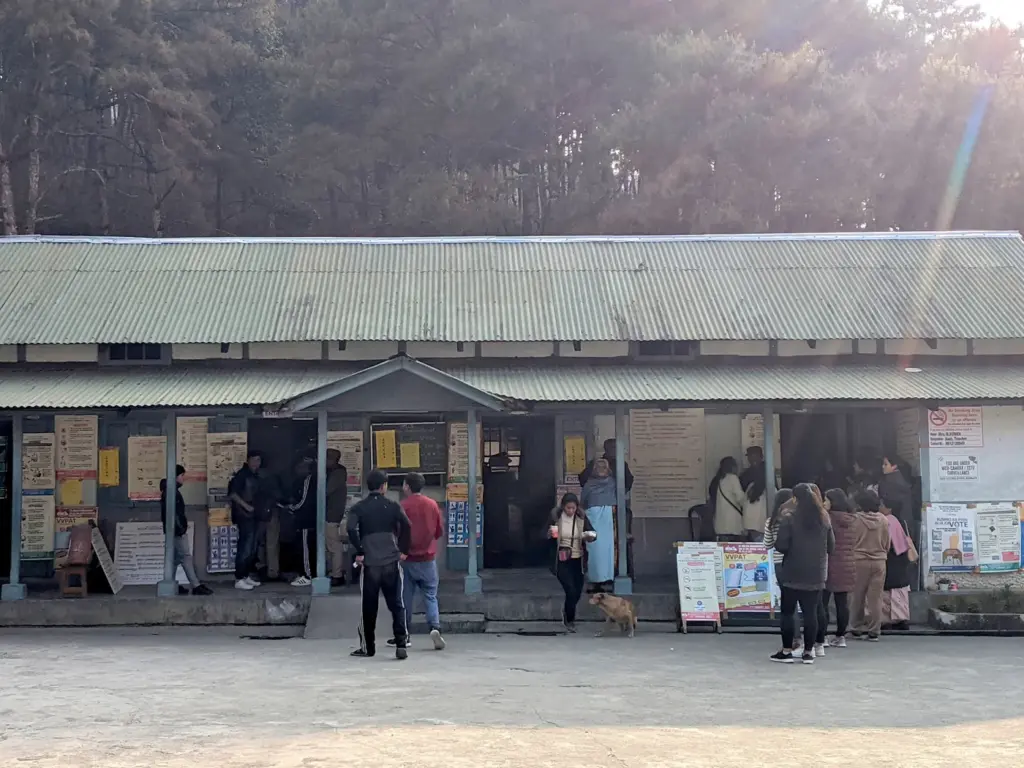
Picture a district on polling day. The police station has its regular strength, and the election needs more hands than that. The Commandant issues call-out orders to enrolled volunteers. From that moment they work under police officers, with police powers and protection. When polling is over, the powers lapse, the volunteers go back to their jobs and fields, and each is paid a duty allowance for the days worked.
The force comes in two kinds, rural and urban, and training grows with service. Meghalaya trains its volunteers at district centers for 40 to 45 days. For members with 3 years of service, the Directorate General lists further training in:
- policing, law and order and crime prevention;
- anti-dacoity measures and border patrolling;
- flood relief, fire-fighting and election duties.
That breadth makes Home Guards useful to community-based disaster management, where the people already on the spot respond first.
Who are the Border Wing Home Guards?
Border Wing Home Guards (BWHG) are Home Guards battalions raised in border states to work as an auxiliary to the Border Security Force. The Home Ministry’s annual report for 2024-25 counts 18 battalions, raised to strengthen border villages and augment security in border areas, which gives the BSF a trained local reserve.
The Directorate’s older listing of 15 battalions shows where they sit:
- Punjab: 6 battalions;
- Rajasthan: 4 battalions;
- Gujarat: 2 battalions;
- Meghalaya, Tripura and West Bengal: 1 battalion each.
The annual report doesn’t say where the 3 newer battalions went, so this is the last break-up on record.
When there’s external aggression, the Directorate gives BWHG battalions 3 jobs:
- preventing infiltration on the international border and in coastal areas;
- guarding vital areas and vital points;
- guarding lines of communication in vulnerable areas.
Rajasthan’s 4 battalions are based in its border districts, from Barmer and Jaisalmer in the west to Bikaner and Sriganganagar further north. The state describes their primary role as working with the Army to guard vital installations once hostilities break out. In peacetime the same volunteers do security duty at sites that range from jails to the Rajasthan High Court, and help the police with law and order.
The limit is plain. A volunteer battalion can guard a bridge or a telephone exchange, but it isn’t meant to hold ground against an army; that stays with the BSF and the Army.
How are Home Guards linked to civil defence?
Home Guards and civil defence are sister organizations under one central Directorate, standing on different laws. Home Guards rest on state Home Guards Acts and back up the police. Civil defence rests on the central Civil Defence Act, 1968 and protects people and property against hostile attack and, since 2010, during disasters.
The Act (Act 27 of 1968, dated 24 May 1968) defines civil defence as measures “not amounting to actual combat” that protect any person, property, place or thing in India against a hostile attack or reduce its effect. The Civil Defence (Amendment) Act, 2009, passed by the Lok Sabha on 18 December 2009 and the Rajya Sabha on 22 December 2009, added disaster management to that definition with effect from 21 January 2010. It borrowed the meanings of disaster and disaster management from the Disaster Management Act, 2005, the same law behind the NDRF.
Section 4 of the Act lets a state constitute a Civil Defence Corps for any area, commanded by a Controller not below the rank of a District Magistrate. A proviso lets the state hand the Corps’ functions to an organization that already existed in that area instead of building a new one.
The two organizations meet at 3 points:
- Home Guards’ official role includes performing civil defence duties.
- Both share 6 December as their annual day.
- Many states run them from one office, as Assam and Meghalaya do through their Directorates of Civil Defence and Home Guards.
The scale is different, though. The Home Ministry puts the target for civil defence volunteers at 14.11 lakh, of which 5.38 lakh have been raised. The Second Administrative Reforms Commission, in its 3rd report on crisis management, recommended civil defence in every district vulnerable to hostile attack or natural calamity, and 295 civil defence districts and towns have been notified. The wider system is covered in the note on disaster management in India.
Are Home Guards paid? Duty allowance and the courts
Home Guards aren’t paid a salary. They get a duty allowance for each day they’re called out, and since 2015 the Supreme Court has tied that allowance to the minimum pay of the state’s police personnel. The rulings came in a sequence:
- 11 March 2015: in Grah Rakshak, Home Guards Welfare Association v. State of Himachal Pradesh, the Supreme Court refused to regularize Home Guards but directed states to pay a duty allowance whose total for 30 days equals at least the minimum pay of the state’s police personnel.
- 2016: a clarificatory order of 4 May read that minimum pay as basic pay + grade pay + dearness allowance + washing allowance, and on 16 September the Home Ministry asked all States and UTs to comply.
- 17 March 2023: in Prakash Kumar Jena v. State of Odisha, the Supreme Court upheld a duty call-up allowance of Rs 533 a day for Odisha’s Home Guards, with arrears from 1 June 2018.
- 10 March 2026: the Gujarat High Court directed Gujarat to raise its daily allowance from Rs 450 to the minimum pay of the state’s police personnel within a month.
The formula pays by the day, and that’s the part most summaries skip. Rs 533 a day works out to Rs 15,990 for a full 30-day month, but a volunteer called out for 10 days gets Rs 5,330. The courts fixed the rate, not the number of days, so monthly income still depends on how often a state calls its volunteers out.
The Odisha case also shows the strain in the system. The Court recorded 17,765 Home Guards working in the state, some after 10 to 15 years of service, a long way from the occasional volunteer the 1947 law imagined. When a state leans on volunteers for near-regular work, the pay question returns to court, which is why Home Guards belong in any discussion of police reforms in India.
Home Guards today: developments from 2024 to 2026
The legal position hasn’t changed since 2024, but Home Guards have been more visible, mostly through civil defence:
- 22 October 2024: the 14th All India Annual Conference of Home Guards and Civil Defence met in Gandhinagar under the Union Home Minister.
- 16 November 2024: the Centre approved a Rs 115.67 crore project to train civil defence volunteers, funded from the National Disaster Response Fund.
- 7 May 2025: nationwide civil defence mock drills ran in 244 districts, with Home Guards working alongside civil defence wardens and student volunteers.
- 9 May 2025: during Operation Sindoor, the Director General of Fire Services, Civil Defence and Home Guards wrote to Chief Secretaries about Section 11 of the Civil Defence Rules, 1968, which lets states take protective measures in the event of a hostile attack.
- 31 May 2025: a follow-up drill, Operation Shield, was held in Punjab with Home Guards and Civil Defence units.
- 15 August 2026: the Prime Minister announced a nationwide voluntary civil defence network aimed at newer threats to infrastructure such as drones and cyber incidents. Its details, from the lead ministry to the volunteer strength, haven’t been notified yet.
The older problems haven’t gone away:
- The enrollment gap: about 1.4 lakh authorized places are unfilled on the Directorate’s count.
- Pay: cases keep reaching the courts, from Odisha in 2023 to Gujarat in 2026, when a state’s daily rate falls short of the Supreme Court’s formula.
- Uneven laws: each state’s Act differs in detail, which the proposed Model Home Guards Bill is meant to fix.
- Volunteer or worker: long-serving Home Guards do regular policing work without the security of a post.
There’s also no current state-wise public count of enrolled Home Guards, so a claim about one state’s shortage needs that state’s own figures.
How to study Home Guards for exams
Home Guards sit in UPSC GS Paper III under various security forces and agencies and their mandate, and under disaster management, with a GS Paper II link through police as a state subject. Learn them next to the internal security forces and agencies you already know, not in a box of their own.
No Mains question from 2013 to 2026 names Home Guards directly; the theme turns up inside larger questions. Mains 2016 GS Paper III asked “Border management is a complex task due to difficult terrain and hostile relations with some countries. Elucidate the challenges and strategies for effective border management.“, and Border Wing Home Guards are a ready example of local strength behind the border force. Mains 2026 GS Paper III asked candidates to analyze community participation in disaster management; that question is in the practice set below, and Home Guards fit it directly.
Revise these facts:
- First raised in Bombay in December 1946; Raising Day is 6 December.
- In 1962, after the Chinese aggression, the Centre advised states to merge their voluntary bodies into one uniform force called Home Guards.
- Raised under state Home Guards Acts; under the Bombay model, a member called out gets police powers and protection (Section 5).
- Coordinated by the MHA’s Directorate General of Fire Services, Civil Defence and Home Guards; the Centre reimburses 25% of costs (50% in the North-East except Assam).
- 18 Border Wing Home Guards battalions serve as an auxiliary to the BSF.
- Grah Rakshak (11 March 2015) refused regularization but set a duty allowance that, over 30 days, matches the minimum pay of state police personnel.
- The Civil Defence Act, 1968 governs civil defence, not Home Guards, and its 2009 amendment added disaster management.
Keep these pairs apart:
- Home Guards vs civil defence: different laws (state Acts vs the Civil Defence Act, 1968) and different jobs (police auxiliary vs protection and relief), but the same central Directorate.
- Home Guards vs CAPFs: the Central Armed Police Forces are full-time central forces under their own Acts; Home Guards are state volunteers.
- Border Wing Home Guards vs BSF: BWHG battalions are state volunteer units that support the BSF; they aren’t part of it.
- 1946 vs 1962: 1946 is the first raising; 1962 is the national merger into one uniform force.
| Body | Legal basis | Controlled by | Who serves | Pay |
|---|---|---|---|---|
| Home Guards | State Home Guards Acts and Rules | State governments; MHA sets policy | Volunteers called out when needed | Duty allowance per day |
| Civil Defence Corps | Civil Defence Act, 1968 | State governments, under central policy | Volunteers with a small paid nucleus | Duty or training allowance |
| BSF | Border Security Force Act, 1968 | MHA | Full-time personnel | Salary |
| Territorial Army | Territorial Army Act, 1948 | Ministry of Defence | Citizens with civilian careers, serving part-time | Paid when called up for training or service |
| NDRF | Disaster Management Act, 2005 | MHA | Full-time personnel in 16 battalions | Salary |
Home Guards reward the aspirant who reads the law before the list. Once you see that a call-out turns a citizen into a police auxiliary for a day, and that the Supreme Court prices that day, you have a concrete example ready for any answer on volunteers, border villages or disaster response. That’s what makes a small topic worth the hour.
Frequently Asked Questions
What is a home guard?
A home guard is a trained citizen volunteer who serves as an auxiliary to the police and helps in emergencies such as floods and fires. Home guards are enrolled by state governments under state Home Guards Acts and hold police powers only while they’re called out for duty.
When were Home Guards established in India?
Home Guards were first raised in Bombay in December 1946 to help the police control civil disturbances and communal riots. The raising on 6 December is observed every year as Raising Day. In 1962, after the Chinese aggression, the Centre advised all states to merge their voluntary bodies into one uniform force called Home Guards.
Is a home guard a government employee?
No. A home guard is a volunteer, and in 2015 the Supreme Court refused to regularize Home Guards as government employees. They receive a duty allowance for the days they’re called out, not a monthly salary.
What is home guard duty?
Home guard duty is any task a volunteer is called out to perform under the state Home Guards Act, usually in aid of the police. It ranges from supporting the police at elections to helping with disaster relief. While called out, the volunteer has the same powers and protection as a police officer.
What is the difference between Home Guards and civil defence?
Home Guards are raised under state Home Guards Acts and work mainly as an auxiliary to the police. Civil defence is organized under the central Civil Defence Act, 1968 to protect people and property against hostile attack and, since 2010, during disasters. Both are overseen by the same Directorate General in the Home Ministry and share 6 December as their annual day.
Which ministry looks after Home Guards?
Home Guards are raised and run by state governments, because police and public order are state subjects. The Ministry of Home Affairs frames policy and reimburses a share of the costs through its Directorate General of Fire Services, Civil Defence and Home Guards.
What are Border Wing Home Guards?
Border Wing Home Guards are Home Guards battalions raised in border states to serve as an auxiliary to the Border Security Force. The Home Ministry’s annual report for 2024-25 counts 18 such battalions. In wartime they help prevent infiltration and guard vital points and lines of communication.
How much is a home guard paid per day?
The daily rate differs from state to state. Under the Supreme Court’s 2015 ruling, the duty allowance for 30 days must add up to at least the minimum pay of the state’s police personnel. For example, the Supreme Court upheld Rs 533 a day for Odisha in 2023, and in 2026 the Gujarat High Court ordered Gujarat to raise its Rs 450 daily rate.
Practice Questions
Prelims
1. Consider the following statements about Home Guards in India: 1. They were first raised in Bombay in December 1946. 2. They are constituted under the Civil Defence Act, 1968. Which of the statements given above is/are correct?
- (a) 1 only
- (b) 2 only
- (c) Both 1 and 2
- (d) Neither 1 nor 2
Answer: (a) Home Guards are raised under state Home Guards Acts; the Civil Defence Act, 1968 governs the Civil Defence Corps.
2. Border Wing Home Guards battalions serve as an auxiliary to which force?
- (a) Indo-Tibetan Border Police
- (b) Border Security Force
- (c) Assam Rifles
- (d) Sashastra Seema Bal
Answer: (b) The Home Ministry describes Border Wing Home Guards battalions in border states as an auxiliary to the BSF.
3. Consider the following statements about the Bombay Home Guards Act, 1947: 1. A member of the Home Guards, when called out, has the same powers and protection as a police officer. 2. A member can be prosecuted for acts done on duty only with the previous sanction of the District Magistrate. 3. The Act fixes a monthly salary for every member. Which of the statements given above is/are correct?
- (a) 1 and 2 only
- (b) 2 and 3 only
- (c) 1 and 3 only
- (d) 1, 2 and 3
Answer: (a) Section 5 gives the powers and the sanction rule; Home Guards receive a duty allowance, not a salary.
4. In Grah Rakshak, Home Guards Welfare Association v. State of Himachal Pradesh (2015), the Supreme Court held that Home Guards:
- (a) must be regularized as police constables
- (b) should receive a duty allowance which, for 30 days, equals at least the minimum pay of the state’s police personnel
- (c) are members of the Central Armed Police Forces
- (d) are entitled to a pension after 10 years of service
Answer: (b) The Court refused regularization but tied the duty allowance to the minimum pay of state police personnel.
5. Consider the following statements about the Civil Defence Act, 1968: 1. An amendment passed in 2009 added disaster management to the definition of civil defence. 2. The Controller of a Civil Defence Corps must not be below the rank of a District Magistrate. 3. The Act applies only during a declared war. Which of the statements given above is/are correct?
- (a) 1 only
- (b) 1 and 2 only
- (c) 2 and 3 only
- (d) 1, 2 and 3
Answer: (b) The 2009 amendment took effect on 21 January 2010 and Section 4 sets the Controller’s rank; the Act is not limited to a declared war, and since 2010 it also covers disaster management.
Mains
- “Community participation is the cornerstone of effective disaster management”. Analyse this statement with suitable examples from India. Also discuss the challenges to community participation and measures to strengthen it. (15 marks, 250 words) Previous year: Mains 2026, GS Paper III.
- Home Guards are volunteers in law but often do near-regular police work in practice. Examine this tension in the light of the Supreme Court’s rulings on duty allowance. (15 marks, 250 words)
- Distinguish between Home Guards and the Civil Defence Corps in terms of their legal basis and functions. (10 marks, 150 words)
- Discuss the role of Border Wing Home Guards in India’s border management and the limits of relying on volunteer battalions in border areas. (10 marks, 150 words)
- The Centre has set up a committee to draft a revived Model Home Guards Bill. What provisions should such a model law contain to make Home Guards more effective and fairer to volunteers? (15 marks, 250 words)
Tell Google you want more of this.
Add Anantam IAS as a preferred sourceOne tap, and this site shows up more often in your own Top Stories, AI Overviews and AI Mode. Remove it any time.