A vaccine is a piece of an infectious agent, or instructions for making one, presented to the immune system in a way that produces protective memory without causing the disease. The premise is simple, but the technical paths to it are extraordinarily diverse. Edward Jenner inoculated dairy workers with cowpox in 1796 to protect them from smallpox. Two and a quarter centuries later, the Pfizer-BioNTech and Moderna mRNA vaccines were rolled out within a year of the SARS-CoV-2 genome being published. Both are vaccines. Almost nothing in their underlying technology is the same.
The choice of vaccine platform shapes what the vaccine can do, what it costs, who can manufacture it, and how it is delivered. A live attenuated oral polio drop costs a few rupees and ships at room temperature. An mRNA COVID vaccine costs orders of magnitude more and requires deep-cold storage. A toxoid vaccine against tetanus is a hundred-year-old product that still saves lives every day. The toolkit available in 2026 is wider than at any point in history.
For UPSC, the topic is in biotechnology and health system under GS-III, and intersects pharmaceutical industry policy, intellectual property, and public-health governance. This article explains the major vaccine platforms, walks through their advantages and limitations, surveys the Indian portfolio under the Universal Immunisation Programme and the COVID-19 response, and discusses the regulatory and manufacturing landscape that makes India a global vaccine producer.
How Vaccines Work in Outline
Every vaccine teaches the immune system to recognise a pathogen by exposing it to a specific molecular feature called an antigen. The immune system responds by producing antibodies that bind that antigen, and by building memory cells that respond faster on a second exposure. When the real pathogen later arrives, the body recognises it, mounts an immediate antibody and cellular response, and clears the infection before the disease takes hold.
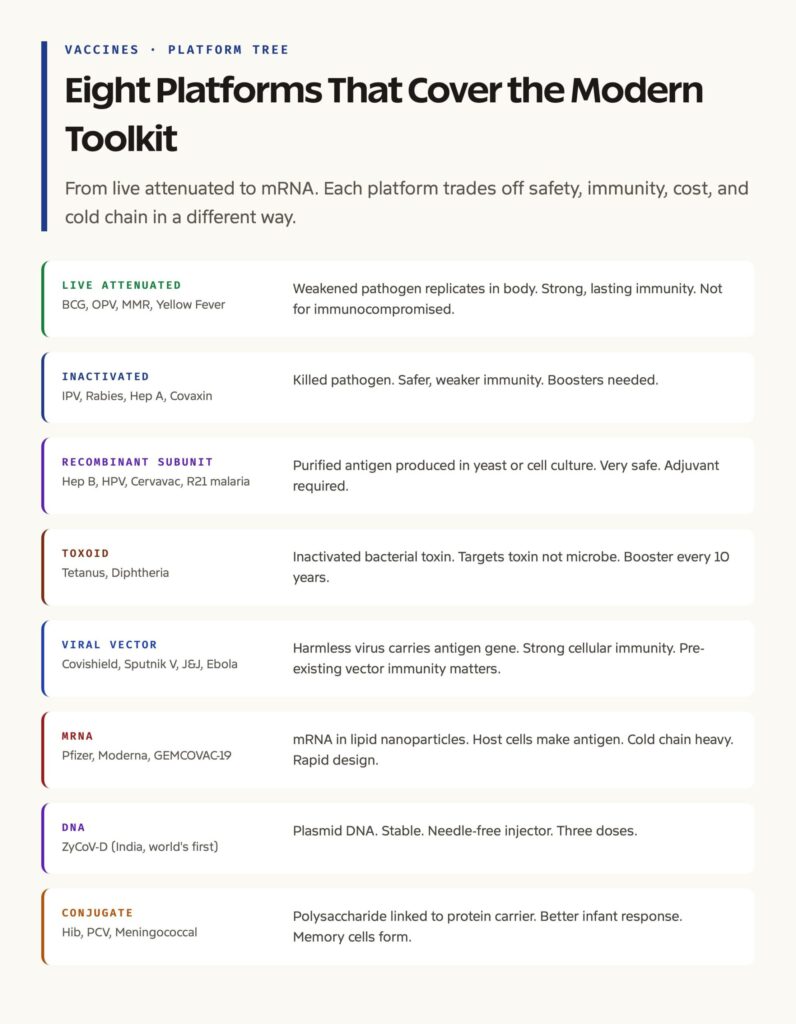
The challenge is delivering the antigen in a form that triggers a strong, lasting immune response without causing the disease. Each vaccine platform takes a different approach to this trade-off. Live attenuated vaccines use the whole pathogen, weakened. Inactivated vaccines use the whole pathogen, killed. Subunit vaccines use just the antigen. Vector and nucleic-acid vaccines deliver the genetic instructions for making the antigen, letting the recipient’s own cells produce it.
Adjuvants, which are chemical or biological additives that strengthen the immune response, are used with most non-live vaccines because the antigen alone is often not enough to trigger durable immunity. Aluminium salts have been the workhorse adjuvant for decades; newer adjuvants like AS01, AS04, and CpG oligonucleotides target specific immune pathways and are used in modern vaccines for shingles, hepatitis B, and HPV.
Live Attenuated Vaccines
Live attenuated vaccines use a version of the pathogen that has been weakened so it can replicate in the recipient and trigger an immune response without causing disease. The classic methods of attenuation involve serial passage in cell culture or in non-human hosts until the pathogen loses virulence, though modern reverse genetics allows targeted attenuation by specific gene modifications.
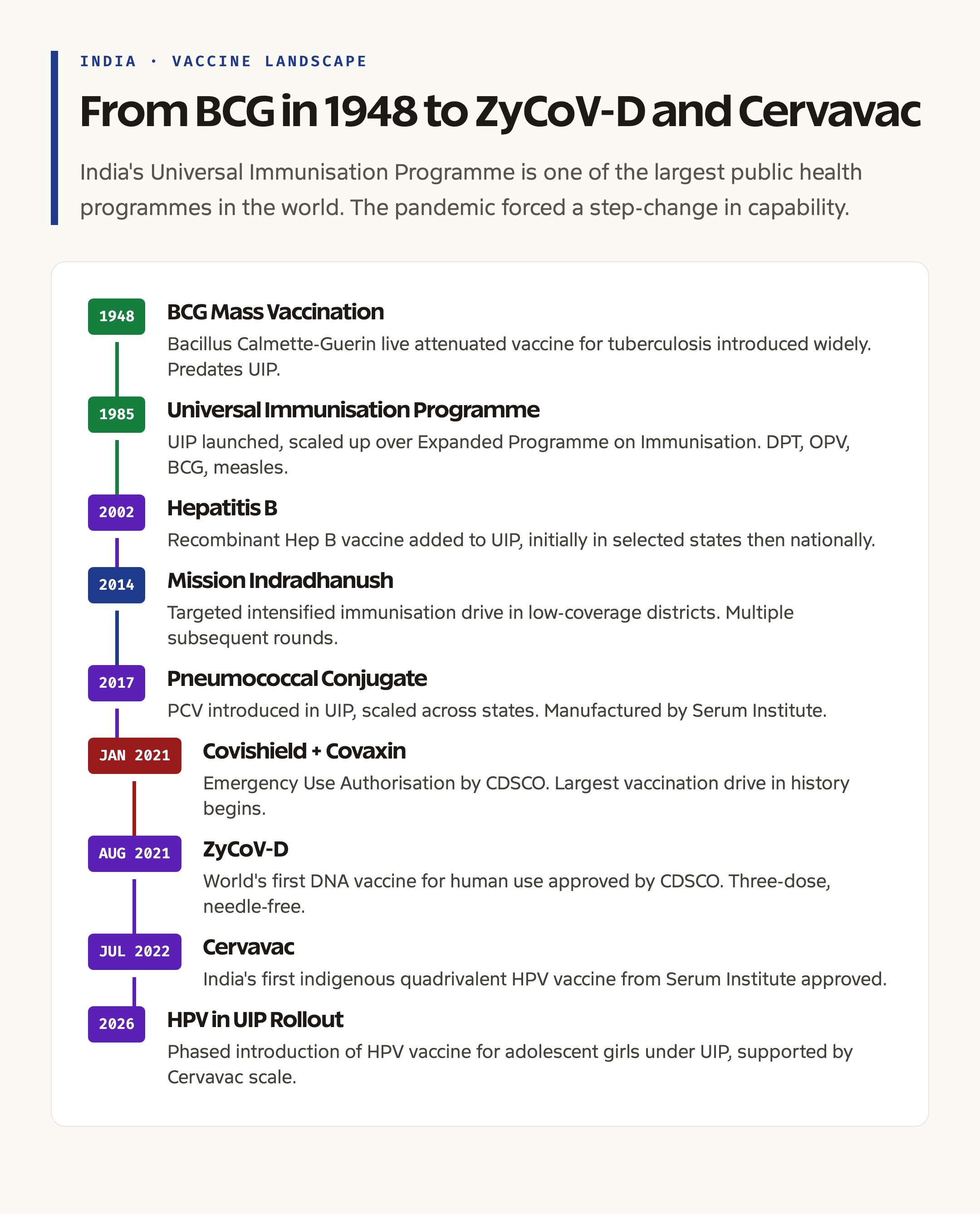
The bacillus Calmette-Guerin vaccine against tuberculosis, given to newborns under the Universal Immunisation Programme, is a live attenuated vaccine derived from Mycobacterium bovis. The oral polio vaccine, the mainstay of polio eradication, contains attenuated poliovirus. The measles, mumps, and rubella vaccine, also part of UIP in India, uses live attenuated strains of all three viruses. Yellow fever, varicella, and rotavirus vaccines are also live attenuated.
The advantages are strong. A live vaccine that replicates in the recipient produces immune responses similar to natural infection, including both antibody and cellular components, often after just one or two doses. Immunity tends to be long-lasting, sometimes lifelong.
The drawbacks are equally important. Live vaccines cannot be given to severely immunocompromised people because even an attenuated pathogen can cause disease in the absence of normal immune control. Cold-chain storage is usually required because the live organism must remain viable. Rare cases of reversion to virulence are possible, as with the very rare vaccine-derived poliovirus events in OPV-using populations, which is why the global polio programme is gradually moving toward inactivated polio vaccine.
Inactivated Vaccines
Inactivated vaccines use whole pathogens that have been killed by heat, chemicals, or radiation. The antigenic structure is preserved, but the organism cannot replicate or cause disease. The inactivated polio vaccine developed by Jonas Salk in the 1950s is the classical example. Rabies vaccine, hepatitis A vaccine, the seasonal influenza shot, and pertussis whole-cell vaccine are all inactivated.
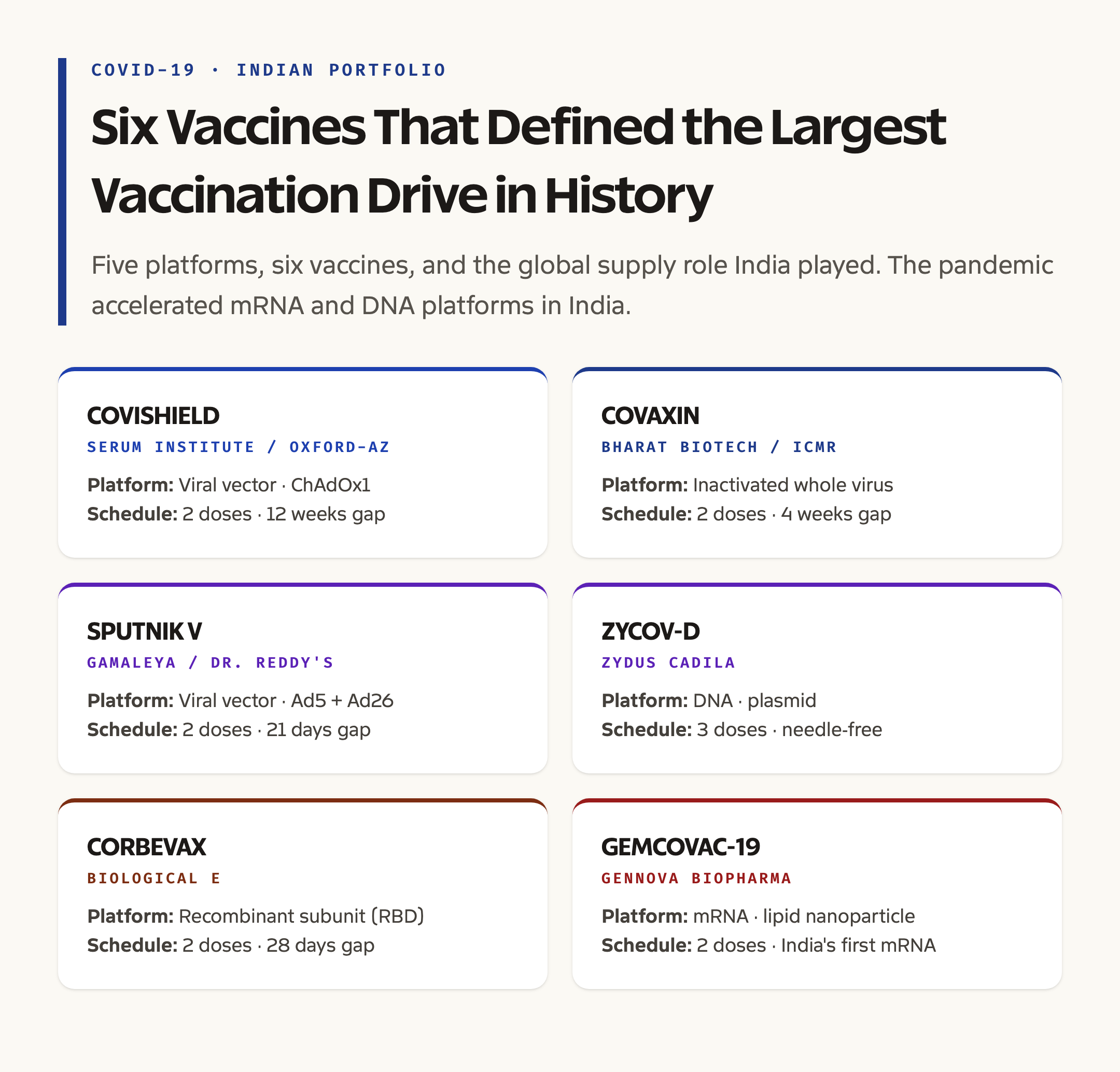
For COVID-19, India’s Covaxin from Bharat Biotech and Sinopharm and Sinovac from China were inactivated whole-virus vaccines. They could be deployed using existing cold chain infrastructure designed for vaccines like measles, which made them attractive for low and middle income countries.
Inactivated vaccines are safer than live ones because there is no risk of replication or reversion. They can be given to immunocompromised patients. Storage is easier, typically standard refrigeration rather than freezing.
The trade-off is weaker, shorter-duration immunity. Inactivated vaccines usually require multiple doses and periodic boosters because the antigen does not amplify in the recipient. Production is also more complex than for nucleic-acid vaccines because growing and inactivating the pathogen at scale requires biosafety-level-3 facilities for many viruses.
Recombinant Subunit Vaccines
Subunit vaccines deliver only the specific protein or polysaccharide that triggers immunity, not the whole pathogen. The antigen is produced separately, often in yeast, bacterial, mammalian, or insect cells using recombinant DNA technology, then purified and formulated for injection.
The hepatitis B vaccine introduced in the 1980s was the first widely used recombinant subunit vaccine. The hepatitis B surface antigen is produced in yeast cells and combined with an aluminium adjuvant. Indian manufacturers like Bharat Biotech, Serum Institute of India, and Shantha Biotechnics produce hepatitis B vaccine on a large scale, and the vaccine is part of the pentavalent shot under UIP.
The human papillomavirus vaccine, used to prevent cervical cancer, is a subunit vaccine. The two- and four-valent versions from Merck and GSK use virus-like particles assembled from the L1 capsid protein. India’s indigenous Cervavac from Serum Institute, approved in 2022, is a four-valent HPV vaccine produced through similar technology.
The malaria vaccines RTS,S and R21, the latter developed by the University of Oxford and manufactured at scale by Serum Institute of India, are subunit vaccines targeting the circumsporozoite protein of Plasmodium falciparum. R21 is being deployed in several African countries from 2024.
Subunit vaccines are very safe and can be given to immunocompromised patients. They can be produced in large quantities. The main limitations are weaker immunity than live vaccines, the need for adjuvants, and often multiple-dose schedules.
Toxoid Vaccines
Toxoid vaccines target diseases where the danger comes not from the bacterium itself but from the toxin it produces. The bacterial toxin is purified and chemically inactivated to produce a toxoid, which retains the antigenic structure but cannot cause harm. The recipient mounts an immune response against the toxoid, and on real exposure the antibodies neutralise the actual toxin.
Tetanus and diphtheria vaccines are toxoid vaccines, given as part of the DPT and Td and TT formulations under UIP. The pertussis component of the whole-cell DPT is a separate inactivated vaccine, while the acellular pertussis vaccine in DTaP combines toxoid and subunit components.
Toxoid vaccines have been in use for nearly a century and are very well characterised. The main operational issue is the need for boosters every ten years to maintain antibody titres against tetanus, which is why a tetanus booster is recommended after deep wounds even in fully vaccinated adults.
Viral Vector Vaccines
Viral vector vaccines use a harmless virus, modified to be unable to replicate in the recipient, to deliver the genetic instructions for the target antigen. The recipient’s own cells then produce the antigen, which triggers the immune response. The vector itself does not cause disease, but the immune system encounters the antigen as if it were produced during a real infection.
The Oxford-AstraZeneca COVID-19 vaccine, marketed in India as Covishield by Serum Institute of India, uses a chimpanzee adenovirus vector carrying the SARS-CoV-2 spike protein gene. Sputnik V, developed by Russia’s Gamaleya Institute, uses two different human adenovirus vectors for the two doses to avoid pre-existing immunity. Johnson and Johnson’s Janssen COVID-19 vaccine uses a single adenovirus 26 vector.
The Ebola vaccine, deployed during the 2014-2016 West Africa outbreak and routinely since, uses a vesicular stomatitis virus vector carrying the Ebola surface glycoprotein. The mpox vaccine MVA-BN, used during the 2022 outbreak, uses a modified vaccinia Ankara vector.
Viral vector vaccines combine some of the advantages of live vaccines, particularly strong cellular immunity, with the safety of non-replicating systems. The main drawback is pre-existing immunity to the vector itself, which can blunt the response, especially on a second dose with the same vector.
mRNA Vaccines
Messenger RNA vaccines deliver genetic instructions for the target antigen directly, without using a viral vector. The mRNA is encapsulated in lipid nanoparticles that fuse with cell membranes and release the RNA into the cytoplasm, where it is translated by ribosomes into the antigen protein.
The Pfizer-BioNTech and Moderna COVID-19 vaccines are the first widely deployed mRNA vaccines. Both use a stabilised version of the SARS-CoV-2 spike protein and lipid nanoparticle delivery. Their efficacy in the original trials, above 90 percent against symptomatic COVID-19, demonstrated that the platform could produce strong immunity.
The advantages of mRNA are speed and flexibility. Once a target antigen is identified, the genetic sequence can be synthesised in days, the vaccine can be in clinical trials within weeks, and large-scale manufacturing requires no biosafety containment. The 2023 Nobel Prize in Physiology or Medicine to Katalin Kariko and Drew Weissman recognised the foundational work on modified nucleosides that made mRNA vaccines clinically viable.
The drawbacks are cold chain and cost. The Pfizer-BioNTech vaccine originally required storage at minus 70 degrees Celsius, well below standard pharmaceutical freezer ranges. Subsequent reformulation has eased this, but mRNA vaccines remain more expensive to manufacture per dose than inactivated or subunit vaccines.
In India, Gennova Biopharmaceuticals received emergency authorisation for an indigenous mRNA COVID vaccine, GEMCOVAC-19, in 2022, becoming the first Indian mRNA vaccine. The platform is being explored for cancer vaccines, where personalised mRNA targeting individual tumour mutations is in advanced clinical trials.
DNA Vaccines
DNA vaccines deliver a circular plasmid containing the gene for the target antigen. The plasmid enters cells, is transported to the nucleus, transcribed into mRNA, and translated into protein. The platform is conceptually similar to mRNA vaccines but with an extra step.
ZyCoV-D, developed by Zydus Cadila and approved in India in 2021, was the world’s first DNA vaccine approved for human use. It is a three-dose vaccine targeting the SARS-CoV-2 spike protein, delivered with a needle-free injector device that pushes the DNA through the skin without a hypodermic needle. The platform is heat-stable, removing some of the cold-chain constraints of other COVID vaccines.
DNA vaccines are stable, easy to manufacture, and can in principle be reformulated rapidly. The drawbacks include lower immunogenicity compared to mRNA, the theoretical concern of integration into the host genome though this has not been observed clinically, and the need for delivery devices that can get the DNA across the cell membrane.
Conjugate Vaccines
Conjugate vaccines target bacterial pathogens whose surface polysaccharides do not produce strong immunity in young children because their immune systems do not respond well to polysaccharide-only antigens. The polysaccharide is chemically linked to a carrier protein, typically a tetanus or diphtheria toxoid, which helps the immune system mount a stronger response with proper memory.
Haemophilus influenzae type b vaccine, the pneumococcal conjugate vaccine, and the meningococcal conjugate vaccines all use this approach. The Hib vaccine has dramatically reduced childhood meningitis and pneumonia in countries where it has been introduced. India’s pentavalent vaccine, given in three doses under UIP at 6, 10, and 14 weeks of age, includes the Hib component along with diphtheria, tetanus, pertussis, and hepatitis B.
The pneumococcal conjugate vaccine PCV was introduced into the Indian UIP in 2017 and has been progressively scaled across states. PCV manufactured by Serum Institute of India contains 13 strain antigens conjugated to carrier protein.
India’s Vaccine Manufacturing and Regulatory Landscape
India is one of the largest vaccine manufacturers in the world. Serum Institute of India in Pune is the single largest producer by volume, supplying half of all childhood vaccines used globally. Bharat Biotech, Biological E, Panacea Biotec, Zydus Cadila, Indian Immunologicals, and Shantha Biotechnics produce a wide range of vaccines for the domestic market and for export.
The Universal Immunisation Programme delivers free vaccines against twelve diseases to over 26 million infants and 30 million pregnant women each year through more than nine million sessions, making it one of the largest public health programmes in the world. The schedule includes BCG, OPV, hepatitis B, pentavalent, rotavirus, PCV, IPV, MR, JE in endemic states, DPT, Td, and TT.
The Central Drugs Standard Control Organisation, CDSCO, under the Ministry of Health and Family Welfare regulates vaccine approval. Emergency Use Authorisation, used for COVID-19 vaccines, allows accelerated approval based on interim safety and efficacy data. The Subject Expert Committee under CDSCO reviews submissions and recommends approval to the Drugs Controller General of India.
The Indian Council of Medical Research, ICMR, conducted the indigenous development of Covaxin in collaboration with Bharat Biotech and the National Institute of Virology. The role of ICMR in subsequent development of HPV vaccine, malaria vaccine, and emerging-pathogen vaccines through the pre-clinical research network is expanding.
Vaccine Hesitancy and Public Health Communication
Vaccines work as a public-health intervention only if uptake is high. Vaccine hesitancy, the reluctance or refusal of vaccines despite availability, has been listed by the World Health Organization as one of the top ten threats to global health. The phenomenon is not new, but social media and the COVID pandemic have intensified it.
Concerns range from genuine medical questions to long-debunked misinformation linking vaccines to autism, sterility, or microchips. The autism claim from a 1998 paper by Andrew Wakefield was discredited and the paper retracted, but the legacy persists. The Indian context includes specific concerns around cultural and religious factors, gender-based access in some communities, and the impact of vaccine-preventable disease outbreaks like the recurrent diphtheria outbreaks in Kerala.
Public health communication, transparent reporting of adverse events, and trusted local healthcare providers are the main tools for addressing hesitancy. The Mission Indradhanush programme of the Ministry of Health, launched in 2014 and updated several times, focuses on increasing immunisation coverage in low-coverage districts through targeted outreach.
Prelims Pointers
Live attenuated vaccines include BCG, OPV, MMR, varicella, yellow fever, and rotavirus. Inactivated vaccines include IPV, rabies, hepatitis A, and Covaxin. Recombinant subunit vaccines include hepatitis B, HPV, R21 malaria vaccine, and Cervavac. Toxoid vaccines include tetanus and diphtheria. Viral vector vaccines include Covishield, Sputnik V, Janssen, and the rVSV Ebola vaccine. mRNA vaccines include Pfizer-BioNTech, Moderna, and India’s GEMCOVAC-19. DNA vaccines include ZyCoV-D, the world’s first approved DNA vaccine. Conjugate vaccines include Hib, pneumococcal, and meningococcal. The 2023 Nobel Prize in Physiology or Medicine went to Katalin Kariko and Drew Weissman for mRNA vaccine work. CDSCO regulates vaccines in India. The pentavalent vaccine combines DTP, Hep B, and Hib. Cervavac is India’s indigenous HPV vaccine.
Mains Practice Questions
- The COVID-19 pandemic accelerated the adoption of new vaccine platforms. Discuss the technical features, advantages, and limitations of mRNA, viral vector, and DNA vaccines, with reference to the Indian portfolio. (250 words)
- India’s role as a global vaccine manufacturer rests on a combination of public-sector capacity and private-sector industry. Examine the policy and regulatory framework that supports it. (250 words)
- Vaccine hesitancy is a public health challenge that combines genuine medical concerns and misinformation. Suggest a comprehensive strategy for sustaining high immunisation coverage in India. (250 words)
Way Forward
India’s vaccine programme has three priorities for the next decade. The first is consolidating the gains of the Universal Immunisation Programme by closing the gaps in low-coverage districts. The Mission Indradhanush platform should be sustained with adequate funding, training of frontline workers, and integration with maternal and child health services. The roll-out of the HPV vaccine under UIP, planned for adolescent girls, will be a major step.
The second is platform diversification. India’s strength in inactivated and subunit production is well established, but mRNA, DNA, and self-amplifying RNA platforms need sustained investment. The Genova Biopharmaceuticals mRNA platform should be supported and extended to other diseases, and the National Biopharma Mission should fund domestic manufacturing of the lipid nanoparticle components currently dominated by foreign suppliers.
The third is preparedness for emerging infectious diseases. The COVID experience showed that the gap between an outbreak and a deployable vaccine can be compressed to under a year if the right platforms exist. India’s investment in disease X preparedness, in the National Institute of Virology, in biotechnology infrastructure, and in cross-government coordination through the National Disease Control Programme should reflect that urgency.
For the world, the Indian vaccine industry will continue to be a critical supplier. Maintaining quality, regulatory credibility, and the willingness to share both vaccines and technology with low-income partners will define India’s place in global health for the coming decade.
Frequently Asked Questions
What are the main types of vaccines?
The main vaccine platforms are live attenuated, inactivated, recombinant subunit, toxoid, viral vector, mRNA, DNA, and conjugate. Each uses a different approach to deliver an antigen to the immune system, with different trade-offs in safety, efficacy, cost, and storage.
How do mRNA vaccines work?
mRNA vaccines deliver messenger RNA encoding the target antigen, encapsulated in lipid nanoparticles. The RNA enters cells and is translated into protein, which the immune system recognises and responds to. The Pfizer-BioNTech and Moderna COVID-19 vaccines were the first widely deployed mRNA vaccines.
What is a live attenuated vaccine?
A live attenuated vaccine uses a weakened version of the pathogen that can replicate in the recipient and trigger an immune response without causing disease. Examples include BCG, oral polio vaccine, MMR, and yellow fever vaccine. Live vaccines produce strong, durable immunity but cannot be given to immunocompromised patients.
What is the difference between Covishield and Covaxin?
Covishield, manufactured by Serum Institute of India, is a viral vector vaccine using a chimpanzee adenovirus to deliver the SARS-CoV-2 spike protein gene. Covaxin, manufactured by Bharat Biotech in collaboration with ICMR, is an inactivated whole-virus vaccine. Both were approved in India in January 2021.
What is ZyCoV-D?
ZyCoV-D, developed by Zydus Cadila, was approved in India in 2021 as the world’s first DNA vaccine for human use. It is a three-dose vaccine against COVID-19 delivered with a needle-free injector device. The platform is heat-stable, simplifying cold chain requirements.
Why do some vaccines need adjuvants?
Adjuvants are chemical additives that boost the immune response to the antigen. They are often needed in non-live vaccines because purified antigens alone produce weaker responses. Aluminium salts have been the most common adjuvant for decades, with newer adjuvants like AS01 and CpG used in modern formulations.
What is the Universal Immunisation Programme?
The Universal Immunisation Programme is India’s national childhood vaccination programme, providing free vaccines against twelve diseases to over 26 million infants and 30 million pregnant women annually. It is one of the largest public health programmes in the world.
Why was the 2023 Nobel Prize in Medicine given for mRNA vaccines?
Katalin Kariko and Drew Weissman shared the 2023 Nobel Prize in Physiology or Medicine for foundational work on modified nucleosides in messenger RNA, which made it possible to deliver mRNA into cells without triggering excessive inflammation. Their research, dating to the 2000s, made the modern mRNA vaccine platform clinically viable.
What is a conjugate vaccine?
A conjugate vaccine links a bacterial polysaccharide antigen to a carrier protein, usually a tetanus or diphtheria toxoid. The conjugation helps the immune system mount a strong response with proper memory in young children, who otherwise respond poorly to polysaccharide alone. Hib and pneumococcal conjugate vaccines are examples.
What is Cervavac?
Cervavac is India’s indigenous quadrivalent HPV vaccine, manufactured by Serum Institute of India and approved in 2022. It targets four HPV types associated with cervical cancer and genital warts. Its rollout under the Universal Immunisation Programme is planned for adolescent girls.
Tell Google you want more of this.
Add Anantam IAS as a preferred sourceOne tap, and this site shows up more often in your own Top Stories, AI Overviews and AI Mode. Remove it any time.