
Opens in a new tab
Join Anantam IAS Channel on Telegram

Daily Digest · Monday

2 March 2026 Current Affairs for UPSC

3 current affairs published on Monday, 2 March 2026

2 March 2026 Current Affairs for UPSC — every Why-in-News article AnantamIAS published on Monday, 2 March 2026, broken down with Why in News?, the exact GS paper it feeds, sub-topic mapping, MCQ-ready facts and a UPSC-style practice question. 3 articles in total, covering Polity, Economy, Environment, S&T, IR, Geography, History, Society and Internal Security — the same Why-in-News + GS-paper-mapping + practice-question format the Compass uses across every daily digest on the site.

Daily current affairs for UPSC is where new material enters your prep stream. Read this 2 March 2026 digest end-to-end in 25–35 minutes, attempt the practice question at the foot of each article (it's MCQ for some, 10/15-marker for others), then bookmark the entries that fall inside your active revision window. Everything stays cross-linked: tap any subject pill to jump to that subject's hub, or use the table of contents above to skip straight to a specific story.

Use this page three ways. Read sequentially for a one-sitting scan of everything that mattered on 2 March 2026. Download the 2 March 2026 PDF below for offline study or print revision. Or use the March 2026 Current Affairs compilation to see this day in the month's full context. For the previous day's reading, see 1 March 2026 Current Affairs; the next day's is 3 March 2026 Current Affairs.

Why we publish daily current affairs separately from the monthly compilation: daily is learning, monthly is revision. Use the daily page to add fresh material to your notes the day it breaks; come back to the March 2026 compilation 60 days before Prelims when the noise has settled and only the lasting takeaway is worth re-reading.

NITI Aayog and JICA Deepen SDG Cooperation

Open article →Download PDF

Why in News?

On 2 March 2026, NITI Aayog put NITI Aayog and JICA Deepen SDG Cooperation in the spotlight through an official communication. The development is relevant because it speaks directly to themes that UPSC regularly tests in both factual and analytical form.

The official source, titled NITI Aayog and JICA Sign Record of Discussions for Phase II of Japan – India Cooperative Actions towards SDGs in Aspirational Districts and Blocks, helps place the issue in a wider policy context. For aspirants, the topic is useful not only for remembering the headline event but also for connecting it to governance, economy, diplomacy, infrastructure, environment, or social policy as required.

NITI Aayog and JICA Deepen SDG Cooperation Anantam IAS

UPSC Relevance

  • Prelims: institutions, reports, schemes, and administrative mechanisms
  • Mains: GS II on governance, delivery, and public policy

What Happened?

In a significant step towards strengthening India–Japan development cooperation, NITI Aayog and the Japan International Cooperation Agency (JICA) today signed the Record of Discussions (RoD) for the “Project for Promotion of the Program for Japan – India Cooperative Actions Towards Sustainable Development Goals – Phase II” in presence of Shri Rohit Kumar, Additional Secretary and Mission Director, Aspirational Districts and Blocks Programme, NITI Aayog and Takeuchi Takuro, Chief Representative, JICA India. This collaboration reaffirms the strong India–Japan development partnership and advances joint efforts toward achieving the Sustainable Development Goals (SDGs), particularly in Aspirational Districts (ADs) and Aspirational Blocks (ABs).

Shri Rohit Kumar noted that the partnership brings together institutional strengths, shared knowledge and on-ground experience to accelerate inclusive development in underserved regions. The project under ADP and ABP aims to strengthen policy frameworks and implementation systems across six themes—Global Partnership, Health & Nutrition, Education, Agriculture & Water Resources, Financial Inclusion & Skill Development and Basic Infrastructure.

Prelims Focus

  • Event date: 2 March 2026
  • Primary source: NITI Aayog
  • NITI Aayog
  • NITI Aayog and JICA Sign Record of Discussions for Phase II of Japan – India Cooperative Actions towards SDGs in Aspirational Districts and Blocks
  • SDG implementation support
  • International development cooperation

Mains Focus

  • The issue is relevant for GS II because it shows how governance reforms depend on institutional design, coordination, and citizen-facing delivery.
  • It can be used to discuss accountability, policy implementation, and administrative responsiveness.
  • The topic also has value in linking central initiatives with state-level outcomes and local institutions.
  • A balanced answer should mention capacity constraints along with reform gains.

Why it Matters

For UPSC, the event matters because governance topics are best understood through the institutions involved, the target group, and the quality of implementation. In exam terms, this topic can strengthen both short factual notes and longer answer-writing examples.

Exam Takeaways

  • The event belongs to 2 March 2026 and should be linked to that day's current-affairs revision.
  • The official source was NITI Aayog.
  • SDG implementation support
  • International development cooperation
  • Policy planning and state capacity

Bottom Line

NITI Aayog and JICA Deepen SDG Cooperation is relevant because it combines immediate current-affairs value with wider exam utility. For UPSC, the event matters because governance topics are best understood through the institutions involved, the target group, and the quality of implementation.

Exam Oriented Questions

Why is this topic in the news?

It is in the news because an official development linked to niti aayog and jica deepen sdg cooperation was recorded on 2 March 2026.

Which official source is associated with this development?

The primary official source is NITI Aayog, and aspirants should revise the linked release or official document.

What is the core issue involved in this topic?

The core issue involves sdg implementation support and its policy significance.

How is this topic relevant for UPSC Prelims?

It is useful for Prelims because it involves factual details such as institutions, initiatives, locations, or technical terms that can be directly asked.

How is this topic relevant for UPSC Mains?

It is useful for Mains because it can be linked to broader themes such as governance, economy, foreign policy, infrastructure, environment, or social inclusion.

Which broader policy area does this topic touch?

It touches public policy, implementation systems, institutions, and administrative reform.

What should aspirants remember first from this topic?

Aspirants should first remember the event date, the official institution involved, and the headline takeaway from niti aayog and jica deepen sdg cooperation.

How can this topic be used in answer writing?

It can be used as a recent example to support analytical points in GS answers, especially when explaining implementation, strategic relevance, or policy direction.

What factual areas should be revised from this topic?

Revise the institution involved, the exact development, and these quick points: SDG implementation support, International development cooperation, Policy planning and state capacity.

What is the one-line exam takeaway?

NITI Aayog and JICA Deepen SDG Cooperation shows how a current event can combine factual recall with wider analytical value for both Prelims and Mains.
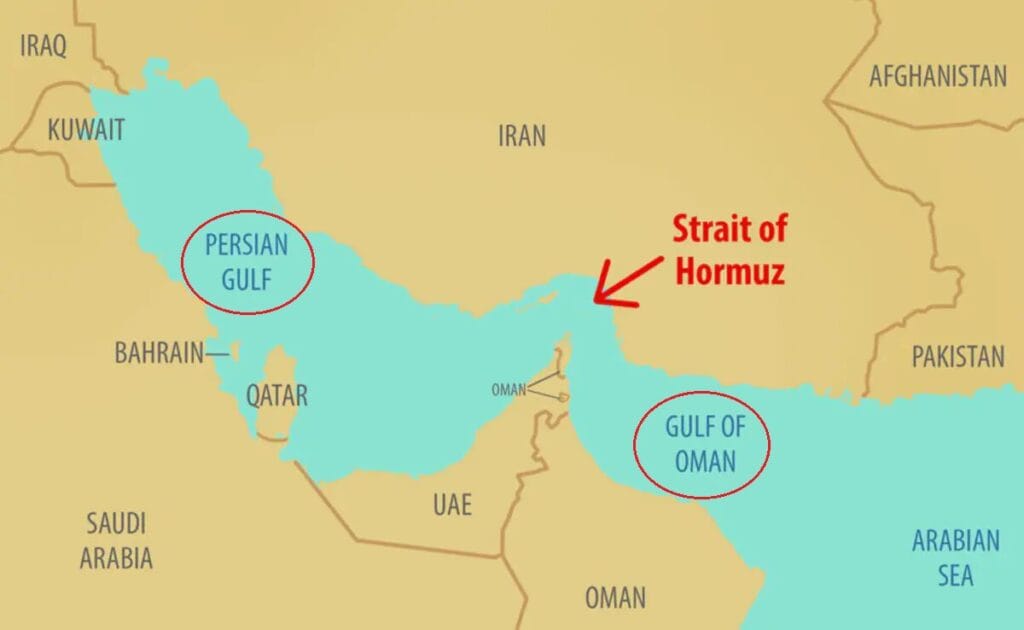
Why the closure of Strait of Hormuz is causing fears about elevating crude oil prices

Open article →Download PDF

Why in news

Recent escalation in the Middle East conflict involving the US, Israel, and Iran has sharply increased risks to marine traffic through Hormuz:

  • Iran reportedly shut or threatened to close traffic through the strait in retaliation to US-Israel strikes.
  • Multiple oil tankers have been attacked or damaged near the strait, leading to safety fears and anchoring of ships outside the waterway.
  • Heightened naval activity and risk warnings have disrupted normal shipping patterns.

Tanker movements are halted or rerouted, and war risk insurance premiums have spiked.

UPSC Relevance:

GS-II: International Relations, GS-III: Indian Economy – Energy Security, Internal Security & Maritime Security

hormuz

What is the Strait of Hormuz?

The Strait of Hormuz is a narrow sea passage between the Persian Gulf and the Gulf of Oman/Arabian Sea.

  • It is about 33 km wide at its narrowest, but extremely significant — nearly 20% of the world’s crude oil and major volumes of LNG pass through it daily.
  • It’s a maritime chokepoint — meaning a narrow route where global energy flow can be seriously affected by disruptions.
  • Multiple Gulf producers (Saudi Arabia, UAE, Kuwait, Qatar, Iraq) depend on it to export energy.
  • Indian imports are part of this traffic.

India’s energy profile

India is a major net energy importer:

  • ~90% of crude oil and a significant share of LNG are imported.
  • India’s oil consumption is about 5.5 million barrels per day and it relies heavily on Middle Eastern supplies.

Key dependencies via Hormuz

  • Crude oil: ~35-50% of India’s crude imports flow through the Strait.
  • LPG: Around 80-85% of imported LPG (cooking gas) passes via Hormuz.
  • LNG: Over half of LNG imports route through the strait.

Note: LPG vulnerability is often higher than crude because India has limited strategic LPG reserves.

Immediate impacts of the disruption

Even if physical supplies haven’t stopped yet, the market reaction and economic effects are real:

A. Price effects

  • Crude oil prices have jumped (with Brent crude touching multi-month highs).
  • A spike in oil prices increases India’s import bill sharply – roughly ₹13,000 crore increase in import bill for every $1 rise in crude.
  • LPG and LNG prices are sensitive due to high Gulf dependence.

B. Supply chain stress

  • Insurance costs and freight rates increase because tankers avoid high-risk zones.
  • Some shipping lines have delayed or rerouted cargoes, causing logistics delays.

C. Financial markets & macro

  • Indian stock markets fell due to risk appetite deterioration.
  • Rupee weakens under higher import costs and inflation pressure.

Can India face actual supply shortages?

Short-term:

  • Government says even if flows are disrupted, India has crude stocks sufficient for ~10 days and fuel stocks for ~5-7 days.
  • Strategic reserves can cushion for a short period.

Medium-term:

  • India could recalibrate sourcing — increasing imports from Russia, Africa, Americas to reduce reliance on Hormuz.

But shipments of LPG remain more vulnerable because of limited stockpiles and high Gulf dependence.

Strategic and policy implications for India

A. Energy security strategy

  • Diversification of suppliers: India has been shifting some purchases to Russia, the US, West Africa, and Latin America to reduce Gulf dependence.
  • Strategic Petroleum Reserves (SPR): Maintain buffer stocks to guard against short-term supply shocks.

B. Infrastructure and alternative routes

  • India may use pipelines bypassing Hormuz (like Saudi Eastern pipelines to Red Sea, UAE’s pipeline to Fujairah) to import oil without transiting the strait.
    These alternative routes, while useful, may have limited capacity.

C. Foreign policy and strategic autonomy

  • India aims to balance relations with Middle Eastern suppliers, the US, and major powers while protecting its energy interests.
  • Maintaining neutral diplomatic posture reduces direct exposure in regional conflicts.

D. Economic impact

  • Imported inflation can feed into fuel and transport costs, affecting inflation, current account deficit, and fiscal balances.

Long-term lessons for India

1. Importance of chokepoints

Strait of Hormuz illustrates how geopolitical conflicts can threaten global trade and energy security through maritime chokepoints.

2. Energy security = national security

For a net importer like India, stability of energy supply corridors is critical; disruption affects economic growth, inflation, and diplomacy.

3. Inter-linkage with global geopolitics

Energy security cannot be viewed in isolation — conflicts in West Asia have direct macro, social, and energy implications for India.

Conclusion

The Strait of Hormuz is a vital global energy artery, critical to India because a significant portion of its crude, LPG, and LNG imports pass through it. Recent Middle East conflicts threatening or disrupting traffic have raised energy security concerns — reflected in rising oil prices, higher freight/insurance costs, financial market stress, and inflation potential. India’s response involves strategic reserves, supply diversification, alternative import routes, and careful foreign policy navigation to ensure stability.

Practice Questions:

The Strait of Hormuz connects:
(a) Red Sea and Arabian Sea
(b) Persian Gulf and Gulf of Oman
(c) Mediterranean Sea and Red Sea
(d) Black Sea and Mediterranean Sea

Answer: (b)

Practice Mains Question:

Evaluate the implications of disruption in the Strait of Hormuz for India’s energy security.

Centre’s revenue focus has shifted from selling PSUs to earning more from them, data shows

Open article →Download PDF

Why in news

The launch of National Monetisation Pipeline (NMP) 2.0 and declining emphasis on strategic disinvestment in recent budgets indicate a shift in India’s public sector reform strategy from privatisation to asset monetisation and dividend-based revenue generation.

UPSC Relevance:

GS-III: Public Sector & Fiscal Policy Infrastructure

Background:

In 2020–21, the Government of India announced a strong push toward privatisation and strategic disinvestment of Public Sector Enterprises (PSEs). The government clearly stated that it would exit non-strategic sectors and reduce its role in business activities.

However, in recent years, the government’s approach has changed. Instead of selling public sector companies outright, the focus has shifted toward:

  • Leasing public assets to private players (asset monetisation)
  • Increasing dividend income from public sector companies

The launch of the National Monetisation Pipeline (NMP) 2.0 confirms this policy shift.

This indicates that India’s public sector reform strategy is evolving from “ownership transfer” to “value extraction without ownership transfer.”

What is Disinvestment?

Disinvestment means the government sells a part of its ownership in a public sector enterprise.

For example, if the government owns 100% of a company and sells 20% to private investors, it is called disinvestment.

Disinvestment can be of two types:

  1. Minority disinvestment – Government sells some shares but keeps management control.
  2. Strategic disinvestment – Government sells majority stake and transfers management control to private players.

Strategic disinvestment is equivalent to privatisation.

Evolution of Disinvestment Policy in India

Phase 1: Early Reforms after 1991

  • After economic liberalisation in 1991, India faced a severe fiscal crisis. The government started selling small portions of shares in public sector companies to raise revenue.
  • During this period:
    • The government did not transfer management control.
    • The main objective was to raise funds to reduce fiscal deficit.
    • Public sector companies continued to remain under government control.
  • Thus, this phase was cautious and revenue-oriented.

Phase 2: Strategic Disinvestment (1999–2004)

  • During this period, the government became more aggressive and started selling majority stakes in certain public sector enterprises.
  • In some companies, management control was transferred to private players.
  • The objective shifted from merely raising revenue to improving efficiency by bringing in private management.
  • However, this approach faced political resistance and was later slowed down.

Phase 3: Slowdown Period (2004–2014)

  • During this period, there was limited enthusiasm for privatisation.
  • The government mainly focused on minority stake sales rather than strategic disinvestment.
  • Public sector enterprises were viewed as instruments of social and developmental policy, not merely commercial entities.

Phase 4: Renewed Privatisation Push (2020–21)

  • In 2020, the government announced a clear policy direction:
  • “Government has no business to be in business.”
  • Under the Public Sector Enterprises Policy (2021), the government declared that:
    • It will exit non-strategic sectors.
    • In strategic sectors, only a minimum number of public sector enterprises will remain.
    • Strategic disinvestment will be encouraged where private sector capacity exists.
  • This appeared to be a strong move toward privatisation.

Why Did Privatisation Slow Down?

Despite strong announcements, actual disinvestment revenues started declining.

Disinvestment proceeds were:

• ₹35,294 crore in 2022–23
• ₹16,507 crore in 2023–24
• ₹10,163 crore in 2024–25
• ₹15,562 crore (so far) in 2025–26

There are several reasons for this slowdown.

  • First, many public sector enterprises have large employee numbers and legacy liabilities. Private investors are hesitant to take over such companies.
  • Second, some enterprises are loss-making and structurally inefficient, making them unattractive.
  • Third, privatisation often faces political opposition and labour resistance.
  • Fourth, market conditions and global economic slowdown reduced investor appetite.

Because of these constraints, large-scale strategic disinvestment became difficult.

Increasing Focus on Dividend Income

As privatisation slowed, the government began focusing on extracting higher dividends from public sector companies.

The Department of Investment and Public Asset Management (DIPAM) issued guidelines asking CPSEs to:

• Pay higher dividends.
• Use excess cash reserves efficiently.
• Balance capital expenditure with profitability.

As a result, dividend income increased significantly.

Dividend receipts rose from ₹39,750 crore in 2020–21 to ₹74,128 crore in 2024–25.

In fact, dividend income is now much higher than disinvestment proceeds.

This indicates that the government prefers steady annual income rather than one-time asset sales.

Asset Monetisation: The New Strategy of the Govt

Instead of selling companies, the government now focuses on leasing public infrastructure assets.

This approach is called asset monetisation.

In 2021, the government launched the National Monetisation Pipeline (NMP).

The key principle of NMP is:

Ownership of assets remains with the government, but private players are allowed to operate them for a fixed period in return for payment.

Examples of assets under monetisation:
• Highways
• Railway freight corridors
• Airports
• Power transmission lines
• Telecom towers

The first phase (2021–25) had a target of ₹6 lakh crore, and around 90% of the target was achieved.

Now, NMP 2.0 (2025–30) has been launched with a target of ₹16.72 lakh crore, which shows massive expansion.

Why Is the Government Preferring Monetisation?

There are several reasons.

  • First, monetisation generates revenue without selling ownership. This reduces political opposition.
  • Second, it improves utilisation of underused or idle public assets.
  • Third, it attracts private sector efficiency while keeping public ownership intact.
  • Fourth, it provides relatively predictable fiscal revenue.

Thus, monetisation is politically easier than privatisation.

What Are the Risks?

Although monetisation and dividend extraction provide revenue, they have limitations.

  • Excessive dividend extraction may reduce the reinvestment capacity of public sector companies. If companies distribute too much profit, they may not have enough funds for modernization and expansion.
  • Asset monetisation does not solve structural inefficiencies in management. Leasing an asset does not reform corporate governance.
  • There is also policy inconsistency. A shift from aggressive privatisation to monetisation may create uncertainty among investors about long-term reform direction.
  • Finally, monetisation revenues depend on economic conditions and private sector interest. They are not guaranteed.

What is the Bigger Economic Interpretation?

This shift shows that India is not fully adopting a neoliberal privatisation model.

Instead, India is following a hybrid model where:

• The government retains ownership.
• The private sector participates in operations.
• The state continues to play a strategic role.

This reflects pragmatic state capitalism rather than complete withdrawal of the state from business.

Way Forward: Reforming Public Sector Strategy in a Balanced Manner

The shift toward asset monetisation and dividend extraction cannot be the final reform model. A calibrated and sustainable approach is required.

1️. Adopt a Balanced Reform Strategy

India should not abandon privatisation completely. Instead:

  • Strategic disinvestment should continue in loss-making and non-strategic sectors.
  • Monetisation should be used for brownfield infrastructure assets.
  • Strategic sectors (defence, energy security, critical infrastructure) may retain calibrated government presence.

A mix is better than an ideological extreme.

2️. Ensure Sustainable Dividend Policy

While higher dividends provide fiscal comfort, excessive extraction can:

  • Reduce internal capital formation
  • Weaken long-term competitiveness of CPSEs
  • Force companies to borrow for expansion

Therefore:
Dividend policy must balance fiscal needs with reinvestment capacity.

3️. Strengthen Corporate Governance of CPSEs

Monetisation alone does not solve structural inefficiencies.

Reforms needed:

  • Professional boards
  • Reduced political interference
  • Performance-linked incentives
  • Greater managerial autonomy

Without governance reform, financial engineering will not improve productivity.

4️. Improve Transparency in Asset Monetisation

For NMP 2.0 to succeed:

  • Transparent bidding processes
  • Strong regulatory oversight
  • Clear concession agreements
  • Risk-sharing mechanisms

This ensures credibility and sustained investor participation.

5️. Provide Policy Stability

  • Frequent shifts from privatisation → monetisation → dividend focus may create investor uncertainty.
  • Government should articulate a long-term, predictable public sector roadmap.
  • Policy credibility is as important as policy design.

Conclusion

India’s evolving public sector reform strategy reflects pragmatic adaptation to fiscal realities, political constraints, and market conditions. While asset monetisation and dividend extraction provide steady revenue without triggering political resistance, they cannot substitute for deeper structural reforms. Sustainable public sector transformation requires a calibrated blend of selective privatisation, efficient asset monetisation, and robust corporate governance reforms. Ultimately, the objective should not merely be revenue maximisation, but the creation of productive, competitive, and strategically aligned public enterprises that contribute to long-term economic growth.

Practice Questions:

With reference to Disinvestment in India, consider the following statements:

  1. Strategic disinvestment involves transfer of management control to private players.
  2. Minority disinvestment always results in loss of government ownership.
  3. Disinvestment receipts are classified as capital receipts in the Union Budget.

Which of the statements given above is/are correct?

(a) 1 and 3 only
(b) 1 only
(c) 2 and 3 only
(d) 1, 2 and 3

Answer: (a) 1 and 3 only

With reference to Asset Monetisation, consider the following statements:

  1. It involves permanent transfer of ownership of public assets.
  2. It is primarily applicable to brownfield infrastructure assets.
  3. It generates recurring revenue for the government.

Which of the statements given above is/are correct?

(a) 2 and 3 only
(b) 1 and 2 only
(c) 1 and 3 only
(d) 1, 2 and 3

Answer: (a) 2 and 3 only

Mains question:

Critically analyse the evolution of India’s disinvestment policy and examine whether the current shift towards asset monetisation represents a structural reform or fiscal adjustment.