2 current affairs published on Saturday, 27 September 2025
27 September 2025 Current Affairs for UPSC — every
Why-in-News article AnantamIAS published on Saturday, 27 September 2025, broken down with
Why in News?, the exact GS paper it feeds, sub-topic mapping, MCQ-ready facts and a
UPSC-style practice question. 2 articles in total, covering Polity, Economy, Environment, S&T, IR, Geography, History, Society and Internal
Security — the same Why-in-News + GS-paper-mapping + practice-question format the Compass uses across
every daily digest on the site.
Daily current affairs for UPSC is where new material enters your prep stream. Read this
27 September 2025 digest end-to-end in 25–35 minutes, attempt the practice question
at the foot of each article (it's MCQ for some, 10/15-marker for others), then bookmark the entries
that fall inside your active revision window. Everything stays cross-linked: tap any subject pill to jump
to that subject's hub, or use the table of contents above to skip straight to a specific story.
Why we publish daily current affairs separately from the monthly compilation: daily is learning,
monthly is revision. Use the daily page to add fresh material to your notes the day it breaks;
come back to the September 2025 compilation 60 days before Prelims when the
noise has settled and only the lasting takeaway is worth re-reading.
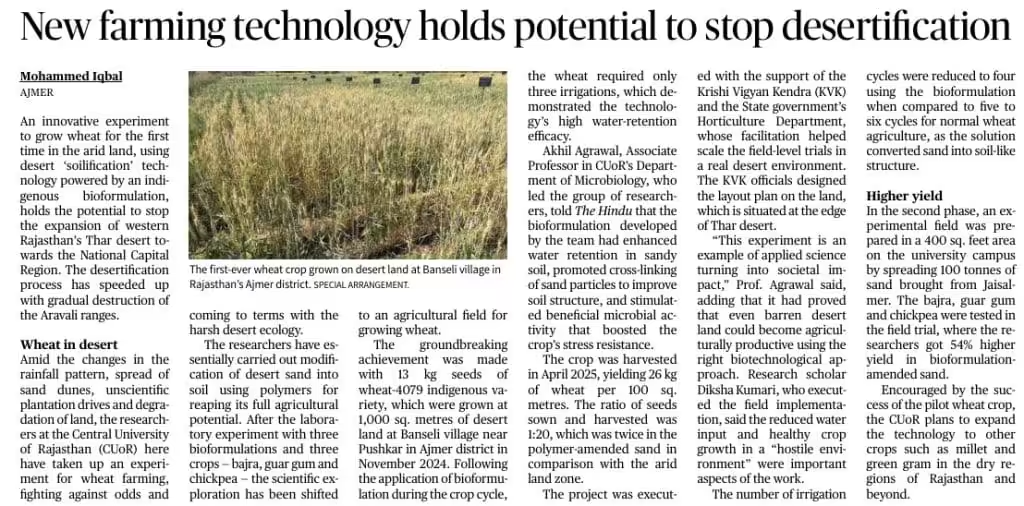
Scientists at the Central University of Rajasthan (CUoR) have successfully grown wheat for the first time in Rajasthan’s desert land (Ajmer district), using an innovative desert “soilification” technology. This breakthrough is significant as it can combat desertification in the Thar desert and expand cultivable land in arid regions.
Wheat variety 4079 was grown on 1,000 sq. metres of desert land near Pushkar (Ajmer). Crop harvested in April 2025 produced 26 kg of wheat per 100 sq. metres, with only three irrigations (compared to 5–6 cycles in normal wheat farming). Demonstrated 54% higher yield in bioformulation-amended land compared to untreated land.
UPSC Relevance:
Conservation, environmental pollution and degradation, Climate change.
UPSC PYQ:
Q. The process of desertification does not have climate boundaries. Justify with examples. (2020)
Q. In what way micro-watershed development projects help in water conservation in drought-prone and semi-arid regions of India? (2016)
About Desertification:
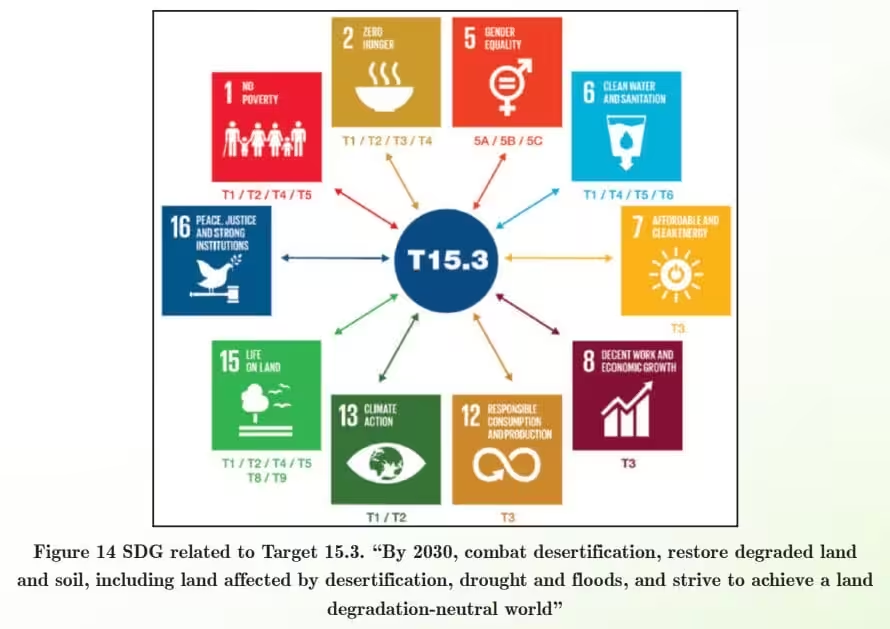
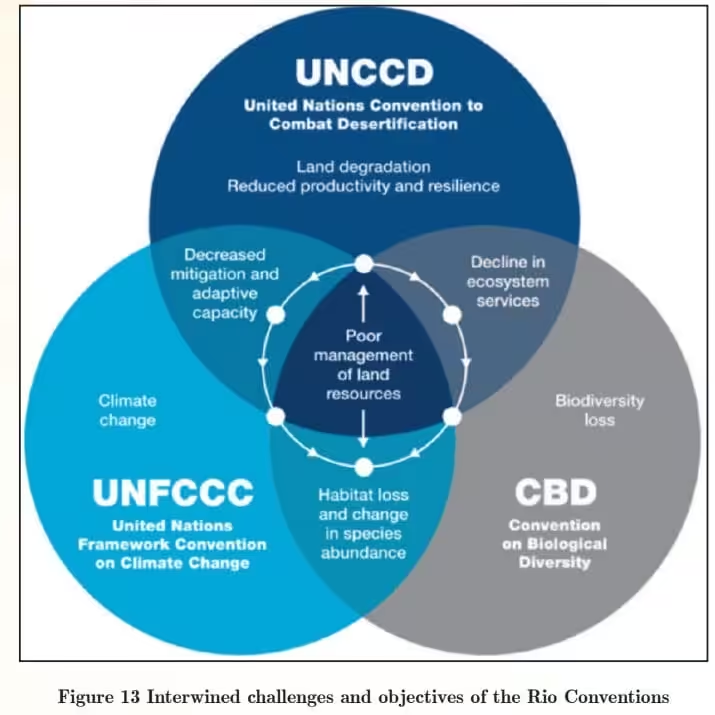
Desertification poses a serious challenge to sustainable development and humanity’s ability to survive in many areas of the world. The UNCCD’s goal is a future that avoids, reduces, and reverses desertification. Our work paves the way for a land degradation neutral world, one that fosters sustainable development to achieve the goals set in the UN’s 2030 Agenda for Sustainable Development.
Definition:
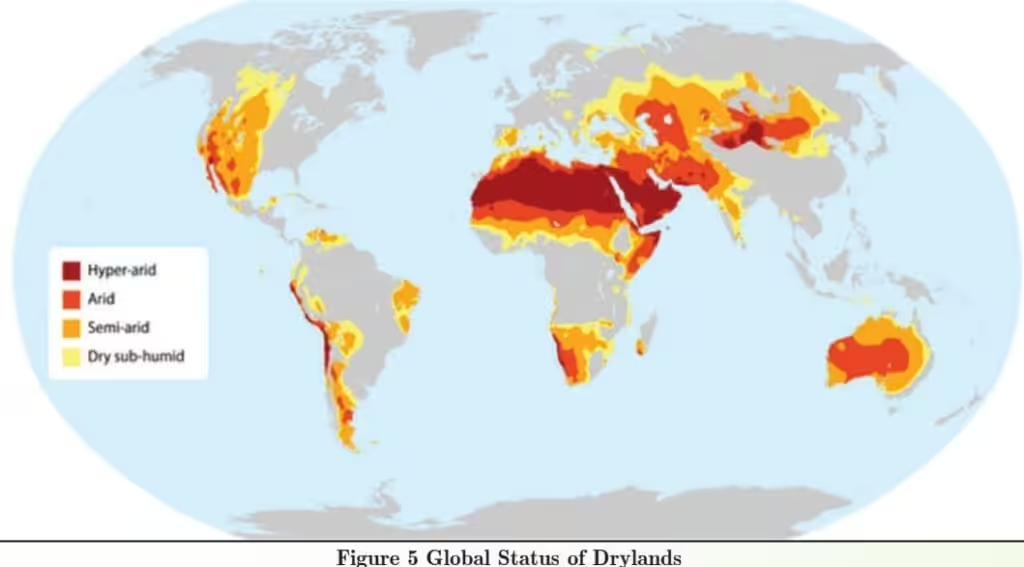
Desertification refers to land degradation in arid, semi-arid and dry sub-humid areas resulting from various factors, including climatic variations and human activities.
Data:
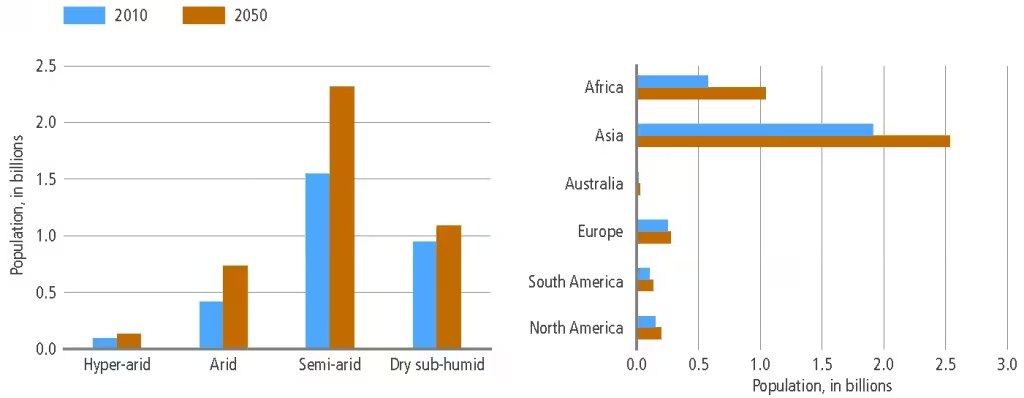
Currently, an estimated 2 billion people live on drylands vulnerable to this phenomenon and scientists predict that the effects of desertification could lead to the displacement of around 50 million people by 2030 as a result of the soaring temperatures, large-scale deforestation, and ecosystem damage in many parts of the world.
At present, Drylands cover about 46.2% (±0.8%) of the global land area and are home to 3 billion people (IPCC 2019). Approximately 70% of dryland areas are located in Africa and Asia. The highest number of people live in the drylands of South Asia, followed by Sub-Saharan Africa and Latin America. Over 70 percent of people living in drylands derive their livelihoods from natural resources (FAO). The status and extent of desertification globally and regionally still show substantial variations..
ISRO Desertification Data:
India is the second most populated country in the world with 1.21 billion population and area wise is the seventh largest covering 328.72 million ha (Census of India, 2011).
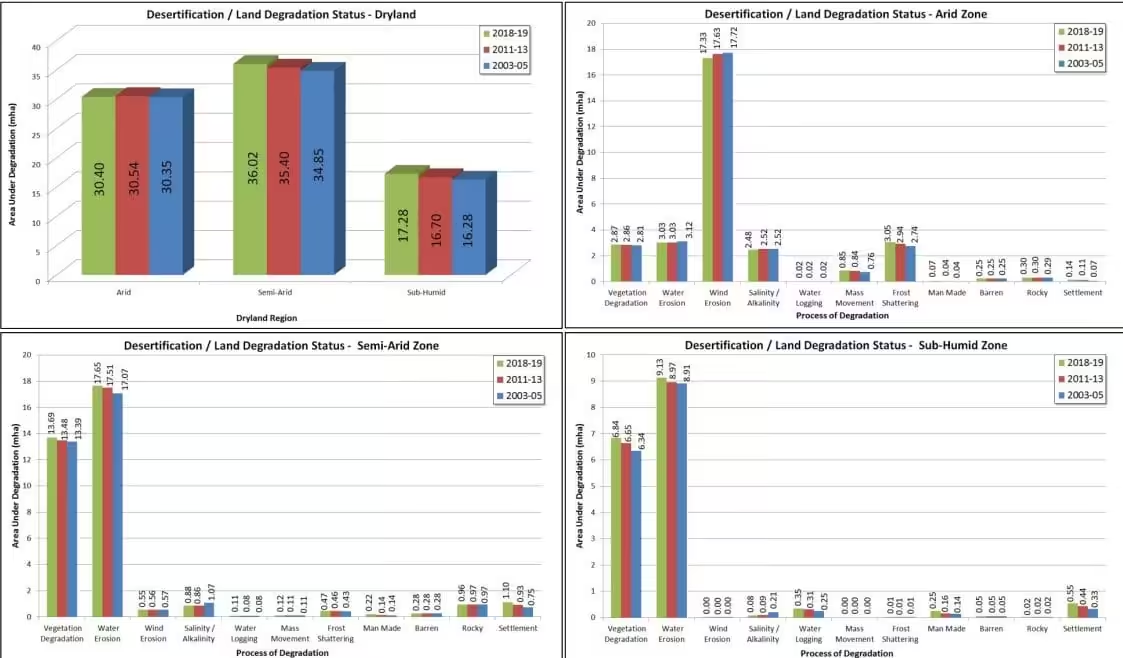
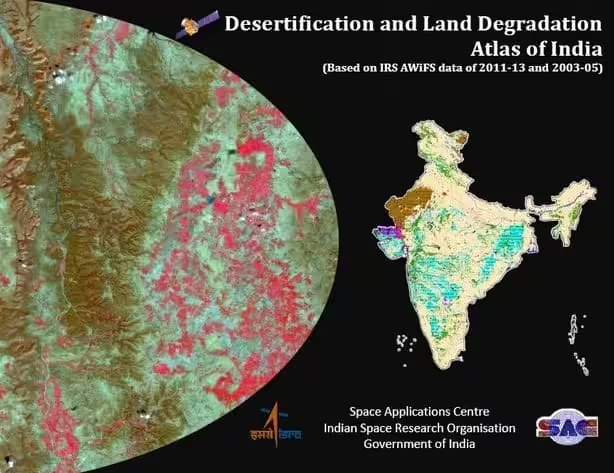
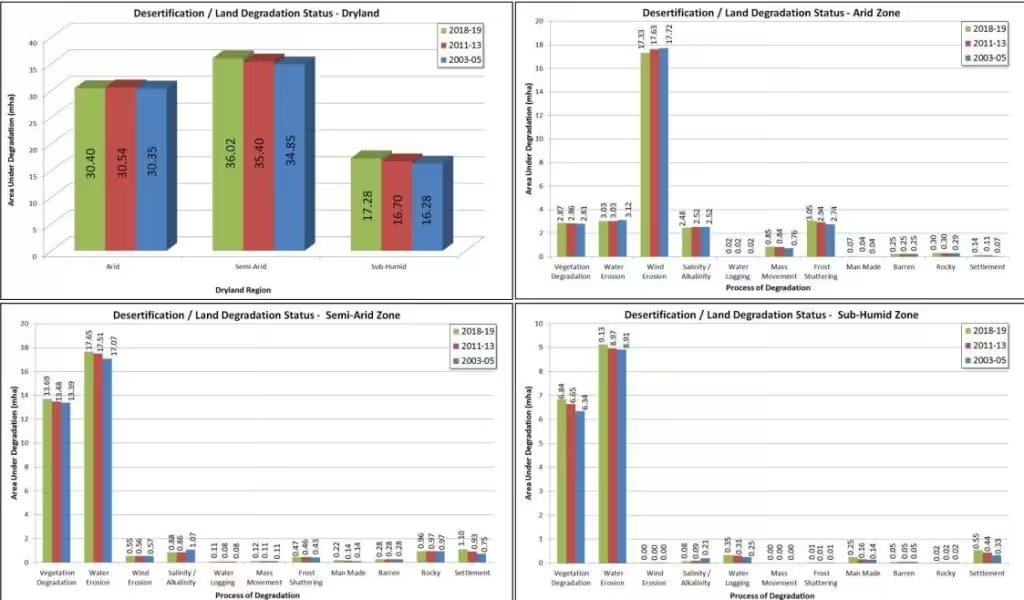
The statistical summary and analysis reveals that 97.85 million ha, 29.77% of the total Geographic Area (TGA) of the country is undergoing land degradation during timeframe 2018-19.
The area undergoing DLD during timeframe 2011-13 and 2003-05 is observed as 96.40 million ha (29.32% of the TGA) and 94.53 million ha (28.76% of the TGA) respectively.
A cumulative increase of 1.45 million ha area (0.44% of the TGA) undergoing DLD is observed from timeframe 2011-13 to 2018-19. Whereas, from timeframe 2003-05 to 2011-13, a cumulative increase of 1.87 million ha area (0.57% of the TGA) is observed.
The most significant process of desertification/ land degradation in the country is Water Erosion (11.01% in 2018-19, 10.98% in 2011-13 and 10.83% in 2003-05), followed by Vegetation Degradation (9.15% in 2018-19, 8.91% in 2011-13 and 8.60% in 2003-05) and Wind Erosion (5.46% in 2018-19, 5.55 % in 2011-13 and 5.58 % in 2003-05).
Cause of Desertification:
Deforestation, causes of which go beyond tree felling, which increases the risk of fires, among others.
Poor agricultural practices, from not rotating crops to unprotected soils or chemical fertiliser and pesticide use, etc.
Loss of forest cover, with a corresponding shortage of wood resources.
The decrease in drinking water reserves due to the loss of aquifers.
According to the United Nations Convention to Combat Desertification, the lives of 250 million people are already affected by desertification and up to 135 million could be displaced (climate migrations) by desertification by 2045, making it one of the most serious environmental problems facing humanity.
GOI Steps to combat desertification:
National Action Plan to Combat Desertification, 2022:
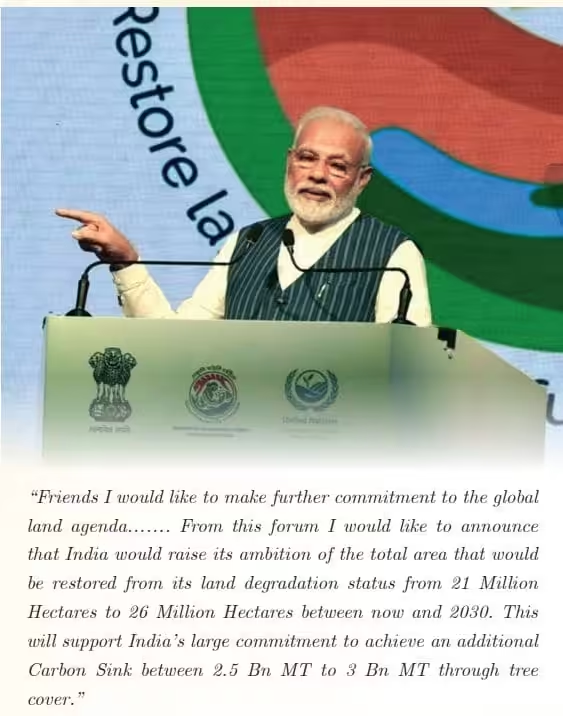
Restoration of 26 million hectares of degraded land by 2030
Generating an additional carbon sink of 2.5 – 3 billion tonnes of CO2 equivalent by 2030 through additional forest and tree cover.
An estimation of the Forest Survey of India establishes that the largest potential of creating additional carbon sinks lies in the restoration of open forest areas included degraded lands, afforestation on wastelands and agroforestry.
These activities of eco-restoration through forestry interventions can contribute up to 60% of the total carbon sink that may be achieved by 2030.
Established in 1994, the United Nations Convention to Combat Desertification (UNCCD) is the sole legally binding international agreement linking environment and development to sustainable land management. It is the driving force behind Sustainable Development Goal 15 and Land Degradation Neutrality (LDN).
As the U.S. under President Trump disrupts long-standing global alignments, Europe is presenting itself as a stable and reliable partner for India. In this light, the EU has released a strategic agenda outlining its vision for ties with India, anchored on five key pillars and a commitment to mutual benefit.
UPSC Relevance:
Bilateral relations of India.
PYQ:
Q) The expansion and strengthening of NATO and a stronger US-Europe strategic partnership works well for India. What is your opinion about this statement? Give reasons and examples to support your answer. (UPSC-2023)
Five Pillars of the New India–EU Strategic Agenda:
The India–EU Strategic Agenda is built on five core pillars:
Prosperity and Sustainability – covering trade, investment, resilient supply chains, and sustainable development.
Technology and Innovation – focusing on critical technologies, digital infrastructure, and joint research.
Security and Defence – emphasising new agreements, regional stability, and countering traditional and hybrid threats.
Connectivity and Global Issues – strengthening cooperation in third countries and global governance.
Enablers Across Pillars – promoting skills mobility, mutual understanding, business linkages, research collaboration, and stronger institutional frameworks for EU–India relations.
Economic and Trade Ties:
The EU is India’s largest trading partner, while India is the EU’s biggest partner in the Global South.
In 2024, bilateral trade in goods reached €120 billion — a 90% rise over the past decade — with services adding another €60 billion.
Nearly 6,000 European companies operate in India, directly employing 3 million people and indirectly supporting millions more.
Despite these gains, India accounts for less than 2.5% of the EU’s trade, and Indian investment in the EU stands at only €10 billion.
To expand ties, both sides are pushing to finalise a Free Trade Agreement (FTA) by 2025 to cut tariff and non-tariff barriers.
They are also negotiating an Investment Protection Agreement, a bilateral macroeconomic dialogue, a Geographical Indications pact, and a comprehensive air transport agreement, all aimed at deepening economic cooperation.
Emerging Technologies:
India and the EU are leveraging complementary strengths to drive innovation.
The EU offers world-class research, regulation, and green-digital expertise, while India contributes a skilled workforce, vast datasets, a thriving startup ecosystem, and frugal innovation.
Planned initiatives include EU-India Innovation Hubs for key technologies and an EU-India Startup Partnership with the European Innovation Council and Start-up India.
Cooperation will focus on AI, particularly large language models, multilingual datasets, and AI applications in healthcare, agriculture, and climate action.
Both sides are working on safeguards to prevent unauthorised transfer or misuse of sensitive technologies, aligning with global stability and democratic values.
Additionally, the Euratom-India agreement will boost collaboration in peaceful nuclear energy, including reactor safety, waste management, nuclear security, and fusion research.
Connectivity and Strategic Corridors:
The EU’s Global Gateway initiative (€300 billion) and India’s MAHASAGAR programme provide strong platforms for joint connectivity efforts.
Their 2021 Connectivity Partnership has laid the foundation for cooperation in energy, transport, and digital infrastructure.
A flagship project is the India-Middle East-Europe Economic Corridor (IMEC), which integrates maritime, rail, digital, energy, and clean hydrogen networks to revive historic Eurasian trade routes.
Within this, the EU-Africa-India Digital Corridor is advancing through the 11,700 km Blue Raman submarine cable system, linking Europe and India via the Mediterranean, Middle East, and East Africa.
This will ensure ultrafast, secure, and resilient data connectivity.
Additionally, India and the EU are developing Green Shipping Corridors to promote sustainable maritime trade and reduce reliance on carbon-intensive transport routes, further boosting commercial and strategic opportunities.
Security and Defence Cooperation:
India and the EU are strengthening ties through the Strategic Dialogue on Foreign and Security Policy (2025), with thematic discussions on maritime security, cybersecurity, counterterrorism, and non-proliferation.
A formal EU-India Security and Defence Partnership is under consideration.
Both sides are negotiating a Security of Information Agreement to enable classified information sharing.
Cooperation will also expand in the Indo-Pacific, with proposed arrangements between the EU Naval Force and Indian Navy to boost coordination in the western Indian Ocean.
Joint efforts include combating terrorism, terror financing, online propaganda, drug trafficking, and risks from emerging technologies.
On the industrial front, increased collaboration between Indian and EU defence industries aims to strengthen supply chain security, boost innovation, and expand production capabilities.
Plans include establishing an EU-India Defence Industry Forum to connect businesses, share best practices, and explore cooperation opportunities.
People-to-People Ties:
India and the EU are deepening social and cultural links.
In 2023, 825,000 Indians lived in the EU, forming the largest group receiving Blue Cards and intra-corporate transfer permits.
Travel has become easier, with nearly one million Schengen visas issued in 2024, many as multiple-entry.
Educational exchanges are expanding through initiatives like the Union of Skills and Erasmus, making Europe more attractive for Indian students amid U.S. restrictions under Trump


Deforestation, causes of which go beyond tree felling, which increases the risk of fires, among others.
 Poor agricultural practices, from not rotating crops to unprotected soils or chemical fertiliser and pesticide use, etc.
Overexploitation of natural resources as a consequence, for example, of irresponsible management of vegetation or water.
Bad livestock practices, such as overgrazing, which severely erode the land and prevent the regeneration of vegetation.
Loss of biodiversity by worsening the living conditions of many species.
Food insecurity due to crop failure or reduced yields.
 The loss of vegetation cover and therefore of food for livestock and humans.
 Increased risk of zoonotic diseases, such as COVID-19.
The decrease in drinking water reserves due to the loss of aquifers.