3 current affairs published on Friday, 26 September 2025
26 September 2025 Current Affairs for UPSC — every
Why-in-News article AnantamIAS published on Friday, 26 September 2025, broken down with
Why in News?, the exact GS paper it feeds, sub-topic mapping, MCQ-ready facts and a
UPSC-style practice question. 3 articles in total, covering Polity, Economy, Environment, S&T, IR, Geography, History, Society and Internal
Security — the same Why-in-News + GS-paper-mapping + practice-question format the Compass uses across
every daily digest on the site.
Daily current affairs for UPSC is where new material enters your prep stream. Read this
26 September 2025 digest end-to-end in 25–35 minutes, attempt the practice question
at the foot of each article (it's MCQ for some, 10/15-marker for others), then bookmark the entries
that fall inside your active revision window. Everything stays cross-linked: tap any subject pill to jump
to that subject's hub, or use the table of contents above to skip straight to a specific story.
Why we publish daily current affairs separately from the monthly compilation: daily is learning,
monthly is revision. Use the daily page to add fresh material to your notes the day it breaks;
come back to the September 2025 compilation 60 days before Prelims when the
noise has settled and only the lasting takeaway is worth re-reading.
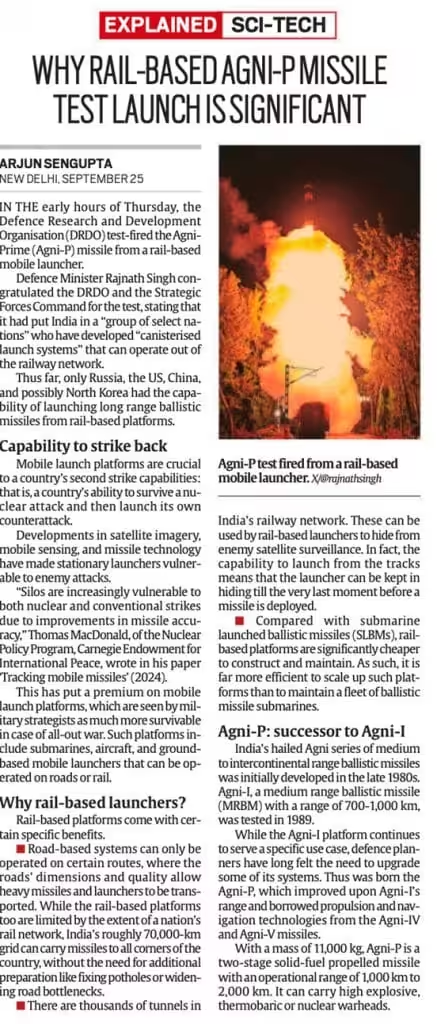
India has become the latest country to conduct rail-based missile launching, only after Russia, USA, China and possibly North Korea.
UPSC Relevance:
Important defense related developments of India.
PYQ:
Q. Consider the following statements 1. Ballistic missiles are jet-propelled at subsonic speeds throughout their fights, while cruise missiles are rocket-powered only in the initial phase of fight. 2. Agni-V is a medium-range supersonic cruise missile, while BrahMos is a solid-fuelled intercontinental ballistic missile. Which of the statements given above is/are correct?
[A] 1 only
[B] 2 only
[C] Both 1 and 2
[D] Neither 1 nor 2
About Agni-P missile:
Agni Prime is a nuclear-capable new-generation advanced variant of the Agni class of missiles. It is a two-stage solid- fuel canister missilewith a maximum range of 1,000 to 2,000 km.
It is lighter than all the earlier Agni series of missiles.
It is equipped with the Multiple Independently Targetable Re-entry Vehicle (MIRV) technology.
Advantage of rail-based launchers:
India’s roughly 70,000 km railway grid can carry missiles to all corners of the country, without the need for additional preparation like fixing potholes or widening road bottlenecks.
The Presence of thousands of tunnels in India’s railway network can be used by rail-based launchers to hide from enemy satellite surveillance.
Rail-based platforms are significantly cheaper to construct and maintain as compared to submarine launched ballistic missiles.
Agni-P, which combines Agni-I’s range with propulsion and navigation technologies borrowed from the Agni-IV and Agni-V missiles.
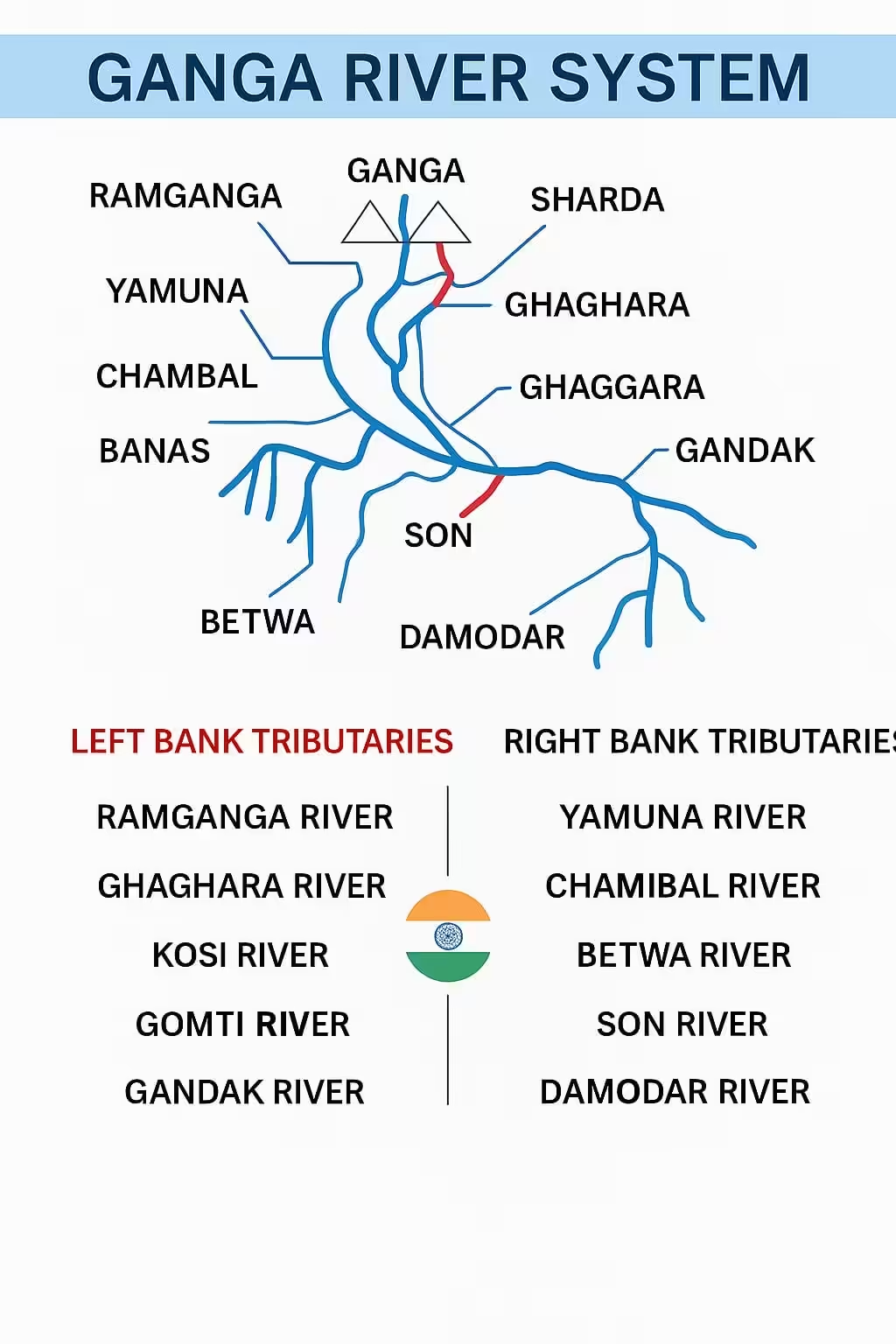
Report on Ganga Pollution: The Central Pollution Control Board (CPCB) has submitted a report to the National Green Tribunal (NGT) highlighting that over 50% of the Grossly Polluting Industries (GPIs) in Uttar Pradesh are violating government-stipulated pollution norms.
UPSC Relevance:
Conservation, environmental pollution and degradation.
UPSC PYQ:
Q. Discuss the Namami Gange and National Mission for Clean Ganga (NMCG) programmes and causes of mixed results from the previous schemes. What quantum leaps can help preserve the river Ganga better than incremental inputs? (2015).
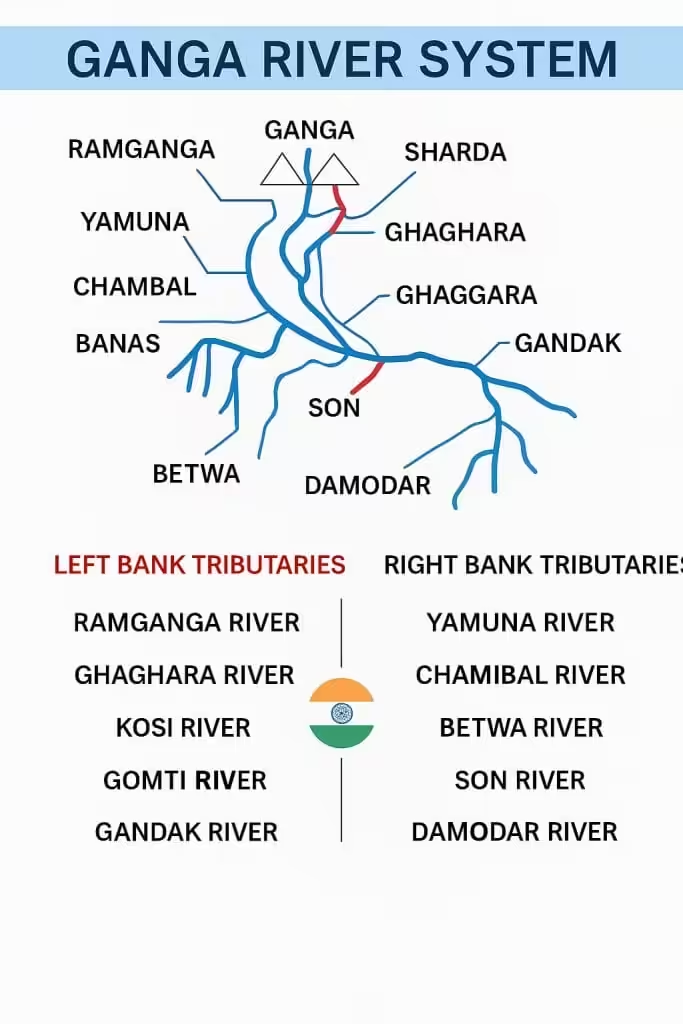
About Ganga River:
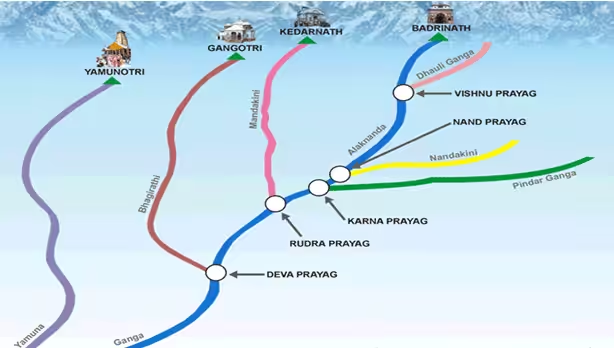
Five Confluences (Prayags) and Tributaries
Vishnu Prayag
Confluence: Alaknanda + Dhauliganga
Nand Prayag
Confluence: Alaknanda + Nandakini
Karna Prayag
Confluence: Alaknanda + Pindar Ganga
Rudra Prayag
Confluence: Alaknanda + Mandakini
Dev Prayag
Confluence: Alaknanda + Bhagirathi
Ganga River Pollution:
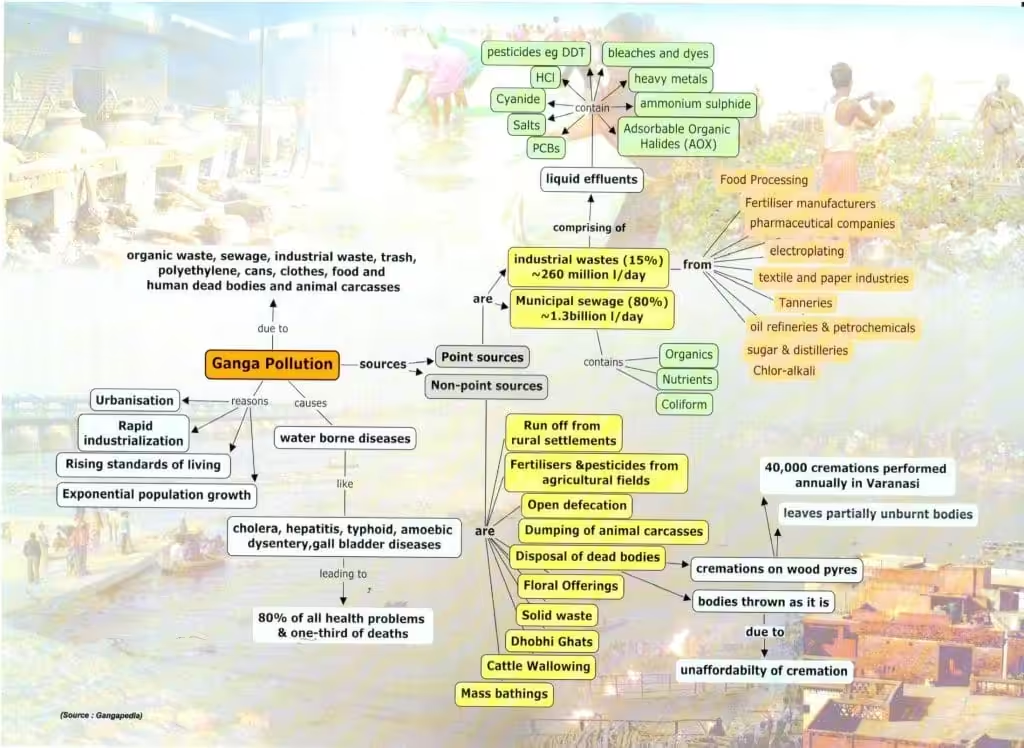
Rapidly increasing population, rising standards of living and exponential growth of industrialisation and urbanisation have exposed water resources, in general, and rivers, in particular, to various forms of degradation. Major point sources of pollution in river Ganga are discharge of untreated/partially treated sewage from- -urban- centres- discharge from open drains carries sewage, -industrial wastewater, returned storm water discharge from major tributaries discharge of untreated/partially treated/treated wastewater from industrial units .
In the Ganga basin approximately 12,000 million litres per day (mld) sewage is generated, for which presently there is a treatment capacity of only around 4,000 mld.
The industrial pockets in the catchments of Ramganga and Kali rivers and in Kanpur city are significant sources of industrial pollution. The major contributors are tanneries in Kanpur, distilleries, paper mills and sugar mills in the Kosi, Ramganga and Kali river catchments.
Water Quality with time:
Major Sources:
Industrial effluents
Untreated sewage
Agricultural runoff
Govt. Initiatives:
The first major initiative, the Ganga Action Plan (GAP), launched in 1985, focused primarily on building sewage treatment plants (STPs) in major cities.
The National Ganga River Basin Authority (NGRBA), established in 2009, adopted a more comprehensive approach, incorporating basin-level planning and stakeholder involvement.
Namami Gange program:
In 2014, the government launched its flagship program, Namami Gange. This integrated conservation mission expanded beyond sewage treatment to include industrial pollution abatement, riverfront development, biodiversity conservation, and public awareness components.
Sewage infrastructure expansion: Construction and rehabilitation of STPs to increase treatment capacity to 3,293 million liters per day (MLD), covering major urban centers.
Industrial pollution control: Implementing zero liquid discharge requirements for industries and relocating tanneries from sensitive zones.
River surface cleaning: Deploying trash skimmers and developing systems to intercept floating waste, particularly after religious events.
Biodiversity conservation: Establishing conservation areas for endangered species and restoring riparian vegetation to enhance ecosystem services.
Public awareness and engagement: Mobilizing communities, religious leaders, and educational institutions to foster a sense of ownership and responsibility.
In a judgment that referred to Ganga river as “Ganga Maa” and deliberated on the nature of God, the Uttarakhand High Court has declared Ganga and Yamuna and their tributaries “juristic/legal persons/living entities having the status of a legal person”.
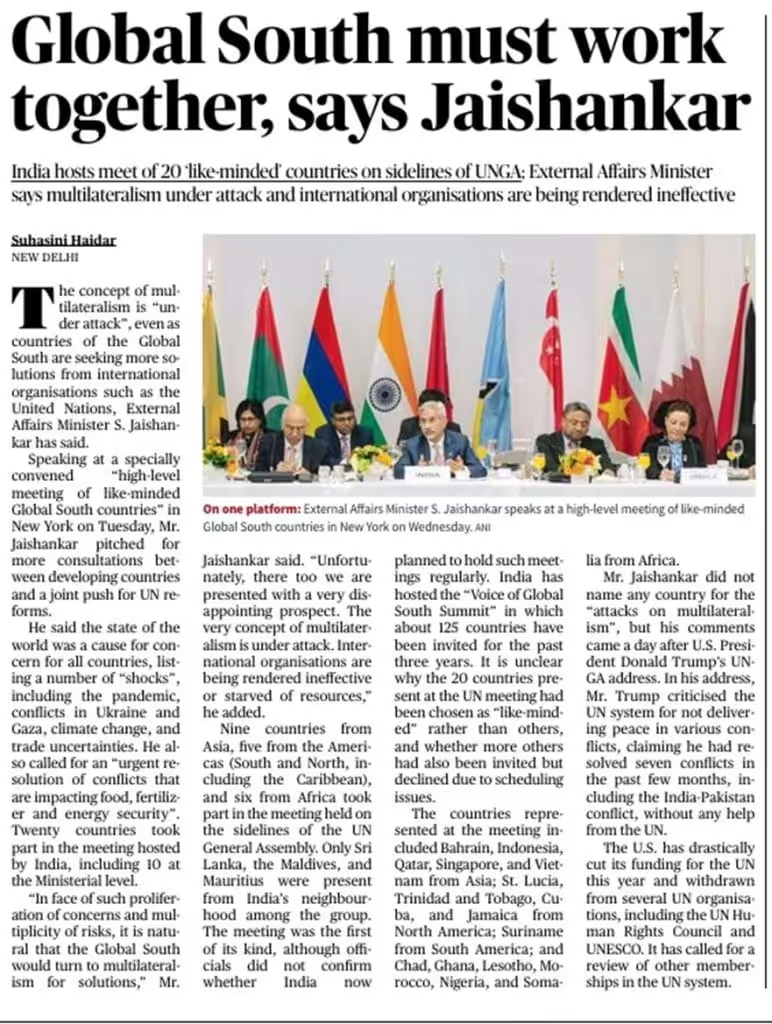
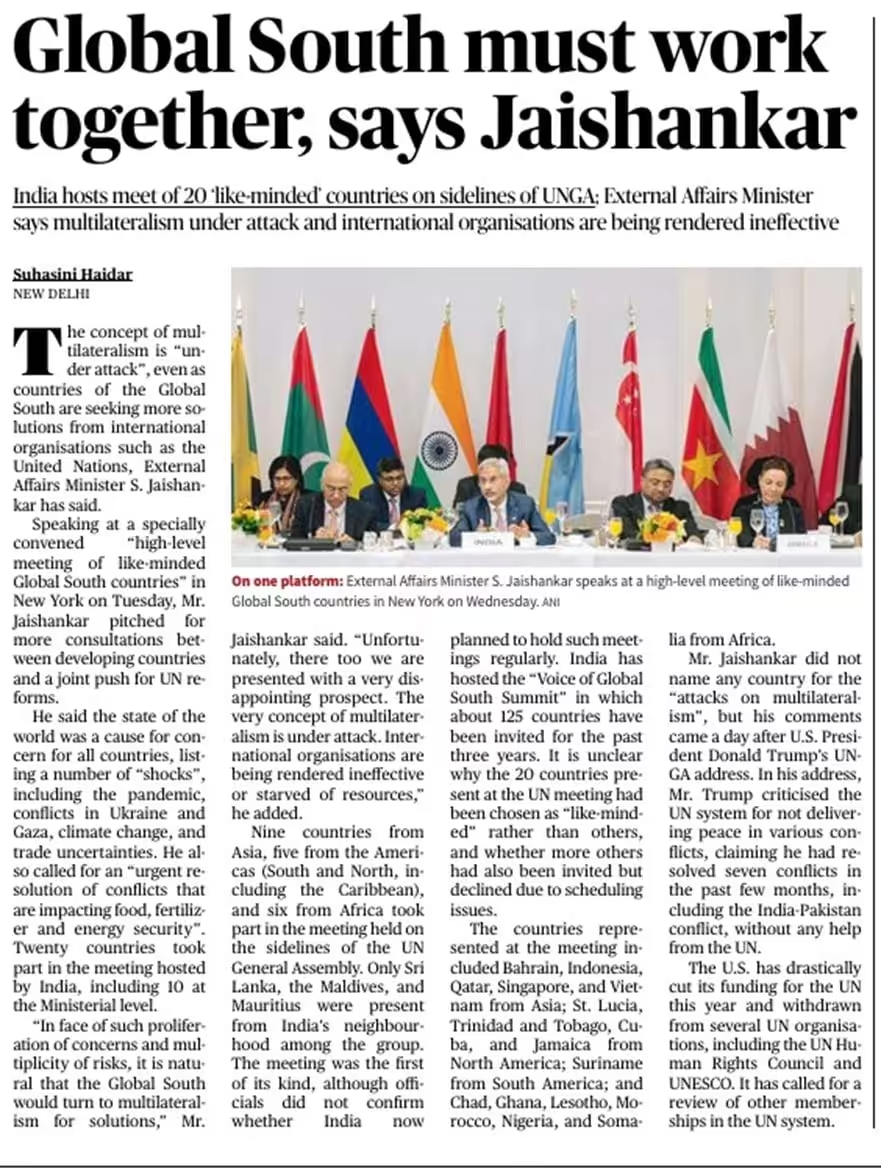
India’s foreign minister has called out the double standards of developed nations at the recent G20 Foreign Minister’s meeting.
UPSC Relevance:
Important Global Institutions.
PYQ:
In which one of the following groups are all the four countries members of G20?
(a) Argentina, Mexico, South Africa and Turkey
(b) Australia, Canada, Malaysia and New Zealand
(c) Brazil, Iran, Saudi Arabia and Vietnam
(d) Indonesia, Japan, Singapore and South Korea
About G20
Group of Twenty (G20) is a forum for international economic cooperation consisting of 19 countries, the EU, and the African Union.
Evolution:
G20 was founded in 1999 after the Asian financial crisis.
It was started as a forum for Finance Ministers and Central Bank Governors to discuss global economic and financial issues.
It was upgraded to the level of Heads of States in the wake of the 2007 global financial crisis.
In 2009, it was designated the “premier forum for international economic cooperation”.
It initially focused on broad macroeconomic issues but now expanded its agenda to include sustainable development, health, energy, environment, climate change, and anti-corruption.
Member Countries:
G20 Presidency
G20 Presidency is responsible for bringing together G20 agenda in consultation with other members.
India holds the Presidency of the G20 from 1 December 2022 to 30 November 2023.
As the G-20 presidency, India sets the agenda for the year, identifies the themes and focus areas, conducts discussions, and works out outcome documents.
Troika:
The Troika supports the Presidency. It consists of the previous, current, and upcoming presidency.
During India’s Presidency, the Troika comprised of Indonesia, India, and Brazil.
G20 Sherpa
Sherpas are special envoys of G20 leaders.
They are representatives of member countries and are appointed directly by the Head of Government. Amitabh Kant is India’s 2023 G20 Sherpa.
Working of G20
G20 has no fixed headquarters or a permanent Secretariat. The secretariat moves by rotation between the countries hosting the Presidency of the grouping each year.
The G20 Presidency leads the G20 agenda for one year and hosts the Summit.
The G20 consists of two parallel tracks:
Finance Track is led by Finance Ministers and Central Bank Governors of the member countries.
Sherpa Track is led by the Sherpas of member countries.
There are Working Groups in which representatives from the relevant ministries of the members, invited, and various international organisations participate.
These working groups meet regularly throughout the term of each Presidency.
There are Engagement Groups that bring together civil societies, parliamentarians, think tanks, women, youth, labour, businesses, and researchers of the G20 countries.
G20 Summits:
The G20 Summit is held annually under the leadership of a rotating Presidency.
The first G20 Summit was held in 2008 in Washington, DC.
The US is the only country that hosted the summit twice in 2008 and 2009.
18th G20 Summit 2023 (Hosted by India)
The 2023 G20 summit was India’s first G20 summit as a host country.
India invited Bangladesh (India did not invite any other neighbour), Egypt, Mauritius, Netherlands, Nigeria, Oman, Singapore, Spain, and UAE as Guests for the 2023 G20 summit held in Kashmir.
Challenges Confronting the G20:
Representational Inequity: Despite the inclusion of the African Union, smaller and emerging nations remain underrepresented, raising questions about equitable decision-making in the proposed “G21” framework.
Geopolitical Rivalries: Tensions between major powers, such as the US-China competition & the Russia-Ukraine conflict, often derail discussions, making consensus-building on critical issues challenging.
Divergent Economic Priorities: Sharp divides between developed nations focused on sustainability and developing countries prioritising growth impede agreements on climate financing and resource-sharing mechanisms.
Structural Weaknesses: The non-binding nature of G20 decisions reduces their enforceability, weakening the forum’s ability to address pressing global challenges effectively.
Competition from Other Platforms: Rising influence of groups like BRICS and SCO challenges the G20’s centrality in global governance, with overlapping agendas creating further fragmentation.
Way Forward:
Global Challenges: Strengthen partnerships with international organizations to address food insecurity, and energy crises, and promote sustainable agricultural practices and clean energy solutions.
Inclusive Climate Action: Develop inclusive frameworks that balance economic growth with climate priorities, ensuring equitable access to climate finance for all nations.
Geopolitical Engagement: Establish specialised working groups to address persistent geopolitical conflicts like the Russia-Ukraine war, fostering diplomacy and conflict resolution.
Accountability Mechanisms: Implement robust mechanisms to ensure accountability on climate finance, debt relief, and the achievement of sustainable development goals.
Representation of Global South: Expand G20 membership to include more countries from the Global South and increase their advisory roles to amplify their voices in global decision-making.
Institutional Strengthening: Set up a permanent G20 secretariat to ensure greater policy continuity, enhanced coordination, and more effective execution of global initiatives.