Why in News?
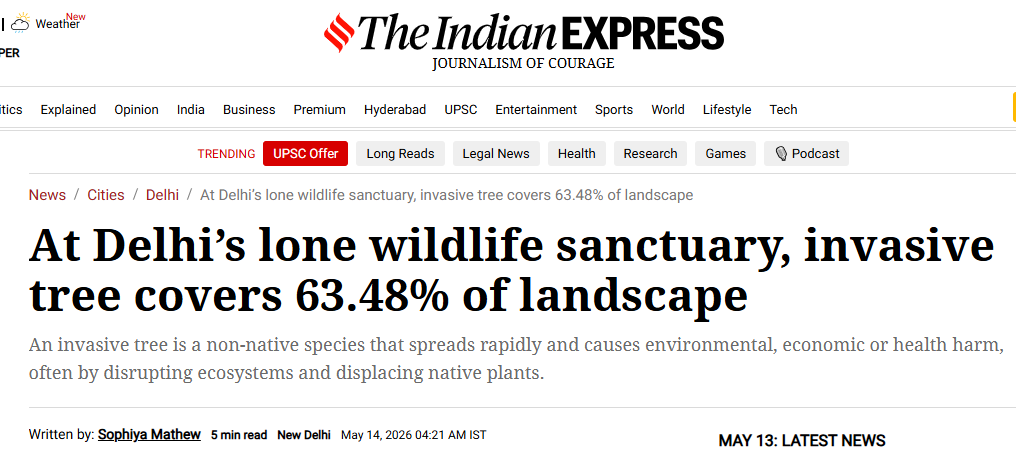
A 10-year management plan prepared by the Wildlife Institute of India (WII) for the Asola Bhatti Wildlife Sanctuary in Delhi has highlighted severe ecological degradation caused by invasive species, urban encroachment and unsustainable wildlife management practices.
The report found that the invasive tree species Prosopis juliflora covers nearly 63.48% of the sanctuary landscape, significantly affecting native biodiversity and ecological recovery. The plan also flagged:
- Habitat fragmentation
- Urban encroachment
- Stray cattle pressure
- Artificial feeding of rhesus macaques
- Pollution and waste dumping
- Weak ecological monitoring
The findings are important in the context of:
- Aravalli ecosystem conservation
- Urban ecology
- Biodiversity management
- Human-wildlife coexistence
UPSC Relevance
Prelims Relevance
- Invasive alien species, Aravalli ecosystem, Wildlife sanctuaries, Prosopis juliflora and Lantana camara, Biodiversity conservation, Human-wildlife conflict
Mains Relevance
GS Paper 3
- Conservation and environmental pollution, Biodiversity and invasive species, Human-wildlife conflict, Urban environmental governance, Climate resilience and ecosystem restoration
GS Paper 1
- Urbanisation and environmental challenges
Essay
- Ecological restoration and sustainable development
- Urbanisation versus conservation
- Human-nature coexistence
Background and Context
Asola Bhatti Wildlife Sanctuary
Asola Bhatti Wildlife Sanctuary is Delhi’s only notified wildlife sanctuary and forms part of the northern extension of the Aravalli hill system.
The sanctuary:
- Lies along the Delhi-Haryana border
- Covers ecologically fragile tropical thorn forest habitat
- Acts as a green buffer for the National Capital Region (NCR)
- Supports biodiversity including nilgai, jackals, reptiles, birds and smaller mammals
The sanctuary also performs critical ecological functions:
- Groundwater recharge
- Dust and pollution control
- Urban heat mitigation
- Carbon sequestration
Its ecological significance has increased due to rapid urbanisation around Delhi.
The Aravalli Ecosystem
Aravalli Range is one of the world’s oldest fold mountain systems.
The Aravallis:
- Extend from Gujarat to Delhi
- Act as a natural barrier against desertification from the Thar Desert
- Influence regional climate and rainfall
- Support dry deciduous and thorn forest ecosystems
However, the range faces severe threats from:
- Mining
- Urban expansion
- Habitat fragmentation
- Deforestation
- Invasive species
The degradation of Asola Bhatti reflects broader ecological stress affecting the Aravallis.
Understanding Invasive Alien Species
Definition
Invasive alien species are:
- Non-native organisms introduced outside their natural range
- Species that spread aggressively
- Organisms that cause ecological, economic or health-related harm
Unlike naturalised species, invasive species disrupt ecosystems by:
- Outcompeting native species
- Altering habitat structure
- Reducing biodiversity
Major Invasive Species in India
Some important invasive species include:
- Prosopis juliflora
- Lantana camara
- Water hyacinth
- Parthenium weed
The India State of Forest Report 2023 identified Prosopis juliflora and Lantana camara among major invasive species affecting Delhi’s forests.
Prosopis Juliflora: Ecological Impacts
Introduction and Spread
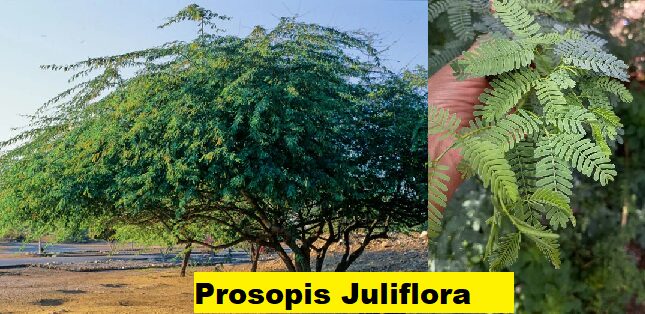
Prosopis juliflora, locally called “Vilayati Kikar”, is native to Central and South America.
It was introduced in India during the colonial period for:
- Afforestation
- Fuelwood supply
- Desertification control
Over time, it spread rapidly across dry and semi-arid landscapes.
Why It Became Invasive
The species possesses several characteristics that make it invasive:
- Rapid growth
- Deep root systems
- High drought resistance
- Aggressive seed dispersal
- Ability to survive poor soil conditions
It often forms dense monocultures that suppress native vegetation.
Ecological Consequences
Suppression of Native Flora
Dense Prosopis growth blocks sunlight and reduces space for native species such as:
- Dhauk (Anogeissus pendula), Palash, Babul
This reduces biodiversity and weakens ecological resilience.
Alteration of Habitat Structure
The species changes:
- Soil composition
- Water availability
- Fire patterns
- Habitat suitability for wildlife
This affects food chains and ecosystem functioning.
Impact on Groundwater and Soil
Research indicates that invasive species can:
- Alter groundwater recharge
- Reduce moisture availability
- Influence local microclimate
The Asola Bhatti plan specifically notes impacts on:
- Groundwater recharge
- Weather buffering
- Desertification control
Ecological Complexity
Despite being invasive, Prosopis juliflora also provides:
- Soil stabilisation
- Shade
- Sub-optimal habitat for some wildlife
Therefore, abrupt removal may create ecological instability.
This is why the management plan recommends:
- Phased removal
- Scientific restoration
- Continuous ecological monitoring
Lantana Camara and Forest Degradation
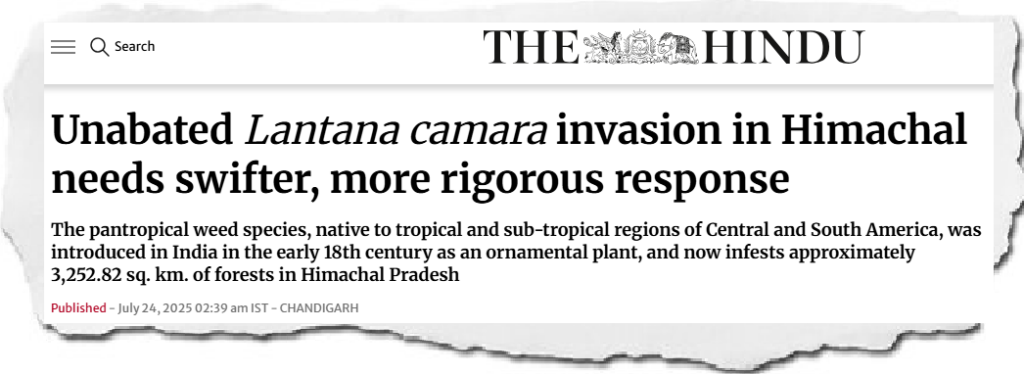
Lantana camara is another major invasive species affecting Indian forests.
It:
- Prevents regeneration of native plants
- Increases forest fire risks
- Reduces grazing quality
- Alters wildlife movement patterns
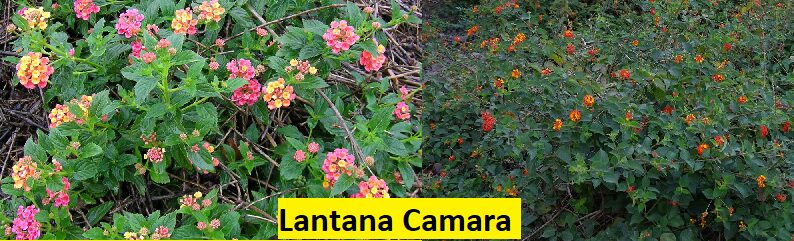
Lantana invasion is a major issue across:
- Western Ghats
- Central Indian forests
- Himalayan foothills
- Dry forests of North India
Human-Wildlife Conflict and Macaque Management
Rhesus Macaque Relocation
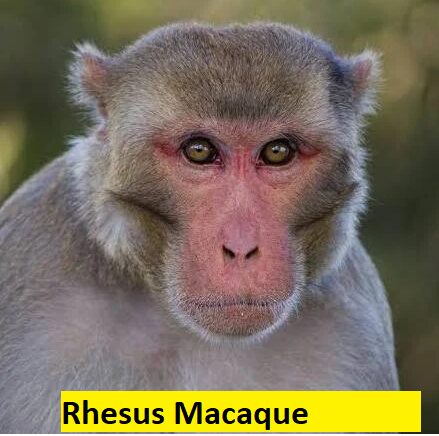
The sanctuary has received nearly 20,000 rhesus macaques relocated from urban areas over the years.
This has created ecological imbalance because:
- The sanctuary’s natural carrying capacity is limited.
- Food availability is inadequate for such large populations.
Artificial Feeding Problem
Artificial feeding at designated points has:
- Altered natural foraging behaviour
- Increased population growth
- Encouraged dependence on humans
- Increased human-wildlife conflict
The management plan describes this model as:
- Ecologically unsustainable
- Financially expensive
Carrying Capacity Concept
Carrying capacity refers to:
The maximum population size an ecosystem can sustainably support without ecological degradation.
Exceeding carrying capacity results in:
- Resource depletion
- Habitat degradation
- Competition among species
Suggested Measures
The plan recommends:
- Scientific population assessment
- Habitat enrichment
- Native fruit-bearing plantations
- Gradual withdrawal of artificial feeding
- Humane sterilisation programmes
Urbanisation and Encroachment Pressures
Settlement Expansion
Areas such as:
- Sangam Vihar
- Sanjay Colony
- Bhatti village
have expanded near the sanctuary.
This has caused:
- Habitat fragmentation
- Waste dumping
- Increased human interference
Habitat Fragmentation
Fragmentation breaks continuous habitats into smaller isolated patches.
Its consequences include:
- Reduced wildlife movement
- Declining genetic diversity
- Increased edge effects
- Higher human-animal interactions
Peri-Urban Ecological Stress
Expansion around:
- Devli
- Tughlaqabad
has intensified ecological pressures.
Urban sprawl around protected areas is increasingly becoming a major environmental challenge in India.
Stray Cattle and Ecological Pressure
The report identified stray cattle as major ecological competitors.
Camera-trap studies found:
- Stray cattle formed around 15.1% of mammal detections
Stray cattle:
- Compete with native herbivores
- Reduce water availability
- Disturb natural vegetation
The issue reflects weak urban livestock governance and poor waste management.
Waste Dumping and Pollution
The sanctuary faces:
- Sewage inflow
- Greywater contamination
- Garbage dumping
- Fire risks
Abandoned mining pits are reportedly used for:
- Waste disposal
- Sewage accumulation
This contributes to:
- Soil contamination
- Water pollution
- Habitat degradation
Weak Institutional and Administrative Capacity
The plan identified several governance deficiencies:
- Lack of standard operating procedures (SOPs)
- Weak monitoring systems
- Poor inter-agency coordination
- Inadequate staff training
- Limited scientific management
These challenges are common across many protected areas in India.
Legal and Policy Framework
Wildlife Protection Act, 1972
Provides legal protection to:
- Wildlife habitats
- Protected areas
- Species conservation
Wildlife sanctuaries are governed under this law.
National Biodiversity Action Plan
India’s biodiversity framework recognises:
- Invasive alien species
- Habitat restoration
- Ecosystem-based conservation
as major priorities.
Convention on Biological Diversity (CBD)
India is a party to the Convention on Biological Diversity.
The CBD urges countries to:
- Prevent introduction of invasive species
- Control or eradicate harmful invasive organisms
- Restore degraded ecosystems
Bonn Challenge and Land Restoration
India has committed to restoring degraded landscapes under:
- Bonn Challenge
- UN Decade on Ecosystem Restoration
Urban ecological restoration is increasingly important under these commitments.
Ecological Restoration and Native Species
The management plan recommends:
- Native vegetation restoration
- Soil-binding plants
- Nitrogen-fixing species
Suggested native species include:
- Dhauk
- Palash
- Salai
- Vetiver
- Babul
- Siris
Native species restoration improves:
- Biodiversity
- Water conservation
- Habitat resilience
Climate Change and Urban Ecology
Urban green spaces such as Asola Bhatti are increasingly important because they:
- Reduce urban heat island effects
- Improve air quality
- Enhance climate resilience
- Support ecological connectivity
Climate change may further intensify:
- Water stress
- Forest fires
- Habitat degradation
Therefore, protecting urban ecological systems has become a developmental necessity.
Challenges in Conservation
Balancing Restoration and Existing Ecological Dependence
Sudden removal of invasive species may:
- Destabilise soil
- Affect species dependent on existing cover
Restoration must therefore remain gradual and scientifically guided.
Governance Fragmentation
Multiple agencies operate in the Delhi-NCR region, including:
- Forest departments
- Municipal bodies
- Development authorities
Weak coordination undermines effective conservation.
Urban Population Pressure
High population density around the sanctuary increases:
- Resource pressure
- Waste generation
- Illegal activities
Limited Public Awareness
Urban residents often underestimate the ecological importance of urban forests and wildlife habitats.
Way Forward
Scientific Invasive Species Management
Removal of invasive species should be:
- Phased
- Evidence-based
- Monitored scientifically
Ecological restoration should accompany removal programmes.
Native Habitat Restoration
Priority should be given to:
- Indigenous vegetation
- Ecological connectivity
- Water conservation landscapes
Native species improve ecosystem stability.
Strengthening Urban Ecological Governance
Coordination among:
- Forest departments
- Urban local bodies
- Pollution control agencies
- Planning authorities
must be institutionalised.
Regulating Urban Encroachment
Strict monitoring and enforcement are needed to prevent:
- Illegal settlements
- Waste dumping
- Habitat destruction
Urban planning should integrate ecological buffers around protected areas.
Sustainable Human-Wildlife Coexistence
Scientific wildlife management should include:
- Population assessments
- Carrying-capacity studies
- Humane sterilisation where necessary
- Reduction of artificial feeding
Community Participation
Local communities should be involved in:
- Conservation awareness
- Waste management
- Eco-restoration programmes
Participatory conservation improves long-term sustainability.
Expanding Ecological Research and Monitoring
Protected areas require:
- Long-term biodiversity monitoring
- GIS-based habitat assessment
- Climate vulnerability studies
- Wildlife health surveillance
Evidence-based management is essential for urban ecosystems.
Conclusion
The ecological crisis in Asola Bhatti Wildlife Sanctuary illustrates the growing pressures faced by urban protected areas in India. Invasive species, habitat fragmentation, unplanned urbanisation and weak governance are collectively undermining ecological resilience in the fragile Aravalli ecosystem.
The issue demonstrates that conservation challenges today are no longer confined to remote forests but increasingly linked to urban expansion, ecological mismanagement and climate vulnerability. Protecting urban ecological landscapes such as Asola Bhatti is therefore critical not only for biodiversity conservation but also for groundwater security, climate resilience and sustainable urban development.
A scientifically informed, community-oriented and ecosystem-based approach will be essential for restoring ecological balance and ensuring long-term coexistence between urban populations and fragile natural habitats.
UPSC Practice Questions
Prelims MCQ 1
With reference to invasive alien species in India, consider the following statements:
- Prosopis juliflora is native to India.
- Lantana camara is considered an invasive species affecting Indian forests.
- Invasive species can alter habitat structure and suppress native biodiversity.
How many of the above statements are correct?
(a) Only one
(b) Only two
(c) All three
(d) None
Answer: (b) Only two
Explanation:
- Statement 1 is incorrect because Prosopis juliflora is native to Central and South America.
- Statement 2 is correct because Lantana camara is a major invasive species in Indian forests.
- Statement 3 is correct because invasive species disrupt ecosystems and suppress native flora.
Prelims MCQ 2
The Asola Bhatti Wildlife Sanctuary is ecologically significant primarily because it:
(a) Protects mangrove ecosystems in Delhi
(b) Forms part of the Aravalli hill ecosystem
(c) Hosts alpine biodiversity
(d) Lies within the Gangetic floodplain ecosystem
Answer: (b) Forms part of the Aravalli hill ecosystem
Explanation:
Asola Bhatti Wildlife Sanctuary forms part of the northern extension of the Aravalli Range and serves as an important urban ecological buffer.
UPSC Mains Questions
Urbanisation and ecological degradation are increasingly intersecting in India’s protected landscapes. Analyse in the context of the Asola Bhatti Wildlife Sanctuary.
Discuss the ecological and governance challenges posed by invasive alien species in India. Examine with reference to urban protected areas.
Tell Google you want more of this.
Add Anantam IAS as a preferred sourceOne tap, and this site shows up more often in your own Top Stories, AI Overviews and AI Mode. Remove it any time.