Why in News?
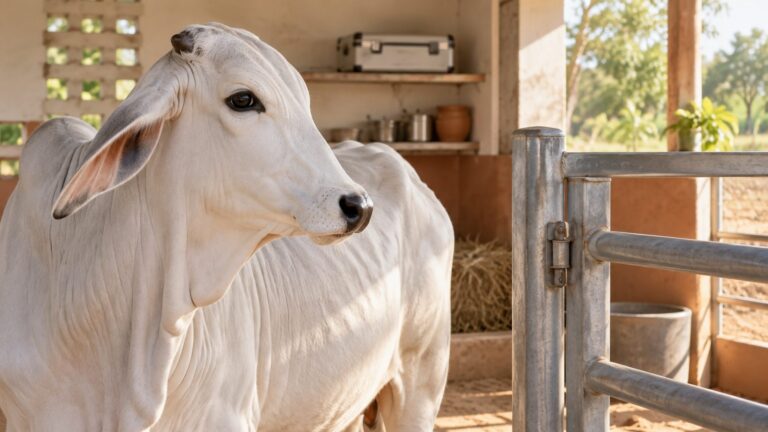
A female Badri calf was born on 11 September 2026 after researchers transferred an OPU-IVF-derived Badri embryo into a Sahiwal recipient cow, PIB reported the following day.
- The collaboration involved ICAR-NDRI, Karnal, and G. B. Pant University of Agriculture and Technology, Pantnagar, with support from the Uttarakhand Biotechnology Council.
- The embryo combined an oocyte from a Badri donor cow with semen from a Badri bull; the Sahiwal cow carried the pregnancy.
- The researchers also reported cloned embryos under a separate research strand. The announced calf was produced through fertilisation, not cloning.
- Indigenous germplasm is a reproductive resource for maintaining breed characteristics. Multiplication can support conservation, but conserving a breed requires more than reproducing a few selected animals.
- This case separates genetic parentage from gestation: a recipient provides the pregnancy environment without becoming the egg or sperm donor.
UPSC Relevance
Prelims Relevance
- Badri cattle: indigenous cattle genetic resource associated with Uttarakhand.
- OPU: ovum pick-up collects oocytes from donor females.
- IVF: in vitro fertilisation takes place outside the animal.
- Embryo transfer: placement of an embryo in a suitable recipient.
- Germplasm: heritable biological material used for breeding and conservation.
Mains Relevance
GS Paper 3
- Applications of reproductive biotechnology in animal husbandry.
- Balancing selection for productive traits with conservation of indigenous genetic diversity.
Essay
- Scientific progress should preserve biological options alongside increasing production.
Background and Context
What the Badri birth establishes
The reported birth demonstrates a working reproductive pathway, while wider conservation benefits still require sustained evidence.
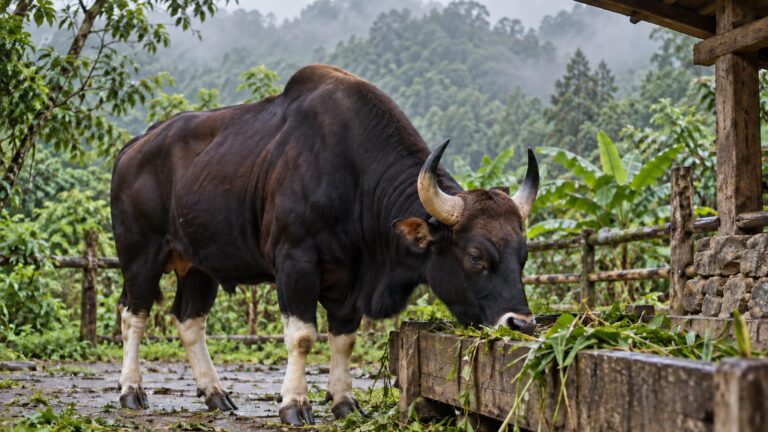
- Badri cattle represent an indigenous genetic resource of Uttarakhand. The conservation objective concerns preserving useful inherited variation within that resource, rather than treating every animal as an interchangeable production unit.
- The successful birth connects laboratory embryo production with a completed pregnancy. It establishes that this particular transferred embryo developed into a calf; it does not establish a general success rate.
- Oocytes and semen came from selected Badri animals. Their combination matters because the programme seeks to multiply Badri germplasm, even when another cattle breed supplies the gestational recipient.
- The official announcement describes future embryo transfers and a further expected delivery. These remain prospective developments; neither should be counted as another completed birth or a verified field-scale outcome.
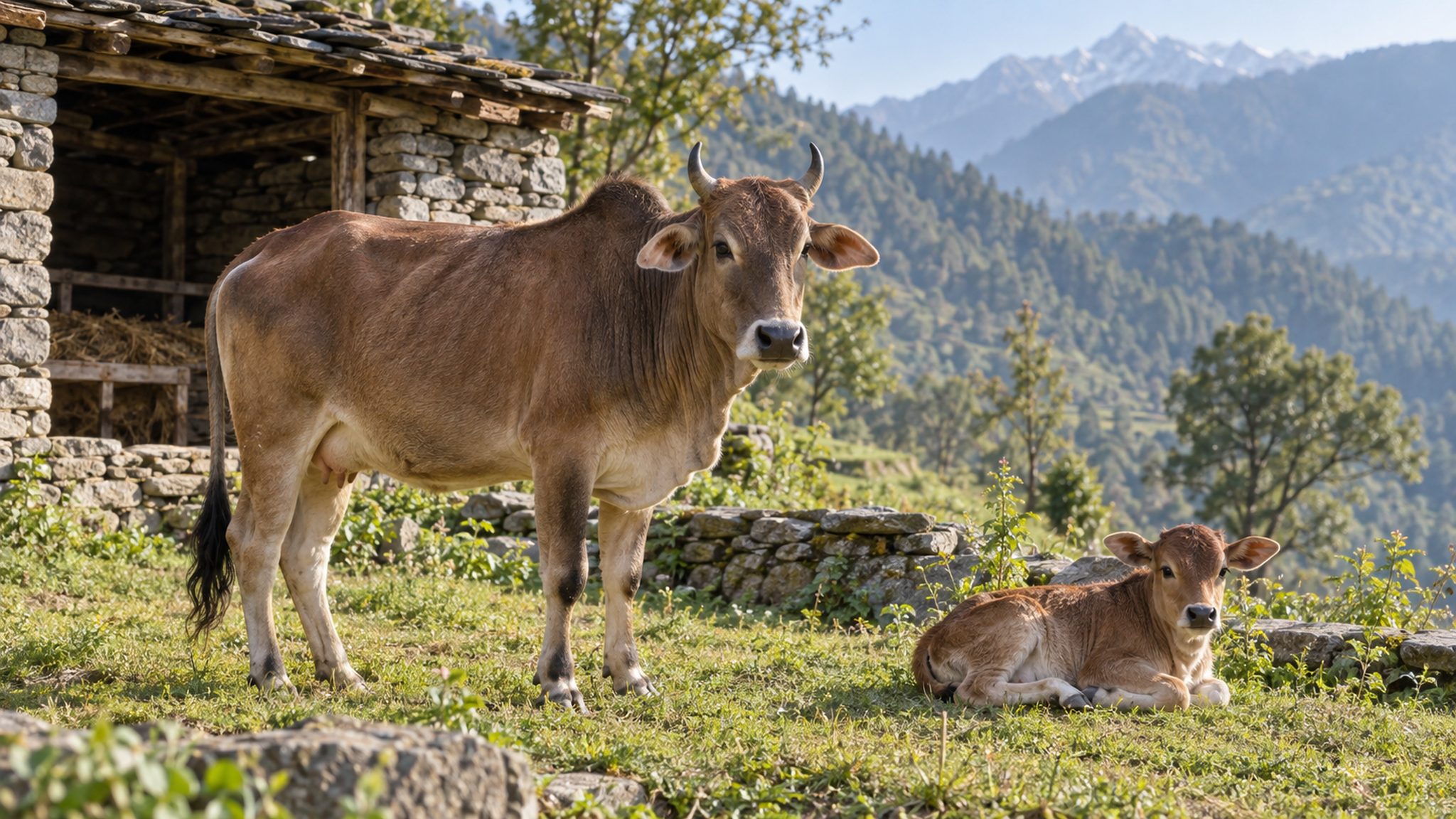
How OPU-IVF and embryo transfer work
The pathway separates egg collection, fertilisation, embryo development and pregnancy into distinct stages requiring different conditions.
- Ovum pick-up uses ultrasound guidance to collect oocytes from selected donor cows. This obtains the female reproductive cells for laboratory work; it does not itself create an embryo or pregnancy.
- Oocyte maturation precedes fertilisation in the laboratory. Researchers then expose mature oocytes to semen from a selected Badri bull, bringing together the reproductive contributions needed to form an embryo.
- Embryo culture supports early development under controlled laboratory conditions. This stage is distinct from gestation: producing an embryo does not mean that it will necessarily establish a successful pregnancy.
- A synchronised recipient is prepared so its reproductive stage is suitable for embryo transfer. The embryo is then placed in that animal, which carries the pregnancy and gives birth.
- Multiple embryo production allows valuable female germplasm to be used beyond a donor cow carrying each resulting pregnancy herself. The release identifies this separation as the basis for faster multiplication.
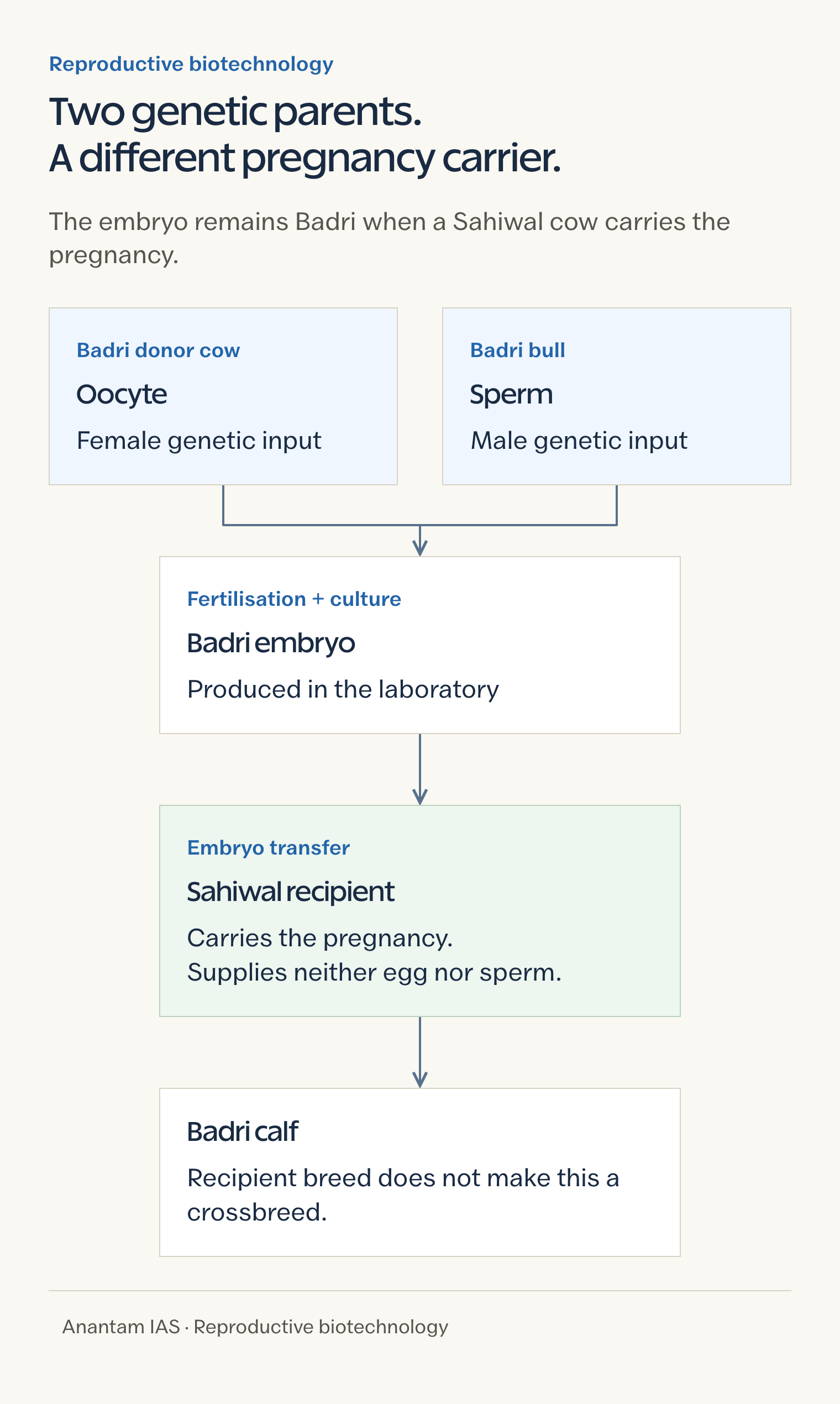
Genetic parentage is different from gestation
The recipient breed and the method of conception answer different biological questions; confusing them changes the meaning of the news.
- The Badri egg donor and Badri bull provide the reproductive cells used in fertilisation. The Sahiwal recipient carries their embryo; its breed does not make that embryo a Badri-Sahiwal crossbreed.
- Crossbreeding involves reproductive contributions from different breeds. A different-breed recipient is insufficient: the relevant distinction is whose egg and sperm formed the embryo, rather than which animal delivered it.
- IVF involves fertilisation and combines parental genetic contributions. Calling this calf a clone would erase that mechanism and incorrectly merge the announced birth with the programme’s separate cloning research.
- The report of cloned Badri embryos concerns an earlier developmental stage under research. It is not evidence of a cloned calf being born, surviving or delivering proven conservation benefits.
Why multiplication alone is not conservation
Selection concentrates particular traits, while conservation must retain enough genetic variation to keep a breed resilient and usable.
- Elite-animal multiplication can increase access to selected germplasm. However, repeatedly relying on a narrow donor group can narrow representation; a conservation programme should deliberately include multiple unrelated breeding lines.
- Pedigree and reproductive records should connect donors, embryos, recipients and offspring. Such traceability supports parentage verification and breeding decisions, rather than assuming breed identity from the recipient or outward appearance alone.
- Field evaluation should examine calf survival, health, reproductive performance and suitability under local husbandry conditions. A laboratory-to-birth milestone is an initial result, not a substitute for observing subsequent animal performance.
- Conservation and improvement need separate measures: retaining genetic diversity answers a different question from multiplying selected stock. Programmes should track both objectives so increased production does not conceal lost variation.
Way Forward
Build a traceable conservation programme
- Select diverse donor lines and maintain pedigree records before expanding embryo production. Avoid concentrating the breeding programme around only a few favoured animals.
- Report outcomes at each stage, from embryo production to calf survival, rather than presenting an isolated birth as proof of routine commercial performance.
- Include veterinary welfare safeguards for donors and recipients, alongside trained handling, reproductive monitoring and follow-up of calves.
Conclusion
- OPU-IVF can multiply selected indigenous germplasm by separating donor genetics from the animal carrying the pregnancy. The Badri birth illustrates this mechanism without implying crossbreeding or cloning.
- The durable policy test is whether reproductive success expands a diverse, healthy breeding population. Conservation needs traceability and field outcomes alongside technically successful embryo production.
UPSC Practice Questions
Prelims MCQ 1
With reference to the reported Badri OPU-IVF calf, consider the following statements:
- The oocyte donor and semen donor belonged to the Badri breed.
- A Sahiwal recipient necessarily makes the resulting calf a Badri-Sahiwal crossbreed.
- OPU-IVF involves fertilisation outside the animal.
How many of the above statements are correct?
(a) Only one (b) Only two (c) All three (d) None
Answer: (b) Only two
Explanation:
Statements 1 and 3 are correct. Genetic parentage follows the egg and semen donors. The Sahiwal recipient carried the embryo and did not contribute either reproductive cell.
Prelims MCQ 2
Which feature distinguishes OPU-IVF from cloning?
(a) Use of a recipient animal for every laboratory step (b) Absence of an embryo development stage (c) Fertilisation combining egg and sperm contributions (d) Automatic production of offspring from different breeds
Answer: (c) Fertilisation combining egg and sperm contributions
Explanation:
IVF uses egg and sperm in fertilisation. The announced calf was an IVF-derived offspring; cloned embryos were reported separately as ongoing research.
UPSC Mains Questions
- Explain how ovum pick-up, in vitro fertilisation and embryo transfer can support indigenous cattle conservation. Distinguish genetic parentage from gestation.
- Multiplication of selected germplasm is necessary but insufficient for breed conservation. Discuss with reference to genetic diversity, traceability and field evaluation.
Source: PIB, Ministry of Agriculture and Farmers Welfare.
Frequently Asked Questions
What is OPU-IVF?
OPU-IVF combines ovum pick-up, which collects oocytes from donor cows, with fertilisation outside the animal. Resulting embryos are cultured and transferred into suitable recipients to establish pregnancy.
Why is the calf Badri despite a Sahiwal recipient?
The embryo was formed using an oocyte from a Badri cow and semen from a Badri bull. The Sahiwal cow carried the pregnancy but supplied neither reproductive cell.
Was the announced Badri calf a clone?
No. The calf was produced through OPU-IVF, involving fertilisation. The same research programme also reported cloned embryos, but the release did not describe this birth as a cloning outcome.
How does germplasm multiplication differ from conservation?
Multiplication increases access to selected reproductive material or offspring. Conservation additionally requires retaining genetic variation across a breed. Concentrating on a narrow donor pool may fail that broader objective.
Tell Google you want more of this.
Add Anantam IAS as a preferred sourceOne tap, and this site shows up more often in your own Top Stories, AI Overviews and AI Mode. Remove it any time.