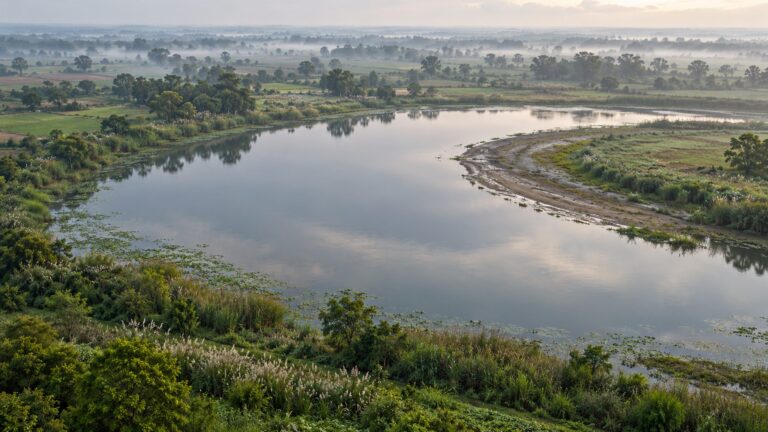
Why in news:
An elephant was electrocuted in Bandipur Tiger Reserve, Karnataka, after it came in contact with an illegally drawn live electric fence around farmland. The fence was reportedly set up by villagers to protect crops from wild animal raids.
UPSC PYQ 2020:
With reference to India’s Desert National Park, which of the following statements are correct?
- It is spread over two districts.
- There is no human habitation inside the Park.
- It is one of the natural habitats of the Great Indian Bustard.
Select the correct answer using the code given below:
(a) 1 and 2 only
(b) 2 and 3 only
(c) 1 and 3 only
(d) 1, 2 and 3
About Bandipur Tiger Reserve:
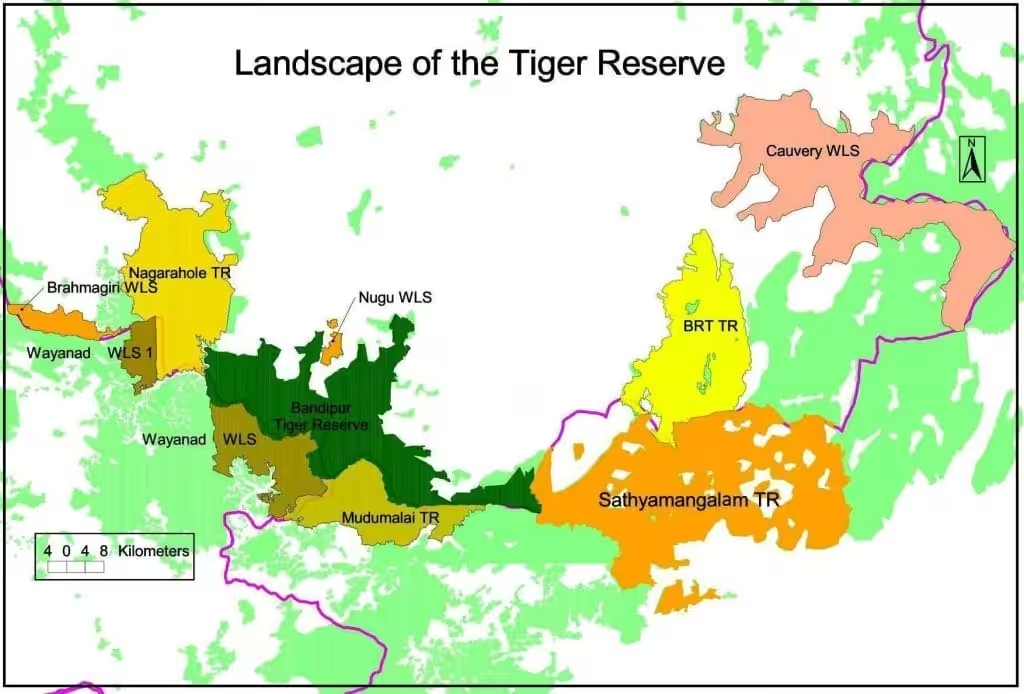
- The Bandipur Tiger Reserve is situated in the Mysore and Chamarajanagar revenue districts of southern Karnataka.
- Geographically, it is an “ecological confluence” as the western and Eastern Ghats meet and constitute this area as distinctive and extraordinary from the point of its fauna and flora.
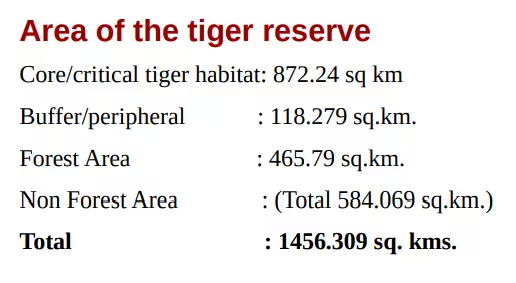
Habitat attributes:
Flora and Fauna:
- The scrub jungle towards the eastern limits of the Park consists of stunted trees, interspersed with bushes and open grassy patches. Towards its northwestern fringes, there is a gradual shift in the vegetation from open dry deciduous forest to tropical mixed deciduous forests.
- Even during the summer, when dryness prevails over most parts of Bandipur, the backwaters of the Kabini Reservoir in the northwestern portion of the Park host huge congregations of large mammals, especially the elephant and the gaur. This unique feature makes a breathtaking spectacle, and is almost the only one of its kind in Asia.
Tiger Status:
The Bandipur tiger reserve has a high density of tiger in the Western ghats landscape, bounded by other important tiger habitats, namely Mudumalai, Waynad, Nagarahole and BRT. As per the 2010 tiger assessment, the tiger density is 11 per 100 sq.km.
Corridor
- The reserve has contiguous corridor linkages within the State with Nagarahole and BRT. Besides, it is also contiguous with tiger habitats of Kerala (Wayanad) and Tamil Nadu (Sathyamangalam, buffer areas of Mudumalai). These areas require monitoring and protection, besides fostering ecologically sustainable land uses.
Human-Animal Conflict:
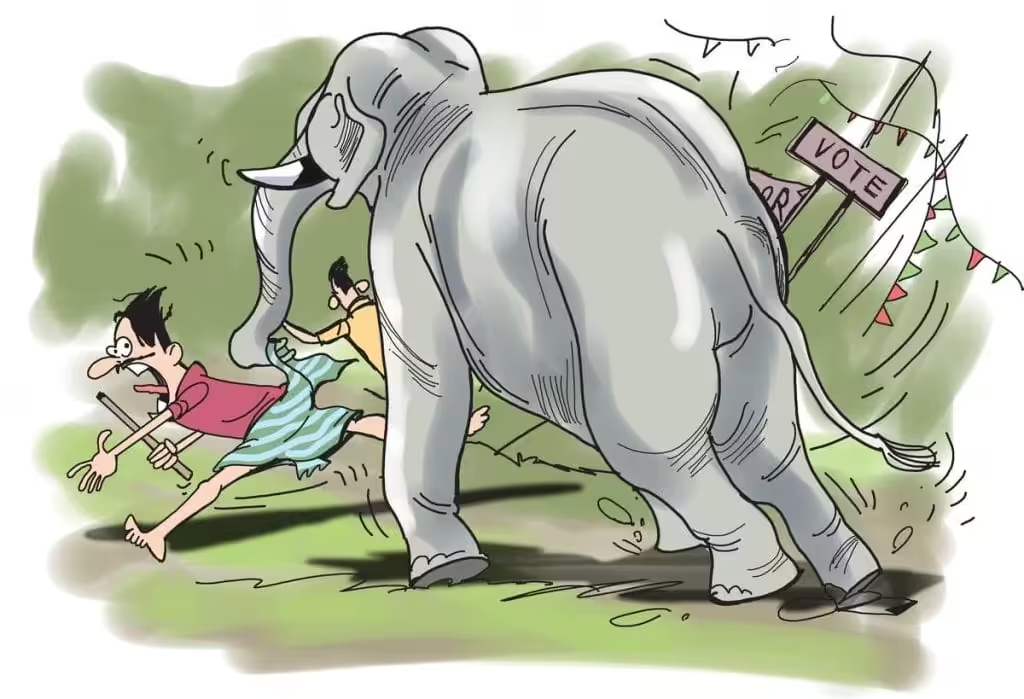
- Between 2019 and 2023, elephant attacks caused nearly 2,800 deaths. In Kerala alone, between 2021 and 2024, conflicts with wildlife claimed 316 lives and injured 3,700 people. During the same period, human-tiger conflicts resulted in nearly 300 deaths, while 75 tigers died due to poaching, seizures, and other unnatural causes.
- Electrocution killed the maximum number of elephants, with Karnataka and Tamil Nadu recording the maximum deaths.
Govt. Initiatives:
- Elephant Corridors in India: 88 corridors were identified jointly by the Ministry of Environment, Forests and Climate Change and Wildlife Trust of India (WTI), and published in 2005.
- Project Elephant was launched in 1992 by the Government of India for the protection of elephants, their habitats and corridors.
Tell Google you want more of this.
Add Anantam IAS as a preferred sourceOne tap, and this site shows up more often in your own Top Stories, AI Overviews and AI Mode. Remove it any time.