Why in News?
On November 3, India outlined its COP31 negotiating position ahead of the Antalya meeting, calling for predictable climate finance and protection against additional debt for developing countries.
- India wants parties to agree in Antalya to start a Climate Finance Work Programme. The environment ministry presented this as a decision India will seek at the talks.
- India wants adaptation indicators to remain voluntary so a country’s ability to measure climate risks does not determine whether it can receive money to address them.
- The ministry linked support for agricultural adaptation to food security and the livelihoods of small and marginal farmers, whose needs may differ substantially even within one country.
- A government can identify a sound adaptation project yet struggle to finance it on commercial terms. The cost of borrowing matters alongside the amount offered.
- When negotiators discuss national circumstances, the practical questions include who chooses the investment, who bears its financing costs and how the recipient will measure success.
UPSC Relevance
Prelims Relevance
- Article 9.1 covers assistance for mitigation and adaptation.
- Concessional finance offers more favourable terms than market borrowing.
- Nationally determined contributions set out countries’ climate commitments.
- The global stocktake assesses collective progress under the Paris Agreement.
Mains Relevance
GS Paper 3
- Assess how financing terms affect adaptation in agriculture.
- Explain why measurement of resilience varies across locations.
GS Paper 2
- Distinguish a treaty obligation from a negotiating demand.
Essay
- Who bears the cost of adapting to a changing climate?
Background and Context
What the Paris Agreement requires
Article 9 identifies both the providers and the recipients of financial assistance.
- Under Article 9.1, developed country parties must provide financial resources to help developing country parties address both emissions and the effects of climate change, continuing their obligations under the climate convention.
- Mitigation tackles the causes of warming, for example by replacing fossil electricity with renewable power. Adaptation reduces exposure or vulnerability to harm, for example by improving drainage on flood-prone farmland.
- India invokes the existing finance obligation as the basis for its demand. Its preference for largely public, concessional support concerns how countries should deliver that assistance in practice.
- A decision to establish a work programme would give parties a framework for further work on finance. Equating that decision with a payment would skip the separate question of who funds a particular project.
Why terms matter to the recipient
Two offers of the same face value can impose very different costs on a public budget.
- A grant helps pay for an investment without a repayment obligation. A loan adds a claim on future revenues even when the investment reduces the damage from droughts or floods.
- A concessional loan eases that claim through terms such as a lower interest rate or longer repayment period. The borrower still has to repay the principal under the agreed terms.
- A flood embankment may protect harvests without generating a stream of fees for the government that built it. Avoided losses can justify the project even when they cannot directly service its debt.
- Predictable funding also matters before construction starts. A local authority planning work across several farming seasons needs to know when it can pay contractors and whether it can maintain the completed asset.
- When assessing a funding pledge, distinguish money offered from money received. A project manager can hire workers and procure materials only when the agreed resources actually become available.
How adaptation indicators would be used
Adaptation has to be evaluated against the particular risk a community faces.
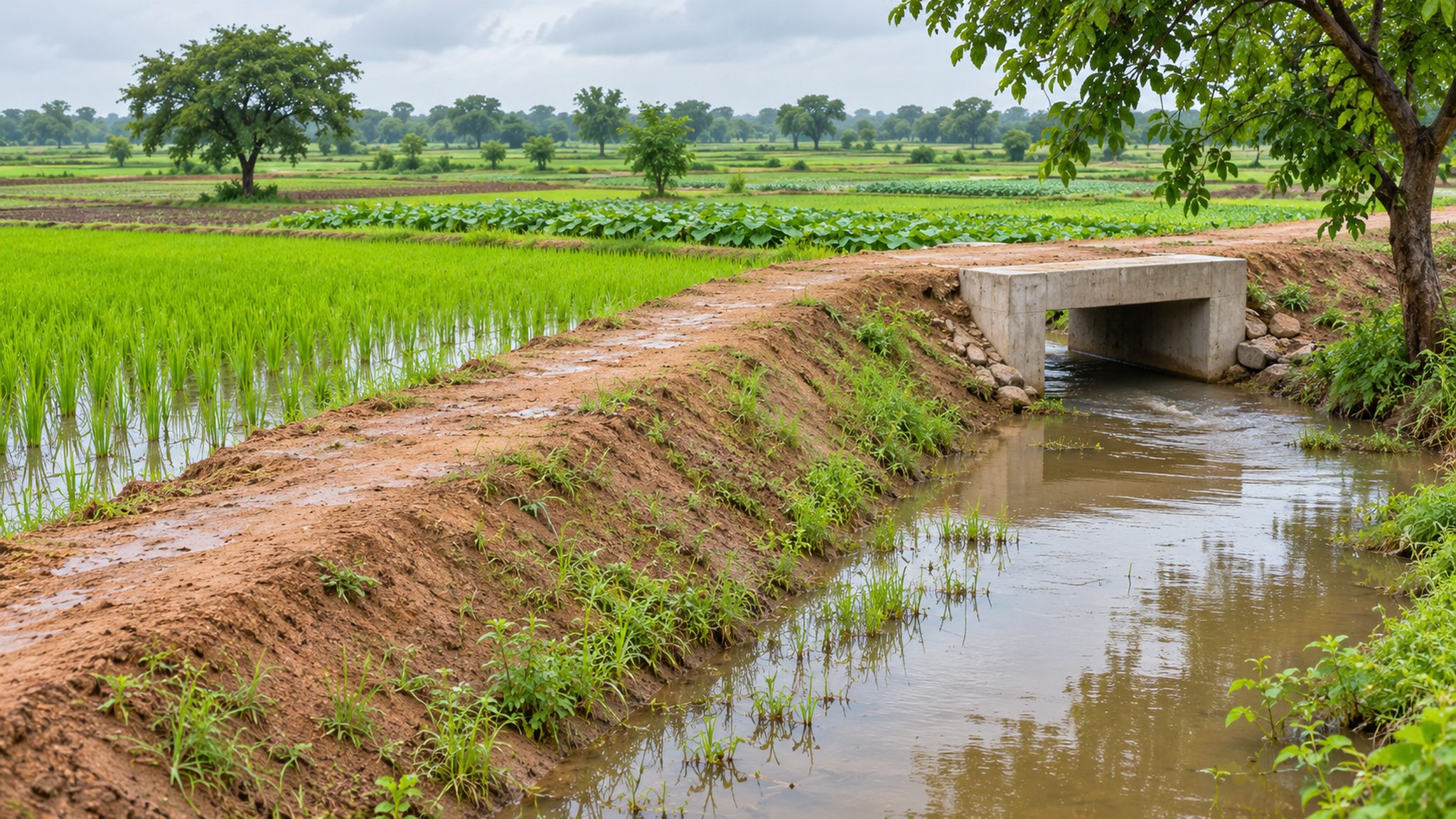
- For a drought-prone farming district, a useful adaptation indicator might track whether irrigation water remains available during a dry spell. A flood-prone district might instead measure how quickly fields drain after heavy rain.
- India wants parties to use voluntary indicators to understand progress. Making finance depend on producing comparable measurements could penalise a district with sparse records even when farmers there face substantial risk.
- At the international level, India wants the global stocktake to guide collective action while leaving governments to choose the measures in their nationally determined contributions.
- The same distinction applies when reading the Antalya agenda. A national delegation can propose an approach, but an agreed decision requires parties to settle the text through the negotiations.
Way Forward
Questions to ask about a finance offer
- Identify the instrument and repayment terms before counting the whole offer as support.
- Check whether the payment schedule matches the investment and maintenance timetable.
- Choose an adaptation measure that tracks the local risk and can be collected with available resources.
Conclusion
- Read the COP31 position in two parts. Article 9.1 establishes who must provide assistance, while the split between grants and loans affects how much of the cost the recipient ultimately bears.
- An adaptation indicator can help a government choose where its next investment should go. India wants to preserve that planning function without making the indicator a condition for accessing funds.
UPSC Practice Questions
Prelims MCQ 1
With reference to climate finance, consider the following statements:
- Article 9.1 covers adaptation as well as mitigation.
- A concessional loan may still require repayment of principal.
- India proposed making adaptation indicators compulsory for access to finance.
How many of the above statements are correct?
(a) Only one (b) Only two (c) All three (d) None
Answer: (b) Only two
Explanation:
The first two statements are correct. India wants voluntary indicators that do not condition access to finance.
Prelims MCQ 2
Which project most directly addresses climate adaptation?
(a) Replacing coal power with solar generation (b) Capturing carbon dioxide from a cement plant (c) Improving drainage to protect flood-exposed farmland (d) Electrifying a diesel bus route
Answer: (c) Improving drainage to protect flood-exposed farmland
Explanation:
Drainage reduces damage from an existing climate hazard. The other measures primarily aim to reduce emissions.
UPSC Mains Questions
- How do the terms of international climate finance affect the feasibility of adaptation investments in developing countries?
- Examine the tension between comparable adaptation indicators and nationally determined priorities in climate negotiations.
Sources: PIB, Ministry of Environment, Forest and Climate Change and UNFCCC.
Frequently Asked Questions
What did India seek ahead of COP31?
India called for a finance work programme, predictable support on affordable terms and voluntary adaptation indicators. The environment ministry outlined these negotiating priorities on November 3 ahead of the Antalya talks.
Who provides finance under Article 9.1?
Developed country parties must assist developing country parties with financial resources for both mitigation and adaptation. India cited this existing duty when setting out its negotiating position on future support.
Why does India favour concessional finance?
Favourable lending terms can ease the cost of borrowing. They matter particularly when a public investment protects people or crops from harm but generates little direct income for repayment.
Why keep adaptation indicators voluntary?
Indicators can show which actions reduce local climate risks. India wants countries to use them for assessment without making the ability to report particular measurements a prerequisite for finance.
Tell Google you want more of this.
Add Anantam IAS as a preferred sourceOne tap, and this site shows up more often in your own Top Stories, AI Overviews and AI Mode. Remove it any time.