Why in News?
On 3 November 2026, the Ministry of Coal described how SUVIKALP, developed by the Coal Controller Organisation, helps compare future uses for closed and abandoned mines.
- The tool follows the 2025 mining plan guidelines for coal and lignite mines.
- TOPSIS ranks options against several criteria for the same site.
- The ministry identified site-specific feasibility studies and detailed project reports as next steps for shortlisted projects.
- The end of coal extraction leaves decisions about both the physical site and the people who depended on the mine.
- A suitable future land use must fit the site’s physical limits and have an agency able to operate it.
UPSC Relevance
Prelims Relevance
- Coal Controller Organisation developed SUVIKALP under the Ministry of Coal.
- TOPSIS is a multi-criteria ranking method.
- RECLAIM brings community priorities into the assessment.
- PRISM guides implementation planning.
Mains Relevance
GS Paper 3
- Explain how a mine’s physical condition limits the choices available for restoration and economic reuse.
- Distinguish a high suitability score from a project ready for investment.
GS Paper 2
- Assess how communities can influence a land-use choice before the preferred project is selected.
Essay
- What does a mining region owe the people who remain after extraction ends?
Background and Context
What makes a closed mine suitable for another use?
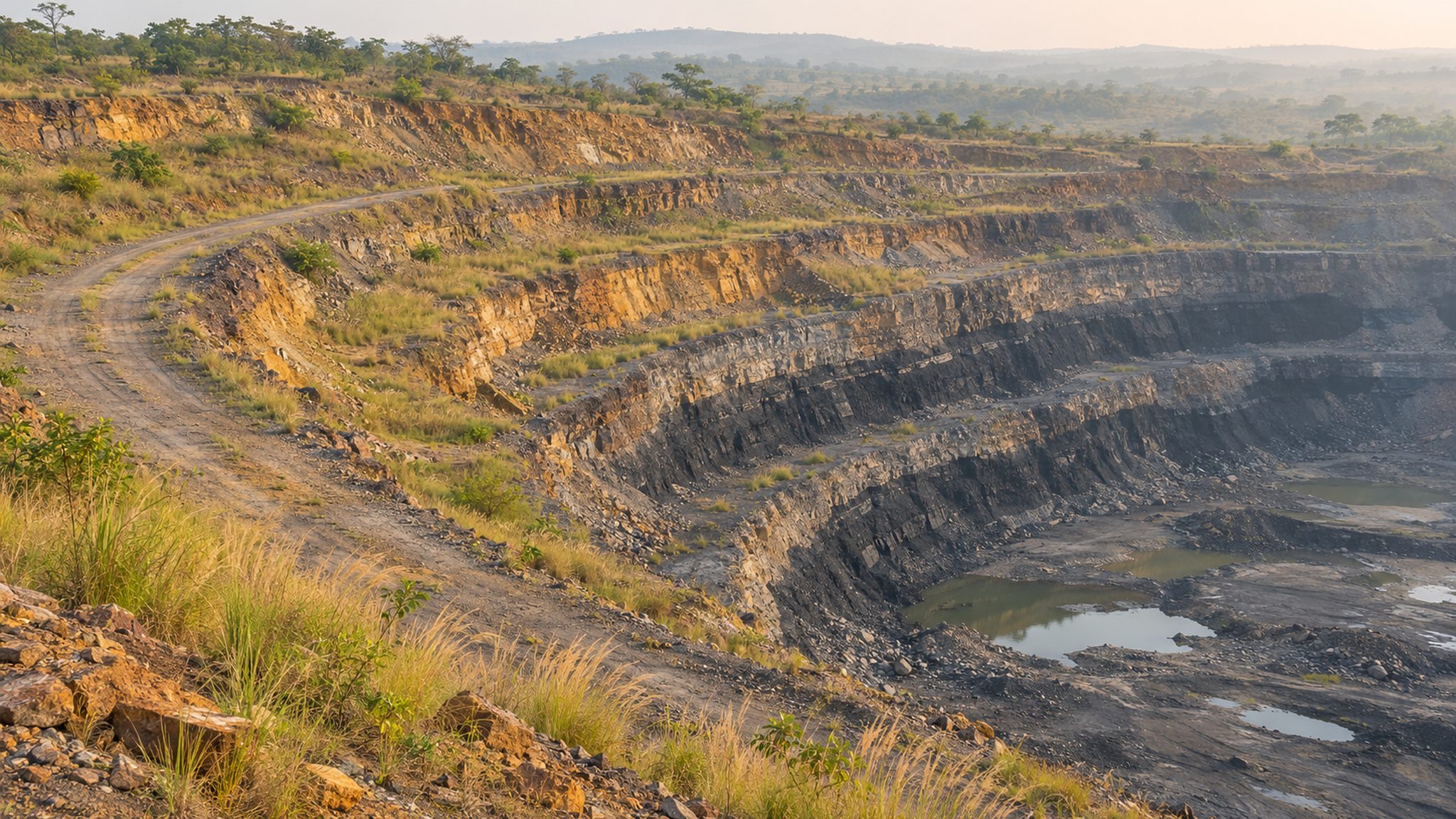
A former mine can retain useful roads and power connections alongside steep slopes, disturbed ground and a loss of local employment.
- Start with the site profile. A proposal that needs level ground and vehicle access presents different engineering questions on the floor of an open pit than on a former surface yard.
- Examine resource constraints alongside the physical setting. An existing road may make a site easier to reach, while a lack of water could still rule out a water-intensive use.
- Record the environmental condition before comparing returns. A proposal that looks inexpensive on paper may require substantial work to stabilise a slope or restore disturbed land before people can use it.
- Ask who stands to gain a livelihood. Revenue from leasing a plot and employment for former mining households are different benefits. Evidence of one cannot establish the other.
- Use these facts to identify plausible alternatives. Transferring a successful project from another mine requires checking which features made it work there and whether those features exist at the new site.
How does SUVIKALP rank the alternatives?
The comparison starts with factors relevant to the mine, then brings local preferences into the assessment before the alternatives receive their final ranking.
- Multi-criteria decision-making places the same alternatives against several criteria. A site with good access might favour a commercial use on transport costs while another option better serves nearby households.
- RECLAIM, the community engagement framework, brings residents’ priorities into that comparison. For instance, a village may value continued access to land more highly than the prospect of a few jobs.
- TOPSIS compares each option with ideal and least desirable combinations of performance across the chosen criteria. An option closer to the favourable combination and farther from the unfavourable one ranks better.
- The result is a relative ranking among the options assessed. Even the strongest option in a weak field may carry risks or costs that make it unsuitable for immediate investment.
- Ask which assumptions drive the order. If the preferred option loses its advantage when expected maintenance costs rise, the project team has identified a cost that needs closer investigation.
What happens after a project ranks first?
The ministry identifies project preparation, financing and monitoring as work that follows the recommendation.
- PRISM, the implementation planning model, helps proponents consider how to structure and monitor a preferred project. Its reference materials include concept notes, case studies and sample tender documents.
- A feasibility study tests whether the proposal can work at this mine. For a public recreation area, for example, safe access and long-term maintenance need scrutiny before an investment decision.
- A detailed project report can translate a viable concept into work that an agency can cost and procure. A sample tender from another project cannot supply missing evidence about the site.
- Keep permissions separate from suitability. The ministry describes a decision-support tool. A favourable score gives a proponent a reason to examine an option, without conferring land-use or environmental approval.
- Judge delivery after the site enters its new use. Compare actual environmental improvements and livelihood benefits with the expectations recorded when residents and planners first assessed the alternatives.
Way Forward
Make the preferred option open to scrutiny
- Publish the site assumptions that determined the ranking so affected households can identify missing evidence.
- Record local preferences before final selection and explain how conflicting priorities affected the result.
- Assign an operating agency and identify maintenance funding during feasibility assessment.
Conclusion
- A mine-specific comparison makes competing benefits visible while there is still time to change the proposal. Ground conditions, the cost of reuse and residents’ priorities can each alter which option deserves closer study.
- The strongest test of repurposing comes after selection. A project needs a workable site plan, an accountable operator and evidence that the people and landscape affected by mining actually benefit.
UPSC Practice Questions
Prelims MCQ 1
With reference to SUVIKALP, consider the following statements:
- The Coal Controller Organisation developed the tool.
- RECLAIM incorporates community priorities into the evaluation.
- A top-ranked project automatically receives environmental approval.
How many of the above statements are correct?
(a) Only one (b) Only two (c) All three (d) None
Answer: (b) Only two
Explanation:
Statements 1 and 2 are correct. The tool ranks alternatives for further examination. Its recommendation grants no environmental approval.
Prelims MCQ 2
Which question does TOPSIS help answer when planning the future use of a closed mine?
(a) Which agency owns the surface rights? (b) What quantity of coal remains underground? (c) Which candidate use performs best across the selected criteria? (d) Which tender has received final approval?
Answer: (c) Which candidate use performs best across the selected criteria?
Explanation:
TOPSIS compares the relative suitability of candidate uses across several criteria. Ownership, reserves and tender approvals require other evidence.
UPSC Mains Questions
- How can multi-criteria assessment improve the choice of post-mining land use? Explain the limitations of relying on a ranking.
- Discuss how mine closure planning can give affected households a substantive role in economic redevelopment.
Source: Ministry of Coal, Press Information Bureau.
Frequently Asked Questions
Who developed SUVIKALP?
The Coal Controller Organisation under the Ministry of Coal developed SUVIKALP to assess alternative land uses for closed and abandoned mines using mine-specific information and community priorities.
How does TOPSIS compare land uses?
It assesses alternatives against a set of criteria and compares their distances from favourable and unfavourable combinations of performance. The resulting order expresses suitability within the set examined.
How do RECLAIM and PRISM differ?
RECLAIM brings local priorities into project evaluation. PRISM helps proponents explore the practical arrangements for a preferred use, including investment, project structure and how the implementing agency will monitor delivery.
Does the first-ranked option become an approved project?
A high rank identifies an option for further assessment. Project proponents still need to examine feasibility, secure financing and obtain applicable permissions before the proposed land use can proceed.
Tell Google you want more of this.
Add Anantam IAS as a preferred sourceOne tap, and this site shows up more often in your own Top Stories, AI Overviews and AI Mode. Remove it any time.