Why in News?
The proposed 11,200-MW Siang Upper Multipurpose Project (SUMP) in Arunachal Pradesh has faced sustained opposition from sections of the Adi community.
Currently at the pre-feasibility survey stage, the project is being viewed as a strategic response to China’s proposed mega-dam on the Yarlung Tsangpo (Brahmaputra) in Tibet.
| UPSC Relevance: GS-3 Environment & Biodiversity: Conservation; Infrastructure Prelims: Siang Upper Multipurpose Project, Brahmaputra River |
Siang Upper Multipurpose Project (SUMP):
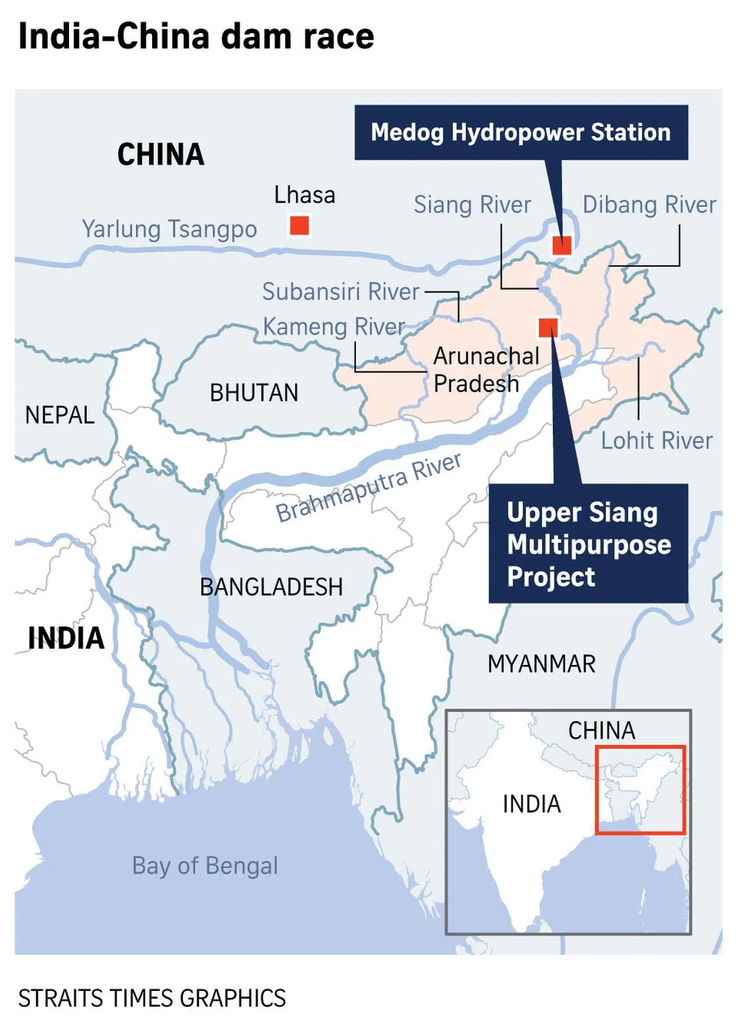
- Location: Upper Siang district, Arunachal Pradesh, on the Siang River, which is known as the Yarlung Tsangpo in Tibet.
- Proposed capacity: Approximately 11.2 GW, making it one of India’s major proposed hydropower projects.
- Multipurpose objectives: Hydropower generation, flood moderation, water storage and strengthening India’s preparedness against possible upstream interventions by China.
- Strategic significance: India views SUMP as a critical countermeasure to China’s 60 GW lower Yarlung Tsangpo project (Medog Hydropower Station) approved in 2024, serving as a strategic “water bomb” buffer and flood-moderation tool. The proposed reservoir is expected to provide India with greater operational flexibility in managing sudden changes in downstream river flows.
Brahmaputra River System:
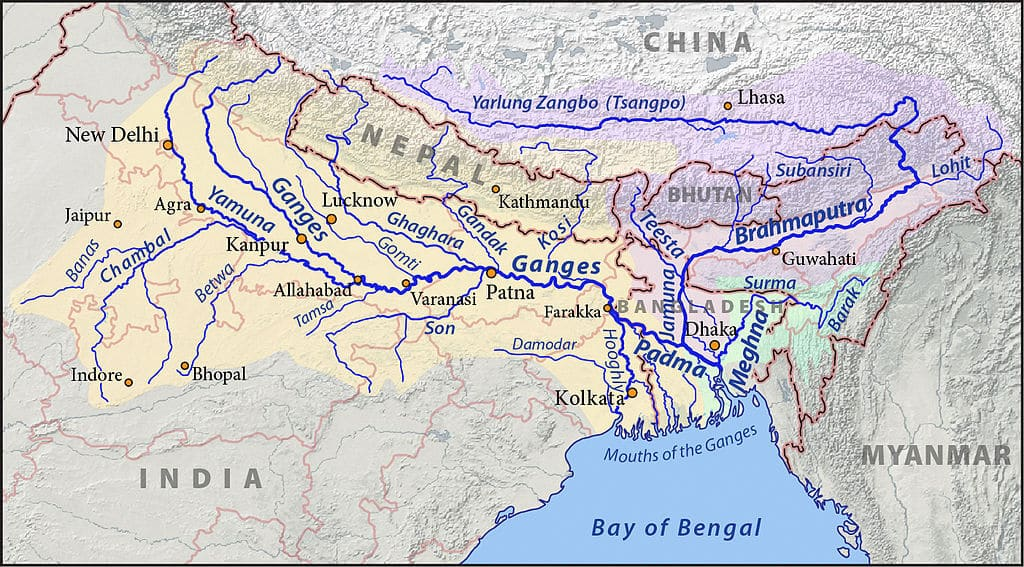
The Brahmaputra is a transboundary river system shared by China, India and Bangladesh.
Course of the River:
- Origin: The Yarlung Tsangpo originates in the Tibetan Plateau, near the Angsi Glacier in the vicinity of Mount Kailash.
- Tibet: It flows eastwards across southern Tibet before making a dramatic horseshoe-shaped bend around the Namcha Barwa massif.
- India:
- Arunachal Pradesh: It enters India as the Siang (also called Dihang).
- Assam: The Siang joins the Dibang and Lohit rivers to form the Brahmaputra’s main channel.
- Bangladesh: It enters Bangladesh as the Jamuna and eventually joins the Ganga-Padma system before draining into the Bay of Bengal.
Important tributaries and sub-basins in India:
- Arunachal Pradesh: Subansiri, Kameng (Jia Bharali) and other Himalayan tributaries.
- Assam: Manas, Dhansiri, Kopili, Sankosh and other tributaries.
- Meghalaya: Umngot and Kynshi.
- Sikkim and West Bengal: Teesta system, which joins the Brahmaputra-Jamuna system in Bangladesh.
Why is the Project facing Local Opposition?
- Loss of Ancestral and Customary Land Rights: Land in Arunachal Pradesh is governed significantly by customary ownership and community-based arrangements. Adi community fears that reservoir construction and associated infrastructure could submerge ancestral settlements, agricultural land and community resources.
- Displacement & Livelihood Loss: Submergence risks displacing riverbank communities, destroying agriculture, fishing, and forest-based livelihoods that cash compensation alone cannot replace.
- Cultural & Spiritual Disruption: The Adi people revere the river as “Aane Siang” (Mother Siang); damming it causes deep cultural displacement beyond physical relocation.
- Ecological & Seismic Vulnerability: Located in the tectonically active Eastern Himalayas, the dam raises fears of reservoir-induced seismicity, landslides, and Glacial Lake Outburst Floods (GLOFs).
- Trust Deficit & Governance Gaps: Perceived coercive surveys, heavy security deployment, and a lack of transparency mirror past grievances from projects like the Subansiri Upper Hydroelectric Project.
The Siang project highlights the complex relationship between national security, infrastructure development, environmental sustainability and indigenous rights.
India’s infrastructure development must therefore be founded on transparency, scientific assessment, meaningful community participation and respect for constitutional and statutory safeguards.
Practice Prelims MCQ:
Q. With reference to the Brahmaputra river system, consider the following statements:
- The Yarlung Tsangpo enters India through Arunachal Pradesh, where it is known as the Siang.
- The Brahmaputra is formed in Assam by the confluence of the Siang, Dibang and Lohit rivers.
- The Teesta is a tributary of the Brahmaputra system and joins the river in India.
- India and China have a comprehensive bilateral treaty governing the equitable sharing of Brahmaputra waters.
Which of the statements given above are correct?
(a) 1 and 2 only
(b) 1, 2 and 3 only
(c) 2, 3 and 4 only
(d) 1, 2, 3 and 4
Answer: (a)
Explanation:
- Statement 3: Incorrect. The Teesta joins the Brahmaputra (Jamuna) in Bangladesh, not India.
- Statement 4: Incorrect. No comprehensive bilateral water-sharing treaty exists between India and China.
UPSC PYQ 2017:
Q. With reference to river Teesta, consider the following statements:
- The source of river Teesta is the same as that of Brahmaputra but it flows through Sikkim.
- River Rangeet originates in Sikkim and it is a tributary of river Teesta.
- River Teesta flows into Bay of Bengal on the border of India and Bangladesh.
Which of the statements given above is/are correct?
(a) 1 and 3 only
(b) 2 only
(c) 2 and 3 only
(d) 1, 2 and 3
Answer: (b)
Tell Google you want more of this.
Add Anantam IAS as a preferred sourceOne tap, and this site shows up more often in your own Top Stories, AI Overviews and AI Mode. Remove it any time.