Context:
India’s GM (Genetically Modified) crop adoption has stagnated, while Genome Editing (GE)—especially CRISPR-based technologies—is advancing rapidly.
UPSC Relevance:
Science and Technology
UPSC PYQ:
Q. What are the research and developmental achievements in applied biotechnology? How will these achievements help to uplift the poorer sections of society? (2021)
GM Crops v/s Genome Editing Crops:
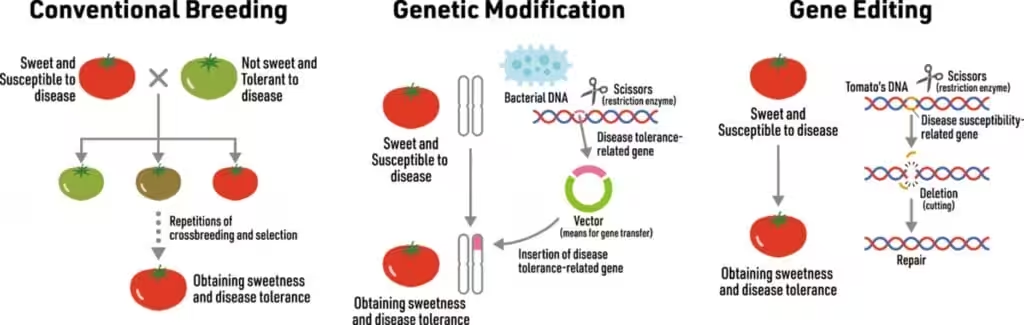
GM crops contain foreign genes from unrelated species – say the Bacillus thuringiensis or Bt soil bacterium that code for the production of proteins toxic to various insect pests in cotton.
GE, on the other hand, entails mere “editing” of genes naturally present in the host plant, leading to mutation or changes in their DNA sequence.
- The editing is done by protein enzymes that act like “molecular scissors” to cut and modify the DNA of the targeted native gene. Such editing is aimed to bring forth desirable alterations in that gene’s expression and function.
- The enzyme is directed to the specific location/address in the plant genome by a “navigator” guide-RNA, which is a custom-designed molecule having a sequence matching that of the target DNA.
For developing the GE rice and mustard varieties, scientists used so-called CRISPR-associated (Cas) proteins. The Cas9 protein was deployed for editing a ‘drought and salt tolerance’ gene in the MTU-1010 rice and 10 ‘glucosinolate transporter’ genes in the Varuna mustard varieties. The Cas12a protein was, likewise, used to edit the ‘cytokinin oxidase 2 (also called Gn1a)’ gene in Samba Mahsuri rice.
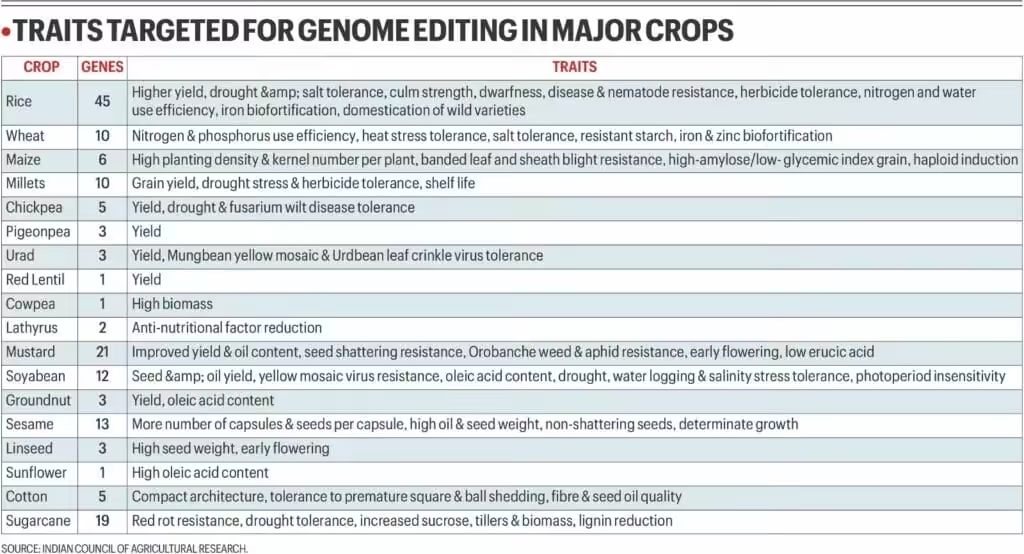
Policy push?
- GE plants, being “free from exogenous introduced DNA”, have been exempted from the Ministry of Environment, Forest & Climate Change’s (MoEFCC) stringent biosafety assessment regulations.
- These regulations apply only to GM crops, whose “environmental release”, not just for commercial cultivation but even field trials and seed production, is contingent upon clearance from a Genetic Engineering Appraisal Committee under the MoEFCC.
- The above exemption – as per an MoEFCC office memorandum, dated March 30, 2022 – limits approvals for GE crops only at the level of an Institutional Biosafety Committee. This committee, comprising scientists from the institution engaged in the GE crop development and the Department of Biotechnology, only has to certify that the edited plant has no foreign DNA.
| GM Crops | GE Crops |
|---|---|
| High regulation | Low regulation (if no foreign DNA) |
| Public protests | Broad acceptability |
| Slow trials | Fast trials |
| Transgenic | Non-transgenic |
| GEAC approvals required | Only institutional approvals |
Advantages:
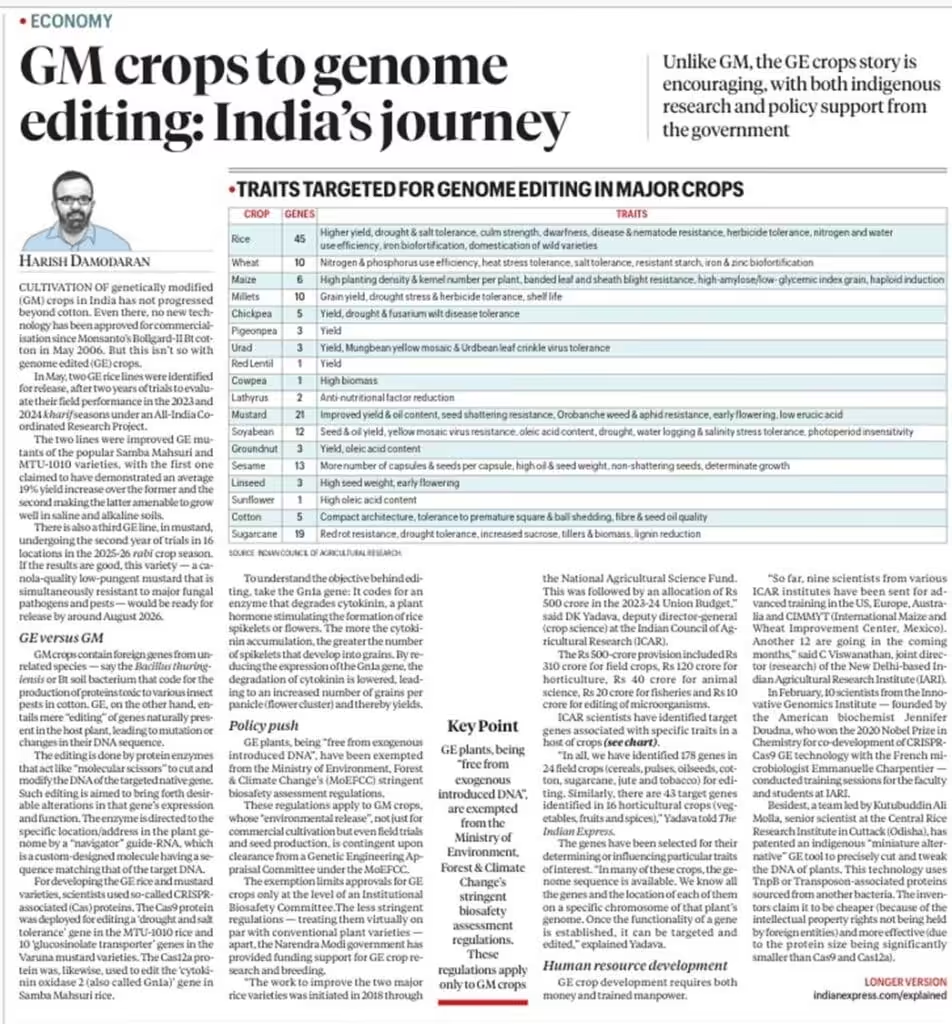
Across rice, wheat, maize, pulses, cotton, oilseeds:
- Higher yield
- Drought/salt/heat tolerance
- Nitrogen & phosphorus-use efficiency
- Biofortification (iron, zinc)
- Disease & insect resistance
- Reduced anti-nutritional factors
- Better oil content/fiber quality
- Improved architecture, fewer shattering losses
👉 GE supports both climate resilience & nutrition security.
Implications:
Economic
- Higher productivity
- Climate-resilient crops → stable farmer incomes
- Import reduction (oilseeds, pulses)
Environmental
- Lower pesticide use
- Better nutrient efficiency
Social
- Helps address malnutrition
- Enhances food security
Scientific
India emerging as a global leader in GE crops.
India’s Achievements?
✔ GE Rice (Samba Mahsuri)
- Edited Gn1a gene using Cas12a
- Increases cytokinin → more spikelets → 19% higher yield.
✔ GE Rice (MTU-1010)
- Edited drought & salt tolerance gene using Cas9
→ Tolerance to saline/alkaline soils.
✔ GE Mustard (Canola-quality)
- Edited glucosinolate transporter genes
- → Disease-resistant, pest-resistant, high-quality oil.
- → Trials across 16 locations; may be released by 2026.
Why are GE crops advancing fast:
GE plants contain no foreign DNA
→ They are not transgenics.
→ Hence treated like conventionally bred varieties.
2022 Regulatory Reform (MoEFCC)
GE crops (SDN-1 & SDN-2 categories) require only:
- Institutional Biosafety Committee certification
→ No GEAC approval needed.
This is the biggest reason for GE acceleration.
Government Funding
- National Agricultural Science Fund
- ₹500 crore in 2023–24 Budget
→ Explicit push for GE research.
Indigenous & Global collaboration
- India’s own TnpB-based genome editing tool developed at CRRI Cuttack.
- IARI, ICAR, CRRI developing GE technologies
- Training by Innovative Genomics Institute (IGI)
Tell Google you want more of this.
Add Anantam IAS as a preferred sourceOne tap, and this site shows up more often in your own Top Stories, AI Overviews and AI Mode. Remove it any time.