Why in News?
India and Japan held their fourth 2+2 Foreign and Defence Ministerial Meeting in Tokyo on November 19, 2026, reviewing bilateral security institutions and defence industrial cooperation.
- The ministers welcomed a recently signed Maritime Security Cooperation arrangement and sought concrete outcomes in information sharing, search and rescue, and disaster relief.
- They agreed to explore joint naval shipbuilding and design, while identifying further arrangements and approvals needed for the UNICORN project.
- They directed officials to renew the existing cybersecurity cooperation memorandum and convene the next bilateral cyber dialogue.
- Ministerial coordination helps align diplomatic priorities with defence institutions and industrial policy.
- Implementation status varies across the agenda, from existing agreements to future consultations and exploratory projects.
UPSC Relevance
Prelims Relevance
- 2+2 dialogue brings the foreign and defence ministers of two countries together.
- ACSA concerns reciprocal provision of supplies and services between the two countries’ forces.
- HADR means Humanitarian Assistance and Disaster Relief.
- Joint development requires agreed responsibilities for a project, while a ministerial statement supplies political direction.
Mains Relevance
GS Paper 2
- Institutional mechanisms in India’s bilateral relations and their contribution to strategic autonomy.
- The relationship between diplomatic commitments, administrative arrangements and implementation.
GS Paper 3
- Defence industrial capacity, technology partnerships and resilient critical infrastructure.
Background and Context
How the 2+2 Format Coordinates Policy
The format places diplomatic priorities and defence cooperation within one ministerial discussion, with officials responsible for carrying agreed tasks forward.
- Joint ministerial participation allows foreign-policy concerns and defence requirements to be discussed together. It can help resolve coordination problems when a proposal involves diplomatic relations, technical institutions and domestic administrative procedures.
- Political direction comes from the ministers, while specialised authorities handle subsequent work. The statement repeatedly identifies future coordination, arrangements and dialogues, showing that a high-level meeting is one stage in an institutional process.
- Bilateral scope matters because India and Japan can assign responsibilities directly to their own agencies. Their wider participation in the Quad has a separate membership and agenda.
- Policy continuity is supported by recurring consultations. The ministers agreed to hold the next meeting in India and directed work across several specialised channels, allowing unresolved issues to return for review.
- Reading commitments accurately requires attention to verbs such as signed, directed and exploring. Each describes a different stage, so an announced intention should be assessed against the subsequent agreement, approval or delivered outcome.
What Industrial Cooperation Requires
A defence industry partnership becomes concrete through agreed project responsibilities, domestic approvals and arrangements governing the knowledge and equipment involved.
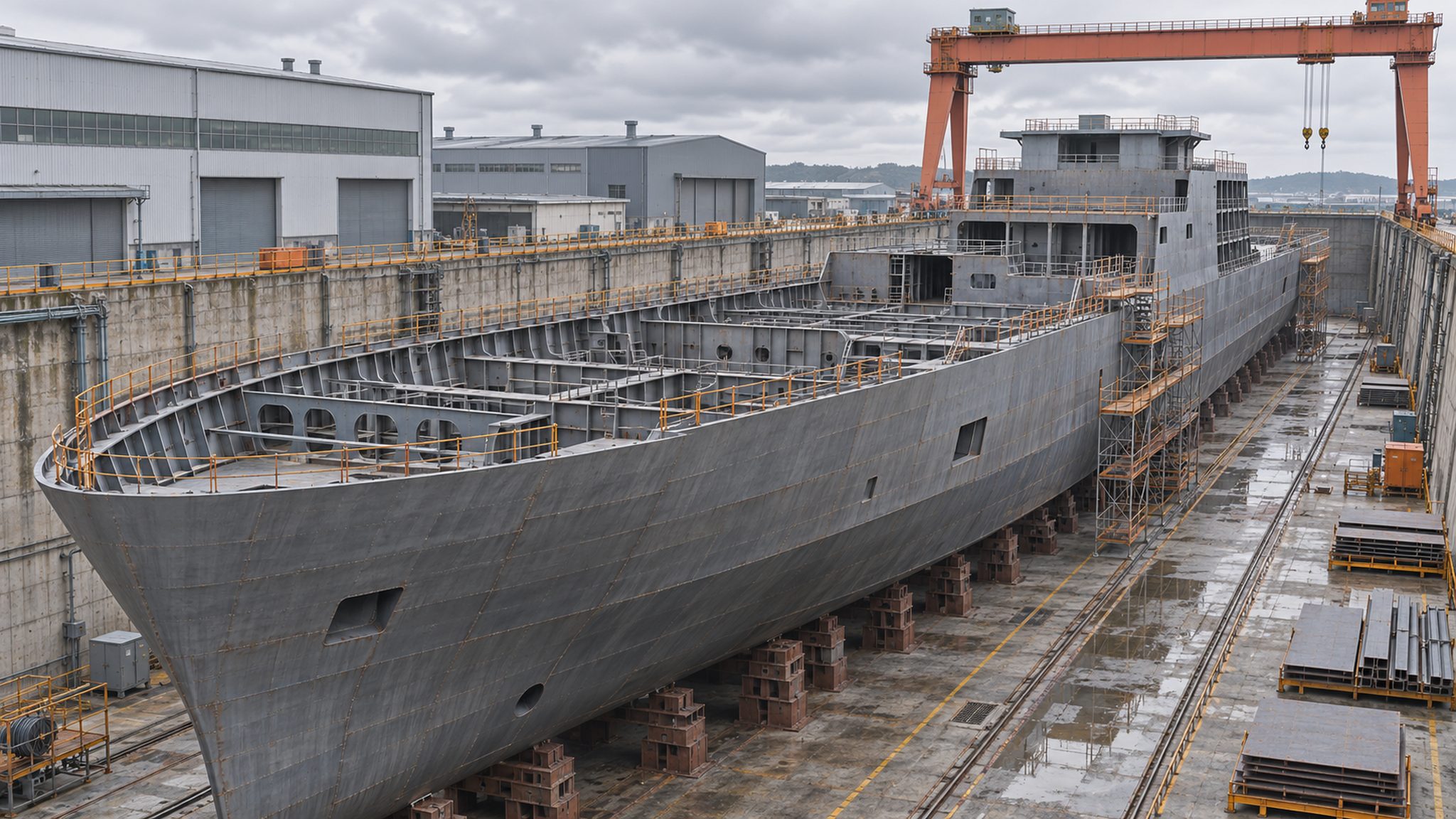
- Naval shipbuilding and design were identified as areas for possible joint development. The statement describes exploration of this possibility, leaving the eventual project scope, commercial arrangements and production responsibilities to further work.
- Technology cooperation may connect designers, manufacturers and government agencies. Its value depends on which knowledge and responsibilities are actually shared, so local production alone does not establish the depth of a technical partnership.
- UNICORN appears in the statement as a project still needing further arrangements and Indian approval steps. The disclosed wording supports a prospective cooperation story, without establishing that a completed transfer has already occurred.
- Industrial dialogue provides a channel for companies and officials to identify practical obstacles. The ministers welcomed the recent defence industries forum, linking political interest with continuing discussion among potential implementing organisations.
- Long-term support deserves attention when evaluating industrial cooperation. Equipment requires maintenance and future updates, as the separate Barak obsolescence case illustrates, making support arrangements relevant to procurement assessment.
Logistics Agreements and Maritime Arrangements
Different bilateral instruments address different administrative needs, so their scope and legal effect must be read from the relevant texts.
- Reciprocal logistics has an institutional basis in the Acquisition and Cross-Servicing Agreement. India’s Defence Ministry describes it as a framework for the two sides to provide supplies and services to one another.
- Agreed activities define where the arrangement applies. The ministry identifies bilateral training, United Nations peacekeeping, humanitarian relief and other mutually agreed activities. The scope follows the agreement between the two governments.
- Maritime cooperation in the new statement covers public functions such as search and rescue and humanitarian assistance. The ministers sought concrete outcomes under a recently signed arrangement, indicating that follow-through remains part of the agenda.
- Information governance accompanies closer cooperation because agencies need agreed responsibilities for the material they exchange. The statement identifies information sharing as a field of cooperation, while leaving detailed implementation arrangements outside its public account.
- Legal interpretation should remain tied to the instrument being discussed. A supplies-and-services framework or maritime arrangement cannot, by its title alone, establish an automatic obligation to use force in another country’s defence.
Way Forward
Track Agreements Through Implementation
- Publish implementation milestones that distinguish agreed arrangements, outstanding approvals and completed projects where disclosure is appropriate.
- Assess industrial depth through documented responsibilities for design, production, maintenance and training.
- Maintain institutional review so specialised dialogues can report unresolved administrative issues to the ministerial level.
Conclusion
- India–Japan cooperation operates through several institutions, each with its own purpose and implementation requirements. Understanding those instruments makes the bilateral relationship easier to assess.
- The November meeting supplied direction for industrial and maritime cooperation. Its outcomes should be followed through the arrangements, approvals and practical results that the statement itself identifies.
UPSC Practice Questions
Prelims MCQ 1
With reference to bilateral defence cooperation, consider the following statements:
- A 2+2 meeting may bring together foreign and defence ministers.
- The India–Japan ACSA provides a framework for reciprocal supplies and services.
- Exploring joint development necessarily means that a completed production contract has been signed.
How many of the above statements are correct?
(a) Only one (b) Only two (c) All three (d) None
Answer: (b) Only two
Explanation:
The first two statements describe the institutions correctly. Exploration is a prospective stage and does not establish a completed production contract.
Prelims MCQ 2
Which evidence would most directly establish progress from a ministerial intention toward an industrial project?
(a) Repetition of a general statement of friendship (b) A larger ceremonial delegation (c) Agreed project responsibilities and the necessary approvals (d) Membership of an unrelated forum
Answer: (c) Agreed project responsibilities and the necessary approvals
Explanation:
Project responsibilities and approvals make implementation concrete. General political statements alone cannot establish those steps.
UPSC Mains Questions
- Explain how the 2+2 format supports coordination in India’s bilateral relations, using the India–Japan relationship.
- Discuss the institutional requirements for translating defence industrial cooperation into sustained domestic capability.
Sources: PIB, Ministry of Defence and Ministry of Defence via PIB, 2020 reciprocal supplies agreement.
Frequently Asked Questions
What is an India–Japan 2+2 meeting?
It brings together the foreign and defence ministers of India and Japan. The format allows diplomatic priorities and defence cooperation to be considered jointly, with specialised officials carrying agreed work forward.
What does ACSA cover?
Japan’s foreign ministry describes ACSA as a framework for reciprocal supplies and services between the two countries’ forces, including settlement procedures. Its scope should be understood from the agreement itself.
Did the meeting announce completed joint shipbuilding?
The statement said the countries would explore possible joint development in naval shipbuilding and design. That wording leaves project scope and implementation to further work and does not establish completed production.
Why do approval stages matter?
Political support can precede domestic approval and detailed arrangements. Keeping these stages clear helps readers distinguish an existing instrument from an intended project and assess the evidence of implementation.
Tell Google you want more of this.
Add Anantam IAS as a preferred sourceOne tap, and this site shows up more often in your own Top Stories, AI Overviews and AI Mode. Remove it any time.