Why in News?
India and Nepal adopted a Joint Vision on November 23, 2026, setting out a bilateral roadmap for connectivity, development and institutional cooperation.
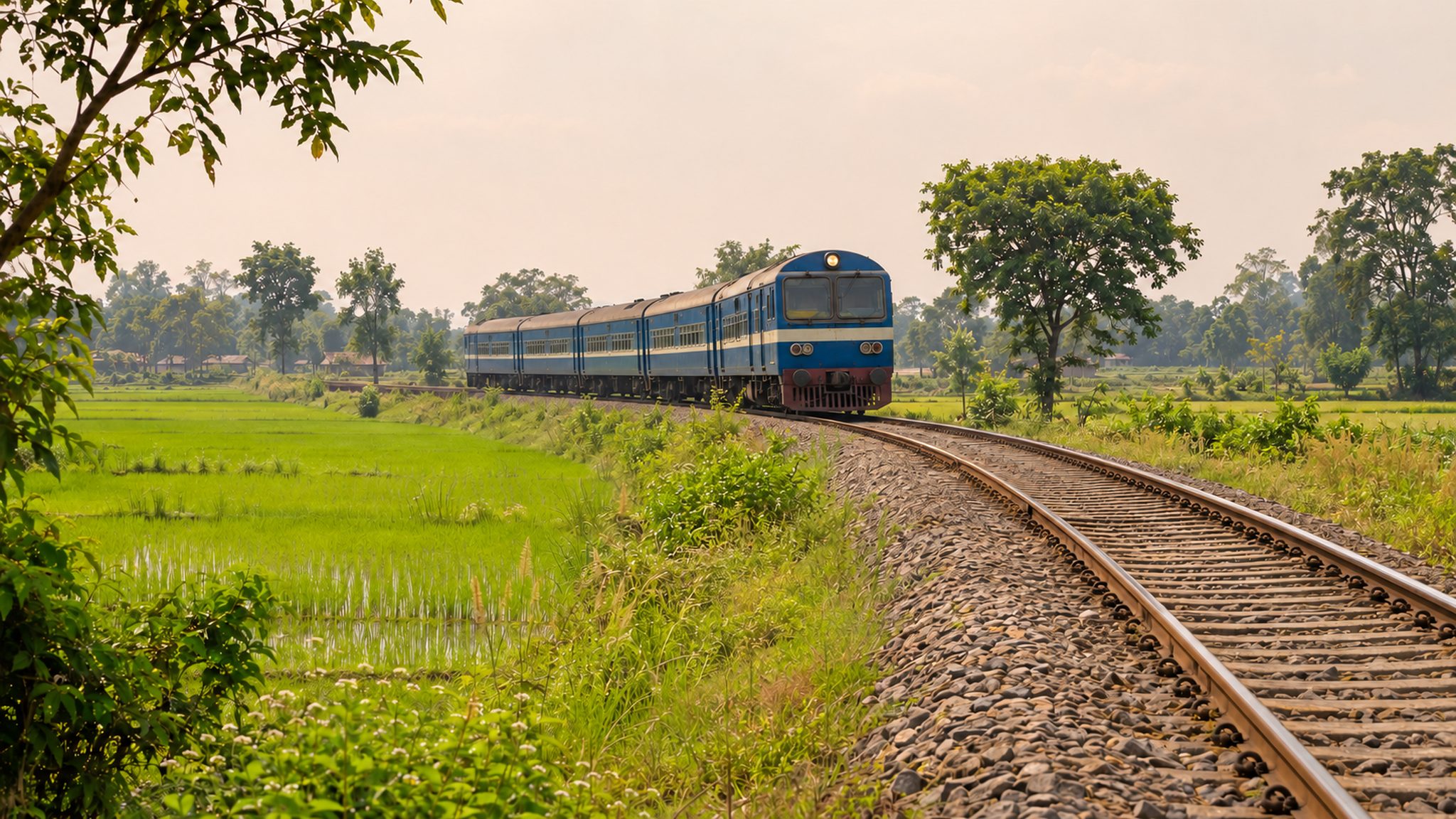
- The leaders welcomed the launch of the Ayodhya–Janakpur express rail service and the motorable bridge connecting Dharchula and Darchula across the Mahakali River.
- They agreed to pursue additional transport, power and payment links, with several projects and operating arrangements still requiring further work.
- A High-Level Monitoring Group will follow implementation and report to the bilateral Joint Commission.
- Cross-border connectivity depends on operating rules, approvals and maintenance alongside physical infrastructure.
- The roadmap provides a current example of how neighborhood diplomacy connects everyday mobility with longer-term economic cooperation.
UPSC Relevance
Prelims Relevance
- India–Nepal Joint Commission and its foreign-minister-level leadership.
- Integrated Check Posts as facilities supporting cross-border movement.
- Hydropower and transmission as linked components of electricity trade.
- 1950 Treaty of Peace and Friendship and the requirement for mutual consent to review agreements.
Mains Relevance
GS Paper 2
- Neighborhood relations and the implementation of bilateral commitments.
- Regional connectivity, sovereignty and institutional coordination.
Background and Context
What the Joint Vision Establishes
The document provides a shared direction for cooperation and identifies institutions responsible for advancing its commitments.
- The Joint Vision connects several areas of bilateral cooperation within a common roadmap. Its practical value depends on whether responsible agencies translate each undertaking into an agreed project or operating arrangement.
- The leaders welcomed two launched transport links, the Ayodhya–Janakpur express service and the Mahakali bridge. These have a different implementation status from railway sections that the document asks officials to complete.
- The document envisages review by mutual consent of existing agreements, including the 1950 Treaty of Peace and Friendship. This wording opens a process for discussion while leaving the actual terms of any revision unsettled.
- Outstanding matters involving the boundary, water resources, energy and commerce remain subjects for dialogue. The adoption of a broad cooperation roadmap cannot establish that individual bilateral disagreements have already been resolved.
- The development-assistance commitment leaves specific projects and modalities for mutual consultation. Assessing implementation requires subsequent project decisions, financing terms and delivery evidence beyond the announcement of assistance itself.
How Connectivity Becomes a Working Network
Transport, electricity and payment systems deliver benefits when infrastructure connects with usable services and compatible arrangements.
- Rail interoperability is an explicit objective of the roadmap. The leaders called for completion of ongoing railway sections and cooperation on further links, so a finalized survey should be distinguished from completed construction.
- Integrated Check Posts and trading points support the movement of people and goods across the border. Coordinated processing matters because delays at the crossing can reduce the usefulness of an improved transport route.
- Electricity trade links generation with transmission and market arrangements. The document seeks investment in Nepal’s hydropower and transmission infrastructure, with further expansion of power trade to be explored according to mutual benefit and demand.
- Retail payment connectivity requires implementation work after systems are linked. The leaders agreed to expedite cross-border retail payments, making service availability and functioning transactions relevant measures of progress for users.
- Climate resilience also affects connectivity. The proposed institutionalization of two-way hydrometeorological information and early warning can help agencies prepare for hazards affecting shared river systems, communities and infrastructure.
How Implementation Will Be Assessed
The monitoring arrangement creates a route for reviewing progress and escalating obstacles between the two governments.
- The High-Level Monitoring Group is led by Nepal’s Foreign Secretary and India’s Ambassador. It is tasked with advancing envisaged projects and initiatives and facilitating the clearances or approvals that implementation requires.
- The group will meet at least once every six months and submit its report to the Joint Commission, co-chaired by the foreign ministers. This establishes a reporting relationship between operational follow-up and political oversight.
- Project-level evidence should distinguish a survey, an approval, construction and service operation. These stages answer different questions about readiness and prevent an announced connection from being treated as an already available public service.
- Mutual benefit requires attention to how costs, access and responsibilities are allocated. A connection can support commerce while still needing agreed arrangements for operation, maintenance and the handling of disruptions or complaints.
- Sovereignty and coordination operate together in the roadmap. Cooperation on digital public infrastructure explicitly refers to digital sovereignty and data protection, making institutional safeguards relevant alongside the convenience promised by connected services.
Way Forward
Track Delivery at the Project Level
- Publish a concise implementation tracker showing the responsible agencies, current stage and pending approval for each major connection.
- Use the Monitoring Group to resolve specific delays and record agreed action before the next review meeting.
- Assess user outcomes through service availability, reliability and border-processing performance alongside completion of physical assets.
- Read the related notes on trade-agreement scoping and bilateral institutional cooperation for other stages of diplomatic implementation.
Conclusion
- The India–Nepal Joint Vision links connectivity with institutions that can follow projects through successive approvals and delivery stages. Its implementation will depend on sustained coordination between the agencies responsible for each commitment.
- For a Mains answer, connect regional interdependence with accountable implementation. Use the distinction between launched services, prospective projects and unresolved negotiations to assess what the roadmap has achieved and what still requires action.
UPSC Practice Questions
Prelims MCQ 1
With reference to the India–Nepal Joint Vision adopted in November 2026, consider the following statements:
- It provides for review of existing bilateral agreements on the basis of mutual consent.
- Its High-Level Monitoring Group reports to the bilateral Joint Commission.
- Its adoption itself completes all proposed railway projects.
How many of the above statements are correct?
(a) Only one (b) Only two (c) All three (d) None
Answer: (b) Only two
Explanation:
The first two statements reflect the document. Several railway undertakings require further development or completion, so adoption of the roadmap does not establish their completion.
Prelims MCQ 2
Which pair most directly explains why additional hydropower generation alone may be insufficient to expand cross-border electricity trade?
(a) Transmission infrastructure and market arrangements (b) Diplomatic titles and ceremonial visits (c) Tourism promotion and cultural festivals (d) University exchanges and sports facilities
Answer: (a) Transmission infrastructure and market arrangements
Explanation:
Electricity must reach buyers through transmission infrastructure and operate within applicable trade arrangements. The Joint Vision addresses hydropower investment, transmission and further trade based on market demand.
UPSC Mains Questions
- Explain how the India–Nepal Joint Vision connects physical and digital infrastructure with bilateral institutional coordination.
- How should the progress of a cross-border connectivity roadmap be assessed? Discuss with reference to launched services, prospective projects and implementation oversight.
Source: PIB, Ministry of External Affairs.
Frequently Asked Questions
What did India and Nepal adopt on November 23, 2026?
They adopted a Joint Vision covering connectivity, development and institutional cooperation. It includes launched transport links as well as prospective projects and arrangements that require further implementation.
Has the 1950 Treaty of Peace and Friendship been amended?
The Joint Vision says existing agreements, including the treaty, could be reviewed by mutual consent. That commitment to possible review does not establish that an amendment has already been agreed or completed.
Who will monitor the Joint Vision?
A High-Level Monitoring Group led by Nepal’s Foreign Secretary and India’s Ambassador will follow implementation. It will meet at least every six months and report to the foreign-minister-led Joint Commission.
Why does electricity trade require transmission cooperation?
Hydropower generation must be connected to buyers through transmission infrastructure. The roadmap combines investment in generation and transmission with exploration of further trade according to mutual benefit and market demand.
Tell Google you want more of this.
Add Anantam IAS as a preferred sourceOne tap, and this site shows up more often in your own Top Stories, AI Overviews and AI Mode. Remove it any time.