Why in news?
India is hosting the first SCO Civilisational Dialogue Forum at Purana Qila, New Delhi, from November 20, 2026.
UPSC Relevance
Prelims – SCO, Purana Qila, Global Civilization Initiative
GS2, Bilateral, regional and global groupings involving India; India and its neighbourhood (China, Central Asia)
About the Civilisational Dialogue Forum
- What: A meeting of SCO culture ministers along with dialogue partners from over 25 countries.
- Origin: Proposed by PM Modi at the SCO Summit in Tianjin, China in 2025.
- Organisers: Ministry of Culture along with the Ministry of External Affairs.
- Venue: Purana Qila, Delhi – walls built by Sher Shah Suri in the 16th century; tradition and excavations link the site with ancient Indraprastha.
Why “civilisation” has become a contested idea
After the Cold War, the West set the global vocabulary – democracy, free markets and human rights were presented as universal values. Rising powers did not reject this language but began to argue that modernity can take many forms. The word “civilisation” is now a tool of diplomacy.
China has moved fastest to build this narrative:
- Global Civilization Initiative (GCI) launched by Xi Jinping in 2023, along with the Global Development Initiative and Global Security Initiative.
- UN General Assembly, on China’s initiative, declared June 10 as the International Day for Dialogue among Civilizations (2024).
- Ministerial meeting of the Global Civilizations Dialogue (July 2025); Nishan Forum on World Civilizations, held at Confucius’ birthplace (12th edition, September 2026).
China’s message: ancient continuity justifies a centralised political order, and universal standards are a Western imposition.
India’s objectives behind the Forum
- Soft connectivity: Highlighting shared links – Buddhist circuits, Sufi traditions and old trade routes from Taxila to Samarkand. This is the only openly stated aim.
- Agenda-setting within SCO: India has never been fully comfortable in the SCO – it opposes the Belt and Road Initiative, faces Pakistan in every meeting and carries the memory of Galwan (2020). A flagship forum gives India a “brand” in a body headquartered in Beijing.
- Civilisation and democracy can coexist: India argues that its continuity has been plural, argumentative and layered – unlike China’s use of history to justify centralised rule.
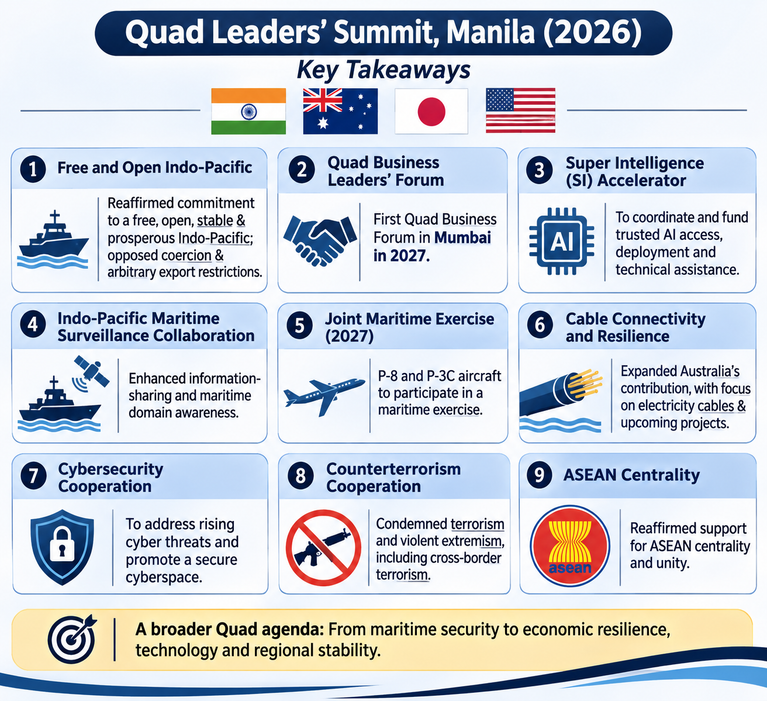
- Multi-alignment: Fits India’s pattern of being in all relevant clubs – BRICS summit (September 2026), India–EU Strategic Partnership Review (November 2026), Quad Leaders’ Summit (November 2026).
India’s Soft Power Toolkit
| Tool | Example |
|---|---|
| Culture and heritage | ICCR, Festivals of India, Project Mausam, Buddhist circuit |
| Yoga and wellness | International Day of Yoga (June 21, UNGA 2014), AYUSH |
| Knowledge | Nalanda University revival, ITEC training programme |
| Diaspora | Pravasi Bharatiya Divas, largest diaspora in the world |
| Development partnership | Vaccine Maitri, lines of credit, HADR missions |
| Agenda-setting | G20 presidency (2023), AI Impact Summit (2026), Voice of Global South Summit |
Concerns and risks
- Strengthening China’s narrative: Any forum that sees the world in civilisational terms supports China’s claim that universal norms are Western. A democracy hosting it can make this look like an Asian consensus.
- Contest over Buddhism: China may use the platform to project its claim over Buddhism, which matters for the succession of the Dalai Lama.
- Alibi for authoritarianism: Civilisational arguments are often used by authoritarian regimes to justify repression.
- Rival claims of antiquity: Competing claims of being older or superior can breed conflict rather than dialogue (echoing Huntington’s “Clash of Civilizations”).
- Resource gap: India cannot outspend China in Central Asia; soft power without connectivity and investment has limits.
Way Forward
- Inclusive Asian identity: Build a forum where China can participate without dominating, and India becomes a bridge between the Global South, the West and Central Asia.
- Back culture with connectivity: Chabahar port and INSTC to give substance to links with Central Asia.
- Avoid the antiquity race: Stress pluralism and absorption rather than claims of being older or better.
- Protect democratic credibility: India should not lend its name to a language used to justify repression.
- Institutionalise the forum: Regular editions, scholar exchanges, joint heritage projects and digital archives of shared heritage.
Agenda-setting, not just attendance, is the real currency of soft power. If India uses the forum to show an inclusive model of civilisation, it offers something China cannot easily copy.
Practice MCQ
Q1. With reference to the Shanghai Cooperation Organisation (SCO), consider the following statements:
1. Its Secretariat is in Beijing, while its Regional Anti-Terrorist Structure is in Tashkent.
2. Russian and Chinese are its official languages.
3. Belarus was the first country admitted as a full member after India and Pakistan.
How many of the statements given above are correct?
(a) Only one
(b) Only two
(c) All three
(d) None
Answer: (b)
Explanation: Statement 3 is incorrect. Iran joined in 2023, before Belarus (2024).
Q2. Consider the following statements:
1. The UN General Assembly designated June 10 as the International Day for Dialogue among Civilizations on China’s initiative.
2. The Global Civilization Initiative was proposed by China in 2023.
3. Varanasi was named the first SCO Tourism and Cultural Capital.
Which of the statements given above are correct?
(a) 1 and 2 only
(b) 2 and 3 only
(c) 1 and 3 only
(d) 1, 2 and 3
Answer: (d)
Explanation: All statements are correct. Varanasi held the title for 2022–23, during India’s SCO chairmanship.
Practice Question
“Civilisation has become a contested idea in international politics.” In this context, examine the significance of India hosting the SCO Civilisational Dialogue Forum. What risks does this approach carry for India’s foreign policy? (15 Marks)
Tell Google you want more of this.
Add Anantam IAS as a preferred sourceOne tap, and this site shows up more often in your own Top Stories, AI Overviews and AI Mode. Remove it any time.