Why in News?
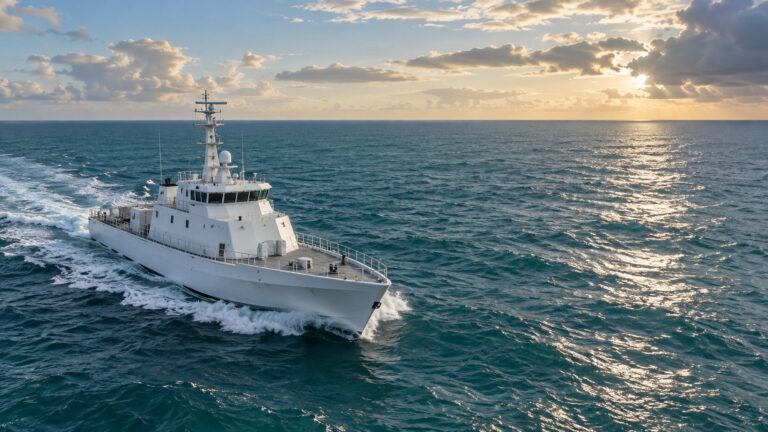
On 11 June 2026 the Indian Navy announced that its Southern Naval Command (headquartered at Kochi) had safely extracted an unexploded missile warhead from inside MT Olympic Life, a Marshall Islands-flagged crude oil tanker, off Kochi.
- The tanker, a Very Large Crude Carrier (capacity around 2 million barrels), was struck off Oman on 26 May 2026 while sailing from Fujairah (UAE) to Kochi.
- It carried the live, embedded warhead across the Arabian Sea before the Navy’s explosive ordnance disposal (EOD) team neutralised it.
- The Information Fusion Centre-Indian Ocean Region (IFC-IOR) flagged the emergency and triggered the response.
- No Indian nationals were aboard; operation completed without loss of life or environmental damage.
- The Ministry of Defence (via PIB) framed it as proof of the Navy’s EOD proficiency, technical expertise and inter-agency coordination.
The development matters in the context of:
- The spillover of the West Asian war into the Indian Ocean.
- India’s maritime domain awareness architecture and its role as a net security provider.
- The technical depth of the Navy as a first responder in the region’s busiest sea lanes.
UPSC Relevance
Prelims Relevance
- MT Olympic Life: Marshall Islands-flagged crude oil tanker, classed as a Very Large Crude Carrier.
- Struck off Oman on 26 May 2026, en route Fujairah (UAE) to Kochi; recovery announced 11 June 2026.
- Southern Naval Command is headquartered at Kochi and led the EOD operation.
- IFC-IOR (Information Fusion Centre-Indian Ocean Region) flagged the emergency.
- IFC-IOR was inaugurated on 22 December 2018 at Gurugram, Haryana.
- IFC-IOR is co-located with the Information Management and Analysis Centre (IMAC), jointly run by the Indian Navy and the Indian Coast Guard.
- ‘White shipping’ = commercial merchant vessel traffic, the information IFC-IOR fuses and shares.
- Maritime Domain Awareness (MDA) = effective understanding of activity in the maritime domain affecting security, safety, economy or environment.
- SAGAR vision (Security and Growth for All in the Region) articulated in 2015; frames India as a net security provider.
- Explosive Ordnance Disposal (EOD) = detection, identification, render-safe and disposal of unexploded munitions.
- The projectile penetrated the hull, traversed multiple compartments and lodged inside a fuel tank; the recovered warhead was moved to a secure facility for stowage and detailed examination.
Mains Relevance
GS Paper 3 (Internal and Maritime Security):
- A clean example of how a foreign conflict reaches Indian sea lanes and tests the Navy’s first-responder capacity and inter-agency coordination.
- Links the current event to static anchors: IFC-IOR and MDA, the SAGAR vision, the net-security-provider role, and EOD as a capability. See India’s Indian Ocean strategic posture.
GS Paper 2 (International Relations) overlap:
- The spillover ties to the West Asia war and to the disruption of shipping in the Red Sea and Gulf, both staples of India’s energy-security debate.
Background and Context
The recovery cannot be read apart from the war in West Asia and the maritime architecture India built to anticipate exactly this kind of spillover.
The West Asia Spillover
- Since late February 2026 a wider conflict involving Israel, the United States and Iran has gripped the Gulf.
- The Strait of Hormuz heavily disrupted: merchant ships boarded and attacked, sea mines reported, sharp collapse in crude and LNG sailings to and from Persian Gulf ports.
- MT Olympic Life is a textbook case: a ship hit near Oman carried the consequence onward into Indian waters.
- India draws the bulk of its imported oil and a major part of its gas from this corridor; any insecurity translates into higher freight and insurance costs, longer routings and direct threats.
The Institutional Anchor: IFC-IOR
- Inaugurated 22 December 2018 at Gurugram; co-located with IMAC (jointly run by the Indian Navy and Indian Coast Guard).
- India’s nodal hub for maritime domain awareness across the Indian Ocean.
- Fuses, analyses and shares information on ‘white shipping’ (commercial merchant traffic) and hosts international liaison officers for near-real-time data.
- Has white-shipping information-exchange agreements with around 22 countries plus a multinational construct.
- In this case, that network turned a distress signal off Oman into a coordinated Indian Navy response.
The Doctrinal Frame: Net Security Provider
- India’s posture as a net security provider in the Indian Ocean Region, articulated through the SAGAR vision (2015).
- Naval doctrine rests on sea control, sea denial and maritime presence, sustained through mission-based deployments at major chokepoints.
- EOD is the technical edge of that presence: dedicated EOD and diving teams (drawn from the same tradition as the marine commandos) render safe mines, improvised devices and unexploded munitions at sea and along the coast.
Static Concepts to Define Cleanly
- Maritime Domain Awareness: the umbrella idea of knowing what is happening at sea and why it matters.
- ‘White shipping’: normal commercial traffic, distinct from ‘grey’ (naval) and ‘black’ (illicit/hostile); sharing it lets navies spot the anomaly — the ship off course, silent or in distress.
- Net security provider: a state that supplies security as a public good to its region, through patrols, capacity-building, humanitarian assistance and first response.
- EOD: the operational end of that posture.
Anatomy of the Olympic Life Operation
- Detection: IFC-IOR fused the distress information and alerted the Navy, converting a foreign tanker’s emergency into a tasked national response.
- Assessment: The Southern Naval Command’s EOD team boarded and traced the projectile’s path through the hull into a fuel tank.
- Diagnosis: Advanced diagnostics identified and isolated the detonation mechanism before any handling — the highest-risk step near crude oil.
- Extraction: The warhead and associated debris were safely removed after prescribed safety procedures.
- Exploitation: The ordnance was moved to a secure facility for stowage and forensic examination that can establish provenance.
- Principle: The Navy acted irrespective of the vessel’s flag or its crew’s nationality, reinforcing its net-security-provider role.
Why the Architecture Matters
- The real story is the architecture, not the rescue: India now runs an information-led model of maritime security.
- The chain — sensor and partner feeds into IFC-IOR, then a tasked command, then a technical team — now functions as a system fast enough to act on a foreign ship days before it reaches an Indian port.
- Spillover here arrives physically: an unexploded munition lodged in a hull that sails into India’s exclusive economic zone, not just refugees, oil prices or diplomatic strain.
- Capability message: disposing of a warhead inside a crude-oil compartment points to mature EOD and underwater-engineering depth, not improvisation.
- Norms signal: acting on a foreign-owned, foreign-crewed ship positions India as a guarantor of freedom and safety of navigation for the whole region, connecting to India’s Indo-Pacific strategy and the wider Indian maritime sector.
Challenges and Concerns
- Merchant ships continuing to sail with live, embedded ordnance shows how far conflict risk has crept into routine commercial traffic.
- EOD on a loaded crude carrier is extremely hazardous; the margin for error near hydrocarbon vapour is thin, and not every such task will end safely.
- Attribution remains hard: an unexploded warhead helps, but proving who fired it is politically and technically fraught.
- MDA depends on willing data-sharing; gaps in partner reporting or in coverage of ‘dark’ (transponder-off) shipping can blind the system.
- India’s response capacity is finite relative to the volume of traffic and the duration of a Gulf conflict — raising questions of sustainment and burden-sharing.
Way Forward
- Deepen IFC-IOR’s information-exchange agreements and liaison-officer presence so distress and threat data flow even faster and cover transponder-off traffic.
- Invest in EOD and underwater-engineering depth — training, diagnostics and forward-positioned teams — so high-risk render-safe tasks can be met across the Navy’s deployment arc.
- Pair response capacity with diplomacy: work through regional frameworks to reduce attacks on merchant shipping and keep the Strait of Hormuz and Arabian Sea sea lanes open.
- Build forensic and attribution capacity to inform that diplomacy.
Conclusion
The Olympic Life operation shows all three layers of India’s maritime security working together: awareness through IFC-IOR, presence through the Southern Naval Command, and technical capacity through the EOD specialists. For a country that imports the bulk of its crude through these waters, that responsiveness is strategic, not merely humanitarian.
Maritime security today blends domain awareness, rapid response, technical disposal and forensic exploitation into one continuum. The strategic return — credibility with regional partners and an open energy lifeline — is why the Navy treats such incidents as core business rather than a distraction.
UPSC Practice Questions
Prelims MCQ 1
With reference to the Information Fusion Centre-Indian Ocean Region (IFC-IOR), consider the following statements:
- It was inaugurated in 2018 at Gurugram, Haryana.
- It is co-located with the Information Management and Analysis Centre (IMAC), jointly run by the Indian Navy and the Indian Coast Guard.
- It primarily fuses and shares information on ‘white shipping’, that is, commercial merchant traffic.
How many of the above statements are correct?
(a) Only one (b) Only two (c) All three (d) None
Answer: (c)
Explanation:
- All three statements are correct: IFC-IOR was inaugurated on 22 December 2018 at Gurugram, is co-located with IMAC (a joint Navy-Coast Guard centre), and fuses and shares white-shipping (commercial) information.
Prelims MCQ 2
The SAGAR vision, often cited in the context of India’s maritime posture, stands for:
(a) Strategic Alliance for Gulf and Arabian Region
(b) Security and Growth for All in the Region
(c) Sea-lane Awareness and Global Action Roadmap
(d) South Asian Group for Atlantic Resources
Answer: (b)
SAGAR — Security and Growth for All in the Region — was articulated in 2015 and frames India’s role as a net security provider in the Indian Ocean Region.
UPSC Mains Questions
Examine the role of the Information Fusion Centre-Indian Ocean Region (IFC-IOR) in strengthening India’s maritime domain awareness and its emergence as a net security provider in the Indian Ocean Region. (GS-III, 10 marks)
Maritime security today blends domain awareness, rapid response, technical disposal and forensic exploitation. Discuss with reference to the spillover of conflicts in West Asia into India’s sea lanes. (GS-III, 15 marks)
What was recovered off Kochi?
The Indian Navy’s Southern Naval Command safely extracted an unexploded missile warhead lodged inside MT Olympic Life, a crude oil tanker, off Kochi. The projectile had pierced the hull and lodged in a fuel tank. An EOD team isolated the detonation mechanism and removed the warhead with its debris before it could explode.
When and where was the tanker hit?
MT Olympic Life was struck off the coast of Oman on 26 May 2026 while sailing from Fujairah in the UAE to Kochi. The projectile did not detonate, so the tanker carried the live warhead across the Arabian Sea until the Navy neutralised it, with the operation announced on 11 June 2026.
What is IFC-IOR and why does it matter here?
The Information Fusion Centre-Indian Ocean Region is India’s maritime domain awareness hub at Gurugram, inaugurated in 2018 and co-located with IMAC. It fuses and shares information on merchant shipping. In this case it flagged the tanker’s emergency and set the Navy’s response in motion, the trigger for the whole operation.
Why is this a maritime security issue for India?
A munition from the West Asian war reached Indian waters inside a foreign tanker bound for Kochi. India imports most of its crude through these sea lanes, so any conflict that attacks or mines Gulf shipping lands directly on its doorstep. The episode shows how distant wars spill physically into India’s own maritime space.
What does the operation say about the Navy’s capability?
It shows mature explosive ordnance disposal skill, since disposing of a warhead inside a crude-oil tank is among the most hazardous EOD tasks. It also shows inter-agency coordination, from IFC-IOR detection to command tasking to technical extraction. Acting on a non-Indian ship reinforces India’s role as a net security provider in the region.
Tell Google you want more of this.
Add Anantam IAS as a preferred sourceOne tap, and this site shows up more often in your own Top Stories, AI Overviews and AI Mode. Remove it any time.