Why in News?
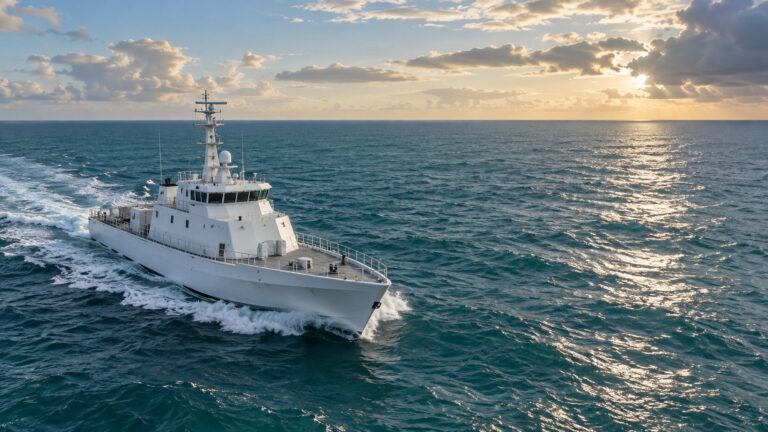
Three Indian seafarers were killed when MT Settebello, a Palau-flagged oil tanker, took a missile hit on 10 June 2026 about 20 nautical miles north-east of Sohar on Oman’s coast — the seaward approach to the Strait of Hormuz. India has lodged a formal protest (a demarche) with the United States after publicly attributing the strikes to the US Navy.
- Settebello carried 28 crew, 24 of them Indian; three Indians confirmed dead, the other 25 (including 21 Indians) evacuated (PIB, Ministry of Ports, Shipping & Waterways, 11 June).
- Second of three attacks in four days on vessels crewed largely by Indians: MT Marivex (8 June), Settebello (10 June), MT Jalveer (11 June).
- MEA spokesperson Randhir Jaiswal said all three strikes “came from the U.S. Navy” — the first time India publicly named American forces.
- India’s message in the demarche: these strikes must stop; it also told the UN Security Council it firmly opposes attacks on merchant shipping.
- The Seafarers Welfare Fund Society is releasing ₹10 lakh to each bereaved family.
The development matters in the context of:
- India-US relations under direct stress — a partner’s missiles killing Indian citizens.
- Protection of citizens abroad and the safety of sea lines of communication.
- Energy and food security riding on the Hormuz chokepoint; France’s expected invitation to a multinational Hormuz security initiative ahead of the Modi-Macron G7 bilateral.
UPSC Relevance
Prelims Relevance
- MT Settebello (IMO 9162916): Palau-flagged medium-range oil tanker, attacked 10 June 2026 about 20 nautical miles north-east of Sohar, Oman; three Indian crew killed.
- Settebello’s 28 crew: 24 Indians, 2 Pakistanis, 1 Russian, 1 Ukrainian.
- MT Marivex (8 June, Palau flag, 24 Indians rescued by the Omani Air Force) and MT Jalveer (11 June, Guinea-Bissau flag, asphalt/bitumen tanker, IMO 9486283, all 20 Indians safe).
- India lodged a demarche (formal diplomatic protest) with Washington and told the UNSC it opposes attacks on merchant shipping.
- Seafarers Welfare Fund Society (SWFS) functions under the Directorate General of Shipping; pays ₹10 lakh to each deceased seafarer’s family.
- Directorate General of Shipping (DGS), under the Ministry of Ports, Shipping and Waterways, derives authority from the Merchant Shipping Act, 1958; RPSL agencies are its licensed seafarer recruiters.
- Strait of Hormuz separates Iran from Oman’s Musandam exclave and links the Persian Gulf to the Gulf of Oman; about a fifth (roughly 21%) of globally traded oil passes through it; it is about 33 km wide at its tightest.
- Ships in Hormuz exercise ‘transit passage’ under Part III of UNCLOS, 1982 — continuous, expeditious passage through international straits that coastal states cannot suspend.
- Operation Sankalp (June 2019): Indian Navy escort of Indian-flagged vessels through the Strait of Hormuz after tanker attacks.
- Palau and Guinea-Bissau are ‘flags of convenience’ — open registries chosen for low cost and light regulation.
- Over 3,537 Indian seafarers repatriated from the Gulf; DG Shipping control room handled 12,331 calls and 27,515+ emails since activation.
- Inter-ministerial briefing (11 June 2026): fertiliser stocks at 195.79 LMT against the Kharif 2026 requirement of 383.9 LMT (over 51%); 153.79 LMT added after the crisis.
Mains Relevance
GS Paper 2 (International Relations and International Law):
- The India-US relationship under direct stress — a demarche against a strategic partner, the calculus of protest versus partnership, and protection of citizens abroad as a first-order diplomatic function.
- UNCLOS transit passage, the law of naval blockade, neutral shipping rights, and flag-state versus national-state responsibility for crews.
GS Paper 3 (Security and Economy):
- Security of sea lines of communication (SLOCs), chokepoint dependence for crude, LNG and fertiliser inputs.
- The buffer-stock and demand-management template for absorbing supply shocks.
Essay / Ethics:
- A partner’s war killing your citizens raises the duty-of-care question — material for essays on strategic autonomy and the state’s obligations to citizens working in dangerous geographies.
Background and Context
A tragedy at sea connects to the durable architecture behind it: flag-state law, the DG Shipping welfare system, chokepoint economics, and the limits of a demarche between strategic partners.
The Sequence of Attacks
- 8 June: Palau-flagged MT Marivex reported a fire near the Omani coast; all 24 Indian crew rescued by the Omani Air Force (The Hindu reported it was disabled by US forces).
- 10 June: MT Settebello hit about 20 nautical miles north-east of Sohar; three of 24 Indians killed; 25 (including 21 Indians) evacuated; first word via Oman’s Maritime Security Centre and the vessel’s management.
- 11 June: MT Jalveer, a Guinea-Bissau-flagged asphalt/bitumen tanker with 20 Indian seafarers, attacked off Shinas port; all 20 safe; US Central Command said a combat aircraft “disabled” it with two Hellfire missiles into the engine room for “violating the blockade against Iran” after the crew “repeatedly failed to comply” with US directions.
India’s Two-Track Response
- Diplomatic track: a strong protest (demarche) lodged with the US, public statement that attacks must stop, and a position carried to the UNSC opposing attacks on merchant shipping.
- Jaiswal’s confirmation that the strikes “came from the U.S. Navy” ended days of careful passive-voice statements (“attacks”, “fires”).
- A demarche is among the stronger peacetime tools of protest; aiming one at a comprehensive global strategic partner — days before Modi is expected to meet President Trump at the G7 in France — signals a threshold crossed.
- Administrative track: the shipping ministry declared the government on highest alert; DGS maintains sustained surveillance of Hormuz, the Gulf of Oman and adjoining waters, coordinating with MEA, the Navy, missions abroad and shipping companies.
- Union Minister Sarbananda Sonowal called the deaths “a profound loss to our maritime family” and directed fast-tracking of repatriation and dignified return of remains.
The Geography: Strait of Hormuz
- About 33 km wide at its tightest; separates Iran from Oman’s Musandam exclave; connects the Persian Gulf to the Gulf of Oman and the Arabian Sea.
- Around a fifth (roughly 21%) of the world’s traded oil moves through it, plus the bulk of Qatar’s LNG exports.
- India imports more than 85% of its crude oil and draws a large share of crude and LNG through this single passage; fertiliser supply chains lean on the same geography.
- All three attacked vessels were on the Gulf of Oman approaches (Sohar and Shinas sit on that corridor).
- In law, ships exercise ‘transit passage’ under Part III of UNCLOS, 1982 — a right coastal states cannot suspend; a war turning the corridor into a free-fire zone collides with this.
India’s Seafarer Economy and the Flag Question
- India is among the world’s largest suppliers of merchant mariners; the active workforce is estimated above 2.5 lakh, serving overwhelmingly on foreign-flagged ships.
- Regulatory spine: the Directorate General of Shipping, under the Ministry of Ports, Shipping and Waterways, drawing powers from the Merchant Shipping Act, 1958.
- Recruitment runs through agencies holding a Recruitment and Placement Services Licence (RPSL), aligned with the Maritime Labour Convention, 2006.
- Welfare flows through the Seafarers Welfare Fund Society under DGS — the body releasing the ₹10 lakh payments.
- None of the three attacked ships flew the Indian flag: Settebello and Marivex are Palau-flagged; Jalveer is Guinea-Bissau-registered — flags of convenience with light regulation and accountability.
- When shooting starts, a crew’s protection depends on a weak flag state, the nearest coastal state (Oman did the rescuing) and the seafarers’ own government acting through diplomacy.
The Legal and Doctrinal Backdrop
- June 2019: after limpet-mine attacks on tankers in the Gulf of Oman, the Navy launched Operation Sankalp, escorting Indian-flagged vessels through Hormuz, with IFC-IOR (Gurugram) tracking merchant traffic.
- Doctrine has widened from SAGAR toward MAHASAGAR, with mission-based deployments near chokepoints.
- A naval blockade is historically an act of war, governed by customary international law and the non-binding San Remo Manual (1994): it must be declared, effective and impartially enforced; lethal force against neutral crews engages strict necessity and proportionality limits.
- Washington’s claim that Jalveer “violated the blockade against Iran” is a legal assertion, not a settled fact; India’s UNSC statement opposing attacks on merchant shipping stakes out the contrary position.
India’s Crisis-Response Architecture for Seafarers
- DG Shipping control room: 12,331 calls and more than 27,515 emails handled since activation; 311 calls and 683 emails in the last 72 hours.
- SWFS compensation: ₹10 lakh released to each deceased seafarer’s family.
- Repatriation pipeline: more than 3,537 Indian seafarers brought home from the Gulf, including 31 in the last 72 hours.
- 24×7 helplines: the DG Comm Centre (MMDAC) and e-Navik grievance channels run round-the-clock, with domestic and international toll-free lines.
- Advisories: DGS directs seafarers on Indian and foreign-flagged vessels in conflict waters to exercise highest caution; operators must report incidents immediately.
- Whole-of-government briefing: Petroleum, Shipping, External Affairs and Fertilizers ministries briefing jointly from the National Media Centre to pre-empt panic.
The Partner Problem and the Home Front
- India’s crisis playbook assumes threats from adversaries; here the missiles came from a comprehensive global strategic partner, removing sanctions, deterrent signalling or coalition options.
- What remains is calibrated protest — loud enough to register, contained enough to keep G7 meetings on track; protecting citizens abroad has moved from consular routine to the centre of strategic calculus (close to nine million Indians live and work in the Gulf). See our note on India’s strategic autonomy under the West Asia war.
- Flag-of-convenience trap: Indians die on Palau-flagged ships because that is where the jobs are; the case strengthens the project of growing Indian-flagged, Indian-insured shipping, backed by the Bharat Maritime Insurance Pool.
- Home front as the buffer: Kharif 2026 requirement re-assessed at 383.9 LMT, stocks at 195.79 LMT (over 51%, against a usual comfort near 33%); 153.79 LMT added (domestic production 118.15 LMT, imports 35.64 LMT, helped by 28 missions abroad), with a global tender for 17 LMT of urea; on fuel, a ₹10-per-litre excise cut, commercial LPG at 70% (household at 100%), and an excise waiver extended to E22-E30 ethanol blends on 10 June — see the Strait of Hormuz explainer.
- Coalition question: France’s proposal puts a live choice on the table — a collective freedom-of-navigation initiative (akin to the US-led Project Freedom convoy initiative) versus sovereign escort in the Operation Sankalp mould; the likeliest Indian course is engagement without enlistment.
Challenges and Concerns
- Asymmetry of leverage: beyond a demarche, India has few instruments to compel a superpower partner to change military behaviour — visible helplessness carries domestic political costs.
- The flag gap: most Indian seafarers serve under foreign flags of convenience, leaving protection dependent on weak open registries and ad hoc diplomacy.
- War-risk economics: insurance premiums for Gulf transits spike, and shipowners may pass risk to crews through hazard contracts — the RPSL oversight system will be tested.
- Escalation trap: joining a Hormuz coalition risks entangling India in a US-Iran war; staying out risks exclusion from arrangements governing its own energy lifeline.
- Domestic transmission: prolonged disruption strains the fertiliser subsidy budget, excise revenues (already cut by ₹10/litre) and LPG logistics, with inflation consequences for the RBI.
Way Forward
Immediate
- Bring the mortal remains home with dignity and repatriate rescued crews fast; release SWFS support without paperwork friction.
- Convert the demarche into a working de-confliction channel with the US Navy — advance notification of vessels carrying Indian crew, agreed safe corridors, and an understanding that boarding and disabling must not endanger crew lives.
- Press through the IMO and UN Security Council for explicit protection of neutral seafarers in the conflict zone.
Structural
- Grow Indian-flagged tonnage backed by the Bharat Maritime Insurance Pool.
- Establish a standing naval escort protocol activable without a fresh political decision each time.
- Codify compensation norms for seafarers killed or injured in war zones — a statutory floor above the current ₹10 lakh protocol.
- If the French-backed Hormuz initiative materialises, sit inside the information-sharing layer while retaining operational command of India’s own escorts — engagement without enlistment.
Conclusion
The June 2026 attacks invert India’s crisis toolkit: the attacker is a strategic partner, so there is no coalition to mobilise and no deterrent to signal — only calibrated protest. The episode shows that, at sea, a passport buys far less protection than a flag does.
A continental economy rides out a maritime shock it cannot stop militarily through buffers, diversified sourcing and demand management on the home front. The lasting lessons are the case for Indian-flagged, Indian-insured shipping and the price of multi-alignment, paid in weeks like this one.
UPSC Practice Questions
Prelims MCQ 1
With reference to the Strait of Hormuz, consider the following statements:
- It separates Iran from Oman’s Musandam exclave and links the Persian Gulf to the Gulf of Oman.
- Roughly a fifth of the world’s traded oil passes through it.
- Ships transiting it exercise the right of ‘transit passage’ under UNCLOS, 1982, which coastal states cannot suspend.
How many of the above statements are correct?
(a) Only one (b) Only two (c) All three (d) None
Answer: (c)
Explanation:
- All three are correct: the geography, the roughly 21% share of globally traded oil, and the transit-passage right under Part III of UNCLOS that coastal states cannot suspend.
Prelims MCQ 2
The Seafarers Welfare Fund Society (SWFS), in news for releasing compensation to bereaved families, functions under which body?
(a) The Indian Navy
(b) The Directorate General of Shipping
(c) The Ministry of External Affairs
(d) The Indian Coast Guard
Answer: (b)
The SWFS functions under the Directorate General of Shipping (Ministry of Ports, Shipping and Waterways) and is releasing ₹10 lakh to each deceased seafarer’s family.
UPSC Mains Questions
The protection of Indian nationals abroad has moved from consular routine to the core of India’s strategic calculus. Examine in the light of the June 2026 attacks on merchant vessels carrying Indian seafarers in the Gulf of Oman. (GS-II, 15 marks)
India’s dependence on the Strait of Hormuz is as much about fertilisers and cooking gas as about crude oil. Discuss how a chokepoint crisis transmits to India’s food and energy security, and evaluate the buffer-based response of the government. (GS-III, 15 marks)
What happened to MT Settebello?
MT Settebello, a Palau-flagged medium-range tanker with 28 crew including 24 Indians, was hit by a missile on June 10, 2026, about 20 nautical miles north-east of Sohar, Oman. Three Indian seafarers were killed; the other 25 crew were evacuated. PIB confirmed the bodies were located and identified. It is the deadliest single incident for Indian seafarers in this crisis.
Who attacked the ships carrying Indian seafarers?
India says the strikes came from the US Navy. MEA spokesperson Randhir Jaiswal confirmed the attacks on Marivex, Settebello and Jalveer “came from the U.S. Navy” — the first such public acknowledgement. US Central Command said Jalveer was disabled for violating the blockade against Iran. The attacker is a strategic partner, which is exactly what makes this crisis so unusual.
What is a demarche in diplomacy?
A demarche is a formal diplomatic representation through which one government conveys its official position, concern or protest to another. India lodged one with Washington over the strikes, with the message that they must stop. It sits among the stronger peacetime instruments of protest — sharper than a statement, softer than expelling diplomats or downgrading ties.
Why is the Strait of Hormuz critical for India?
About a fifth of globally traded oil and a major share of India’s crude and LNG imports pass through Hormuz, the chokepoint between the Persian Gulf and the Gulf of Oman. India imports over 85% of its crude. When Hormuz becomes a war zone, India’s fuel pumps, fertiliser plants and kitchen cylinders all feel it within weeks.
What support are families of the killed seafarers getting?
The Seafarers Welfare Fund Society, under the Directorate General of Shipping, is releasing ₹10 lakh to each deceased seafarer’s family as per protocol. DG Shipping and the RPSL recruitment agencies are in constant contact with the next of kin, and repatriation of remains and rescued crew is being fast-tracked. Compensation is flowing; the question of who protects crews under foreign flags stays open.
Will India join the Hormuz maritime security initiative?
French diplomatic sources say India is expected to be among the countries invited into a multinational initiative to secure freedom of navigation through the Strait of Hormuz, proposed ahead of the Modi-Macron bilateral at the G7 summit. India hasn’t committed. Its choice — join a coalition or escort independently as in Operation Sankalp — will define its maritime posture for the decade.
Tell Google you want more of this.
Add Anantam IAS as a preferred sourceOne tap, and this site shows up more often in your own Top Stories, AI Overviews and AI Mode. Remove it any time.