Why in News?
On November 25, NHAI issued guidelines requiring incident management services to be available before a National Highway stretch opens to traffic.
- The required incident management services include ambulances, route patrol vehicles and tow-away cranes, bringing emergency assistance into the preparations for opening a highway.
- On-location teams must connect with the 1033 National Highway Helpline and coordinate with local police, fire services and hospitals to support assistance during accidents, breakdowns and other emergencies.
- The deployment arrangements distinguish operational stretches, highways entrusted to NHAI and highways tolled by NHAI that remain under another authority, making responsibility an essential part of readiness.
- Infrastructure readiness includes the services required when ordinary travel is disrupted. This links road construction with the continuing duties of operators and emergency agencies.
- Institutional coordination matters because toll collection, highway administration, vehicle deployment and hospital care can involve different organisations on the same stretch.
UPSC Relevance
Prelims Relevance
- NHAI and the Ministry of Road Transport and Highways.
- Incident management services on National Highways.
- 1033 National Highway Helpline.
- Entrustment of highways and responsibility for toll collection.
Mains Relevance
GS Paper 3
- Infrastructure quality and road-user safety throughout the operating life of a highway.
- Service readiness as a condition accompanying physical infrastructure delivery.
GS Paper 2
- Coordination between national highway bodies, local emergency services and hospitals.
Background and Context
What Incident Management Provides
The guideline combines several services because different road incidents require different kinds of assistance.
- An ambulance supports the medical response to an incident. Its availability must connect with local hospitals so that assistance on the road can lead to further care when required.
- A route patrol vehicle provides an operational presence along the highway. Patrol arrangements connect the road authority with events occurring between fixed facilities such as toll plazas.
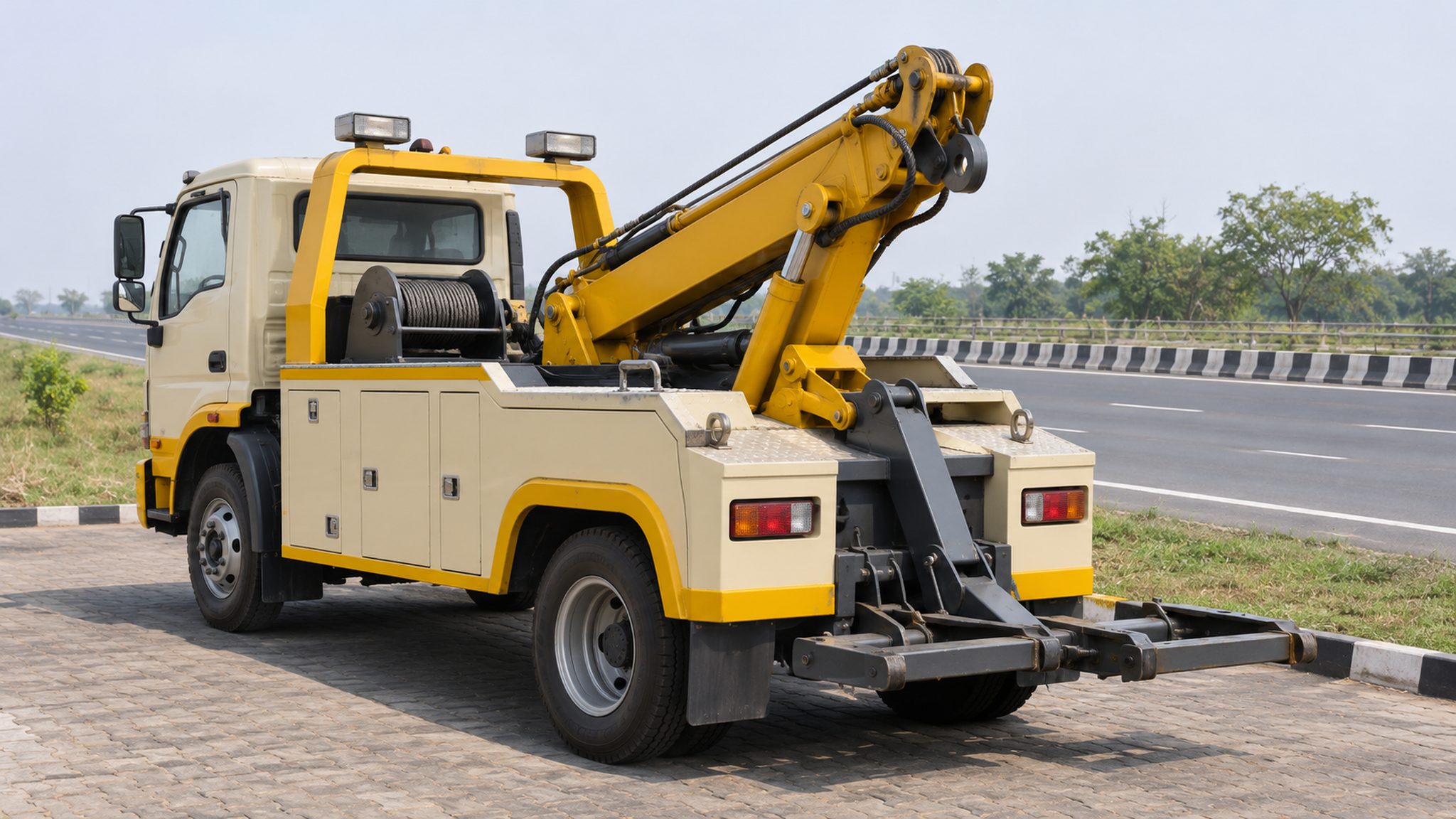
- A tow-away crane serves vehicle recovery needs during breakdowns and accidents. Recovery capacity complements medical assistance by addressing vehicles that need removal from the affected road space.
- The 1033 helpline connects with on-location teams under the announced arrangement. Police, fire services and hospitals remain part of the coordination required for an effective response to different incidents.
- The official release makes availability before opening the central requirement. Assessing readiness requires attention to vehicles, responsible organisations and their working connections.
How Deployment Responsibility Differs
The authority collecting a toll and the authority responsible for a highway stretch can have different roles.
- On operational stretches, ambulances are positioned at user fee plazas or other suitable locations. Accident data and the needs of the particular stretch guide their positioning.
- For highways entrusted to NHAI, a centralised agency will deploy ambulances according to the delegated powers of NHAI field offices, linking procurement arrangements with local administrative authority.
- On these entrusted stretches, patrol vehicles and tow-away cranes may be arranged through separate tenders or included within highway maintenance and strengthening works, allowing more than one contracting route.
- Where NHAI collects tolls on a highway entrusted elsewhere, its centralised agency will deploy ambulances in coordination with the concerned Ministry regional office or NHIDCL, following the Ministry’s procedure.
- On those NHAI-tolled stretches under another authority, the concerned authority arranges patrol vehicles and tow-away cranes. This allocation identifies who must provide each service instead of assuming one organisation handles everything.
How to Assess Readiness
The policy sets an administrative requirement whose practical results depend on deployment and coordination on each stretch.
- Issuing guidelines establishes a requirement. Assessing implementation also needs evidence that the specified services are available on the stretch when traffic begins and remain available during operation.
- Location choices should reflect accident data and local needs. The release allows suitable sites beyond toll plazas, making the characteristics of the stretch relevant to deployment decisions.
- Coordination records can help operators examine whether the helpline and field teams reach the appropriate local agency. A shared process needs clearly assigned contacts and responsibilities.
- Changes in toll-plaza design make service location a useful administrative question. The emergency arrangements must remain workable as highway operating layouts change.
- Performance assessment needs actual service records. The announcement specifies neither a uniform response-time promise nor a universal spacing rule for vehicles, so either claim would require separate supporting evidence.
Way Forward
Verify Services Before Opening
- Record the responsible agency for each service on every stretch and confirm the deployment arrangements before traffic begins.
- Check communication links between the helpline, field teams and local emergency agencies, with current contact details available to all participants.
- Use incident records to review vehicle positioning, gaps in availability and coordination problems during operation.
Conclusion
- Highway readiness now includes the availability of incident management services before opening. The policy connects physical infrastructure with the organisations and vehicles needed when travel is disrupted.
- Accountability follows responsibility. An exam answer should identify who deploys ambulances, who arranges patrols and towing, and how these services connect with local emergency agencies.
UPSC Practice Questions
Prelims MCQ 1
With reference to NHAI’s November 2026 incident management guidelines, consider the following statements:
- Incident management services include ambulances, route patrol vehicles and tow-away cranes.
- Services should be available before a highway stretch opens to traffic.
- Every ambulance must be stationed only at a toll plaza.
How many of the above statements are correct?
(a) Only one (b) Only two (c) All three (d) None
Answer: (b) Only two
Explanation:
The first two statements are correct. Operational stretches may have ambulances at user fee plazas or other suitable locations according to accident data and the stretch’s requirements.
Prelims MCQ 2
On a National Highway tolled by NHAI but entrusted to another authority, who arranges route patrol vehicles and tow-away cranes under the announced procedure?
(a) The concerned highway authority (b) The receiving hospital (c) The vehicle manufacturer (d) The individual toll user
Answer: (a) The concerned highway authority
Explanation:
The concerned authority arranges patrol vehicles and tow-away cranes. Ambulances are deployed through NHAI’s centralised agency in coordination with the concerned Ministry regional office or NHIDCL.
UPSC Mains Questions
- Explain how incident management readiness can improve the governance of National Highway projects.
- Discuss the coordination challenges created when toll collection and highway administration involve different authorities.
Source: PIB, Ministry of Road Transport and Highways.
Frequently Asked Questions
What are highway incident management services?
They include ambulances, route patrol vehicles and tow-away cranes. NHAI’s announced arrangement connects on-location teams with the 1033 helpline and local police, fire services and hospitals.
When must these services be available?
NHAI’s November 25 guidelines require incident management services before a National Highway stretch opens to traffic. Their deployment arrangements vary according to the administrative status of the stretch.
Must ambulances stay only at toll plazas?
On operational stretches, ambulances may be positioned at user fee plazas or other suitable locations. Accident data and the needs of the stretch guide that choice.
Does the announcement guarantee a response time?
The official release does not specify a uniform response-time guarantee. It describes required services, deployment arrangements and coordination, while actual performance needs evidence from implementation.
Tell Google you want more of this.
Add Anantam IAS as a preferred sourceOne tap, and this site shows up more often in your own Top Stories, AI Overviews and AI Mode. Remove it any time.