Why in News?
India issued its first PRAMAAN certificates under the Indian Forest and Wood Certification Scheme on 29 September 2026.
- The Andhra Pradesh Forest Development Corporation received certification for plantations covering 33,000 hectares.
- An Odisha bamboo farmer also received a certificate, extending the announcement beyond state-managed plantations to tree-based farming.
- The plantations underwent field and management audits; the announcement concerns first certificates, not a new scheme launch.
- A sustainability claim becomes useful to buyers when independent evidence supports it and the claim remains traceable through processing and sale.
- Certification connects forest governance with market information, but cannot by itself guarantee higher farmer incomes or acceptance under every importing jurisdiction.
UPSC Relevance
Prelims Relevance
- IFWCS: Indian Forest and Wood Certification Scheme.
- Forest Management and Trees Outside Forests Management assess management against their respective standards.
- Chain of Custody: continuity of a product claim along the supply chain.
- IIFM, Bhopal: scheme operating agency.
- NABCB: accredits certification bodies under the Quality Council of India.
Mains Relevance
GS Paper 3
- Sustainable forestry: combining ecological stewardship, traceability and producer livelihoods.
- Trade: distinguishing credible sustainability evidence from guaranteed market access.
GS Paper 2
- Regulatory institutions: separating standard setting, accreditation and independent assessment.
Essay
- Trust in markets depends on evidence that can survive independent scrutiny.
Background and Context
What does PRAMAAN certify?
The scheme separates how trees are managed from how a claim follows their products to buyers.
- The Indian Forest and Wood Certification Scheme, launched in December 2023, offers voluntary third-party certification. The latest certificates demonstrate field implementation of that framework rather than the creation of another forestry programme.
- Forest Management certification assesses management against the Indian Forest Management Standard within the National Working Plan Code 2023. Its subject is management quality; a forest product label serves a different evidentiary purpose.
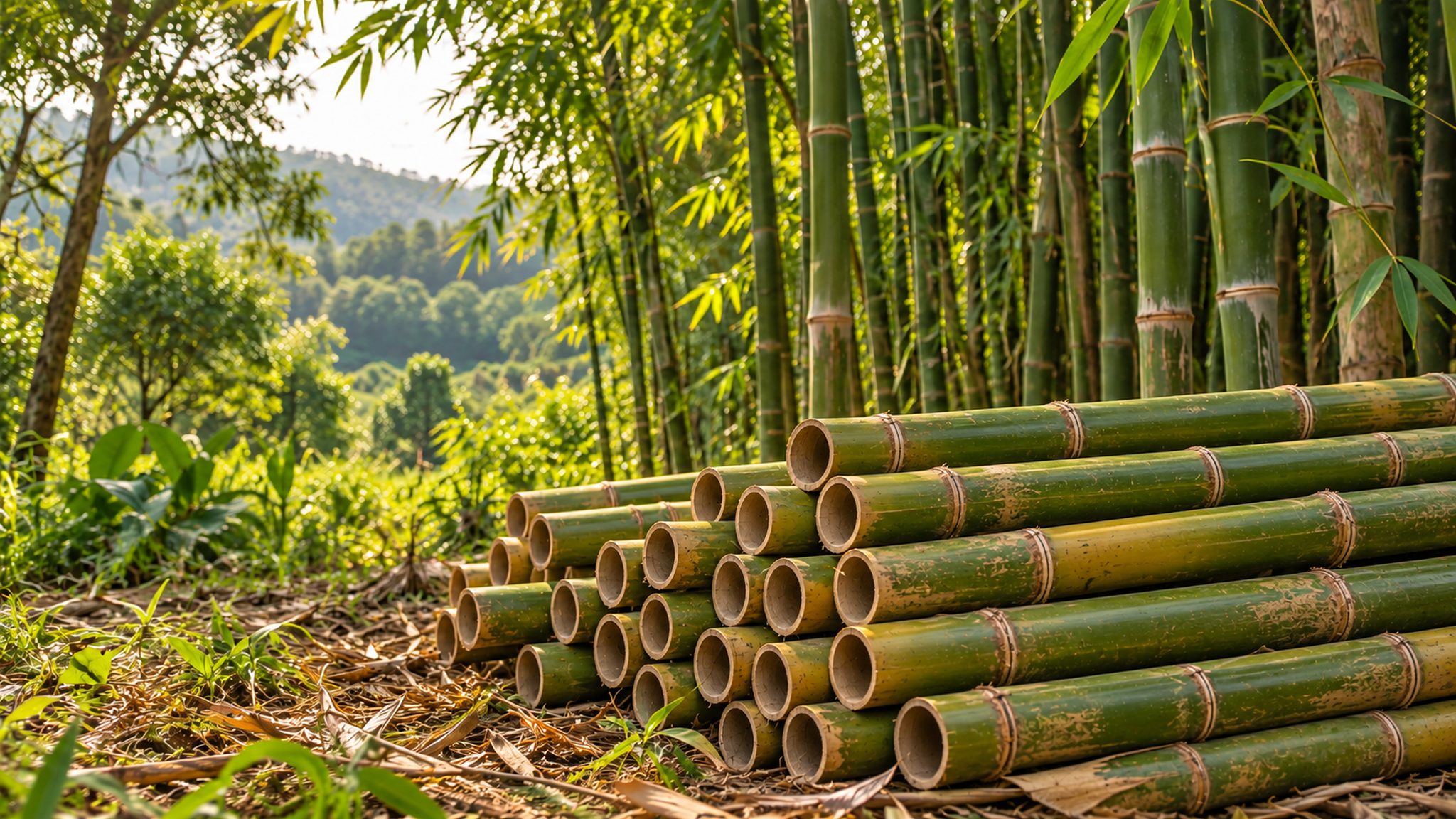
- Trees Outside Forests Management extends the certification architecture beyond forests to relevant tree-growing systems. This matters for farmers whose production enters wood and bamboo value chains without originating in a conventional forest plantation.
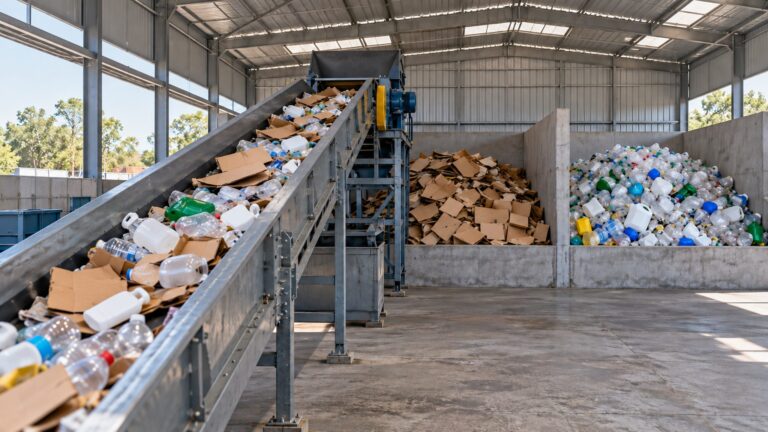
- Chain of Custody certification concerns the continuity of a claim through sourcing, processing, trading and distribution. A certified source and a traceable finished product answer related but separate questions for a buyer.
- The scope includes wood and non-timber forest products. Certification should be read against the relevant certificate and standard; these first awards do not establish that every Indian forest, farm or timber consignment is certified.
Who checks the claim, and who checks the checker?
Independent assessment is the central safeguard against treating a producer’s declaration as sufficient proof.
- The Indian Institute of Forest Management, Bhopal, operates the scheme. Administrative coordination is distinct from conducting an independent assessment of whether a particular applicant meets the standard relevant to its proposed certification.
- The National Accreditation Board for Certification Bodies, under the Quality Council of India, accredits certification bodies. Accreditation concerns the bodies performing assessments; it does not itself certify every forest enterprise or product they encounter.
- Accredited certification bodies perform independent audits against prescribed standards. The announcement records field and management audits before the first plantation certificates, giving the claim a basis beyond the applicant’s own description of its practices.
- For chain of custody, ownership changes along the value chain matter. The official standard requires effective custody management systems and independent verification where an organisation wants to make an IFWCS claim about its products.
- Consider a furniture maker purchasing wood from a certified source: the source certificate addresses management upstream. Evidence connecting the purchased material with the finished product is still needed to support a downstream certification claim.
What certification can and cannot deliver
A credible certificate can reduce uncertainty, but its commercial and legal effects must be established separately.
- Information asymmetry arises when a seller knows more about sourcing than a buyer. Independent assessment can help buyers distinguish supported sustainability claims from unsupported assertions, provided the certificate actually covers the activity being represented.
- Traceability links a claim to material as it moves between organisations. It complements management assessment: good practices at the growing site cannot establish, by themselves, the origin of every product later offered for sale.
- The government presents PRAMAAN as supporting responsible sourcing and market linkages. That stated objective is not proof that a particular certificate automatically satisfies every foreign regulation, buyer specification or importing-country due-diligence requirement.
- Livelihood benefits depend on buyers valuing the claim and producers bearing workable costs. The first awards do not establish a realised price premium, higher net income or universal access for smallholders and forest-dependent communities.
- Certification and legal due diligence should remain distinct in an answer. A certificate is evidence within its scope; checking applicable sourcing rules, documents and market obligations remains necessary rather than becoming redundant after an audit.
Way Forward
Make claims verifiable and participation workable
- For implementation: make certificate scope and validity easy for buyers to check, reducing the risk of broad claims based on narrowly certified activities.
- For small producers: support recordkeeping and collective participation where appropriate; assess costs before promising livelihood gains.
- For evaluation: track buyer acceptance, producer costs and net returns separately from the number of certificates issued.
Conclusion
- PRAMAAN links sustainable management with independent assessment and product traceability. Its first certificates are an implementation milestone whose value depends on the credibility of the underlying evidence.
- In a Mains answer, connect environmental governance with market trust, then examine certificate scope, custody continuity and producer costs before claiming commercial success.
UPSC Practice Questions
Prelims MCQ 1
With reference to PRAMAAN certification, consider the following statements:
- Forest Management certification and Chain of Custody certification address different aspects of a sustainability claim.
- NABCB accredits the certification bodies that perform independent assessments.
- The first certificates establish that all Indian timber exports automatically meet every importing-country requirement.
How many of the above statements are correct?
(a) Only one (b) Only two (c) All three (d) None
Answer: (b) Only two
Explanation:
The first two statements are correct. Certification has a defined scope and does not establish automatic compliance with every foreign market requirement.
Prelims MCQ 2
A furniture maker needs to substantiate that a finished product carries a valid claim linked to certified source material. Which mechanism is most directly relevant?
(a) A general increase in national forest cover (b) A producer self-declaration without supporting records (c) Chain of Custody certification (d) An accreditation certificate issued to an unrelated auditor
Answer: (c) Chain of Custody certification
Explanation:
Chain of Custody concerns the continuity of the product claim through the supply chain; management certification alone addresses the upstream management standard.
UPSC Mains Questions
- Explain the distinction between forest management certification and chain of custody. How can both contribute to credible sustainability claims?
- Assess the opportunities and limits of voluntary forest certification for small producers and forest-dependent communities.
Sources: PIB, Ministry of Environment, Forest and Climate Change and Indian Institute of Forest Management, certification standards.
Frequently Asked Questions
Is PRAMAAN a newly launched scheme?
No. IFWCS was launched in December 2023. The September 2026 announcement concerns its first PRAMAAN certificates, marking field implementation after assessment rather than a fresh scheme launch.
How does chain of custody differ from forest management certification?
Forest management certification assesses management against its standard. Chain of custody addresses the continuity of a product claim through sourcing, processing, trading and distribution, connecting material with its claimed origin.
Who audits applicants under the scheme?
Independent certification bodies conduct assessments against applicable standards. NABCB, under the Quality Council of India, accredits these bodies, while IIFM Bhopal acts as the scheme operating agency.
Does certification guarantee higher prices or foreign market access?
No automatic guarantee follows. Commercial benefits depend on buyer acceptance and producer costs; applicable importing-market requirements must still be checked. The first awards are not evidence of realised price premiums.
Tell Google you want more of this.
Add Anantam IAS as a preferred sourceOne tap, and this site shows up more often in your own Top Stories, AI Overviews and AI Mode. Remove it any time.